
You are here
Feed aggregator
Gäste hindern Unfallfahrer an der Flucht
Ein Auto kracht mitten auf die Terrasse eines gut besuchten Restaurants im griechischen Thessaloniki. Drei Personen werden verletzt und müssen im Spital behandelt werden.
Categories: Swiss News
«Ich werde mich nicht zum Schweigen bringen lassen»
Razzia bei Ilhan Omar: US-Beamte durchsuchten ihr Haus in Washington wegen Ermittlungen zu möglichem Einwanderungsbetrug. Die Demokratin spricht von politischer Einschüchterung durch die Trump-Regierung.
Categories: Swiss News
Michael Douglas packt über seine Affären aus
Michael Douglas packt in seiner neuen Biografie aus. Der Schauspieler räumt mit Gerüchten auf und enthüllt pikante Details über ehemalige Affären.
Categories: Swiss News
Til Schweiger ist zurück
Eineinhalb Jahre hat Til Schweiger auf Instagram geschwiegen. Jetzt meldet er sich mit einem Foto zurück, das viele erst für einen KI-Fake halten. Er lächelt an der Seite von Hollywood-Legende Jackie Chan in die Kamera.
Categories: Swiss News
Roboter begrapscht Mädchen (16) in Köln
Ein 1,20 Meter grosser Roboter hat in Köln (D) eine 16-Jährige begrapscht. Besonders perfid: Der Besitzer (16) und sein Kollege (19) filmten den bizarren Übergriff und streamten ihn live im Netz.
Categories: Swiss News
Nachbarschaftsstreits eskalieren immer wieder – warum?
In Vättis SG eskaliert ein Nachbarschaftsstreit um eine Grundstücksgrenze komplett. Es ist kein Einzelfall. Nachbarschaftskonflikte gehören in der Schweiz zu den häufigsten Konflikten. Warum ist das so?
Categories: Swiss News
Pomme de terre plafonnée à 90 DA : Himayatec dénonce des produits « impropres à la consommation »
L’organisation algérienne de protection et d’orientation du consommateur et de son environnement, Himayatec, a vivement critiqué la qualité des pommes de terre proposées à 90 […]
L’article Pomme de terre plafonnée à 90 DA : Himayatec dénonce des produits « impropres à la consommation » est apparu en premier sur .
Categories: Afrique, Swiss News
Les sept pays africains où les salaires sont les plus élevés
En Afrique de l'Est, le Kenya a fait mieux que ses voisins comme la Tanzanie, l'Ouganda et le Rwanda, mais est resté derrière Djibouti, qui menait non seulement l'Afrique de l'Est, mais aussi l'ensemble du continent avec une moyenne de 2 836 dollars (1 647 007 FCFA) par mois.
Categories: Afrique, Határon túli magyar portálok összesített hírei
Les sept pays africains où les salaires sont les plus élevés
En Afrique de l'Est, le Kenya a fait mieux que ses voisins comme la Tanzanie, l'Ouganda et le Rwanda, mais est resté derrière Djibouti, qui menait non seulement l'Afrique de l'Est, mais aussi l'ensemble du continent avec une moyenne de 2 836 dollars (1 647 007 FCFA) par mois.
Categories: Afrique, Swiss News
Zürcher Polizei wird bei illegalen Partys immer wieder zur Zielscheibe
Die Eskalation an einer illegalen Party beim Zürcher Hardplatz ist keine Ausnahme: Immer wieder werden Einsatzkräfte in Zürich bei unbewilligten Feiern angegriffen und Fahrzeuge beschädigt. Blick liefert einen Überblick über die aufsehenerregendsten Fälle der letzten fünf Jahre.
Categories: Swiss News
Gratuité des transferts nationaux jusqu'à 8 000 FCFA par jour
À compter du 2 novembre 2026, les transferts nationaux de monnaie électronique dont le montant cumulé quotidien ne dépasse pas 8 000 FCFA par utilisateur et par participant seront gratuits, quel que soit le nombre d'opérations effectuées.
Les transferts nationaux dont le montant cumulé quotidien est inférieur ou égal à 8000 Fcfa sont gratuits à partir du 2 novembre. La Banque centrale des États de l'Afrique de l'Ouest (BCEAO) a annoncé cette mesure dans le cadre de la révision des conditions tarifaires des transactions réalisées par l'intermédiaire de la Plateforme interopérable du Système de paiement instantané (PI-SPI) de l'Union économique et monétaire ouest-africaine (UEMOA).
Selon la BCEAO, le seuil retenu permet de couvrir 75 % des transactions de monnaie électronique dans l'Union. Pour les transferts nationaux dont le montant cumulé quotidien dépasse 8 000 FCFA, des frais pourront être appliqués. Leur taux sera compris entre 0 et 0,8 % du montant hors taxes du transfert.
La réception des transferts sera, quant à elle, entièrement gratuite, sans limite de montant ni de nombre d'opérations. Les nouvelles conditions tarifaires s'appliqueront aux transferts entre les comptes détenus dans les banques ou les institutions de microfinance et ceux ouverts auprès des établissements de monnaie électronique ou de paiement. Elles concerneront également les opérations entre établissements de monnaie électronique et établissements de paiement.
L'interopérabilité obligatoire à partir du 2 novembre
Outre la révision des tarifs, la BCEAO prévoit que les transactions de monnaie électronique interopérables au sein de l'UEMOA soient obligatoirement réalisées par l'intermédiaire de la PI-SPI à compter du 2 novembre 2026.
Lancée le 30 septembre 2025, cette plateforme compte actuellement 175 participants connectés et permet à plus de 38 millions de personnes d'accéder aux services de paiement instantané.
Au terme de sa première année de fonctionnement, la Banque centrale a évalué la mise en œuvre de l'interopérabilité avant de décider de revoir les conditions tarifaires des transferts entre personnes physiques. Cette révision vise notamment à renforcer l'inclusion financière, à améliorer la qualité et la disponibilité des services et à favoriser de nouveaux usages.
La gratuité étendue aux transferts régionaux en juin 2027
La BCEAO prévoit également d'étendre les mêmes conditions tarifaires aux transferts de monnaie électronique entre les pays de l'UEMOA à compter du 1er juin 2027. Les opérations transfrontalières seront ainsi soumises aux mêmes règles que les transferts nationaux, aussi bien pour les frais à l'envoi que pour la gratuité à la réception.
Categories: Afrique, Swiss News
Schweizer ohne Führerschein und unter Drogen gestoppt
Die Polizei hat am Sonntag in Bayern einen 29-jährigen Schweizer Autofahrer aus dem Verkehr gezogen. Er soll ohne Fahrerlaubnis und unter Drogeneinfluss unterwegs gewesen sein. Gegen ihn wird ermittelt.
Categories: Swiss News
Sommer mit Kampfansage: «Warum sollte ich ans Aufhören denken?»
Yann Sommer denkt noch lange nicht ans Karriereende. Vor dem Champions-League-Duell mit Inter Mailand spricht der ehemalige Nati-Goalie über seinen Abschied aus Italien, sein neues Leben in Belgien und seine Ambitionen.
Categories: Swiss News
Draft agenda - Thursday, 22 October 2026 - PE796.356v01-00 - Committee on Foreign Affairs
Source : © European Union, 2026 - EP
Categories: Europäische Union, Swiss News
Media advisory - General Affairs Council and accession conferences with Albania, the Republic of Moldova and Ukraine of 13 October 2026
Main agenda items, approximate timing, public sessions and press opportunities.
EU-UK summit to take place in Brussels on 20 November
The second annual EU-UK Summit after the UK’s withdrawal from the EU will take place in Brussels on 20 November 2026.
Categories: Africa, Europäische Union
Multilateralism: Council sets EU position ahead of climate change and biodiversity summits
The Council approved conclusions on the EU’s main negotiating positions ahead of the United Nations climate change (COP31) and biodiversity (COP17) summits.
Categories: Afrique, Europäische Union
Speech by President António Costa at the opening session of the 24th edition of the European Week of Regions and Cities
President of the European Council, António Costa, delivered a speech at the opening session of the 24th edition of the European Week of Regions and Cities in Brussels, on 12 October 2026.
Categories: Afrique, Europäische Union
DPRK: Council adds three individuals and four entities to sanctions lists over nuclear, missile programmes and Russia ties
The Council adopted restrictive measures against three individuals and four entities supporting North Korea’s weapons of mass destruction programmes and violating UN sanctions, including through Russia-DPRK cooperation.
Categories: Afrique, Europäische Union
Lebanon: EU establishes new CSDP support mission to strengthen defence and security institutions
The Council has established the EU Support Mission in Lebanon (EUSM Lebanon) to strengthen the Lebanese Armed Forces and Internal Security Forces and support stability in the country.
Categories: Afrique, Europäische Union
Pages
the old site is here


© 2012-2015 Europa Varietas Foundation © 2015-2020 Europa Varietas Association
www.europavarietas.org | info(@)europavarietas(dot)org | Switzerland
This is a GDPR ready site
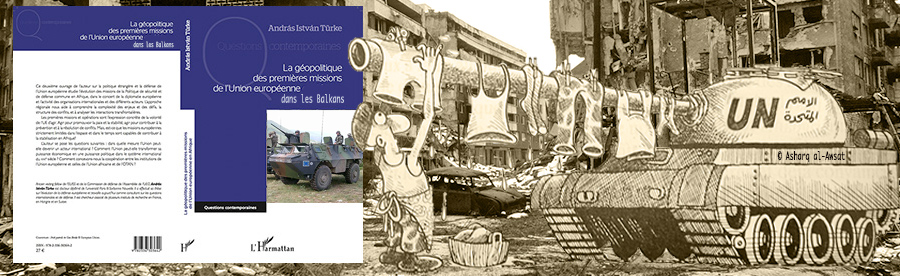
We are looking for sponsors for the English translation of these books, please contact turkeandras(at)gmail(dot)com