
You are here
Feed aggregator
Aid for trade, political ties, and global value chains: a regime-dependent effect?
This paper investigates the impact of aid for trade (AfT) targeted at trade policies on the participation of recipient countries in global value chains (GVCs), and how this impact varies with their prevailing political regimes. In democratic countries, the need for the authorities to account for the interests of various stakeholders (e.g., lobbies, trade unions) can compromise the allocation, use, and effectiveness of AfT. In contrast, less democratic regimes are typically more insulated from political pressures, which may lead to more effective outcomes of aid. At the same time, integration into some complex GVCs requires efficient and democratic institutions, to which these products are sensitive. Employing a sample of 110 countries and data covering 2002-2018, we control for standard determinants of GVC participation, while examining the effect of AfT and the moderating role of the political regime in place. Our estimation addresses the endogeneity of aid through an appropriate instrumentation strategy. Our results suggest that the effect of AfT is mostly positive in autocratic regimes, indicating more effective trade policy reforms. When we account for regional disparities, we find evidence that AfT for trade policy is also impactful in some democratic regimes. This might suggest that the efficacy of AfT is not strictly regime-dependent, but hinges on the government’s commitment to carry out significant reforms leading to greater participation in the global economy.
Categories: Diplomacy & Defense Think Tank News, Swiss News
Aid for trade, political ties, and global value chains: a regime-dependent effect?
This paper investigates the impact of aid for trade (AfT) targeted at trade policies on the participation of recipient countries in global value chains (GVCs), and how this impact varies with their prevailing political regimes. In democratic countries, the need for the authorities to account for the interests of various stakeholders (e.g., lobbies, trade unions) can compromise the allocation, use, and effectiveness of AfT. In contrast, less democratic regimes are typically more insulated from political pressures, which may lead to more effective outcomes of aid. At the same time, integration into some complex GVCs requires efficient and democratic institutions, to which these products are sensitive. Employing a sample of 110 countries and data covering 2002-2018, we control for standard determinants of GVC participation, while examining the effect of AfT and the moderating role of the political regime in place. Our estimation addresses the endogeneity of aid through an appropriate instrumentation strategy. Our results suggest that the effect of AfT is mostly positive in autocratic regimes, indicating more effective trade policy reforms. When we account for regional disparities, we find evidence that AfT for trade policy is also impactful in some democratic regimes. This might suggest that the efficacy of AfT is not strictly regime-dependent, but hinges on the government’s commitment to carry out significant reforms leading to greater participation in the global economy.
Categories: Diplomacy & Defense Think Tank News, Swiss News
Aid for trade, political ties, and global value chains: a regime-dependent effect?
This paper investigates the impact of aid for trade (AfT) targeted at trade policies on the participation of recipient countries in global value chains (GVCs), and how this impact varies with their prevailing political regimes. In democratic countries, the need for the authorities to account for the interests of various stakeholders (e.g., lobbies, trade unions) can compromise the allocation, use, and effectiveness of AfT. In contrast, less democratic regimes are typically more insulated from political pressures, which may lead to more effective outcomes of aid. At the same time, integration into some complex GVCs requires efficient and democratic institutions, to which these products are sensitive. Employing a sample of 110 countries and data covering 2002-2018, we control for standard determinants of GVC participation, while examining the effect of AfT and the moderating role of the political regime in place. Our estimation addresses the endogeneity of aid through an appropriate instrumentation strategy. Our results suggest that the effect of AfT is mostly positive in autocratic regimes, indicating more effective trade policy reforms. When we account for regional disparities, we find evidence that AfT for trade policy is also impactful in some democratic regimes. This might suggest that the efficacy of AfT is not strictly regime-dependent, but hinges on the government’s commitment to carry out significant reforms leading to greater participation in the global economy.
Categories: Diplomacy & Defense Think Tank News, Swiss News
From anticolonial heroes to post-independence liabilities: morphing refugee categorizations in African geopolitics
Many colonies in Africa attained independence through negotiated settlements. However, several others engaged in armed liberation struggles, for example, Kenya, Namibia, South Africa, Southern Rhodesia (Zimbabwe), and the Portuguese colonies of Angola, Cape Verde, Guinea Bissau, Mozambique, and São Tomé and Príncipe. Newly independent states provided liberation movements with bases on their territories and political, military, intellectual, ideological, material, and moral support. In West Africa, Ghana’s first president, Kwame Nkrumah, a notable pan-Africanist, declared in his Independence Day speech in 1957, “Our independence is meaningless unless it is linked up with the total liberation of the African continent.” In East Africa, Julius Nyerere and Jomo Kenyatta, the first presidents of independent Tanzania and Kenya respectively, showed similar commitment to Pan-Africanism and anticolonialism by hosting refugees fleeing armed struggles in Southern Africa. Tanzania hosted the Organization of African Unity Liberation Committee supported anticolonial resistance and liberation movements. President Nyerere supported them for “challenging injustices of empire and apartheid” and declared, “I train freedom fighters”. He encouraged Tanzanians living around liberation movement camps to welcome these movements and their freedom fighters and also protect them from agents of colonial governments. Support also came from many other countries on the continent including Nigeria, Ethiopia, and Algeria. The latter provided sanctuary to representatives of liberation movements such as Nelson Mandela of the African National Congress (ANC) in South Africa.
From anticolonial heroes to post-independence liabilities: morphing refugee categorizations in African geopolitics
Many colonies in Africa attained independence through negotiated settlements. However, several others engaged in armed liberation struggles, for example, Kenya, Namibia, South Africa, Southern Rhodesia (Zimbabwe), and the Portuguese colonies of Angola, Cape Verde, Guinea Bissau, Mozambique, and São Tomé and Príncipe. Newly independent states provided liberation movements with bases on their territories and political, military, intellectual, ideological, material, and moral support. In West Africa, Ghana’s first president, Kwame Nkrumah, a notable pan-Africanist, declared in his Independence Day speech in 1957, “Our independence is meaningless unless it is linked up with the total liberation of the African continent.” In East Africa, Julius Nyerere and Jomo Kenyatta, the first presidents of independent Tanzania and Kenya respectively, showed similar commitment to Pan-Africanism and anticolonialism by hosting refugees fleeing armed struggles in Southern Africa. Tanzania hosted the Organization of African Unity Liberation Committee supported anticolonial resistance and liberation movements. President Nyerere supported them for “challenging injustices of empire and apartheid” and declared, “I train freedom fighters”. He encouraged Tanzanians living around liberation movement camps to welcome these movements and their freedom fighters and also protect them from agents of colonial governments. Support also came from many other countries on the continent including Nigeria, Ethiopia, and Algeria. The latter provided sanctuary to representatives of liberation movements such as Nelson Mandela of the African National Congress (ANC) in South Africa.
From anticolonial heroes to post-independence liabilities: morphing refugee categorizations in African geopolitics
Many colonies in Africa attained independence through negotiated settlements. However, several others engaged in armed liberation struggles, for example, Kenya, Namibia, South Africa, Southern Rhodesia (Zimbabwe), and the Portuguese colonies of Angola, Cape Verde, Guinea Bissau, Mozambique, and São Tomé and Príncipe. Newly independent states provided liberation movements with bases on their territories and political, military, intellectual, ideological, material, and moral support. In West Africa, Ghana’s first president, Kwame Nkrumah, a notable pan-Africanist, declared in his Independence Day speech in 1957, “Our independence is meaningless unless it is linked up with the total liberation of the African continent.” In East Africa, Julius Nyerere and Jomo Kenyatta, the first presidents of independent Tanzania and Kenya respectively, showed similar commitment to Pan-Africanism and anticolonialism by hosting refugees fleeing armed struggles in Southern Africa. Tanzania hosted the Organization of African Unity Liberation Committee supported anticolonial resistance and liberation movements. President Nyerere supported them for “challenging injustices of empire and apartheid” and declared, “I train freedom fighters”. He encouraged Tanzanians living around liberation movement camps to welcome these movements and their freedom fighters and also protect them from agents of colonial governments. Support also came from many other countries on the continent including Nigeria, Ethiopia, and Algeria. The latter provided sanctuary to representatives of liberation movements such as Nelson Mandela of the African National Congress (ANC) in South Africa.
Categories: Afrique, Diplomacy & Defense Think Tank News
Brâncuși Monumental Târgu Jiu
Categories: Afrique, Balkans Occidentaux
Icônes d'Albanie, trésors du Musée national d'art médiéval de Korça
Categories: Afrique, Balkans Occidentaux
Exposition : France, Suède et Empire ottoman : alliances artistiques
Au début du 18e siècle, la France, la Suède et l'Empire ottoman nouent un réseau d'alliances où la diplomatie ouvre la voie à l'imaginaire. À travers peintures, dessins, estampes et aquarelles, l'exposition explore ces circulations artistiques et culturelles.
Au 18ᵉ siècle, les relations entre Occident et Orient s'apaisent après de longs siècles marqués par les conflits armés. La France, la Suède et l'Empire ottoman s'allient contre les ennemis communs que sont la Russie et l'Autriche. Les (…)
Categories: Afrique, Balkans Occidentaux
Musique d'Asie Mineure et de la Mer Égée par Makis Baklatzis
Lors de cet atelier, nous étudierons des airs et des chants de la région élargie d'Asie Mineure et la manière dont le répertoire correspondant a été intégré et domestiqué, principalement dans les îles du nord-est de la mer Égée et des Cyclades.
À travers le répertoire et la pratique, nous étudierons les points communs et les différences stylistiques de ces régions spécifiques. Parallèlement, l'analyse des chants et des airs nous permettra d'identifier les caractéristiques (développement (…)
Categories: Afrique, Balkans Occidentaux
Wer sagt im Krimi um den Fall Fischer die Wahrheit?
Ein teurer Bericht, ein kurzes Telefonat und zwei Aussagen, die sich ausschliessen. In der Affäre Fischer gerät SIHF-CEO Martin Baumann in den Fokus.
Categories: Diplomacy & Defense Think Tank News, Swiss News
Lufthansa-Piloten hamstern Sprit im Ausland
Wegen verstopfter Nachschubwege am Flughafen Frankfurt greift die Lufthansa zu einer Notmassnahme: Um Engpässe zu vermeiden, müssen Piloten vor dem Anflug auf das deutsche Drehkreuz zusätzlichen Sprit im Ausland auftanken.
Categories: Határon túli magyar portálok összesített hírei, Swiss News
Real schockt die Roma mit furiosem Schlussspurt
0:1 im Rückstand, dann sogar 1:3 im Hintertreffen – und am Ende doch drei Punkte eingefahren. Real Madrid gewinnt ein ereignisreiches Champions-League-Spiel in Rom mit 4:3.
Categories: Határon túli magyar portálok összesített hírei, Swiss News
Geburi-Kind Manzambi beschenkt sich mit Debüt-Tor in Königsklasse
Johan Manzambi feiert an seinem 21. Geburtstag sein Champions-League-Debüt – und sein erstes Tor und seinen ersten Sieg. Aston Villa überfährt Fenerbahce gleich mit 6:0.
Categories: Határon túli magyar portálok összesített hírei, Swiss News
Nati-Star Kurashev sieht, wie Lausanne Ajoie ausspielt
In Zusammenarbeit mit Mysports präsentiert dir Blick die Highlights der Partie Lausanne – Ajoie (6:3).
Categories: Swiss News
Erst Mitleid von PSG-Coach, dann Watsche für ManCity
PSG überfährt Manchester City in der Startphase und kommt danach nicht mehr wirklich in Gefahr. Zuvor hat Trainer Luis Enrique noch für viel Wirbel gesorgt.
Categories: Swiss News
Nächster Norwegen-Klub schockt deutsches Top-Team
Einen Tag nach dem sensationellen Remis von Viking Stavanger gegen die Bayern siegt Bodö/Glimt gegen Borussia Dortmund. Der BVB lässt im hohen Norden die Torgefahr vermissen.
Categories: Swiss News
HCD erreicht mit einem blauen Auge die K.-o.-Phase der CHL
Am letzten Vorrundenspieltag der Champions Hockey League gelingt auch Davos der Sprung in die Achtelfinals – trotz Niederlage. Fribourg-Gottéron und Genf-Servette treffen in der ersten Runde der K.-o.-Phase aufeinander.
Categories: Swiss News
La première voiture 100 % algérienne verra le jour avant fin 2028, annonce Tebboune
Produire un véhicule entièrement conçu et assemblé sur le sol national : l’objectif a désormais une date. Devant les chefs d’entreprise réunis au Centre international […]
L’article La première voiture 100 % algérienne verra le jour avant fin 2028, annonce Tebboune est apparu en premier sur .
Categories: Afrique, Central Europe
Pages
the old site is here


© 2012-2015 Europa Varietas Foundation © 2015-2020 Europa Varietas Association
www.europavarietas.org | info(@)europavarietas(dot)org | Switzerland
This is a GDPR ready site
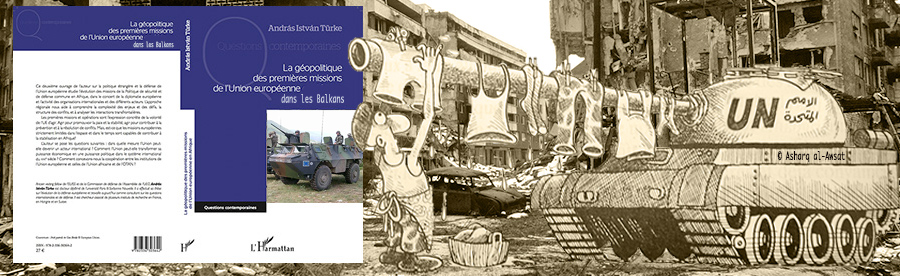
We are looking for sponsors for the English translation of these books, please contact turkeandras(at)gmail(dot)com