
You are here
Diplomacy & Defense Think Tank News
Aid for trade, political ties, and global value chains: a regime-dependent effect?
This paper investigates the impact of aid for trade (AfT) targeted at trade policies on the participation of recipient countries in global value chains (GVCs), and how this impact varies with their prevailing political regimes. In democratic countries, the need for the authorities to account for the interests of various stakeholders (e.g., lobbies, trade unions) can compromise the allocation, use, and effectiveness of AfT. In contrast, less democratic regimes are typically more insulated from political pressures, which may lead to more effective outcomes of aid. At the same time, integration into some complex GVCs requires efficient and democratic institutions, to which these products are sensitive. Employing a sample of 110 countries and data covering 2002-2018, we control for standard determinants of GVC participation, while examining the effect of AfT and the moderating role of the political regime in place. Our estimation addresses the endogeneity of aid through an appropriate instrumentation strategy. Our results suggest that the effect of AfT is mostly positive in autocratic regimes, indicating more effective trade policy reforms. When we account for regional disparities, we find evidence that AfT for trade policy is also impactful in some democratic regimes. This might suggest that the efficacy of AfT is not strictly regime-dependent, but hinges on the government’s commitment to carry out significant reforms leading to greater participation in the global economy.
Categories: Diplomacy & Defense Think Tank News, Swiss News
Aid for trade, political ties, and global value chains: a regime-dependent effect?
This paper investigates the impact of aid for trade (AfT) targeted at trade policies on the participation of recipient countries in global value chains (GVCs), and how this impact varies with their prevailing political regimes. In democratic countries, the need for the authorities to account for the interests of various stakeholders (e.g., lobbies, trade unions) can compromise the allocation, use, and effectiveness of AfT. In contrast, less democratic regimes are typically more insulated from political pressures, which may lead to more effective outcomes of aid. At the same time, integration into some complex GVCs requires efficient and democratic institutions, to which these products are sensitive. Employing a sample of 110 countries and data covering 2002-2018, we control for standard determinants of GVC participation, while examining the effect of AfT and the moderating role of the political regime in place. Our estimation addresses the endogeneity of aid through an appropriate instrumentation strategy. Our results suggest that the effect of AfT is mostly positive in autocratic regimes, indicating more effective trade policy reforms. When we account for regional disparities, we find evidence that AfT for trade policy is also impactful in some democratic regimes. This might suggest that the efficacy of AfT is not strictly regime-dependent, but hinges on the government’s commitment to carry out significant reforms leading to greater participation in the global economy.
Categories: Diplomacy & Defense Think Tank News, Swiss News
Aid for trade, political ties, and global value chains: a regime-dependent effect?
This paper investigates the impact of aid for trade (AfT) targeted at trade policies on the participation of recipient countries in global value chains (GVCs), and how this impact varies with their prevailing political regimes. In democratic countries, the need for the authorities to account for the interests of various stakeholders (e.g., lobbies, trade unions) can compromise the allocation, use, and effectiveness of AfT. In contrast, less democratic regimes are typically more insulated from political pressures, which may lead to more effective outcomes of aid. At the same time, integration into some complex GVCs requires efficient and democratic institutions, to which these products are sensitive. Employing a sample of 110 countries and data covering 2002-2018, we control for standard determinants of GVC participation, while examining the effect of AfT and the moderating role of the political regime in place. Our estimation addresses the endogeneity of aid through an appropriate instrumentation strategy. Our results suggest that the effect of AfT is mostly positive in autocratic regimes, indicating more effective trade policy reforms. When we account for regional disparities, we find evidence that AfT for trade policy is also impactful in some democratic regimes. This might suggest that the efficacy of AfT is not strictly regime-dependent, but hinges on the government’s commitment to carry out significant reforms leading to greater participation in the global economy.
Categories: Diplomacy & Defense Think Tank News, Swiss News
From anticolonial heroes to post-independence liabilities: morphing refugee categorizations in African geopolitics
Many colonies in Africa attained independence through negotiated settlements. However, several others engaged in armed liberation struggles, for example, Kenya, Namibia, South Africa, Southern Rhodesia (Zimbabwe), and the Portuguese colonies of Angola, Cape Verde, Guinea Bissau, Mozambique, and São Tomé and Príncipe. Newly independent states provided liberation movements with bases on their territories and political, military, intellectual, ideological, material, and moral support. In West Africa, Ghana’s first president, Kwame Nkrumah, a notable pan-Africanist, declared in his Independence Day speech in 1957, “Our independence is meaningless unless it is linked up with the total liberation of the African continent.” In East Africa, Julius Nyerere and Jomo Kenyatta, the first presidents of independent Tanzania and Kenya respectively, showed similar commitment to Pan-Africanism and anticolonialism by hosting refugees fleeing armed struggles in Southern Africa. Tanzania hosted the Organization of African Unity Liberation Committee supported anticolonial resistance and liberation movements. President Nyerere supported them for “challenging injustices of empire and apartheid” and declared, “I train freedom fighters”. He encouraged Tanzanians living around liberation movement camps to welcome these movements and their freedom fighters and also protect them from agents of colonial governments. Support also came from many other countries on the continent including Nigeria, Ethiopia, and Algeria. The latter provided sanctuary to representatives of liberation movements such as Nelson Mandela of the African National Congress (ANC) in South Africa.
From anticolonial heroes to post-independence liabilities: morphing refugee categorizations in African geopolitics
Many colonies in Africa attained independence through negotiated settlements. However, several others engaged in armed liberation struggles, for example, Kenya, Namibia, South Africa, Southern Rhodesia (Zimbabwe), and the Portuguese colonies of Angola, Cape Verde, Guinea Bissau, Mozambique, and São Tomé and Príncipe. Newly independent states provided liberation movements with bases on their territories and political, military, intellectual, ideological, material, and moral support. In West Africa, Ghana’s first president, Kwame Nkrumah, a notable pan-Africanist, declared in his Independence Day speech in 1957, “Our independence is meaningless unless it is linked up with the total liberation of the African continent.” In East Africa, Julius Nyerere and Jomo Kenyatta, the first presidents of independent Tanzania and Kenya respectively, showed similar commitment to Pan-Africanism and anticolonialism by hosting refugees fleeing armed struggles in Southern Africa. Tanzania hosted the Organization of African Unity Liberation Committee supported anticolonial resistance and liberation movements. President Nyerere supported them for “challenging injustices of empire and apartheid” and declared, “I train freedom fighters”. He encouraged Tanzanians living around liberation movement camps to welcome these movements and their freedom fighters and also protect them from agents of colonial governments. Support also came from many other countries on the continent including Nigeria, Ethiopia, and Algeria. The latter provided sanctuary to representatives of liberation movements such as Nelson Mandela of the African National Congress (ANC) in South Africa.
From anticolonial heroes to post-independence liabilities: morphing refugee categorizations in African geopolitics
Many colonies in Africa attained independence through negotiated settlements. However, several others engaged in armed liberation struggles, for example, Kenya, Namibia, South Africa, Southern Rhodesia (Zimbabwe), and the Portuguese colonies of Angola, Cape Verde, Guinea Bissau, Mozambique, and São Tomé and Príncipe. Newly independent states provided liberation movements with bases on their territories and political, military, intellectual, ideological, material, and moral support. In West Africa, Ghana’s first president, Kwame Nkrumah, a notable pan-Africanist, declared in his Independence Day speech in 1957, “Our independence is meaningless unless it is linked up with the total liberation of the African continent.” In East Africa, Julius Nyerere and Jomo Kenyatta, the first presidents of independent Tanzania and Kenya respectively, showed similar commitment to Pan-Africanism and anticolonialism by hosting refugees fleeing armed struggles in Southern Africa. Tanzania hosted the Organization of African Unity Liberation Committee supported anticolonial resistance and liberation movements. President Nyerere supported them for “challenging injustices of empire and apartheid” and declared, “I train freedom fighters”. He encouraged Tanzanians living around liberation movement camps to welcome these movements and their freedom fighters and also protect them from agents of colonial governments. Support also came from many other countries on the continent including Nigeria, Ethiopia, and Algeria. The latter provided sanctuary to representatives of liberation movements such as Nelson Mandela of the African National Congress (ANC) in South Africa.
Categories: Afrique, Diplomacy & Defense Think Tank News
Nur 67 Prozent des Tankrabatts werden an die Verbraucher*innen weitergegeben
Zwei Wochen nach Einführung des Tankrabatts zieht Wettbewerbsexperte Tomaso Duso, Leiter der Abteilung Unternehmen und Märkte im Deutschen Institut für Wirtschaftsforschung (DIW Berlin), Zwischenbilanz. Täglich verfolgt der Tankrabatt-Monitor des DIW Berlin die Preisentwicklung für Benzin und Diesel ...
Categories: Africa, Diplomacy & Defense Think Tank News
„Nur 67 Prozent des Tankrabatts werden an die Verbraucher*innen weitergegeben“
Zwei Wochen nach Einführung des Tankrabatts zieht Wettbewerbsexperte Tomaso Duso, Leiter der Abteilung Unternehmen und Märkte im Deutschen Institut für Wirtschaftsforschung (DIW Berlin), Zwischenbilanz. Täglich verfolgt der Tankrabatt-Monitor des DIW Berlin die Preisentwicklung für Benzin und Diesel an den Tankstellen.
Nach zwei Wochen Tankrabatt zeigt sich in unserem Tankrabatt-Monitor, dass nur rund zwei Drittel der Preissenkung von 16,7 Cent bei den Verbraucher*innen ankommen. Seit dem 1. Oktober sind die Preise in Deutschland im Durchschnitt um 10 bis 11 Cent je Liter stärker gesunken als in Frankreich, wo es keinen Rabatt gibt.
Noch deutlicher ist die Entwicklung über die Zeit. In den ersten Tagen sind die Preise um rund 12 Cent stärker gefallen als in Frankreich, beim Diesel um bis zu 13,6 Cent. Die Weitergabe ist über die Zeit kleiner geworden und liegt seit dem 8. Oktober bei durchschnittlich nur noch 9 Cent. Auch beim Tankrabatt im Frühjahr hat die sie mit der Zeit nachgelassen, damals allerdings erst gegen Ende.
Wie viel genau ankommt, hängt auch davon ab, welchen Tag vor dem Rabatt man als Referenzpunkt nimmt. Vergleicht man die Entwicklung mit dem 27. September statt mit dem 30. September, liegt die Weitergabe bei über 80 Prozent, da die Preise in Deutschland schon im September stärker gefallen sind als in Frankreich. An der Entwicklung seit dem 1. Oktober ändert der Vergleichstag aber nichts: Die Weitergabe nimmt ab.
Die Steuersenkung kommt zuerst bei Raffinerien und Großhändlern an. Ob sie weitergegeben wird, hängt vom Wettbewerb auf dieser Stufe ab. Und dort gibt es deutliche Hinweise, dass der Wettbewerb schwach ist. Das Bundeskartellamt sollte seine Untersuchungen auf der Raffinerie- und Großhandelsstufe konsequent fortführen, denn der dortige mangelnde Wettbewerb ist nicht nur in Zeiten des Tankrabatts ein Problem.
Categories: Africa, Diplomacy & Defense Think Tank News
Wer sagt im Krimi um den Fall Fischer die Wahrheit?
Ein teurer Bericht, ein kurzes Telefonat und zwei Aussagen, die sich ausschliessen. In der Affäre Fischer gerät SIHF-CEO Martin Baumann in den Fokus.
Categories: Diplomacy & Defense Think Tank News, Swiss News
Artificial intelligence and inequality
This study examines the relationship between artificial intelligence and income and wealth inequality, combining theoretical analysis with empirical investigation. It focuses on skill demand, wage polarization, capital and market concentration, the digital divide and financial applications. The findings show that AI accelerates existing inequality when its adoption combines with unequal distributions of skills and economic power. This relationship depends on the institutional framework. Digital inclusion, social protection, skill development and economic policy interventions can help distribute the benefits of technological change more broadly and fairly.
Read here (in Greek) the Working paper by Manthos Delis, Professor; Audencia Business School; Sofia Anyfantaki, Senior Economist, European Central Bank; Maria Iosifidi, Associate Professor, Montpellier Business School and Nikolaos Mylonidis, Professor, University of Ioannina.
Categories: Diplomacy & Defense Think Tank News, Swiss News
Rente an Inflation zu koppeln hätte erhebliche Nachteile
Würden Renten künftig mit der Inflation statt mit den Löhnen steigen, fielen Rentenerhöhungen insgesamt deutlich niedriger aus – Rentner*innen mit niedrigen Einkommen und kürzerer Lebenserwartung könnten aber profitieren, wenn die Einstiegsrente deutlich erhöht und danach nur noch mit der Inflation ...
Categories: Défense, Diplomacy & Defense Think Tank News
Wie gut kennst du dich mit den Finnen aus?
Wie gut kennst du die Finnen in der National League? Beweise es im Quiz.
Categories: Diplomacy & Defense Think Tank News, Swiss News
Social cohesion and climate-driven planned relocation in urban settlements: evidence from Suva, Fiji
Planned relocation, the process of moving a community from one area of residence to a new one in response to an environmental risk or threat, is an important option for climate change adaptation. Given the acute climate and environmental risks facing them, small island developing states (SIDS) have taken a leading role in developing policies and processes for planned relocation in response to these risks. This policy brief will look at how planned relocation works as an adaptation strategy in informal urban settlements and will examine the role of social cohesion in planned relocation processes. Fiji has become a regional leader in planned relocation policy, with the Human Mobility in Climate Change Contexts (HMCCC) project serving as a magnifier of Fiji’s existing expertise in planned relocation. Since 2017, the Fijian government and civil society in cooperation with the German and New Zealand governments have developed planned relocation standard operating procedures (SOPs) for helping villages in high-risk areas navigate the physical, cultural, social and economic costs of relocating to higher ground or a safer location. These SOPs have become a “gold standard” for other countries to learn from and emulate in their own planned relocation policies.
The next step that the government is starting to undertake involves adapting the SOPs to informal urban settlements that are facing climate and environmental risks. Fiji’s informal urban settlements have faced a number of social, political and economic challenges over the years. These include serious issues with crime, land insecurity and historical political exclusion. Thus, along with the threats that come with climate change, particularly sea-level rise and flooding, any planned relocation policy for informal urban settlements has to simultaneously address trust in institutions, cooperation for the common good, and inclusive identity. The historical case of the Bainiose being relocated from central Suva to a suburb of Suva in the late 1990s offers guidance on how this can be done.
Key policy messages
- Planned relocation for communities in urban settings requires long-term planning for services such as new public transportation connections, schools, secure land tenure and health facilities.
- Measures should be taken to build institutional trust with urban communities, who may lack the traditional mechanisms of chiefly or customary representation that is present in rural settings.
- Community identity is often strong and can be a starting point for policy-makers and communities to identify sustainable options for relocation.
Dr Anawaite Matadradra is a Lecturer at the University of the South Pacific.
Dr Sevanaia Sakai is a Senior Lecturer at the University of the South Pacific.
Unaisi Raileqe is a Project Officer at the Pacific Centre for Peacebuilding.
Dr Timothy Fadgen is a Senior Lecturer at the University of Auckland.
Categories: Diplomacy & Defense Think Tank News, Union européenne
Social cohesion and climate-driven planned relocation in urban settlements: evidence from Suva, Fiji
Planned relocation, the process of moving a community from one area of residence to a new one in response to an environmental risk or threat, is an important option for climate change adaptation. Given the acute climate and environmental risks facing them, small island developing states (SIDS) have taken a leading role in developing policies and processes for planned relocation in response to these risks. This policy brief will look at how planned relocation works as an adaptation strategy in informal urban settlements and will examine the role of social cohesion in planned relocation processes. Fiji has become a regional leader in planned relocation policy, with the Human Mobility in Climate Change Contexts (HMCCC) project serving as a magnifier of Fiji’s existing expertise in planned relocation. Since 2017, the Fijian government and civil society in cooperation with the German and New Zealand governments have developed planned relocation standard operating procedures (SOPs) for helping villages in high-risk areas navigate the physical, cultural, social and economic costs of relocating to higher ground or a safer location. These SOPs have become a “gold standard” for other countries to learn from and emulate in their own planned relocation policies.
The next step that the government is starting to undertake involves adapting the SOPs to informal urban settlements that are facing climate and environmental risks. Fiji’s informal urban settlements have faced a number of social, political and economic challenges over the years. These include serious issues with crime, land insecurity and historical political exclusion. Thus, along with the threats that come with climate change, particularly sea-level rise and flooding, any planned relocation policy for informal urban settlements has to simultaneously address trust in institutions, cooperation for the common good, and inclusive identity. The historical case of the Bainiose being relocated from central Suva to a suburb of Suva in the late 1990s offers guidance on how this can be done.
Key policy messages
- Planned relocation for communities in urban settings requires long-term planning for services such as new public transportation connections, schools, secure land tenure and health facilities.
- Measures should be taken to build institutional trust with urban communities, who may lack the traditional mechanisms of chiefly or customary representation that is present in rural settings.
- Community identity is often strong and can be a starting point for policy-makers and communities to identify sustainable options for relocation.
Dr Anawaite Matadradra is a Lecturer at the University of the South Pacific.
Dr Sevanaia Sakai is a Senior Lecturer at the University of the South Pacific.
Unaisi Raileqe is a Project Officer at the Pacific Centre for Peacebuilding.
Dr Timothy Fadgen is a Senior Lecturer at the University of Auckland.
Categories: Diplomacy & Defense Think Tank News, European Union
Social cohesion and climate-driven planned relocation in urban settlements: evidence from Suva, Fiji
Planned relocation, the process of moving a community from one area of residence to a new one in response to an environmental risk or threat, is an important option for climate change adaptation. Given the acute climate and environmental risks facing them, small island developing states (SIDS) have taken a leading role in developing policies and processes for planned relocation in response to these risks. This policy brief will look at how planned relocation works as an adaptation strategy in informal urban settlements and will examine the role of social cohesion in planned relocation processes. Fiji has become a regional leader in planned relocation policy, with the Human Mobility in Climate Change Contexts (HMCCC) project serving as a magnifier of Fiji’s existing expertise in planned relocation. Since 2017, the Fijian government and civil society in cooperation with the German and New Zealand governments have developed planned relocation standard operating procedures (SOPs) for helping villages in high-risk areas navigate the physical, cultural, social and economic costs of relocating to higher ground or a safer location. These SOPs have become a “gold standard” for other countries to learn from and emulate in their own planned relocation policies.
The next step that the government is starting to undertake involves adapting the SOPs to informal urban settlements that are facing climate and environmental risks. Fiji’s informal urban settlements have faced a number of social, political and economic challenges over the years. These include serious issues with crime, land insecurity and historical political exclusion. Thus, along with the threats that come with climate change, particularly sea-level rise and flooding, any planned relocation policy for informal urban settlements has to simultaneously address trust in institutions, cooperation for the common good, and inclusive identity. The historical case of the Bainiose being relocated from central Suva to a suburb of Suva in the late 1990s offers guidance on how this can be done.
Key policy messages
- Planned relocation for communities in urban settings requires long-term planning for services such as new public transportation connections, schools, secure land tenure and health facilities.
- Measures should be taken to build institutional trust with urban communities, who may lack the traditional mechanisms of chiefly or customary representation that is present in rural settings.
- Community identity is often strong and can be a starting point for policy-makers and communities to identify sustainable options for relocation.
Dr Anawaite Matadradra is a Lecturer at the University of the South Pacific.
Dr Sevanaia Sakai is a Senior Lecturer at the University of the South Pacific.
Unaisi Raileqe is a Project Officer at the Pacific Centre for Peacebuilding.
Dr Timothy Fadgen is a Senior Lecturer at the University of Auckland.
Categories: Diplomacy & Defense Think Tank News, European Union
Chasing the trillions: what MDB lending can - and cannot - mobilise
This paper examines how additional private financial resources can be mobilised through the use of multilateral development bank (MDB) funds. It focuses on identifying the leverage potential of different financing instruments, improving their mobilisation efficiency, and examining how greater leverage can promote development outcomes while safeguarding the financial sustainability of MDBs. Its contribution is a comparative synthesis that brings together mobilisation mechanisms, differences in the public resources and risks underlying leverage ratios, and development impact. The analysis covers six categories: debt instruments, equity instruments, risk-transfer instruments, guarantees, advisory services and policy-based lending. It compares their characteristics, including the level of intervention, mobilisation mechanisms, constraints addressed and time horizons. It also distinguishes transaction-level private direct and indirect mobilisation from broader catalytic effects arising through market development, institutional strengthening and policy reforms.
The comparison shows why instruments cannot be assessed by a single leverage ratio. MDB lending, guarantee exposure and expenditure on advisory services represent different commitments of public resources and risk. Similarly, private finance linked to a transaction cannot be measured in the same way as subsequent investment enabled by policy reform. Available evidence therefore indicates differences in mobilisation potential rather than an established empirical ranking of instruments. The paper argues that leveraging efficiency can be increased by moving to more powerful approaches and by better targeting instruments to binding investment constraints. It examines how this can enhance the development impact and financial viability of MDB/DFI portfolios through two channels: a financial/portfolio efficiency channel and a development/catalytic channel. However, a high leverage ratio does not necessarily indicate superior performance. It may reflect investment in easier markets, weak additionality or an understatement of public risk. Conversely, a lower ratio may be consistent with greater additionality in a fragile market or pioneering sector. These findings highlight the importance of assessing leverage alongside additionality, development impact and financial sustainability. Using concessional funds through blended finance instruments can be costly and can reduce the resources available for other development priorities.
Therefore, the development finance institutions (DFIs) must strictly apply the additionality principle and further operationalise the principle of using minimum concessionality. If interpreted too generously, there is a risk of creating leverage without sufficient development impact. The paper provides specific recommendations for refining the use of financing instruments and integrating transaction-level support into a broader market-shaping approach that draws on the strengths of policy-based lending and technical assistance. Higher leverage should not be pursued as an end in itself; its value depends on its contribution to additional development impact.
Dr Jürgen Karl Zattler is a distinguished non-resident fellow at the Center for Global Development in Washington, DC and a non-resident research fellow at the German Institute of Development and Sustainability (IDOS) in Bonn. Until October 2023, he was Director General at the German Ministry for Economic Cooperation and Development (BMZ). Prior to that, he served as the Executive Director representing Germany at the World Bank.
Categories: Diplomacy & Defense Think Tank News, Union européenne
Chasing the trillions: what MDB lending can - and cannot - mobilise
This paper examines how additional private financial resources can be mobilised through the use of multilateral development bank (MDB) funds. It focuses on identifying the leverage potential of different financing instruments, improving their mobilisation efficiency, and examining how greater leverage can promote development outcomes while safeguarding the financial sustainability of MDBs. Its contribution is a comparative synthesis that brings together mobilisation mechanisms, differences in the public resources and risks underlying leverage ratios, and development impact. The analysis covers six categories: debt instruments, equity instruments, risk-transfer instruments, guarantees, advisory services and policy-based lending. It compares their characteristics, including the level of intervention, mobilisation mechanisms, constraints addressed and time horizons. It also distinguishes transaction-level private direct and indirect mobilisation from broader catalytic effects arising through market development, institutional strengthening and policy reforms.
The comparison shows why instruments cannot be assessed by a single leverage ratio. MDB lending, guarantee exposure and expenditure on advisory services represent different commitments of public resources and risk. Similarly, private finance linked to a transaction cannot be measured in the same way as subsequent investment enabled by policy reform. Available evidence therefore indicates differences in mobilisation potential rather than an established empirical ranking of instruments. The paper argues that leveraging efficiency can be increased by moving to more powerful approaches and by better targeting instruments to binding investment constraints. It examines how this can enhance the development impact and financial viability of MDB/DFI portfolios through two channels: a financial/portfolio efficiency channel and a development/catalytic channel. However, a high leverage ratio does not necessarily indicate superior performance. It may reflect investment in easier markets, weak additionality or an understatement of public risk. Conversely, a lower ratio may be consistent with greater additionality in a fragile market or pioneering sector. These findings highlight the importance of assessing leverage alongside additionality, development impact and financial sustainability. Using concessional funds through blended finance instruments can be costly and can reduce the resources available for other development priorities.
Therefore, the development finance institutions (DFIs) must strictly apply the additionality principle and further operationalise the principle of using minimum concessionality. If interpreted too generously, there is a risk of creating leverage without sufficient development impact. The paper provides specific recommendations for refining the use of financing instruments and integrating transaction-level support into a broader market-shaping approach that draws on the strengths of policy-based lending and technical assistance. Higher leverage should not be pursued as an end in itself; its value depends on its contribution to additional development impact.
Dr Jürgen Karl Zattler is a distinguished non-resident fellow at the Center for Global Development in Washington, DC and a non-resident research fellow at the German Institute of Development and Sustainability (IDOS) in Bonn. Until October 2023, he was Director General at the German Ministry for Economic Cooperation and Development (BMZ). Prior to that, he served as the Executive Director representing Germany at the World Bank.
Categories: Diplomacy & Defense Think Tank News, European Union
Chasing the trillions: what MDB lending can - and cannot - mobilise
This paper examines how additional private financial resources can be mobilised through the use of multilateral development bank (MDB) funds. It focuses on identifying the leverage potential of different financing instruments, improving their mobilisation efficiency, and examining how greater leverage can promote development outcomes while safeguarding the financial sustainability of MDBs. Its contribution is a comparative synthesis that brings together mobilisation mechanisms, differences in the public resources and risks underlying leverage ratios, and development impact. The analysis covers six categories: debt instruments, equity instruments, risk-transfer instruments, guarantees, advisory services and policy-based lending. It compares their characteristics, including the level of intervention, mobilisation mechanisms, constraints addressed and time horizons. It also distinguishes transaction-level private direct and indirect mobilisation from broader catalytic effects arising through market development, institutional strengthening and policy reforms.
The comparison shows why instruments cannot be assessed by a single leverage ratio. MDB lending, guarantee exposure and expenditure on advisory services represent different commitments of public resources and risk. Similarly, private finance linked to a transaction cannot be measured in the same way as subsequent investment enabled by policy reform. Available evidence therefore indicates differences in mobilisation potential rather than an established empirical ranking of instruments. The paper argues that leveraging efficiency can be increased by moving to more powerful approaches and by better targeting instruments to binding investment constraints. It examines how this can enhance the development impact and financial viability of MDB/DFI portfolios through two channels: a financial/portfolio efficiency channel and a development/catalytic channel. However, a high leverage ratio does not necessarily indicate superior performance. It may reflect investment in easier markets, weak additionality or an understatement of public risk. Conversely, a lower ratio may be consistent with greater additionality in a fragile market or pioneering sector. These findings highlight the importance of assessing leverage alongside additionality, development impact and financial sustainability. Using concessional funds through blended finance instruments can be costly and can reduce the resources available for other development priorities.
Therefore, the development finance institutions (DFIs) must strictly apply the additionality principle and further operationalise the principle of using minimum concessionality. If interpreted too generously, there is a risk of creating leverage without sufficient development impact. The paper provides specific recommendations for refining the use of financing instruments and integrating transaction-level support into a broader market-shaping approach that draws on the strengths of policy-based lending and technical assistance. Higher leverage should not be pursued as an end in itself; its value depends on its contribution to additional development impact.
Dr Jürgen Karl Zattler is a distinguished non-resident fellow at the Center for Global Development in Washington, DC and a non-resident research fellow at the German Institute of Development and Sustainability (IDOS) in Bonn. Until October 2023, he was Director General at the German Ministry for Economic Cooperation and Development (BMZ). Prior to that, he served as the Executive Director representing Germany at the World Bank.
Categories: Diplomacy & Defense Think Tank News, European Union
Eine faire Pflegefinanzierung ist möglich
Die Regierung will das Finanzloch der Pflegeversicherung durch höhere Beiträge stopfen. Dabei gäbe es gerechtere Wege – echte Solidarität und hohe Vermögen ranziehen., Die Reform der gesetzlichen Pflegeversicherung ist dringend notwendig: Die Zahl der Pflegebedürftigen in Deutschland hat sich in den vergangenen 20 Jahren auf inzwischen mehr als sechs Millionen Menschen verdreifacht. Ohne Gegenmaßnahmen droht der Pflegeversicherung bereits 2028 eine ...
Categories: Diplomacy & Defense Think Tank News, Europäische Union
Pages
the old site is here


© 2012-2015 Europa Varietas Foundation © 2015-2020 Europa Varietas Association
www.europavarietas.org | info(@)europavarietas(dot)org | Switzerland
This is a GDPR ready site


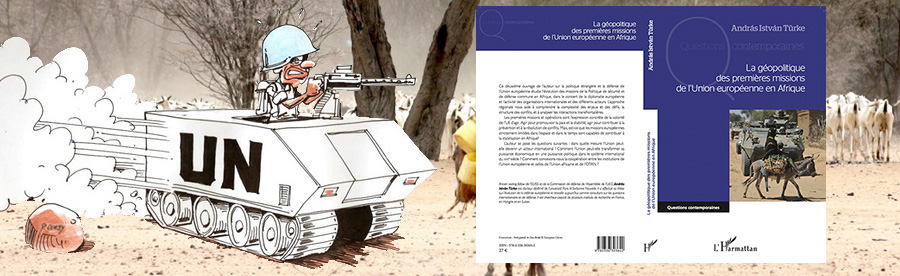
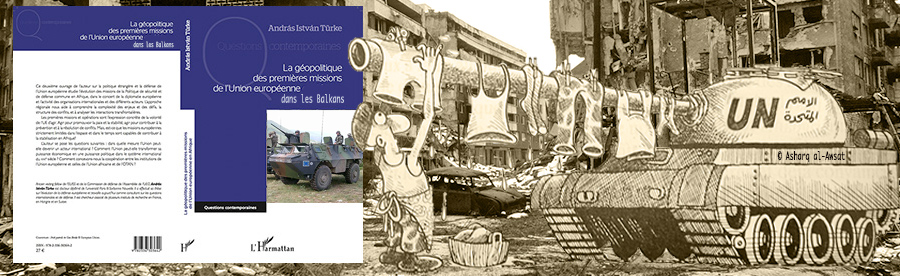
We are looking for sponsors for the English translation of these books, please contact turkeandras(at)gmail(dot)com