
You are here
Africa
Group of 20 graduates rescued after being abducted in Nigeria
The group was kidnapped earlier this month while travelling for a community service programme
Categories: Africa, European Union
Eritrean troops move deep into Ethiopia's Tigray region as fighting escalates
Residents of Adigrat tell the BBC they have seen truck loads of soldiers from Eritrea moving south.
Categories: Africa, European Union
«Ich vermisse meinen Sohn so sehr»
Noch ermittelt die Kantonspolizei zur Brandursache von Oberwinterthur. Jetzt ist klar, bei der aufgefundenen toten Person handelt es sich um Musikproduzent Marco Heer.
Categories: Africa, Swiss News
Comment les habitants d'un kibboutz israélien dévasté par les attaques du Hamas du 7 octobre tentent de reconstruire leur vie
Trois ans après l'attaque de Nir Oz, au cours de laquelle 47 personnes ont été tuées et 76 prises en otage, certains survivants sont retournés y vivre.
Ten people linked to Kenya's first-ever Ebola case quarantined as screening concerns grow
The patient passed through multiple cities in DR Congo, drove to Uganda and eventually flew to Kenya.
Categories: Africa, Swiss News
Press release - Parliament approves EU aid for workers in Belgium, Spain and Finland
On Wednesday, MEPs gave the greenlight to disburse €6.91 million to help workers laid off in Belgium, Spain and Finland find new jobs.
Committee on Budgets
Source : © European Union, 2026 - EP
Committee on Budgets
Source : © European Union, 2026 - EP
Categories: Africa, European Union
Kenya must be 'clean' to be credible, says Wada chief
Wada president Witold Banka says Kenya must strengthen testing, investigations and anti-doping enforcement before hosting the 2029 World Athletics Championships.
Categories: Africa, Swiss News
Kenya must be 'clean' to be credible, says Wada chief
Wada president Witold Banka says Kenya must strengthen testing, investigations and anti-doping enforcement before hosting the 2029 World Athletics Championships.
Categories: Africa, Swiss News
Press release - MEPs reiterate their call for an ambitious 2028-2034 EU budget
On Wednesday morning, MEPs with Commission and Council representatives debated the latest developments in the negotiations on the EU’s next multiannual financial framework (MFF).
Committee on Budgets
Source : © European Union, 2026 - EP
Committee on Budgets
Source : © European Union, 2026 - EP
Categories: Africa, European Union
Ukrainian Groups Urge WHO to Act on Torture of Captives by Russian Medical Staff
The effects of torture and ill-treatment seen on Oleksandr Savov, a Ukrainian marine who took part in the defence of Mariupol after his release from Russian captivity. Credit: Anastasiia Savova
By Ed Holt
BRATISLAVA, Oct 7 2026 (IPS)
More than 60 Ukrainian organisations have issued an appeal to the World Health Organisation (WHO) to help stop the torture of Ukrainians held in Russian captivity.
Ahead of International Doctors’ Day on October 5, the groups, including the Nobel Peace Prize-winning organisation the Centre for Civil Liberties (CCL), issued an appeal to the WHO, calling on it to draw international attention to systematic violations of the right to medical care for Ukrainian prisoners of war (POWs) and civilians illegally detained by Russian forces.
The appeal follows the release of a report, ‘Anatomy of Torture: Testimonies on Torture and Ill-Treatment by Medical Personnel in Russian Captivity’, by Ukrainian NGOs, including testimonies from released POWs and illegally detained civilians, which its authors say points to, among others, the systemic denial of medical care to detainees and the direct participation of medical staff in their torture and ill-treatment. In some cases this has resulted in the deaths of POWs and detained civilians.
The groups behind the appeal believe it will increase public awareness of the treatment of detained Ukrainians and put pressure on international organisations to take concrete action to stop it.
“It is important to draw attention to the fact that the denial of medical care and the involvement of medical personnel in cruel treatment are not isolated incidents but form a systemic problem. We expect international organisations not only to respond with statements but also to take concrete action,” Nataliia Yashchuk, Senior War Consequences Officer at CCL, which co-produced the Anatomy of Torture report, told IPS.
Since the start of Russia’s full-scale invasion more than four and a half years ago, there have been repeated reports of ill-treatment of POWs and civilians held in Russian detention facilities, including some that allege war crimes and crimes against humanity committed against detainees.
But the Anatomy of Torture report documents specifically how Ukrainians held in Russian penal institutes have been, and continue to be, victims of torture by medical staff.
Yashchuk told IPS that the group’s systematic analysis of dozens of testimonies demonstrated that these were not isolated incidents but instead a recurring pattern of behaviour by medical personnel in different detention centres, suggesting it was a systematic practice.
This is backed up by the fact that some of those who provided testimonies for the report were doctors and medics themselves and therefore especially qualified to identify the deliberate and systematic nature of the ill-treatment they suffered, its authors say.
“Our objective [with the report] was…to demonstrate the systemic nature of the problem,” Yashchuk said.
The report includes testimony from former Ukrainian prisoners of war (POWs) who were subjected to torture by doctors and nurses at facilities – CCL estimates there are up to 300 locations where Ukrainians are being held – across Russian-occupied territories and Russia itself.
The abuse included not just denial of healthcare but also beatings, electric shocks, death threats from medical staff, and being forced to stand in one spot for 16 hours and being made to beg for help before being tortured again.
Sergii Doroshenko, a former paediatrician who was serving as head of an army medical unit when he was captured by Russian forces in Mariupol in spring 2022, spent 1030 days in captivity at various detention centres across Russia.
He told IPS he was held in inhumane conditions in detention centres where medical supplies or personnel were sometimes non-existent, and any request for medical help was met with refusal. At others he and any other medical personnel detained were allowed to help their own wounded, but only using whatever they could scavenge themselves, such as any bandages, tourniquets, or other materials they happened to have.
Doroshenko said that in one penal facility where only unpurified water was available to prisoners, 800 people had intestinal illnesses at the same time. He and others used stripped bark from prison grounds, which they then brewed into a drink to slow down or curb such outbreaks.
“There were episodes when people lost consciousness from dehydration and received no treatment, because there were no medicines at all,” he said.
He also describes how at another detention centre when he and others sought medical help, “instead of pills, we were treated with electric shocks …it was the treatment for everything — for toothache, for injuries from beatings, for joint pain, for fever, for coughing.”
Meanwhile, in some cases medical personnel actively participated in torture.
He said his worst experience was during his last year of captivity when he was sent to a correctional colony in the Republic of Mordovia in the Russian Federation.
“There, the doctor personally took part in the torture and was perhaps the cruellest of all the staff at that colony,” said Doroshenko. He was nicknamed “Doctor Death” because after his torture sessions, several people had to undergo surgical operations.
“There was also the deliberate withholding of medical care by medical staff. Even when they saw that we had temperatures of 39–40°C, when people had a fever and fell into a kind of intermediate state between consciousness and unconsciousness, even then, they did not permit any treatment, not even a rest from the torture.
“For example, from my own experience, I had a very high fever, and for about four or five days I sought help daily, and in response received beatings and electric shocks, but my condition was so bad that a rash covered my entire body, from my face to my heels, and afterward I had peeling, shedding skin… I never received a single pill, not a single antipyretic treatment — nothing but beatings,” said Doroshenko.
He added that Russian propaganda intentionally demonised medics, which made prisoners like him a special target for torture.
Meanwhile, his presence in captivity was officially confirmed only two and a half years after his capture. Groups like Amnesty International have pointed out that POWs have been deliberately cut off from the outside world, often for years, and a lack of transparency over their whereabouts has allowed for their torture and even unlawful killings to continue with total impunity.
“The Russian Federation only officially confirmed my presence in captivity after two and a half years. Before that, they did not officially acknowledge that I was their prisoner, meaning that if I had been killed or tortured to death somewhere, they would bear no responsibility for it,” said Doroshenko.
“Only about six months before my release did they confirm that they indeed held a certain Sergii Doroshenko in captivity, and thereafter, the frequency of torture decreased significantly, the beatings decreased significantly — they started, so to speak, to take a bit of care of us, fearing that we might die from the torture,” he added.
Other groups have also documented incidents of torture of Ukrainians by Russian medical staff.
A report released late last year by Human Rights Watch (HRW) suggested medical personnel enabled or were apparently complicit in torture, staff at the group told IPS.
Yulia Gorbunova, associate director for Ukraine at HRW, told IPS that the report’s findings and ongoing monitoring showed incidents of Ukrainian POWs being denied basic treatment and pain management at detention facilities in Russia and Russia-occupied areas of Ukraine despite suffering from severe combat wounds or after being injured during interrogations.
“From the moment of capture and throughout their detention, former POWs described medical care at every stage as inadequate, often abusive, and routinely withheld or delayed. Treatment for combat wounds, torture injuries, or contagious diseases like tuberculosis and scabies was typically restricted to basic antiseptics or mild painkillers.
“In addition, these facilities are operated under conditions that actively degrade physical health. Ukrainian detainees (POWs and civilians) endure severe overcrowding, chronic starvation, unsanitary conditions, and a lack of clean water, leading to rapid physical deterioration and untreated health issues,” she said.
Another recent report by Ukrainian NGOs included similar findings.
Russian authorities have repeatedly denied that any Ukrainian POWs or civilians it holds are subject to ill treatment or torture.
However, reporting from the Office of the United Nations High Commissioner for Human Rights (OHCHR) and the Independent International Commission of Inquiry on Ukraine, among others, has shown that Russia has consistently refused to grant independent monitors access to POW detention sites.
This means that there are no official records of injuries and illnesses resulting from the ill-treatment and torture of detainees.
The Anatomy of Torture report includes an analysis documenting how the reported treatment of detainees by Russian medical staff is a violation of not just international rights treaties such as the Geneva Conventions but also the World Medical Association’s International Code of Medical Ethics.
When IPS contacted them, WHO officials were not available to speak about the Ukrainian organisations’ appeal.
A spokesperson for the ICRC did not comment on the specific allegations in the Anatomy of Torture report but said the group was “concerned by any reports of ill-treatment of those in captivity or detention.”
“Under international humanitarian law, all people deprived of liberty, be they combatants or civilians, must be treated humanely. Care for their life, dignity and wellbeing is paramount. The 1949 Geneva Conventions contain specific rules governing conditions of detention, including access to proper hygiene standards and medical care and treatment. In all cases, the provision of medical care must comply with the applicable standards of medical ethics,” the spokesperson said.
Meanwhile, some victims of the torture and ill-treatment recorded in the report are speaking out to help bring those responsible to justice.
When Oleksandr Savov, a Ukrainian marine who took part in the defence of Mariupol, returned to his family after almost three years in various Russian detention centres, his daughter, Anastasiia, was glad to be reunited with her father but shocked at his physical state. She knew from his almost skeletal frame that he had suffered while in captivity.
She told IPS that when he had been captured, he had no injuries nor illnesses. But when he was released, he had tuberculosis, broken ribs, chronic ulcers, and lymphoedema. He was unable to straighten one leg and doctors told him he would need a knee replacement.
He also had mental health problems, including night terrors, panic attacks during air raids, and a paralyzing fear of silence or queues.
After seeing doctors and realising the full extent of his injuries he began to think about what had happened to him and fellow captives and the fact that it was medical staff who had inflicted such suffering.
“He couldn’t understand how doctors could be so cruel to other people,” Anastasiia said.
He told her what they had done to him, including not just refusing to provide medical care when he needed it, but torture with electric shocks.
Savov died of heart failure in November last year, eight months after he was released. He was 46. After his death, doctors in Ukraine found that his heart had been damaged following a heart attack he had suffered in captivity.
He spent his final months visiting hospitals and documenting his memories in a notebook for the International Criminal Court (ICC).
Anastasiia has since founded a community for the families of captive marines and continues to speak out in support of detained defenders and returning soldiers. She has also filed a complaint with the ICC over her father’s torture.
She says that, like her father, she believes that speaking out publicly forces Russia to ease conditions for those still detained.
She also says that she wants to see the people who tortured her father and others brought before a court and held accountable for their actions.
“These medical staff are part of a system of torture in these prisons because when people ask for medical help, for instance, like when my father did, they come, and they just laughed in their faces and recorded videos of them on their phones instead of helping them,” she said.
She added it is imperative investigations into these people take place, or “this torture and ill treatment won’t end.”
This was also her father’s wish before he died.
“After he was released from captivity, my father did a lot of interviews with journalists and human rights defenders, and once he was asked whether he felt anger towards the people who had tortured him. He said that at that moment, he felt nothing about them, but he wanted the torture to stop. The thought that those kinds of things were going on at the same time he was talking to those journalists really upset him. He couldn’t understand why there was no one in the whole world who could do anything about it,” she says.
Doroshenko said people involved in the torture of Ukrainian detainees should face “something like the Nuremberg trials”.
“The conduct of the doctors, the medical staff, and even ordinary guards at these penal facilities was a deliberate violation of the Geneva Convention and a deliberate use of torture, and therefore they should be subject, as war criminals, to judicial investigation and, following that, judicial punishment in accordance with the court’s decision. These are people who have lost their humanity, who have become beasts, and who have no right to be in society. A doctor has no right to torture others,” he said.
Some doctors allegedly involved in torture of Ukrainian captives have already been identified, and earlier this year the EU sanctioned Galina Mokshanova, the head of the medical unit of Penal Colony No. 10 in Udarny, Russia, for human rights violations.
Ensuring justice and accountability is vital not just for victims and their relatives, Yashchuk said.
“This research is about documenting crimes but also the urgent need for effective international mechanisms capable of saving the lives of those who remain in captivity,” she said.
IPS UN Bureau Report
Related Articles
Categories: Africa, Swiss News
Nigeria’s School Kidnapping Threat Is Changing: Four Lessons from the 56 Day Oyo Attack
Credit: Tosin Olowoleni
By Saheed Babajide Owonikoko
YOLA, Nigeria, Oct 7 2026 (IPS)
Following the mass abduction of 46 pupils and teachers in Oyo State, south-west Nigeria in 2026, the authorities attributed the attack to the Ansaru terrorist group. Key suspects were prosecuted and handed prison terms. But this was not the first time terrorist groups had engaged in mass abduction of school pupils in Nigeria. Peace and security researcher Saheed Babajide Owonikoko explains what factors could have motivated the Ansaru terror group to stage that attack and what lessons Nigeria should take away from the incident, which lasted 56 days.
What can Nigeria learn from the mass kidnap of school children in Oyo State?
The lessons can be deduced from the differences between the incident and others that have taken place in Nigeria.
The first striking difference is that northern Nigeria was previously the centre of kidnapping incidents in Nigeria. As of 1 June 2026, there had been 31 mass school kidnapping incidents involving over 2,530 people in Nigeria since the 2014 Chibok incidents.
Terrorists had struck before in south-western Nigeria. Also, criminal kidnappings on the highway had taken place, but not a mass school kidnapping. The Oyo State school kidnapping is the first in the southern parts of Nigeria. The lesson is that terrorism is expanding beyond the traditional areas known for activities of terrorist groups.
Another difference is that the victims included children as young as two years. Most previous Nigerian mass school abductions targeted older students.
The third is that it involved multiple schools. My contact in Ogbomosho said three schools were attacked.
This suggests the vulnerability of civilian populations and institutions in areas previously regarded as less exposed to terrorist kidnapping. The targeting of particular groups, especially schoolchildren and other populations whose abduction is likely to generate public pressure, also provides terrorists with a strategic advantage. Such attacks will be easy to execute by the group and can trigger public outrage, protests and demands for government action. They could put pressure on authorities to negotiate or make concessions.
Victims have now been “released” or “rescued”, most probably without concession to any of their demands, and some people linked to the incidents have been put on trial. But the ease with which the group carried out the attack exposes the vulnerability of the south-west and other non-traditional theatres of terrorist kidnapping to sudden attacks, particularly where security presence and response capacity remain limited.
Concentrating security in volatile areas may not be the solution, as terrorist groups will always take advantage of vulnerable areas.
What factors motivated this kidnap?
Criminal bandits and terrorists are responsible for most of the high-profile kidnapping incidents in Nigeria. However, while bandits kidnap mostly for money, terrorists mostly kidnap for more strategic reasons.
The 15 May 2026 armed attack against schools in Oriire Local Government of Oyo State, leading to the abduction of over 40 people, most of whom were pupils and teachers, was carried out by The Vanguard for the Protection of Muslims in Black Africa, popularly known as Ansaru. Since its breakaway from Boko Haram in 2013, Ansaru has acquired the trademark of being involved in high-profile kidnapping and hostage-taking, sometimes with the support of bandits.
Ansaru’s involvement in the Oyo State kidnapping was confirmed by the group’s demands. The group listed its demands as follows:
-
- • 1 billion naira to be paid to one account in the Benin Republic
-
- • the Oyo state government should release their members from prison
-
- • Toyota Hiluxes
- • concession of some Oyo state laws in favour of the bandits (land and sharia law).
The second item is particularly informative. In August 2025, Nuhu Ribadu, Nigeria’s national security adviser, announced the arrest of two key Ansaru leaders – Mahmud Muhammad Usman, the amir (leader) and Mahmud al-Nigeri, the deputy and chief of staff.
They are currently standing trial on terrorism charges. For a long time, Ansaru remained silent due to the leadership vacuum left as a result. Their strategic importance made the group stage the Oyo kidnapping incidents.
In one of my previous articles, I warned that, given the importance of these two leaders, they might attempt to secure their release through a prison break or resort to a high-profile kidnapping or hostage-taking operation, either in retaliation for their detention or as leverage to demand their release.
What makes the south-west vulnerable to these kinds of attacks?
The choice of Oyo State and the kidnapping of pupils are also strategic. Oyo State is vulnerable because of its proximity to the North Central and North East through savannah woodlands, wildlife reserves and riparian vegetation.
Movement from North Central and North West to the south may also be caused by low security expectations and reduced military pressure there.
A reduction in expertise due to the arrest of Mahmud Muhammad Usman and Mahmud al-Nigeri also affected Ansaru’s operational effectiveness in high-intensity security terrain, making the south more attractive.
Ansaru usually targets high-value civilians, including expatriates, well-to-do individuals and humanitarian workers. They kidnapped schoolchildren because of their vulnerability and also because it can spark public outrage that may force the government to give concessions.
Does this incident have any implications for the ongoing debate on state policing in Nigeria?
According to the government account, the rescue of the schoolchildren and their teachers was achieved through a prolonged, intelligence-led, multi-agency operation. Although the outcome shows state security institutions can mount a coordinated response, it raises questions about whether such resource-intensive operations can be sustained and replicated in similar incidents.
More fundamentally, the operation illustrates the reactive character of the response. Security agencies mobilised resources after the abduction rather than preventing the attack or detecting the threat earlier. This is where the debate over the state police is very important. One of the major problems with Nigeria’s security landscape is the centralisation of the security apparatus, leaving the federating units at the mercy of the federal government to deploy security forces.
To reduce the vulnerability of civilians everywhere in Nigeria, the police institution should be federalised. This will ensure that a minimum level of protection exists for everyone, wherever they live in Nigeria.
Saheed Babajide Owonikoko is Researcher, Centre for Peace and Security Studies, Modibbo Adama University of Technology
This story was originally published by The Conversation.
IPS UN Bureau
Categories: Africa, Swiss News
Le Bénin perd 3-0 face à l'Argentine
Les Guépards du Bénin se sont inclinés face à l'Argentine ce mercredi 7 octobre 2026, à l'occasion d'une rencontre amicale comptant pour la journée FIFA du mois d'octobre. Pour cette première confrontation historique avec l'Albiceleste, les Béninois ont résisté en première période avant de céder en seconde mi-temps.

Les Guépards du Bénin ont perdu face à l'Albiceleste ce mercredi 7 octobre 2026 par un score de 3 buts à 0.
La rencontre disputée dans un stade plein à craquer, a débuté sur un rythme soutenu. Bien en place et engagés dans les duels, les hommes de Gernot Rohr ont posé des difficultés à la sélection argentine. Malgré plusieurs séquences intéressantes, les Guépards ne sont pas parvenus à trouver la faille dans la défense adverse.
Face à eux, les Argentins ont également manqué d'efficacité au cours des 45 premières minutes. Le gardien béninois Marcel Dandjinou a contribué à maintenir son équipe dans la partie. À la pause, les deux sélections se sont séparées sur un score nul et vierge (0-0).
Du retour des vestiaires, l'Argentine a accéléré et pris progressivement le contrôle de la rencontre. Nicolas Otamendi a ouvert le score à la 48e minute, en reprenant un corner tiré par Lionel Messi.
À l'heure de jeu, Nico Paz a doublé la mise. Servi par Lionel Messi, le milieu argentin a enchaîné avec une frappe enroulée qui a permis à l'Albiceleste de faire le break.
Les Argentins ont ensuite obtenu un penalty à la 70e minute. Lionel Messi s'est chargé de l'exécution et a inscrit le troisième but de son équipe.
À la 75e minute, Marcel Dandjinou a quitté la pelouse. Le gardien béninois a cédé sa place à Saturnin Allagbé pour la suite de la rencontre.
Avant le démarrage du match, le capitaine des Guépards, Sessi d'Almeida, a remis à Lionel Messi un cadeau symbolique, une statuette de l'Amazone accompagnée d'une lettre.
Le Bénin a perdu la rencontre mais garde un beau souvenir de ce dernier match qui consacre la fin de carrière de la légende du football international.
F. A. A.
La lettre du Gouvernement du Bénin à Messi

Composition des deux équipes
Le sélectionneur des Guépards du Bénin, Gernot Rohr a dévoilé son Onze de départ pour affronter l'Argentine. Pour cette rencontre amicale, le technicien allemand a misé sur un système de 4, 4, 2.
Les Guépards du Bénin face à l'Argentine ce mercredi 7 octobre 2026. Pour aller à l'assaut de Lionel Messi et ses coéquipiers, Gernot Rohr a misé sur les compétences de Marcel Dandjinou dans les buts. A la défense, il a aligné les joueurs tels que Taminou Ouorou, Mohamed Tijani et Liam Omore pour assurer la solidité du bloc béninois.
Le milieu de terrain sera animé par Sessi d'Almeida, Hassane Imourane, et Yamirou Ouorou dans l'entrejeu.
Sur les côtés et dans les phases offensives, Rodolfo Aloko et Junior Olaïtan sont chargés d'apporter de la percussion. Aiyegun Tosin est positionné en pointe pour conduire les offensives béninoises.

Le Onze de départ des Guépards :
1. Marcel Dandjinou
2. Taminou Ouorou
3. Mohamed Tijani
4. Liam Omore
5. Sessi d'Almeida
6. Hassane Imourane
7. Yamirou Ouorou
8. Rodolfo Aloko
9. Junior Olaïtan
10. Aiyegun Tosin
Composition de l'équipe d'Argentine

110 millions FCFA d'équipements médicaux pour l'Alibori et l'Atacora
Les structures sanitaires des départements de l'Alibori et de l'Atacora disposent désormais de nouveaux équipements pour renforcer la prise en charge des patients et la réponse aux urgences de santé publique.
Du matériel médical d'une valeur de 192 412 dollars, soit environ 110 millions de FCFA, ont été remis ce mardi 6 octobre 2026 aux formations sanitaires des département de l'Alibori et de l'Atacora.
L'appui est porté par l'Ambassade du Japon au Bénin, avec le concours de l'Organisation mondiale de la Santé (OMS) au Bénin et du ministère de la Santé. Il vise notamment à renforcer les capacités des formations sanitaires dans ces deux départements.
Le matériel remis comprend des kits d'urgence, des équipements de laboratoire, du matériel destiné à la santé maternelle et nutritionnelle, des lits d'hospitalisation, des panneaux solaires ainsi que des équipements de transfusion sanguine.
Selon les partenaires, cet appui doit permettre d'améliorer la prévention, la détection et la prise en charge des urgences de santé publique, tout en contribuant à assurer la continuité des services essentiels dans les structures bénéficiaires.
L'initiative s'inscrit ainsi dans les efforts visant à rapprocher des populations de l'Alibori et de l'Atacora des services de santé mieux équipés.
M. M.
« Nous avons pu faire entendre notre voix » (Bio Tchané)
Le président du Conseil économique et social (CES) du Bénin revient de Bucarest, en Roumanie, avec un double sentiment de satisfaction et de responsabilité. Du 28 au 30 septembre 2026, Abdoulaye Bio Tchané a participé aux rencontres de l'Union des Conseils économiques et sociaux et Institutions similaires de l'espace francophone (UCESIF), notamment à son Assemblée générale et au Forum du dialogue social francophone.
Pour Abdoulaye Bio Tchané, la participation du CES du Bénin à l'Assemblée générale de l'Union des Conseils économiques et sociaux et Institutions similaires de l'espace francophone (UCESIF), constitue une expérience à la fois satisfaisante et porteuse de responsabilités. « Je viens de participer à cette réunion de l'UCESIF et j'en sors avec un sentiment de satisfaction et de responsabilité », explique-t-il.

Lors de cette réunion, le CES du Bénin a présenté ses positions sur les différents sujets inscrits à l'ordre du jour. « Nous avons pu au cours de cette réunion, faire entendre notre voix. Nous avons pu faire passer les points de vue du CES du Bénin sur chacun des points inscrits à l'ordre du jour », souligne le président du CES.
La rencontre de Bucarest a permis à M. Bio Tchané de mesurer l'ampleur des préoccupations communes aux institutions similaires de l'espace francophone. « On se rend bien compte que ces sujets auxquels nous sommes confrontés ici au Bénin sont des sujets aussi partagés par les autres, que ce soit d'autres Africains ou même d'autres membres de l'OIF comme la France, la Belgique », observe-t-il.
Selon Abdoulaye Bio Tchané, l'intérêt de ces rencontres réside également dans le partage d'expériences. « Moi, j'ai découvert autour de la table certains des collègues qui avaient des solutions pour des problèmes auxquels nous sommes confrontés ici », confie-t-il.
Au-delà des échanges entre institutions, le président du CES béninois insiste sur la responsabilité qui incombe aux Conseils économiques et sociaux. Ces institutions, rappelle-t-il, ont pour mission de porter les préoccupations et les opinions des populations dans les débats publics.
« Être une institution de consultation rend la responsabilité encore plus lourde, la rend plus utile pour nos compatriotes », soutient-il.

La paix comme condition du développement
Les recommandations issues de la rencontre de Bucarest, selon le président du CES, sont de deux ordres. Les premières sont générales et se rapportent au thème de la conférence, notamment au développement durable et à la contribution de la paix au développement. « La paix est importante pour le développement de nos différents pays, pour le développement du continent », affirme l'ancien ministre de l'économie et des finances.
Une conviction qu'il dit avoir retrouvée chez les différents participants à la rencontre. « Nous le voyons ici même dans notre pays, nous le voyons sur le continent africain et ça a été heureux de constater que partout dans le monde, nous partageons cette opinion que la paix est importante pour le développement de nos différents pays », souligne M. Bio Tchané.
Le contexte international donne, selon lui, une résonance particulière à cette question. « À l'heure où partout dans le monde, les crises secouent les pays et les continents, que ce soit en Europe, en Amérique ou en Asie, et surtout en Afrique, il est important de rappeler cela », insiste le président du CES.
Rendre le service utile à nos populations
De cette participation aux travaux de l'UCESIF, Bio Tchané retient également une orientation qu'il présente comme l'un des piliers de sa mandature : l'utilité de l'action publique au profit des populations.
« Pour nous, du CES du Bénin, un message important qu'on en tire c'est l'utilité. Je l'ai souvent dit et ça a été un des piliers de la mandature que je me suis assignée, rendre le service utile à nos populations », rappelle l'ex ministre d'État.
À Bucarest, cette préoccupation aurait trouvé un écho auprès de plusieurs institutions représentées. « Je me suis rendu compte avec plaisir que ce pilier est partagé par beaucoup d'autres », relève le président du CES.
Les numéros gagnants du DIGITAL 20H
DIGITAL 20H : Avez-vous tenté votre chance ?
Le tirage DIGITAL 20H N°242 a livré son verdict !
Mardi 06 Octobre 2026
Avez-vous joué ?
Avez-vous misé sur vos numéros porte-bonheur ?
RÉSULTAT : 81 • 60 • 90 • 45 • 74
Félicitations aux heureux gagnants !
Pas encore cette fois ? Gardez le sourire.
Rendez-vous à 00H pour le prochain tirage.
Jouez dans les points de vente ou : Tapez *590# ou rendez-vous sur lnbloto.bj
Jouez avec modération et responsabilité. Le jeu doit rester un plaisir.
A TOI DE JOUER #XòGbɔnAlɔkpaVo
#LNBSA #JeuResponsable #LaChanceAvecModération
Kpokissa sous les eaux, les populations appellent à l'aide
À Kpokissa, dans la commune de Zogbodomey, la montée des eaux survenue après les dernières pluies perturbe fortement le quotidien des populations. La principale voie d'accès à la localité est impraticable par endroits, compliquant ainsi les déplacements aux habitants.
Kpokissa sous l'eau après les dernières pluies. La principale voie d'accès à la localité est totalement impraticable. Les personnes les plus impactées sont les élèves et écoliers qui éprouvent des difficultés pour se rendre dans leurs établissements, ainsi que d'autres usagers.
Les activités économiques ne sont pas épargnées.
Selon des sources concordantes, plusieurs exploitations agricoles ont subi des dégâts ; des récoltes ayant été détruites par les eaux. Une situation qui vient aggraver la souffrance des producteurs et des populations.
Face à la situation, les autorités locales lancent un cri de détresse aux dirigeants et implorent leur assistance.
F. A. A.
Le Bénin renforce son dispositif face à l'ampleur des risques climatiques
Les membres de la Plateforme nationale de gestion des risques de catastrophe et d'adaptation aux changements climatiques ont tenu une séance de travail ce mardi 6 octobre 2026, dans la salle de conférence du ministère de l'intérieur et de la sécurité publique. Le ministre Djibril MAMA CISSÉ, ouvrant les travaux, a présenté le bilan des dégâts en 2026.
« Les inondations, pluies extrêmes, épisodes de sécheresse, vents violents, incendies, épidémies et autres aléas peuvent, en peu de temps, affecter des milliers de personnes, perturber les activités économiques, dégrader les infrastructures, compromettre les moyens de subsistance et saturer les services essentiels », c'est ce qu'a souligné mardi 6 octobre 2026, le ministre délégué auprès du président de la République chargé de l'intérieur et de la sécurité publique. C'était à l'ouverture d'une rencontre de la Plateforme nationale de gestion des risques de catastrophe et d'adaptation aux changements climatiques.
Selon Djibril MAMA CISSÉ, le Bénin a recensé en 2026, 349 580 personnes sinistrées, réparties dans 52 583 ménages, 1 199 villages et 219 arrondissements. Face à l'ampleur des impacts humains, sociaux, économiques et financiers, il a insisté sur la nécessité d'appréhender la réduction des risques non seulement sous l'angle humanitaire, mais aussi comme un enjeu stratégique de sécurité, d'aménagement du territoire et de développement durable.
Le ministre n'a pas manqué d'exhorter les membres de la plateforme à faire de cette instance, un instrument clé d'anticipation et d'aide à la décision, notamment par le renforcement du partage d'informations, la coordination des secours, la cartographie des zones vulnérables et l'intégration systématique de la résilience dans les politiques publiques.

Abdel Aziz BIO DJIBRIL, directeur général de l'Agence béninoise de protection civile (ABPC) a présenté le bilan détaillé des dégâts provoqués par les intempéries, éboulements, vents violents et chutes de pierres.
Selon une publication du gouvernement, ces phénomènes ont engendré de sévères inondations, la rupture d'ouvrages de franchissement dans plusieurs localités et des pertes en vies humaines par noyade.
La séance en présence des ministres Georges ALE, du cadre de vie, chargé des transports terrestres ; Janvier YAHOUEDEOU, de la décentralisation et de la gouvernance locale ; et Édouard DAHOME en charge de l'énergie, de l'eau et des mines.
Des représentants des partenaires techniques et financiers ainsi que des organisations humanitaires internationales ont également pris part aux échanges.
F. A. A.
Loto Fortune 18 H : le verdict !
LES RÉSULTATS LOTO FORTUNE SONT LÀ !
TIRAGE N°160/26
Mardi 06 Octobre 2026 (18H)
32 • 62 • 36 • 12 • 74
Félicitations aux heureux gagnants !
Pas encore gagné ? Gardez le sourire !
Rendez-vous au prochain tirage de 20H pour une nouvelle chance.
Jouez dans les centres de jeux ou en ligne : Tapez 590# ou lnbloto.bj
Jouez avec modération et responsabilité. Le jeu doit rester un plaisir.
A TOI DE JOUER #a
#LaChanceAvecModération
Prioritize Multilateralism to Resolve Iran War Deepening Humanitarian Crisis, Says OSF Vice President
Seven months into the Iran War, threats of further military escalation and stalled efforts to reopen the Strait of Hormuz have heightened fears of worsening humanitarian suffering and wider regional instability. Pedro Abramovay, Vice President of Open Society Foundations (OSF), told IPS that the international community should empower local actors and middle powers to work […]
Categories: Africa, Swiss News
Pages
the old site is here


© 2012-2015 Europa Varietas Foundation © 2015-2020 Europa Varietas Association
www.europavarietas.org | info(@)europavarietas(dot)org | Switzerland
This is a GDPR ready site

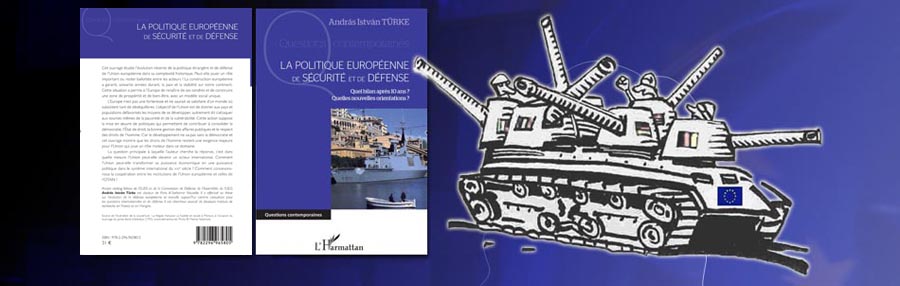
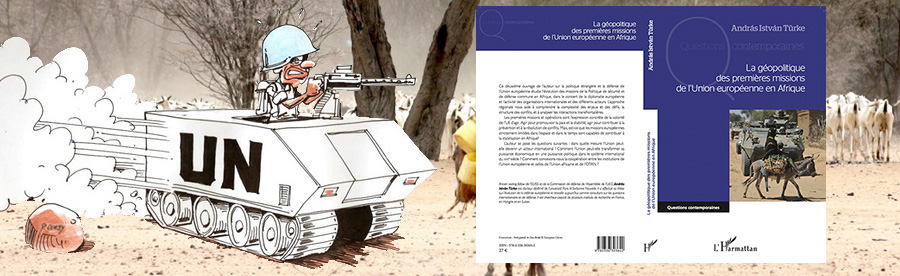
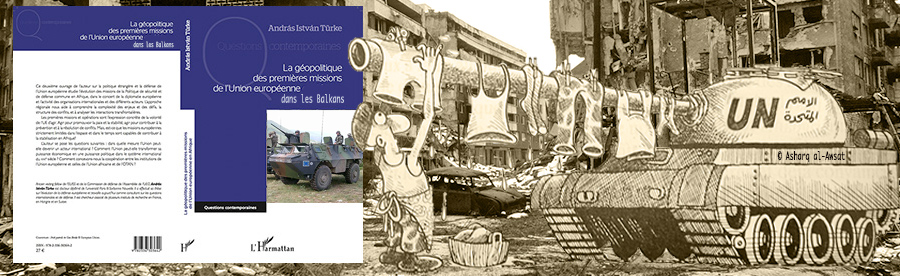
We are looking for sponsors for the English translation of these books, please contact turkeandras(at)gmail(dot)com