
You are here
Africa
Rwanda to host F1's first race in Africa since 1993
Rwanda signs a 10-year deal with Formula 1 to host races in the African country, starting "in the early 2030s".
Categories: Africa, Balkan News
Ex-president named leader of new DR Congo rebel coalition
Joseph Kabila had previously denied having links to the M23 rebels, which control much of eastern DR Congo.
Categories: Africa, Határon túli magyar portálok összesített hírei
Just like in Kabul and Pyongyang | Frankfurter Rundschau - Germany
Categories: Africa, European Union
Salifou Mouhawya décroche l'argent aux World Skate Games 2026
L'athlète béninois Salifou Mouhawya a remporté la médaille d'argent en Free Jump aux World Skate Games 2026, disputés à Asunción, au Paraguay. Il a réalisé un saut de 1,65 mètre, terminant deuxième de l'épreuve le 8 octobre 2026.
Le Bénin compte désormais un vice-champion du monde en roller sports. Salifou Mouhawya a décroché la médaille d'argent en Free Jump lors des World Skate Games 2026, organisés à Asunción, au Paraguay. Selon les informations publiées par la Fédération béninoise de Roller Sports, l'athlète a franchi une hauteur de 1,65 mètre.
La médaille d'or est revenue à l'Italien Gianmarco Savi, qui a réalisé la même performance. Le Sénégalais Ousseynou Diene a terminé troisième, tandis que le tenant du titre, Dame Fall, s'est classé quatrième.
Une progression sur la scène internationale
Cette deuxième place marque une nouvelle étape dans le parcours de Salifou Mouhawya. En 2025, il avait terminé quatrième au championnat du monde d'Inline Freestyle à Singapour, avec un saut de 1,60 mètre.
En avril 2026, le sportif béninois a remporté la première édition de l'International Challenge Cotonou Skating (I2CS), avec une performance annoncée de 1,68 mètre. En juillet de la même année, il a décroché le bronze à la Hero Battle Cup de Milan, une étape de la Coupe du monde d'Inline Freestyle, avec un saut de 1,65 mètre.
Avec cette médaille d'argent obtenue au Paraguay, Salifou Mouhawya confirme sa présence parmi les compétiteurs de haut niveau de sa discipline.
Voici les tarifs de passage au poste de péage de Kétou
Le poste de péage de Kétou, situé sur la Route nationale n°26 (RN26), axe Kétou-Idigny, sera mis en service le 19 octobre 2026. Les tarifs varient de 1 000 à 18 000 FCFA selon le type de véhicule et le nombre d'essieux.
Dans un communiqué en date du 7 octobre 2026, la Direction générale de la SIRAT SA a annoncé la mise en exploitation du poste de péage de Kétou. Les droits de passage sont fixés conformément à l'arrêté du 2 juillet 2026 portant sur les modalités de perception au poste de péage de Kétou.
Pour les véhicules légers d'une hauteur inférieure à 2,55 mètres, le tarif est fixé à 1 000 FCFA par passage. Pour les poids lourds et les véhicules d'une hauteur supérieure ou égale à 2,55 mètres, les tarifs varient selon le nombre d'essieux.
Voici les tarifs applicables
– Véhicule poids lourd à deux essieux, vide ou chargé : 2 000 FCFA par passage ;
– Véhicule poids lourd à trois essieux, vide ou chargé : 4 000 FCFA par passage ;
– Véhicule poids lourd à quatre essieux, vide ou chargé : 6 000 FCFA par passage ;
– Véhicule poids lourd à cinq essieux, vide ou chargé : 8 000 FCFA par passage ;
– Véhicule poids lourd à six essieux, vide ou chargé : 10 000 FCFA par passage ;
– Véhicule poids lourd à sept essieux et plus, vide ou chargé : 18 000 FCFA par passage.
La SIRAT SA invite les usagers à respecter les consignes des agents du poste de péage afin de faciliter la circulation et le bon déroulement des opérations.
Rwanda to host F1's first race in Africa since 1993
Rwanda signs a 10-year deal with Formula 1 to host races in the African country, starting "in the early 2030s".
Categories: Africa, Határon túli magyar portálok összesített hírei
DIGITAL 08 H : le verdict
DIGITAL 08H : Avez-vous tenté votre chance ?
Le tirage DIGITAL 08H N°262 a livré son verdict !
Mardi 13 Octobre 2026
Avez-vous joué ?
Avez-vous misé sur vos numéros porte-bonheur ?
RÉSULTAT : 82 • 54 • 47 • 57 • 26
Félicitations aux heureux gagnants !
Pas encore cette fois ? Gardez le sourire.
Rendez-vous à 11H pour le prochain tirage.
Jouez dans les points de vente ou : Tapez *590# ou rendez-vous sur lnbloto.bj
Jouez avec modération et responsabilité. Le jeu doit rester un plaisir.
A TOI DE JOUER #XòGbɔnAlɔkpaVo
#LNBSA #JeuResponsable #LaChanceAvecModération
LA CROIX DU JOUR

La Commission nationale de réforme du droit échange avec Prof Dorothé Sossa
Le président de la Cour constitutionnelle, Professeur Cossi Dorothé Sossa, a reçu en audience, lundi 12 octobre 2026, une délégation de la Commission nationale de réforme du droit, conduite par son président, Noël Gbaguidi.
Le président de la Cour constitutionnelle et la délégation de la Commission nationale de réforme du droit ont échangé sur l'harmonisation des textes juridiques et la nécessité d'anticiper les besoins législatifs. Selon le rapporteur et porte-parole de la commission, Professeur Samson Igor Guèdègbe, le président de la Cour constitutionnelle a insisté sur les incohérences relevées dans plusieurs textes et encouragé la commission à travailler à leur mise en cohérence.
La rencontre a également permis d'évoquer la nécessité de limiter les législations adoptées dans l'urgence, au profit de textes mieux adaptés aux évolutions de la société. « La plupart du temps, on légifère parfois dans l'urgence. Et ce faisant, cela ne permet pas d'adresser efficacement les problèmes qui sont les nôtres », a-t-il souligné.
Créée par le décret n° 2025-646 du 15 octobre 2025, la Commission nationale de réforme du droit est chargée d'assurer une veille législative et réglementaire, de mener des études prospectives et d'accompagner les institutions publiques dans la modernisation des textes juridiques.
UN to Launch Survey to Track Down Racism at the Secretariat
A group of UN Staffers outside the Secretariat. Credit: United Nations
By Thalif Deen
UNITED NATIONS, Oct 13 2026 (IPS)
The United Nations has once again revived a longstanding problem that has been left lingering behind closed doors for decades – racism and racial discrimination at the UN Secretariat.
A message sent to UN staffers last week reads: “The United Nations is founded on the bedrock principle that all people are equal in rights and dignity. Racism has no place in our Organization, and we are committed to fighting it on every front”.
“But racism often hides within systems, becoming entrenched through policies and practices that may appear neutral, but in fact reinforce biases and deepen inequities. Bringing these patterns to light is crucial, and for that we need data.”
“That is why, on 17 October, we will be launching a voluntary race data collection initiative. This exercise invites all Secretariat staff to provide information about their race, to help the Organization better identify and address discrimination. It is optional. It is anonymous. And it is one of the best tools we have to discover where action is needed.”
Approximately 3,600 to 4,800 Secretariat staff members, including UN agencies, are based in New York.
Meanwhile, the UN Secretariat in New York, faltered ingloriously last year, as it withdrew its own online survey on racism, in which it asked staffers to identify themselves either as “black, brown, white, mixed/multi-racial, and any other”.
But the most offensive of the categories listed in the survey was “yellow” – a longstanding Western racist description of Asians, including Japanese, Chinese and Koreans.
Subsequently, a non-apologetic message emailed to staffers read: “The United Nations Survey on Racism has been taken offline and will be revised and reissued, taking into account the legitimate concerns expressed by staff.”
Dr Palitha Kohona, a former Chief of the UN Treaty Section in the Office of Legal Affairs (OLA) told Inter Press Service (IPS) racism today is not overly evident at the United Nations which was founded on ideals that were very much ahead of their times, but an undercurrent of racial superiority and racial bias exists among certain elements of the Organization. This is evident in certain appointments and deep-seated attitudes, even among some delegates.
“Racism in international bodies could be traced even to the founding of the League of Nations where President Woodrow Wilson strenuously opposed the Japanese proposal to incorporate the principle of racial equality in the constitution of the Organization. His vision of international order was hierarchical and implicitly based on a racial hierarchy that placed white, Western nations at the top”.
While the United Nations is staffed by many enlightened individuals, some bias based on race still prevails at the highest levels, he pointed out, despite the organization itself having been headed by two Asians and an African in recent times.
“Curiously certain positions have been held only by Europeans. For example, the position of the UN Legal Counsel has been held only by white Europeans. There are other positions apparently reserved for European countries”.
Some delegates are also still affected by racial prejudices of an unenlightened past.
In a well reported incident, the not-so-white chairman of the WEOGs ( a Western European group) from a Southern European country once told the recently-arrived Australian delegate (an Australian citizen of Asian ancestry) that the developing countries of the Group of 77 were meeting in an adjoining room—(implying he was an Asian at the wrong meeting).
In an Organization created on the high ideals of equality and merit there is no logical reason for reserving certain positions on the basis of race, even sub consciously.
“Having gone a long way in minimizing gender bias, it is time to ensure that all vestiges of racial bias are also eliminated. One way to ensure equality and equity in appointments might be to subject all appointments to an open application process with selections being made by racially and gender mixed panels,” declared Dr Kohona, a one-time Permanent Representative of Sri Lanka to the UN, and until recently, Ambassador to China.
Ian Richards, President of the UN Geneva Staff Union told IPS: “We are concerned this is being tackled very much from a North American perspective.”
“Race is only a useful indicator if it is combined with where you grew up, which indicates opportunities or disadvantages in formative years, and where you work now. Each region has its own history and attitudes. We don’t feel this has been taken on board,” he said.
Meanwhile, the circular to staffers also points out that by understanding how colleagues identify their race, we can:
- • Pinpoint areas where racial bias or disparities may exist;
• Examine institutional factors that may contribute to racist misconduct, underreporting of incidents, or barriers to racial justice; and
• Develop remedial measures to build a workplace free from racial discrimination.
Staff will be invited to participate by selecting a race category on Inspira. To ensure data protection and maintain privacy, your data will be anonymized and aggregated. It will not be used in connection with any individual human resources management processes, such as recruitment or promotions. It will not be visible to recruiters or hiring managers.
The collection of race data will be managed strictly in line with the parameters outlined in General Assembly resolutions A/RES/80/238 and A/RES/80/243 B, as well as the provisions set out in ST/SGB/2024/3.
The racial categories listed echo the language used in past United Nations staff engagement surveys. An additional question will ask staff if they consider themselves to be a member of a racialized community.
Speaking on condition of anonymity. a former UN staff member expressed concerns about the UN Secretariat Administration’s proposed race data collection initiative, particularly regarding its methodology, suitability for the UN’s diverse global workforce, and safeguards for sensitive personal information.
It was pointed out that a fundamental question remains unanswered: Is the lack of race-disaggregated data genuinely preventing the Organization from addressing racism, or does the real problem lie in the implementation of existing policies, the enforcement of accountability, and the failure to translate commitments into effective action?
This distinction must be established before sensitive personal data are collected on such a scale.
“Any approach to addressing racism and racial discrimination within the UN should also recognize the experiences of affinity groups and other minority and underrepresented communities, whose experiences of exclusion may not be adequately captured by standardized racial classifications”.
The absence of meaningful consultation with staff representatives, together with insufficient clarity regarding the conceptual or empirical basis for the selected racial categories, data protection measures, future use of the data, and independent oversight, further undermines confidence in the initiative.
The United Nations must demonstrate its commitment to equality through action, transparency, and accountability. Collecting sensitive racial data must not become a substitute for enforcing existing protections, addressing substantiated concerns, and correcting discriminatory institutional practices, the former staff member said.
“The ultimate measure of success is not how much data the Organization collects, but whether it can demonstrate that racism has been reduced, accountability strengthened, and the working environment made fairer for all staff”.
IPS UN Bureau Report
Categories: Africa, Határon túli magyar portálok összesített hírei
Dollar System Eroding Slowly, but Still Dominant
By Jomo Kwame Sundaram
KUALA LUMPUR, Malaysia, Oct 13 2026 (IPS)
The protracted demise of dollar-gold convertibility and associated fixed exchange rates did not end dollar hegemony. With crucial and timely help from political allies, confidence in the dollar system has persisted, albeit much diminished.
Jomo Kwame Sundaram
Contingency planning?On August 15, 1971, President Richard Nixon announced that the US would no longer convert dollars into gold, as promised under the 1944 Bretton Woods (BW) agreement.
But the BW payments arrangements and the US promise of dollar convertibility to gold were not sustainable. As Robert Triffin noted in 1960, the system was ‘failing by design’ from the outset, which US authorities denied and refused to address.
Vietnam War spending, rising inflation, and a run on US gold reserves forced this decision after allied Western central banks quietly gave up defending the gold-dollar peg in 1968.
Decades later, then-US Undersecretary for Monetary Affairs Paul Volcker revealed he had initiated a Treasury working group in 1969.
As the US balance of payments was already proving unsustainable, suspending gold-dollar convertibility was no longer considered an option to be avoided at all costs.
Portraying the gold peg’s failure as due to arithmetic, not politics, Volcker argued that suspending it involved implementing contingency planning that the group had long considered.
Two days before, Nixon summoned 15 advisors to a secret retreat at Camp David to draft his announcement. He also imposed a 90-day wage-price ‘freeze’ and a 10% tariff on imports.
Thus, Nixon presented the suspension of dollar convertibility to gold as part of a larger economic policy reform package, rather than as the long-overdue default on earlier US pledges.
With his 1972 re-election campaign approaching, Nixon and his Treasury Secretary, John Connally, claimed to be ‘freeing’ US economic policy by ending dollar-gold convertibility and associated fixed exchange rate obligations.
Clearly, Nixon’s mid-August 1971 announcement was not an improvised response to an emergency or even the sudden break he implied, although the Volcker group preferred a more ‘controlled demolition’.
US dollar, others’ problem
When allied finance ministers were negotiating a replacement arrangement in Rome in November 1971, Connally bluntly told them that the dollar was America’s currency but their problem, belatedly confessing to BW’s true nature.
Nonetheless, their December 1971 Smithsonian Agreement still sought to patch things up rather than explicitly abandon the 1944 arrangement and the later efforts to defend it.
The dollar was devalued against gold for the first time since 1934, with its price rising from $35 to $38 an ounce. Trading bands around other currencies were widened to give central banks more flexibility.
Nixon pronounced the 1971 Smithsonian Agreement the most significant monetary arrangement in world history before the dollar was devalued again 14 months later, in February 1973.
National authorities politically aligned with the US had defended it, but eventually stopped paying to maintain the charade. Thus, a year and a half after August 1971, BW was finally buried.
Within weeks, the major currencies abandoned fixed exchange rates altogether, allowing them to float against one another. Although the transition to floating rates was not smooth, it has survived, with modifications, ever since.
But the ‘settlement gap’ time lag under floating exchange rates is so problematic that international banking regulators have long sought to reform the way cross-border currency trades are cleared.
Charade over?
Although BW is now long gone, the dollar system has proven durable. The end of gold convertibility was not fatal to the dollar’s role at the centre of world finance.
Instead, the end of the BW dollar-gold convertibility obligation removed one constraint on it. After the final break with gold in 1973, the dollar was only backed by US government promises.
Gold’s formal demonetisation was confirmed with the 1976 Jamaica Accords when IMF member governments quietly amended its charter to strip the precious metal of any official role.
Freed from its earlier BW obligation to redeem dollars with gold, the US has financed its trade, current account, and fiscal deficits, as well as foreign and domestic government spending, with ever more dollar debt.
The world has increasingly financed the growth of US debt as the dollar remains the main currency in which most international trade, especially in commodities, is priced and settled.
The IMF had policed fixed exchange rates and gold-dollar convertibility for over two decades after the war. It has since changed roles to oversee floating exchange rates, selectively serve as ‘lender of last resort’ and manage sovereign debt crises.
International oil transactions were mainly settled in ‘petrodollars’, due to an arrangement with Saudi and other Gulf producers to use oil sales revenue to buy US Treasury securities.
The status quo is now based on others’ willingness to hold dollars. But growing concerns about US willingness to honour its commitments have caused governments to consider alternatives. But dollar hegemony has weathered such recent storms so far.
IPS UN Bureau
Related Articles
- The Dollar-Gold Standard’s Lingering Demise
- Dollar Dominance Eroding Slowly but Surely
- Trump’s World Stagflation Also Undermines Dollar Hegemony
- New US Fed Policy Deepens World Stagflation
- Trump De-dollarisation Accelerant
- Central Bank Hedging Triggered Gold Fever
- Western Finance Ruining Economies of the Rest
- US Fed- Induced World Stagnation Deepens Debt Distress
- SWIFT Dollar Decline
- Trade, Currency War Weapons Double-Edged
Categories: Africa, Határon túli magyar portálok összesített hírei
Lockerbie bombing suspect seized from Libya in 'cloak and dagger' operation
Abu Agila Mohammad Mas'ud Kheir Al-Marimi claims he was unlawfully taken from Libya to stand trial over the bombing.
Categories: Africa, Balkan News
Navi Pillay’s Nobel Peace Prize Is a Vote of Confidence in a Global Legal Order under Fire
By Frans Viljoen
PRETORIA, South Africa, Oct 12 2026 (IPS)
The awarding of the 2026 Nobel Peace Prize to distinguished South African jurist and international judge Navanethem “Navi” Pillay is about more than just the recognition of an exceptional individual in the global fight for justice.
Navi Pillay-Credit: UN Photo/Mark Garten
It’s clear that the prize also speaks to a bigger context. It comes at a time of pressure on and the questioning of the international legal order.Pillay’s recognition affirms the conviction that international law, however imperfectly applied, remains indispensable to a peaceful world.
Making history
It is a proud moment for South Africa. She becomes the fifth South African to receive this honour, following resistance leader Chief Albert Luthuli in 1960, religious leader and activist Archbishop Desmond Tutu in 1984, and former presidents Nelson Mandela and FW de Klerk in 1993.
She is the first South African woman to receive the peace award. Her prize is a further break with its historical tendency to mostly honour “highly educated white men from Europe and the US”.
Similar to her South African predecessors, the struggle against apartheid and white minority rule features as a crucial element of her contribution. However, there is an important difference. While Mandela became a global symbol of reconciliation, Pillay took the lessons of South Africa’s struggle into the international arena. There she became leader and institution builder in her own right.
She had the daunting task of being one of the very first international judges responsible for forging into being international institutions intended to ensure that those responsible for the gravest human rights violations are held accountable.
She was on the first bench of judges of both the International Criminal Tribunal for Rwanda, established by the United Nations (UN) following the 1994 genocide in Rwanda, and the International Criminal Court (ICC) from 2003 to 2008.
Her personality and drive endowed these fledgling institutions with gravitas and legitimacy. Through her pioneering contributions, she has come to personify the global quest for accountability.
The Navi Pillay I know
As a scholar of international human rights law, I first met Pillay when she was president of the Rwanda tribunal in Arusha, Tanzania. She struck me then, and over time continued to impress me, as someone remarkably approachable. Humble, unassuming and generous with her time, she is also often described as courageous, principled, and unwavering.
I smiled when, in her characteristically down-to-earth reply to the Nobel committee praising her courage, she insisted she was merely applying her independent legal mind to the stark principles of justice.
When I first met her, I was with a group of human rights students from the University of Pretoria visiting Tanzania to observe proceedings. Judge Pillay’s demanding schedule prevented her from spending much time with us during the day. Yet she offered to meet us at her hotel that evening. To our surprise, she arrived driving herself, without a chauffeur or an entourage. She spent many hours answering questions and discussing the work of the tribunal.
Similar encounters continued over subsequent years. To me, these moments revealed her understanding of human rights institutions not as remote structures, but as belonging to people. This included young Africans who she hoped would one day help shape their future.
From apartheid to global justice
Pillay’s story is held together by a central belief, whether in response to apartheid in South Africa, genocide in Rwanda or the occupation of Palestinian territory: that law can restrain abusive power, protect victims and hold the powerful to account. She simply applied it on a bigger stage each time.
Born in 1941 in Durban, to a family of Indian Tamil origin, Pillay experienced racial and gender discrimination first-hand. Despite this, she built a legal career. In 1967 she became the first woman of colour to establish a legal practice in her province.
Like many lawyers opposed to apartheid, she sought to use the very legal system that sustained injustice to challenge its abuses. She represented political activists, exposed torture and challenged the treatment of political prisoners.
She was also involved in the Women’s National Coalition, which helped shape the equality provisions of South Africa’s democratic constitution. These prohibit discrimination on grounds including race, sex and sexual orientation. After apartheid ended, Mandela in 1995 appointed her as a High Court judge.
Rape as a crime against humanity
Later that year she took up office in Tanzania, where one of her most enduring global contributions came in the Rwanda tribunal’s landmark 1998 judgement.
During the trial of Jean-Paul Akayesu, accused of the slaughter of thousands, Pillay and another judge questioned witnesses about sexual violence. They helped bring these experiences into the open and contributed to the amendment of the indictment to include rape.
The result was a judgment that recognised rape as a crime against humanity. It established that rape and sexual violence could also constitute acts of genocide.
The decision constituted the first conviction for genocide by an international criminal tribunal and the first conviction of an individual for rape as a crime against humanity by such a tribunal. This opened the way for greater accountability for crimes committed disproportionately against women and girls.
As Pillay put it:
- From time immemorial, rape has been regarded as spoils of war. Now it will be considered a war crime.
Human rights within the UN
From 2008 to 2014, Pillay served as UN High Commissioner for Human Rights, the first woman from the global south to hold this position.
It required a different form of leadership. Rather than deciding cases as a judge, she had to engage governments, confront violations and persuade states to honour their international obligations. During her tenure, she managed to steer the UN’s human rights work through turbulent times, including the aftermath of the global financial crisis, the Arab Spring, and civil war in Syria. Her voice was a steadfast pillar of clarity: human rights could not be sacrificed to economic expediency, national sovereignty or political convenience.
Her tenure coincided with significant advances within the UN. She was a consistent advocate for the rights of equality based on sexual orientation and gender identity, anti-discrimination laws, and proper recording of hate crimes.
In 2001, her home city, Durban, hosted the UN’s World Conference against Racism, Racial Discrimination, Xenophobia and Related Intolerance. The Durban Declaration set an international agenda against racism and xenophobia. It also acknowledged slavery as a crime against humanity.
Although she had no official role in the 2001 conference, as UN high commissioner she was closely involved in the subsequent review process. She defended the declaration against misrepresentation. She emphasised its condemnation of antisemitism, remembrance of the Holocaust and recognition of Israel’s right to security.
Despite boycotts by several western states, including the US, she helped steer the 2009 Durban Review Conference towards a consensus reaffirming the declaration, supported by 182 states. Her role exemplified her determination to overcome division and backlash without compromising fundamental human rights principles.
Pillay’s term was also characterised by a distinctive contribution to women’s rights by championing the recognition of preventable maternal deaths as a human rights issue, rather than merely a public health concern. Under her leadership, the UN Human Rights Office developed groundbreaking guidance in 2012 requiring governments to address discrimination, maternal healthcare and accountability for avoidable deaths.
Palestine and genocide
More recently, she took up her last official UN duty as chair of the Independent International Commission of Inquiry on the Occupied Palestinian Territory and Israel. The commission’s investigations and findings, including on the war in Gaza, have generated considerable controversy and strong criticism, particularly from Israel and the US.
Her dedication to this task illustrates an essential feature of her work: the application of legal principles becomes most difficult, and most necessary, when politically powerful actors reject scrutiny.
A time when hope is needed
The timing of this award is therefore particularly telling. It comes as, only days earlier, US president Donald Trump had called the ICC “evil” and urged all its members to resign. Responding to the prize, the US imposed sanctions on the ICC.
By honouring a former ICC judge, the Nobel committee chose to defend the very institutions that are now “under attack”, with their judges “sanctioned”.
The award also comes amid Israel’s growing international isolation. Pillay and her team concluded in 2025 that Israel was committing genocide in Gaza.
The commission’s findings do not constitute a binding judicial determination. But they do represent a significant contribution to documenting alleged atrocities and advancing the pursuit of accountability, despite intense political opposition.
Even as Pillay recently celebrated her 85th birthday, she may soon have another word on genocide. Since 2019, she has been sitting as an ad hoc judge at the International Court of Justice in the case brought by The Gambia against Myanmar concerning alleged genocide against the Rohingya. Following a public hearing in January 2026, a judgment in this case is expected later this year, or in early 2027.
Her Nobel Prize does not suggest that international justice has triumphed. But it reminds us that the structures built to advance it remain worth defending. Recognising Pillay is an affirmation of what has been achieved, but also about what must not be lost.
Frans Viljoen – Professor of International Human Rights Law, SARChI Chair in International Constitutional Law, University of Pretoria
This story was originally published by The Conversation.
IPS UN Bureau
Categories: Africa, Swiss News
EU-UK summit to take place in Brussels on 20 November
The second annual EU-UK Summit after the UK’s withdrawal from the EU will take place in Brussels on 20 November 2026.
Categories: Africa, Europäische Union
Australia close on win against South Africa
Australia close on statement victory over South Africa in Durban after Matt Renshaw's dream Test continues.
Categories: Africa, Swiss News
South Africa's deputy police chief resigns after being charged with sexual offences
Shadrack Sibiya had denied grooming a 16-year-old and raping an 18-year-old.
Categories: Africa, Határon túli magyar portálok összesített hírei
Des localités d'Adjohoun affectées par les inondations
La montée des eaux du fleuve Ouémé affecte plusieurs localités de la commune d'Adjohoun, dans le département de l'Ouémé. À Gangban, Togbota, Dannou et Gogbo, les inondations touchent les habitations et les terres agricoles et les activités scolaires sont perturbées.
La crue du fleuve Ouémé perturbe les conditions de vie des populations de Gangban, Togbota, Dannou et Gogbo, dans la commune d'Adjohoun. La montée des eaux entraîne la submersion de terres agricoles et encercle des habitations.
La situation affecte aussi les activités économiques des populations, dont une partie dépend de l'agriculture. Face aux difficultés rencontrées, les habitants appellent les autorités à intervenir pour leur apporter une assistance.
Le secteur de l'éducation est aussi touché. À l'École primaire publique (EPP) de Dannou, dans l'arrondissement de Gangban, les cours sont interrompus.
La crue du fleuve Ouémé est un phénomène saisonnier qui survient généralement entre août et novembre au Bénin. Elle est liée aux précipitations dans le bassin du fleuve, notamment dans le nord et le centre du pays, ainsi qu'aux pluies enregistrées dans le sud. La montée des eaux entraîne régulièrement des inondations dans les communes de la vallée et du delta de l'Ouémé, notamment Dangbo, Adjohoun, Bonou, les Aguégués et Zagnanado, avec des conséquences sur les habitations, les cultures et le bétail.
Début octobre, le maire d'Adjohoun, Félicien Hounkanrin, a appelé les populations à redoubler de vigilance face à la montée des eaux.
Double Chance : les numéros gagnants
LES RÉSULTATS DOUBLE CHANCE SONT LÀ !
LOTO FORTUNE Tirage N°163/26
Lundi 12 Octobre 2026 (14H)
– Zone A (5 premiers numéros) :
49 • 06 • 56 •30 • 42
– Zone B (5 derniers numéros) :
67 • 69 • 58 • 51 • 09
Félicitations aux heureux gagnants.
Pas encore cette fois ? Gardez le sourire !
Rendez-vous à 18H pour le prochain tirage.
Jouez avec modération et responsabilité. Le jeu doit rester un plaisir.
A TOI DE JOUER #Akaxòa
#LNBSA #XòGbɔnAlɔkpaVo #JeuResponsable #LaChanceAvecModération
Le défi de faire des récoltes une richesse durable
Ananas, cajou, soja, manioc…plusieurs produits agricoles du Bénin peuvent trouver leur place sur les marchés internationaux. La coopération avec la Chine bénéficie dèjà à des producteurs béninois dans ce cadre. Mais un défi reste à relever : vendre plus que des récoltes, en développant des produits transformés, compétitifs et capables de voyager loin.
Une récolte abondante ne signifie pas toujours un revenu à la hauteur des efforts fournis. Entre le champ et le marché, les difficultés de conservation, le manque d'équipements adaptés ou l'insuffisance des débouchés peuvent réduire les bénéfices du travail agricole. Pour les producteurs de fruits, notamment, le temps compte : un produit qui se conserve mal est aussi un produit qui risque de perdre de sa valeur. Telle est la dure réalité à laquelle font face les agriculteurs des pays africains dont le Bénin.
C'est dans ce contexte que la coopération sino-béninoise peut prendre tout son sens. Pas seulement dans les échanges commerciaux, mais dans la capacité à aider à mieux conserver, transformer et commercialiser les productions locales.
L'ananas, une porte ouverte sur la Chine
L'ananas pain de sucre du Bénin est un produit agricole prisé des consommateurs. Sa réputation dépasse les frontières nationales et le marché chinois représente une perspective intéressante pour cette filière. En octobre 2025, l'ambassade de Chine au Bénin a annoncé une avancée concernant les conditions techniques et sanitaires encadrant l'exportation des ananas béninois vers la Chine. Cette étape rappelle qu'accéder à un marché exigeant ne dépend pas seulement de la qualité reconnue d'un fruit. Il faut aussi respecter les règles sanitaires, assurer la traçabilité et garantir des conditions de conditionnement et de transport adaptées.
Mais l'enjeu dépasse l'exportation de fruits frais.
Une récolte d'ananas (© diplomatie.belgium.be/fr)
L'ananas peut aussi être séché, transformé en jus ou conditionné sous d'autres formes. Ces possibilités ouvrent des perspectives aux petites entreprises, aux unités de transformation et aux jeunes entrepreneurs. Elles peuvent également contribuer à limiter les pertes lorsque les récoltes sont abondantes.
Encore faut-il disposer des équipements, de l'énergie, des emballages et des financements nécessaires. Un débouché à l'étranger ne devient une véritable opportunité que si les acteurs locaux ont les moyens d'y répondre.
Transformer ici pour gagner davantage
La même réflexion concerne la noix de cajou, le soja et le manioc. Ces produits ne doivent pas être considérés uniquement comme des marchandises à écouler. Ils peuvent servir de base à la fabrication d'huiles, de farines, de boissons et d'autres produits alimentaires destinés aux marchés béninois et étrangers.
La Zone industrielle de Glo-Djigbé (GDIZ) illustre cette ambition de transformation locale.
Transformation du cajou à la GDIZ (© La Nation)
Développée dans le cadre d'un partenariat public-privé entre l'État béninois et le groupe ARISE IIP, elle accueille notamment des unités de transformation du soja, de la noix de cajou et d'autres matières premières du Bénin. L'objectif est de donner davantage de valeur aux matières premières produites au Bénin, au lieu de les exporter uniquement à l'état brut. La GDIZ n'est pas un projet sino-béninois, mais son expérience éclaire un enjeu central de la coopération avec la Chine. Comment les investissements et les échanges peuvent-ils contribuer à renforcer les capacités industrielles du pays ?
La transformation locale permet de créer plusieurs activités autour d'une même récolte : collecte, stockage, transport, production, emballage et commercialisation. Elle peut ainsi multiplier les possibilités d'emploi, notamment pour les femmes et les jeunes déjà engagés dans les activités agroalimentaires.
La coopération avec la Chine pourrait contribuer à renforcer cette dynamique, notamment par des investissements, des équipements de transformation, des solutions de conservation et des échanges de compétences. Il ne s'agit pas de présumer que ces apports sont déjà acquis dans toutes les filières, mais de déterminer comment les partenariats peuvent répondre aux besoins réels des producteurs et des entreprises béninoises.
Un partenariat à mesurer sur le terrain
En 2023, le Bénin et la Chine ont signé un mémorandum d'entente portant sur le stockage et la réduction des pertes de céréales après la récolte. Cet axe de coopération rappelle une réalité souvent moins visible que les grands projets : préserver ce qui a été produit est aussi important que produire davantage. Reste à traduire les intentions en résultats concrets. Les producteurs ont besoin de débouchés fiables et de prix rémunérateurs. Les transformateurs doivent pouvoir accéder aux machines, au crédit et aux emballages conformes aux exigences des marchés. Quant aux consommateurs, ils attendent des produits sains, de bonne qualité et à des prix abordables.
La réussite de la coopération agroalimentaire sino-béninoise se jouera donc aussi dans les exploitations agricoles, les magasins de stockage et les unités de transformation. Elle se mesurera au nombre de producteurs mieux rémunérés, d'entreprises capables de grandir et de produits béninois qui franchissent les frontières. Car derrière chaque ananas exporté, chaque sac de soja transformé ou chaque tonne de céréales conservée, il y a une question essentielle : quelle part de la richesse créée reste entre les mains de ceux qui travaillent la terre béninoise ? C'est à cette question que le partenariat entre le Bénin et la Chine devra, au fil des projets, apporter des réponses tangibles.
Marc MENSAH
[1]
[1] Cet article a été publié dans le cadre du Prix Sino-Béninois du Journaliste et du professionnel des médias sur le Thème : Mon regard sur la modernisation à la chinoise et les relations sino-béninoises.
Pages
the old site is here


© 2012-2015 Europa Varietas Foundation © 2015-2020 Europa Varietas Association
www.europavarietas.org | info(@)europavarietas(dot)org | Switzerland
This is a GDPR ready site
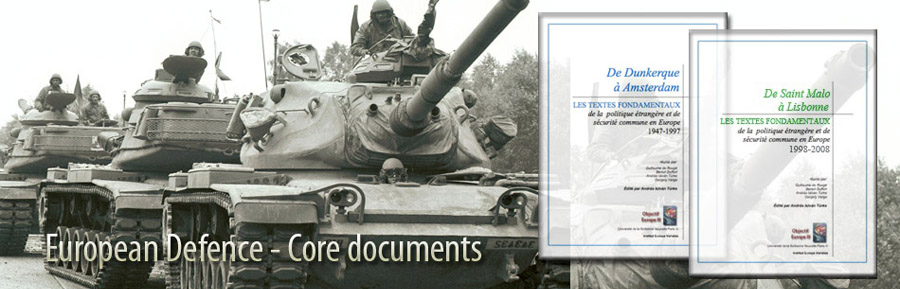
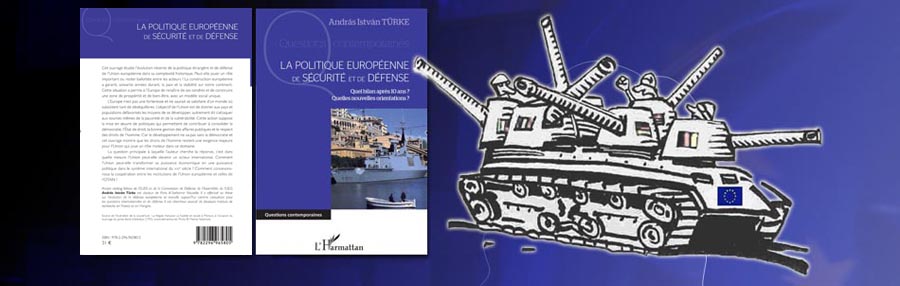
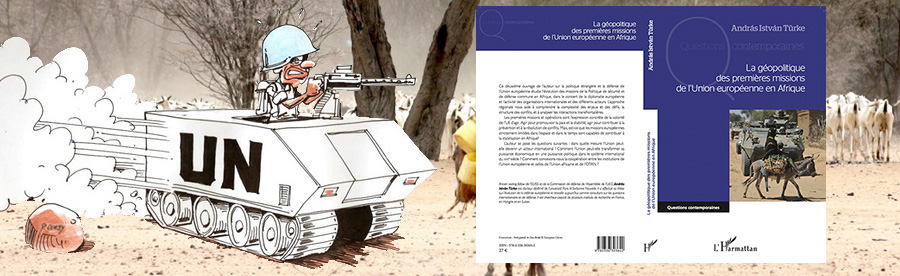
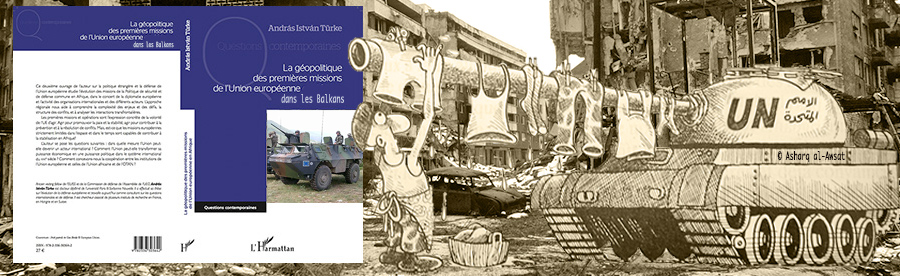
We are looking for sponsors for the English translation of these books, please contact turkeandras(at)gmail(dot)com