
You are here
Africa
Afghanistan’s Drought Deepens, and Women Bear the Heaviest Burden
As wells and other water sources dry up, women and girls in Kabul must travel increasingly long distances to secure enough water for their families. Credit: Learning Together.
By External Source
KABUL, Oct 1 2026 (IPS)
Drought has depleted wells, withered fruit trees, and reduced crop yields across Afghanistan. The heaviest burden of the water shortage falls on women in their daily lives, as they must fetch water from increasingly distant sources and use every single drop with extreme care.
More than half of Afghanistan is suffering from a prolonged drought and water shortage. The situation is critical in 19 provinces. Authorities predict the crisis will worsen. For instance, the capital, Kabul, is projected to lose the majority of its groundwater by 2030. In the northern province of Faryab, 90 percent of the area is already affected by drought.
Drought affects every aspect of her life. She struggles daily to secure enough water for her family’s needs. As an orchardist, she watches helplessly as the trees she has tended for years slowly wither and die while still standing
Water scarcity and poor harvests are further exacerbating Afghanistan’s food crisis. According to the UN World Food Programme, as many as 17.4 million people are in urgent need of food assistance.
Wells, springs, and groundwater sources are drying up. In some households, the water level in wells has dropped from 20 meters to 40 meters. On farmlands, water must now be drawn from depths of up to 120 meters, whereas previously it was accessible at 20 meters. Water is being rationed, and in some areas, farmers receive water for only 20 minutes a day.
When Afghanistan’s wells run dry, women’s workload increasesIn Logar province, near Kabul, drought and water shortages have damaged crops and caused fruit trees to wither. Women must walk increasingly long distances to fetch water for their families.
“When our well ran dry, my immediate concern was whether there would be enough drinking water for our children. I only wash clothes if there is drinking water left over. Sometimes I go several days without doing laundry. I also gather the dishes from three meals and wash them all at once to save water,” says 35-year-old Simin Gul (name changed).
The well belonging to her family of nine ran dry four years ago. The nearest water source is less than a half an hour’s walk away.
At times, Simin Gul and her neighbors are forced to buy water. The local piped water network supplies water only two days a week, and even then, only for a few hours at a time.
Families help one another and take turns collecting water in large containers, but even that is not enough for large families.
The wells around Simin Gul’s home have dried up one by one. Women suffer from back pain and other ailments from carrying heavy water containers from distant sources.
Fetching water is particularly difficult during menstruation. Women must fetch water even when they need rest. At times, children have to miss school to help their mothers carry water.
Water scarcity and poor water quality also cause hygiene and health problems for families.
“The tanker trucks have plastic tanks, and the trucks travel from street to street under the scorching sun. Our children have fallen ill from this water several times,” says Simin Gul.
Drought-damaged crops in Logar province, near Kabul, where water shortages have reduced harvests and caused fruit trees to wither. Credit: Learning Together.
Drought deepens water inequality: “The wealthy can dig deeper wells”Water scarcity has also changed the daily life of 50-year-old Zarmina (name changed). She has lived and worked on her orchard for about 20 years. Her husband is also a farmer.
“This year, about 50 of my apple and apricot trees dried up. I’ve managed to keep the remaining hundred trees barely alive thanks to a spring. But both the yields and the fruit are smaller and of poorer quality.”
“Some farmers pay for irrigation, but we can’t afford it. My husband lost his tomato crop this year because tomatoes need a lot of water,” Zarmina laments.
Zarmina’s husband farms an area of about 60 acres. This year, he planted only half of it because of the water shortage.
“The wealthy can have deep wells dug. The fields of the poor remain dry,” Zarmina notes.
However, according to her, the problem is not just a lack of water but also inadequate infrastructure.
“Some areas have a piped water system. We should have one too, and the government ought to repair the irrigation canals as well. The problem is that Afghanistan has water, but it isn’t distributed efficiently,” she continues.
Zarmina is sometimes forced to buy drinking water, as her own well has very little water, and what remains is salty. Unless the authorities do something about the water shortage, the result will be a disaster, Zarmina believes.
Drought affects every aspect of her life. She struggles daily to secure enough water for her family’s needs. As an orchardist, she watches helplessly as the trees she has tended for years slowly wither and die while still standing. Together with her husband, she mourns the loss of productivity in their fields, where crop yields have dwindled because of the drought.
For Zarmina, water scarcity means more than just the drying up of springs; it means jeopardizing an entire livelihood and way of life, as well as constant worry about her children’s access to water.
As drought worsens, life in Kabul revolves around waterWater scarcity affects the capital, Kabul, too, even just a stone’s throw from the former presidential palace.
Sixty-year-old Shazia (name changed) lives in western Kabul. A large part of her week is spent securing water for her family of five.
To meet their daily needs, families either buy water or wait for the local communal tap to start running. Water used to flow every few days, but now the wait can be much longer.
When the water finally arrives, large containers and buckets are filled, and as much as possible is stored.
“Our lives revolve around water. We buy different types of water for different needs: bottled water for tea, filtered water for cooking, and tap water for washing and the toilet,” Shazia says.
Sheila lives on one of the hills in western Kabul. Together with her young daughter, she tries to find enough drinking water for her six children.
In Sheila’s neighborhood, some homes are connected to a private water supply system that delivers water every two days. Those who cannot afford it buy their water. Another option is to carry water uphill to their homes in heavy containers.
Before water flows properly from the taps of households connected to the private system, it must be allowed to run from the main street pipe for a few minutes. When nearby residents see the water flowing, they rush to the spot with their jerry cans.
“If we’re lucky, we manage to fill a few containers. Here, next to the presidential palace, we aren’t looking for a gushing water source anymore. A few drops for our children are enough for us,” Sheila laments.
“Aid organizations used to install water pipes, but no one comes to help anymore. We’ve been left here with empty jerry cans and thirsty children.”
Excerpt:
The author is an Afghanistan-based female journalist, trained with Finnish support before the Taliban take-over. Her identity is withheld for security reasons
Categories: Africa, Balkan News
How to Protect Coastal Communities From Tide-Related Loss and Damage in Bangladesh
Nurunnahar, 45, is always afraid of the tide. Early warning of the tide helps her prepare. Photographed at Jhapali village in Shyamnagar upazila (sub-district) of Satkhira district, Bangladesh. Credit: Rafiqul Islam Montu/IPS
By Rafiqul Islam Montu
SHYAMNAGAR (Satkhira), Bangladesh, Oct 1 2026 (IPS)
Villagers rush to the vulnerable spot of the embankment—early warning of the rising tide has alerted them. Together, they save the village from tidal flooding by repairing the vulnerable embankment, which is at risk from the impact of low pressure in July this year. The message is clear: early warnings of the rising tide save lives and property.
This wasn’t always the case. Cyclone Amphan in 2020 and Cyclone Yaas in 2021 destroyed the embankment in question, which is located in Datinakhali village, Burigoalini Union, Shyamnagar sub-district, Satkhira district, southwestern Bangladesh. But there was no early warning of the rising tide at that time, and the cyclone caused extensive damage.
Every year during the monsoon, the pressure of tidal water in various parts of the Bangladeshi coast breaks or overflows the embankment. This causes extensive damage to homes, resources, and crops. Many displaced families have been forced to move elsewhere after facing severe losses.
“Real-time area-based tidal surge warnings are helping us in disaster preparedness, saving resources and lives. We can take necessary measures to protect ourselves before the tidal surge. But we have faced losses again and again because we did not have this opportunity before,” explained Meherun Nesa, 45, a resident of Kalbari village in the Shyamnagar sub-district of Satkhira district. Rokeya Begum, 40, Sakina Begum, 39, and many others shared the same opinion.
The United Nations has set the goal of Early Warning for All by 2027 to save people from disasters. On the other hand, a new UN report published on August 31, 2026, says that more than 14 million people in the South Asian delta region are at risk of losing their shelter due to rising sea levels.
Their homes will be permanently submerged. Bangladesh is one of the countries at risk. It is crucial that updated disaster warnings reach people like Meherun Nesha, who live in disaster-prone areas of the country.
This house in Anuliya village in Asashuni upazila (sub-district) of the Satkhira district, Bangladesh, was swept away by tidal water pressure in April 2025, before there was a cyclone warning system. Credit: Rafiqul Islam Montu/IPS
Early Warnings Protect Against Tides
Early warnings were given in 25 places during low sea levels in July, August, and September this year about the risk of breaking embankments or overflowing embankments. After receiving the warnings, villagers repaired the embankments in the two most vulnerable places.
In other places, villagers have also carried out additional preparatory work. Now, people living on the coast can know in advance whether the tide will rise or whether the embankments will collapse under the pressure of the tide. By getting warnings, they are able to prepare themselves and save resources.
Artificial Intelligence (AI)-based scientific early warnings are also protecting the coastal people of Bangladesh from major disasters like tidal waves and embankment collapses. This technology is capable of providing accurate forecasts three days in advance of the cyclone.
The technology provides advance information about the location of potential tidal waves, water height, flooded areas, and vulnerable embankments. Through these capabilities, meteorologists and disaster management professionals can make quick decisions. Disaster management professionals hope that the technology will further enhance Bangladesh’s capacity to deal with disasters and will play an effective role in reducing losses.
The country currently provides cyclone forecasts, but being port-based or large area-based, these forecasts do not cover specific areas. These forecasts can’t accurately identify the specific location of tidal waves, potential water height, or flooded areas. To overcome this limitation, a scientific model has been developed with international cooperation, which is known as ‘Surf IT.’
The international organization Action Against Hunger and North South University are working jointly under the leadership of Bangladeshi non-governmental organization Uttaran to combat the disaster. Technical assistance is provided by the Bangladesh Meteorological Department (BMD), Flood Forecasting and Warning Center (FFWC), Water Development Board (BWDB), and Department of Disaster Management (DDM). The International Development Research Center (IDRC) provides financial support for the project.
How Does ‘Surf IT’ Work?
The model works by combining tides, temperature, and wind speed. It is combined with local knowledge. It involves marginalized communities in the project area. The model has been developed following the experience of weather forecasting systems in the European Union and the United States.
It not only measures the height of the tidal wave but also analyzes the condition of coastal embankments, their load-bearing capacity, and where the embankments are at risk of failure, and creates a map of flooded areas. Water sensors are constantly monitoring the river system and quickly detect any changes in water levels. Dams have been mapped to identify vulnerable areas and potential breach sites.
A digital dashboard has been created to convert complex data into simple and effective warnings. These help in providing forecasts. The information is sent to marginalized communities in local languages. It is sometimes sent via voice calls and sometimes via text messages. It is sent in such a simple language that anybody can access the message from any mobile phone.
According to the researchers, the latest test has shown that the model’s predictions are about 98 percent accurate. Work is underway to make it 100 percent accurate. Therefore, the model was tested at the field level in June, July, August, and September this year.
The project plans to transfer the technology to the government for use in the national disaster forecasting system. Currently, the project covers about 500,000 people in 20 unions across 3 sub-districts in 2 districts in southwest Bangladesh. The sub-districts are Shyamnagar, Asashuni in Satkhira district, and Koyra in Khulna district.
Will Reduce Loss and Damage
Md Jakariya, head of the ‘Surf IT’ technical team and professor in the Department of Environmental Science & Management at North South University, said, “One of the goals of the project is to reduce damage not only from major cyclones but also from regular very high tides and small tidal waves. Usually, even in the absence of major government assistance, people in coastal villages suffer a lot. The project has been initiated to reduce that damage.”
Discussions with the government are ongoing.
“This modern model is now final. Regular policy-making meetings are being held with high-level government officials to increase its effectiveness. The model is capable of predicting disasters three days in advance,” Zahid Amin Shaswat, Head of Program at the NGO Uttaran, which implements ‘Surf IT,’ said.
The advantage of this technology is that it goes beyond forecasting.
“Cyclone forecasting alone is not enough in coastal risk management; accurate information about the location, height, and potential flood areas is the most important thing in protecting human lives and property. Therefore, if such a technology based on scientific information can be effectively implemented, early evacuation of people to safe places, dam protection, and decision-making by local administration will be more realistic,” Environmentalist Sharif Jamil said.
Bangladesh in the Face of Disasters
Disasters like cyclones, floods, and heat waves are increasing in Bangladesh. Recently, coastal marginalized communities are facing loss and damage due to the impact of high tides.
In the latest long-term Global Climate Risk Index (CRI) published by Germanwatch, Bangladesh ranks 13th among the most vulnerable countries in the world. The World Bank has expressed concern that 216 million people will be internally displaced in six regions of the world by 2050 if necessary measures are not taken to prevent climate change. Of these, 40 million people will be displaced in South Asia. In South Asia alone, 19.9 million people are expected to be displaced in Bangladesh.
A recent joint study by the Internal Displacement Monitoring Centre (IDMC) and the Refugee and Migratory Movements Research Unit (RMMRU) says that more than 21 million people were displaced due to cyclones, floods, and tidal waves in Bangladesh between 2008 and 2025.
Meanwhile, in July this year, Disaster Management and Relief Minister Asadul Habib Dulu informed the National Parliament that floods and cyclones have caused Tk 41,200 crore (about US$ 3.3 million) in damage in the country over the five years from 2021 to 2025.
“In addition to major disasters, disasters like sudden high tides cause extensive damage to rural villages. Here, technology is being combined with the long-standing experience and folk knowledge of local people. Through this approach, it is possible to predict more accurately which dams are weak, where the risk of collapse is high, and where water can overflow,” added Md Jakariya.
Experts involved in the project hope that accurate early warning will ensure the safety of coastal people and reduce the risk of cyclones and tidal waves due to climate change. At the same time, the project will further strengthen Bangladesh’s capacity in disaster management.
On the ground people from marginalized communities, like Meherun Nesa, find hope in this message from experts.
IPS UN Bureau Report
Related Articles
Categories: Africa, Europäische Union
“The Price of a Narrow Metric: Why Vulnerability Must Count”
By James Alix Michel
VICTORIA, Seychelles, Oct 1 2026 (IPS)
From a distance, an island nation can appear to possess everything: pristine waters, a thriving tourism industry and a strong cultural identity. Its income figures may suggest prosperity.
James Alix Michel
Yet those figures can conceal the permanent costs of remoteness, dependence on imported food and fuel, expensive transport and infrastructure, and an economy exposed to forces far beyond its shores. A pandemic, a cyclone or a sudden interruption in tourism can undo years of progress with frightening speed.This is the paradox confronting small island states. We are judged by what we earn on paper, while our future is shaped by what we must endure in reality. President Dr Patrick Herminie of Seychelles brought this question to the United Nations this month, urging international finance to “measure reality correctly”. He called for affordable, accessible, long-term finance, meaningful debt relief and effective implementation of the Multidimensional Vulnerability Index (MVI).
His appeal continues a case Seychelles has made for many years.
In 2009, Seychelles warned at the United Nations that small economies were especially exposed to global economic instability and the impacts of climate change. In 2013, it called for financing mechanisms and concessional conditions tailored to small island developing states. In 2015, it argued that attaining a higher-income classification should not automatically exclude an island nation from concessional support. The message has remained consistent: development gains do not erase structural vulnerability.
For too long, eligibility for grants and affordable loans has depended heavily on GDP or gross national income per capita. Income matters, but it cannot tell the whole story. It reveals little about a country’s exposure to shocks or its capacity to recover. A small state must maintain ports, airports, hospitals, schools, power systems, water supplies and coastal defences with a limited population and tax base. It may depend on one or two sectors, such as tourism or fisheries. When global prices rise or supply chains fail, the consequences can be felt across the entire nation at once.
This is not an argument against sound national management. It is an argument for recognising realities that good management alone cannot remove. Countries may graduate from an income category; they do not graduate from geography, climate exposure or limited economic scale.
Nor is this a Seychelles concern alone. From the Caribbean to the Pacific and across the Indian Ocean, island countries have long pressed for international finance to reflect vulnerability rather than income alone. Barbados has advocated measures that better capture vulnerability and resilience, while the Alliance of Small Island States has argued that the financial system must recognise the distinctive circumstances of its members. There is a shared understanding here: a prosperous-looking average can hide a profoundly fragile foundation.
The MVI offers a way to make that foundation visible. It is intended to complement, not replace, income measures by assessing structural vulnerability and resilience across economic, environmental and social dimensions. It asks decision-makers to look beyond a single number towards the pressures an island country faces: remoteness, economic concentration, disaster risk, climate exposure and the limited room to absorb shocks.
In August 2024, the UN General Assembly adopted Resolution 78/322 on the MVI, an important recognition that national income alone is an inadequate guide. But adoption is only the beginning. An index will not protect a coastline, keep a hospital open or help a family recover after a storm unless it changes financing decisions. Will lenders and development partners use it to widen access to concessional finance? Will it help countries obtain adaptation funds before disaster strikes? Will it inform debt arrangements that leave governments room to protect essential services after a crisis?
That is the true test of the international community’s commitment. A fairer system would provide more grants and affordable long-term finance for resilience. It would include clauses that pause debt repayments after major disasters. It would treat coastal protection, water security, renewable energy and the restoration of reefs and mangroves as essential investments, not discretionary extras to be considered only when funds remain.
We know the price of waiting. When a storm destroys infrastructure, a country may have to borrow to rebuild what it could not afford to protect. Debt then limits future investment, leaving it more exposed to the next shock. Financing resilience in advance can break that cycle. It protects lives, public finances and development gains. This is not charity; it is sound economics.
The question also reaches beyond island states. Across the developing world, countries facing climate shocks, volatile markets and heavy debt are too often assessed through indicators that overlook their lived circumstances. When scarce public money goes towards expensive borrowing instead of health, education or adaptation, the poorest communities bear the greatest cost. A financial system that responds only after calamity is neither efficient nor just.
Seychelles has voiced this concern since 2009, and President Herminie’s appeal shows why it remains urgent. The MVI gives the world an opportunity to turn recognition into action. Those who govern international lending must now decide whether vulnerability will matter when resources are allocated, not merely when speeches are delivered.
An island is more than an income figure. It is a society, a culture, an ecosystem and a future, living close to risks often created far beyond its shores. To measure that reality correctly is the beginning of fairness. To finance it fairly must follow.
James Alix Michel, is Former President of the Republic of Seychelles
IPS UN Bureau
Categories: Africa, Határon túli magyar portálok összesített hírei
Les numéros gagnants du DIGITAL 00 H
DIGITAL 00H : Avez-vous tenté votre chance ?
Le tirage DIGITAL 00H N°225 a livré son verdict !
Jeudi 1er Octobre 2026
Avez-vous joué ?
Avez-vous misé sur vos numéros porte-bonheur ?
RÉSULTAT : 05 • 08 • 30 • 15 • 65
Félicitations aux heureux gagnants !
Pas encore cette fois ? Gardez le sourire.
Rendez-vous à 08H pour le prochain tirage.
Jouez dans les points de vente ou : Tapez *590# ou rendez-vous sur lnbloto.bj
Jouez avec modération et responsabilité. Le jeu doit rester un plaisir.
A TOI DE JOUER #XòGbɔnAlɔkpaVo
#LNBSA #JeuResponsable #LaChanceAvecModération
Press release - COP31: Environment MEPs set out priorities ahead of Antalya climate summit
Preparing for the COP31 in Antalya, the Environment Committee is calling for a faster fossil fuel phase-out, more climate finance and stronger support for vulnerable countries.
Committee on the Environment, Public Health and Food Safety
Source : © European Union, 2026 - EP
Committee on the Environment, Public Health and Food Safety
Source : © European Union, 2026 - EP
Categories: Africa, Európai Unió : hírek magyarul
Zimbabwe tycoon Wicknell Chivayo and wife killed in helicopter crash
Chivayo was known for his lavish lifestyle, close ties to African presidents and lucrative government contracts.
Categories: Africa, Határon túli magyar portálok összesített hírei
Africa's richest man launches Kenya oil refinery despite land protests
The Kenya refinery is part of Dangote's ambitious bid to expand and help industralise Africa by 2030.
Démarrage des épreuves écrites de l'examen national de Licence
La session 2026 de l'examen national de Licence a démarré ce mercredi 30 septembre 2026 au CEG Sainte Rita. Les épreuves ont été officiellement lancées par Sylvie De Chacus, directrice de cabinet de la ministre de l'Enseignement supérieur et de la Recherche scientifique.
Les candidats à l'examen national de Licence planchent depuis ce mercredi 30 septembre 2026. La directrice de cabinet du ministre de l'enseignement supérieur et de la recherche a lancé les épreuves au CEG Sainte Rita de Cotonou. Les candidats, au nombre de 284 provenant de plusieurs établissements privés d'enseignement supérieur, composent dans les filières telles que l'agronomie, le journalisme et les techniques audiovisuelles. Selon Flore Lawani, directrice du CEG Sainte Rita et cheffe du centre d'examen, la majorité des candidats était présente dès 6 h 30 et aucun incident n'a été signalé.
Le ministère a assuré avoir pris les dispositions nécessaires pour garantir le bon déroulement des épreuves. Les établissements privés participent également à l'organisation de ces examens, en collaboration avec les autorités ministérielles.
Pour certaines filières, les épreuves pratiques avaient débuté en avril 2026. La journée du 30 septembre est consacrée aux épreuves écrites.
F. A. A.
Dangote: 'Nobody can make Africa great but us'
Africa's richest man says Africans should take the fate of their continent in their own hands, rather than relying on foreigners.
Dangote: 'Nobody can make Africa great but us'
Africa's richest man says Africans should take the fate of their continent in their own hands, rather than relying on foreigners.
Categories: Africa, European Union
Dangote: 'Nobody can make Africa great but us'
Africa's richest man says Africans should take the fate of their continent in their own hands, rather than relying on foreigners.
Categories: Africa, Defense`s Feeds
Un homme a été libéré après avoir passé 41 ans dans le couloir de la mort aux États-Unis grâce à des preuves ADN
De nouvelles analyses ADN n'ont pas permis d'établir de lien de parenté avec Douglas Stewart Carter, aujourd'hui âgé de 71 ans, condamné pour le meurtre d'une femme mais qui a toujours clamé son innocence.
Ethiopia fighting escalates in Tigray killing 52 civilians, medic tells the BBC
The deadly fighting has also spread to neighbouring regions, stranding tourists in Lalibela.
A Stronger Future for Coffee Starts Where It Is Grown
A stronger future for coffee starts by strengthening the places and communities where that journey begins. Credit: Edgardo Ayala/IPS
By Boubaker Ben Belhassen
ROME, Sep 30 2026 (IPS)
Imagine your morning coffee. You smell the aroma as steam rises from the cup. It wisps and swirls, thins, then disappears. You lift the cup to your mouth. The first pure joy of the day.
That coffee may have begun beneath shade trees in Ethiopia, on a Colombian hillside, in Viet Nam’s highlands or among the coffee farms of Brazil. Long before it reached your cup, someone planted and tended the trees from which it came. Then came the harvest. Ripe cherries were picked with care, and the coffee began a journey that would carry it far from the place where it was grown.
Building a stronger future for coffee therefore begins where coffee itself begins: with productive and resilient farms, open and transparent markets, and greater economic opportunity in producing countries
Few agricultural products connect people across such long distances. Coffee is among the world’s most widely traded commodities. Coffee supports the livelihoods of up to 25 million farmers worldwide, while millions more people participate in the economic activity created along the coffee value chain.
Coffee’s extraordinary global reach has created livelihoods and economic opportunities across continents. It has also connected millions of small producers to a market in which shocks can propagate quickly. Building a stronger future for coffee therefore begins where coffee itself begins: with productive and resilient farms, open and transparent markets, and greater economic opportunity in producing countries.
International Coffee Day is a moment to celebrate what coffee has made possible. It is also a moment to ask what its future will require.
Recent years have shown why. International coffee prices have experienced large fluctuations as weather has affected production in major producing countries and supplies have tightened. Droughts, frosts and excessive rainfall can disrupt harvests, while pests, diseases, rising costs, geopolitical tensions and shipping delays can add further pressure.
That exposure is amplified by the concentration of production in relatively few places. Brazil and Viet Nam together account for nearly half of global coffee production, while five countries supply around 70 percent of global coffee bean exports. With such concentration, a shock in one major producing region can quickly reverberate far beyond it.
Those shocks are transmitted unevenly through coffee value chains, with producers generally more directly exposed to fluctuations in international prices. The answer is not to prevent prices from moving. Markets respond to changes in supply and demand, and prices will inevitably rise and fall. Greater resilience therefore depends on strengthening the capacity of producers and producing countries to adapt and respond when conditions change.
The first priority is production itself. Coffee farming must remain productive and competitive while adapting to changing conditions. More resilient farming systems, innovation and technology, effective management of pests and diseases, and better tools for managing risk can help stabilize production and incomes and boost investment in the future of the crop.
Transparent markets and timely information are essential. Better and timely information on crop conditions, stocks, trade flows and prices reduce uncertainty and help producers, governments and businesses understand changing market conditions and adjust sooner. At a time when disruption in one major producing region can affect markets around the world, international cooperation and greater transparency become even more important.
Stronger production and better markets provide the foundation. But there is also an opportunity to create more economic value from the coffee that producing countries already grow.
The bean’s economic journey is far from finished when it is harvested. Coffee is processed and transported, then may be roasted, packaged, branded, distributed and eventually sold to consumers. Each stage requires investment, expertise and enterprise, while creating opportunities to generate additional economic value.
Much of the coffee produced in low- and middle-income countries is exported in raw form as green beans for processing and distribution elsewhere. Coffee therefore often enters international trade relatively early in its economic journey, leaving opportunities for producing countries to develop more economic activity around the later stages of the value chain.
Where commercially viable, improvements in quality can help producers reach different and potentially higher-value markets. Processing can create additional economic activity, while certification and branding can provide further scope for upgrading within coffee value chains. The opportunities will vary across countries, and investments should focus on areas in which producers and businesses can compete successfully.
Greater resilience in coffee production and greater economic opportunity around what happens after it is produced are complementary ambitions. Productivity, innovation and risk management can strengthen the productive foundation of the sector. Transparent markets can help participants respond to changing conditions. And commercially viable upgrading can broaden the economic opportunities created around the crop.
Realising these opportunities requires cooperation across the coffee value chain. Producers, traders, processors, roasters, retailers and governments perform different roles in moving coffee from the tree to the consumer. International cooperation, market transparency, innovation and investment can strengthen those connections and support a coffee sector that is more productive, competitive, resilient and sustainable.
Coffee already demonstrates what international trade can achieve. A crop grown by millions of farmers, predominantly in low- and middle-income countries, reaches consumers across the world and sustains economic activity throughout its journey. The next opportunity not to miss is to strengthen this connection while creating more economic possibilities in the places where coffee is grown.
Tomorrow morning, the journey begins again. Steam will rise from your cup. Somewhere far away, coffee trees will be tended and another harvest prepared.
The journey from crop to cup already connects millions of people around the globe. A stronger future for coffee starts by strengthening the places and communities where that journey begins.
Boubaker Ben-Belhassen is Director of the Markets and Trade Division at the Food and Agriculture Organization of the United Nations (FAO)
Excerpt:
Stronger farms and better markets can build a more resilient coffee economy
Categories: Africa, Határon túli magyar portálok összesített hírei
Botswana condemned for slaughtering 23 elephants for independence celebrations
The government authorises the hunting of elephants and dozens of other wild animals for independence day feasts.
Categories: Africa, Swiss News
Botswana condemned for slaughtering 23 elephants for independence celebrations
The government authorises the hunting of elephants and dozens of other wild animals for independence day feasts.
UNGA81: UN Leaders Calls for Faster Action on Pandemic Preparedness
Khalilur Rahman (second from right), President of the eighty-first session of the United Nations General Assembly, chairs the High-level Meeting on Pandemic Prevention, Preparedness and Response. Credit: UN Photo/Mark Garten
By Shreya Komar
UNITED NATIONS, Sep 30 2026 (IPS)
The United Nations High-level Meeting on Pandemic Prevention, Preparedness and Response (PPPR) on September 25 called for faster and more sustained investment in pandemic preparedness. Speakers emphasized that future outbreaks will require coordinated action across governments, health systems, and communities.
The meeting, held three years after the General Assembly’s first high-level meeting on pandemic preparedness, focused on lessons from COVID-19 and persistent gaps in global health security.
“No country can protect itself alone,” UN Deputy Secretary-General Amina J. Mohammed said, underscoring the need to turn the lessons of COVID-19 into long-term preparedness.
Opening the meeting, Dr. Khalilur Rahman, President of the General Assembly, highlighted three priorities: closing financing gaps, adopting a stronger “One Health” approach, and ensuring equitable access to vaccines, diagnostics, therapeutics and other essential medical tools.
“All countries need and deserve well-funded community-based systems for detection, surveillance, communication and containment,” Rahman said, calling for predictable and sustainable financing. He also stressed that pandemic preparedness must address the links between human, animal and environmental health, arguing that stronger understanding of these interactions could help prevent outbreaks from reaching human populations. Equitable access to life-saving tools, he said, is both a matter of justice and a critical component of containing outbreaks.
In a press briefing held on the same day, World Health Organization (WHO) Director-General Dr. Tedros Adhanom Ghebreyesus warned that global investment in health security has declined since the acute phase of the COVID-19 pandemic, reviving what he described as a cycle of “panic and neglect.”
Although countries and international institutions have established new mechanisms for pandemic preparedness, Tedros said the scale and speed of investment remain insufficient.
The WHO has launched and supported a range of initiatives since the pandemic, including the Pandemic Fund, strengthened pandemic and epidemic intelligence, vaccine and medical countermeasure initiatives, the mRNA Technology Transfer Programme, the WHO BioHub System and the Global Health Emergency Corps.
Countries have also strengthened the international framework governing pandemic response. In 2024, WHO member states adopted amendments to the International Health Regulations, while the WHO Pandemic Agreement was adopted the following year.
However, recent outbreaks, including Ebola in the Democratic Republic of the Congo, have underscored the continuing risk of infectious diseases crossing borders and becoming international threats. Tedros said the possibility of a future respiratory pandemic remains particularly concerning because of the potential scale of its impact.
A key issue still under negotiation is the Pathogen Access and Benefit Sharing (PABS) system, which is intended to establish arrangements for sharing pathogen materials and information while ensuring that countries providing those resources benefit from vaccines, diagnostics and other products developed from them.
Tedros urged countries to conclude the negotiations. “So today, I leave you with just one request: get PABS done as soon as possible. Please conclude the negotiations as soon as possible,” he said. “We are as strong as our weakest link.”
He also emphasized the importance of investing in countries more vulnerable to pandemics, not as an act of charity, but rather as collective action against the common goal of pandemic prevention. Sustained financing and stronger international cooperation will be central to preventing future outbreaks from becoming global emergencies.
IPS UN Bureau Report
Categories: Africa, Határon túli magyar portálok összesített hírei
Sawe loses 'rRock, paper, scissors' for London Marathon dates
A game of rock, paper, scissors is used to determine when the elite female and male races will take place at next year's two-day London Marathon.
New Ocean Report Warns of Rising Seas, Ocean Heat and Acidification
Seaweed farmers tend their crop off Zanzibar, where rising sea temperatures are putting pressure on a vital coastal livelihood, according to the new Copernicus ocean report. Credit: Zuberi Mussa/IPS
By Kizito Makoye
DAR ES SALAAM, Tanzania, Sep 30 2026 (IPS)
Fatuma Makame learned to farm seaweed in the shallow water where her parents worked. These days, she grows it farther from shore.
In the shallows, warmer water has left the crop more vulnerable to poor growth and disease. Conditions can be better farther out, but working there requires a boat, equipment, and the skills to handle deeper water. Makame joined Mwani Zanzibar Mamas—a cooperative union that obtained a boat and farming gear. She has since reported larger, more reliable harvests.
The decision she faced is becoming familiar to seaweed farmers along Zanzibar’s coast: move the crop, if they can afford to, or keep planting where it has become harder to grow.
A new assessment of the world’s oceans gives that local difficulty a wider context. The 10th Copernicus Ocean State Report, released today (September 30), describes an ocean absorbing more heat, rising along coastlines and becoming more acidic. It was produced by Mercator Ocean International through the European Union’s Copernicus Marine Service.
“The ocean is transforming before our eyes: warming, rising seas and ecosystem degradation are interconnected signs of significant and long-term change. It is our responsibility to build the permanent capacity to anticipate this transformation,” said Pierre Bahurel, director-general of Mercator Ocean International.
According to the report, the global ocean absorbed an additional 23 zettajoules of heat in 2025 — roughly 40 times the energy the world consumed that year. Global mean sea level rose by an average of 3.8 millimetres a year between 1999 and 2025; the rate was 4.2 millimetres a year from 2012 to 2025. The report also says the ocean became approximately 17 percent more acidic between 1985 and 2025.
Those are global measurements. They do not describe the water at Makame’s farm or explain the result of any one planting season. But Zanzibar’s seaweed farmers have had to contend with warmer water for years.
Across Unguja and Pemba, seaweed provides income for thousands of households, many of them headed or supported by women. Farmers tie seedlings to lines, tend them in the water, then harvest and dry the crop for sale. A poor harvest can leave less money for food, school fees and the next planting.
The Food and Agriculture Organization has documented how warmer water can inhibit seaweed growth and make it more susceptible to disease. Moving farms into deeper, cooler water presents other difficulties: stronger currents can damage the crop, and many farmers cannot swim or lack the equipment to work there safely. Low prices further limit what they can spend on changing their methods.
Tanzanian marine scientist Narriman Jiddawi has documented related problems farther south, on Songo Songo Island. In one study commissioned by the Institute of Marine Sciences, she recorded unusually warm water and signs of disease at shallow farming sites that had been abandoned.
“Farming is failing in many cultivation sites in shallow intertidal areas where it used to grow well,” she said. Their measurements were taken at Songo Songo, not at Makame’s farm in Zanzibar.
The Copernicus report also examines the ocean territories of small island developing states. It finds that all their exclusive economic zones have experienced ocean warming since 1960. About 65% of their combined ocean area has been exposed to accelerating sea-level rise since 1999. Among the Indian Ocean members of that group, the figure is 33%
Zanzibar is part of Tanzania, rather than a separate small island developing state, so those percentages are not figures for the archipelago. The findings nevertheless speak to risks faced by island communities whose incomes and homes depend on the sea.
“Small Island Developing States are experiencing multiple dimensions of ocean change at once. Nearly two-thirds of their ocean territories are exposed to accelerating sea-level rise, while warming seas are increasing pressure on coral reefs, fisheries and coastal communities,” said Karina von Schuckmann, director of the Copernicus Ocean State Report.
“For island states, ocean change is not a distant environmental issue; it is an immediate economic, development and security challenge – and a warning of what many other coastlines will face in the future.”
For fishing families, the condition of coral reefs is one concern. Reefs provide habitat for fish and help reduce the force of waves reaching shore. Severe heat can cause corals to bleach, and repeated episodes can hinder their recovery.
The report finds that about a quarter of threatened coral reefs within the ocean territories of small island developing states experienced accumulated, mortality-level heat stress for at least one month between 1982 and 2025. That is a finding for those states collectively, not an assessment of Zanzibar’s reefs.
There is local evidence of damage. Researchers from the State University of Zanzibar examined reef observations spanning 1992 to 2016. They found severe declines in hard coral cover following the El Niño events of 1998 and 2016, though the extent of change differed substantially between reefs.
Heat is only one of the pressures on them. Pollution and damaging fishing practices can make recovery harder. Reducing those local pressures will not cool the Indian Ocean, but it may improve the prospects for reefs that survive a period of extreme heat.
Rising seas pose a separate challenge to coastal settlements. A World Bank assessment identifies Zanzibar and mainland Tanzania’s coast as vulnerable to erosion, flooding and damage to infrastructure and marine habitats.
For authorities deciding where to protect homes or restrict construction, measurements of tides, storms, reefs and mangroves need to be considered alongside what residents know about places where water already reaches houses and roads.
Through the Agriculture and Fisheries Development Programme, seaweed farmers in Unguja and Pemba have received training in planting, handling and processing. Improved drying racks and solar dryers help keep harvested seaweed away from sand and rain, reducing losses after it comes ashore.
Other farmers are exploring additional sources of income. FAO has trained seaweed farmers on Zanzibar’s east coast in sea cucumber cultivation. That work requires suitable sites, equipment and buyers and will not suit every household.
Financial protection is being explored as well. The United Nations Development Programme, Zanzibar’s disaster management authorities and the Ministry of Blue Economy and Fisheries are developing a climate-risk insurance proposal for seaweed farmers in Unguja and Pemba. It remains a proposal. Its usefulness will depend on which losses it covers, what farmers must pay, and how quickly they can settle a claim.
For Makame, the cooperative’s boat and gear made it possible to try farming farther offshore. Other farmers still work the shallows. Whether they can follow her depends on access to equipment, training and a way to bear the risk if a new method fails.
The Copernicus report tracks changes across decades. On Zanzibar’s coast, a farmer must decide where to put her next lines of seaweed.
IPS UN Bureau Report
Related Articles
- Human-Caused Climate Change, Not El Niño, Drives Most Coral Bleaching Events – Research
- Central Asia Bets on a New Water–Land Pact to Survive Environmental Degradation
Excerpt:
While the 10th Copernicus Ocean State Report documents the ocean's transformation with increased heat, rising sea levels and its acidity – Zanibar's seaweed farmers feel its impact with every crop.
Categories: Africa, Határon túli magyar portálok összesített hírei
Somali pirates killed oil tanker crew before rescue, official tells BBC
Piracy off the Somali coast has increased in recent years after dropping when international naval operations began in 2011.
Pages
the old site is here


© 2012-2015 Europa Varietas Foundation © 2015-2020 Europa Varietas Association
www.europavarietas.org | info(@)europavarietas(dot)org | Switzerland
This is a GDPR ready site


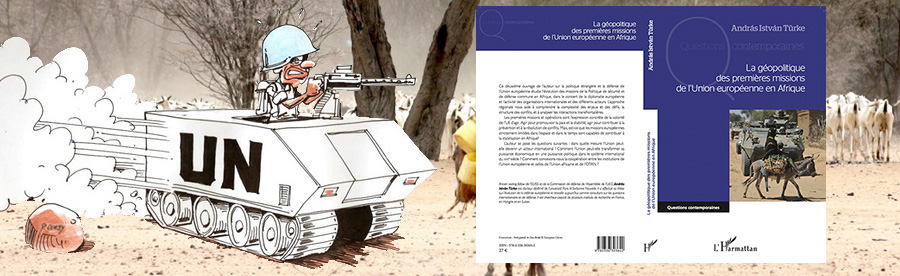
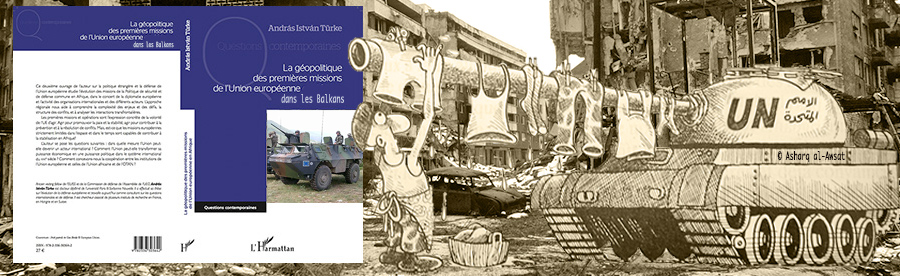
We are looking for sponsors for the English translation of these books, please contact turkeandras(at)gmail(dot)com