
You are here
Africa
Twelve women have been killed in one part of South Africa since July. Here's what we know so far
South African President Cyril Ramaphosa says the murders are a "stain on our national conscience".
Twelve women have been killed in one part of South Africa since July. Here's what we know so far
South African President Cyril Ramaphosa says the murders are a "stain on our national conscience".
Remains of dozens of suspected kidnap victims found in Nigerian forests
Investigations are ongoing to establish the identities of at least 28 people whose remains were recovered by police.
Categories: Africa
Nigerian attempts to break world record by dancing non-stop for seven days
Crowds have gathered in Lagos to watch Ben Dancer, who says he will carry on dancing until Tuesday morning.
Categories: Africa
India Still Needs to Address Harmful Dark Skin Stereotypes
Sarada Murlidharan, Photo: Supplied
By Kumkum Chadha
NEW DEHLI, Sep 28 2026 (IPS)
As a young girl, Sarada Murlidharan cringed at the thought of going to school. It was not the studies but the taunts of ‘being black’ or having dark skin, where fair skin was considered preferential, that made her unhappy.
It was not a one-off: it was there as a constant, often unsaid but equally piercing. She was not one of them but one apart, and that too in the negative sense.
Back home in the silence of the night, she would often cry, something she refused to admit in her adult years: “I don’t remember if I actually cried, but yes, I used to be anxious; in fact, torn apart … my insides eaten away … Yes, I went through all that,” Murlidharan told IPS in an exclusive interview.
Those were the days, and in later years of life too, Murlidharan often questioned her destiny and the curse of her darkness; she often wished she could go back to her mother’s womb and come out “all fair and pretty.” To this day, she shudders at the painful memory of having actually asked her aunts and cousins about the soap they used “to look fair and lovely.”
Etched deep in memory are also her teenage years when her father served as a warden in an engineering college down south. A disciplinarian, he took a strong stand against a group of senior students ragging freshers.
In the Indian context, ragging is a serious issue in higher educational institutions. Even with laws in place, colleges still see numerous cases of “violent fun.” When a first-year university student was brought home in a body bag in a city in eastern India, his parents were initially unaware that a 120-minute ragging session had ended his life.
But back to Murlidharan and her father, who had rusticated students on charges of ragging. Sarada recalls how every time that she and her sister stepped out, there were catcalls referring to her dark skin: “We heard it every single day. Words like ‘irrutu murali’ and ‘kurutte budhi’ … continue to haunt me.”
In Malayalam, which is spoken in the southern part of India, ‘irrutu’ means ‘pitch dark’. Roughly translated, ‘irrutu murali’ and ‘kurutte budhi’ mean someone who is pitch dark and has a devious mind.
Memories run deep: the bitter ones are often buried not to surface again. But this memory did surface, thanks to a social media post that created havoc in India. It brought alive an issue that was kind of buried within deep recesses.
The stigma of being dark stung yet again. It also brought an issue out in the open: one that had until now been private to those battling the curse of being dark-skinned.
When Muraleedharan woke up that morning when she was still serving in the state government in a senior position, it was like any other day, unaware that a storm awaited.
A Facebook post had allegedly commented on her skin colour. Worse still, it was a peg to compare her work with that of her husband, Venu Vasudevan.
“Heard an interesting comment yesterday on my stewardship as Chief Secretary — that (someone wrote that she) is as ‘black’ as my husband’s was ‘white’,” she wrote. “I need to own my blackness … I was hurt, yes … it was about being labelled ‘black’, as if it was something to be ashamed of … I need to own my ‘blackness’.”
Both Murlidharan and her husband were senior administrative officers. Like her husband, Sarada served as administrative head of the state of Kerala in South India: a coveted post.
Murlidharan also made history, given that she succeeded her husband. It was the first time that a husband-wife duo had held the top bureaucratic post in the state in succession.
But back to being dark-skinned and to Murlidharan’s story.
“Incidentally, my husband is fair-skinned,” she said, adding that she was calling out those who harboured a colour bias. “I felt it was time to own my blackness … to understand that there is beauty, except it is of a different kind, and it is not always that being fair means being beautiful. Even we who are dark can be beautiful.”
Ostensibly, Murlidharan may have worked around all these issues, but within, she was torn apart.
“The realisation of not being good enough; not being the right colour and the constant feeling that there was something wrong in the way I was born and that ‘black’ is not a good colour to be. I wanted to change it all,” she said.
It is a battle that she has fought all by herself, confronting “our demons”, as she calls her internal strife, her private hell.
“Sometimes we win, sometimes we lose,” she said.
Murlidharan is not alone. There are others who have faced and continue to face colour bias, but unlike Murlidharan, they did not fight it out.
“Better to keep it hidden than call it out,” said Pratibha, a second-year university student in southern India.
The sentiment, rather than rejection, resonates with what Murlidharan’s husband, Vasudevan, has said.
“My sister is not ‘fair’, and she has had to endure snide remarks from the family.”
Whether or not he stood up for his sister, Vasudevan has clearly supported his wife, Murlidharan.
Defending her outburst, he said, “It was a pensive reflection of a personal experience on a matter she felt deeply about and had endured for many years. The obsession with fair complexion is deep-rooted, fed by the general discourse in a society that worships it. There is only one word for this: ridiculous.”
Ridiculous it surely is, yet this reality is deep-rooted, unspoken, and abhorred.
Colourism, now popularly known as colour discrimination, is gender-specific. The intersection of colour and gender is a double whammy. It hits women hard and is tougher on them than it is on men.
“I cannot not be a woman, and I cannot not be dark. The problems that I have had for having to prove myself for being both woman and dark do not go” Murlidharan said, underlining that men being dark is acceptable, but when it comes to women, it is frowned upon, particularly in India, where there is widespread discrimination in terms of caste, gender and, of course, colour.
Even as women are coming into their own professionally and personally, men still get the better of them on the issue of colour.
Weekends are particularly dreadful given that large matrimonial advertisements stare one in the face. The catchline: Wanted a fair-skinned bride…
Occasionally they may say ‘caste no bar’, but they never say ‘colour no bar’. The prerequisite, decidedly, is fair skin, which in India is synonymous with being pretty.
However, this statement suggests that awareness has indeed dawned upon working women. They have not only opposed the fair skin demand, which until some years ago was kind of non-negotiable, but have also protested and, in many cases, changed the status quo.
In this context, what stands out is the campaign by well-known Indian film star and producer Nandita Das, who says she is “tired of being called dark and dusky.”
UNESCO handpicked her and launched a campaign called “India’s Got Colour.”
The campaign was a take-off from an initiative launched some years ago by the founder of Women and Worth, popular as WOW in India, Kavitha Emmanuel, titled Dark is Beautiful. The India’s Got Colour campaign was a significant advance in the fight against colourism.
Once Das got actively involved, other film personalities also got involved, including Bhumi Pednekar, another well-known name in the Indian film industry. To make this clear, Pednekar had intentionally appeared in a trailer of one of her films with make-up that showed her up as darker than she actually is.
For her part, Das has faced several situations during her film career when her skin tone has been lightened simply because she is playing the role of an educated upper-class woman, quite the opposite of when she is playing the role of a slum dweller.
Das has also faced situations when her makeup man reportedly told her, “Don’t worry. I am an expert in making people look fair.” She could then have torn her hair apart.
In addition to individuals, some top brands in the corporate sector were also facing backlash on this issue.
A well-known brand, Hindustan UniLever, had to rework its campaign after a furore over its Fair and Lovely ad. And advertisements wooing women to use fairness cream were nothing new. It had been in the market for over two decades until reality struck. And once it did, there was a backlash against the company for promoting colourism and racism.
The advertisement in question relied on a narrative that portrayed dark skin as ugly and fair skin as acceptable. Over the years several complaints were filed and penalties imposed. The government too stepped in and proposed a ban on such products till companies like Hindustan Unilever rebranded and dropped Fair from its brand name. Amid clamour for the cream’s withdrawal from the market, the company renamed it Glow and Lovely.
But is that enough? Does the rebranding and name change end the bias? Or does it also apply to colourism as well? Do pro-dark-skinned campaigns make life easier for dark-skinned women in India? Or is it mere eyewash, clearly just to grab eyeballs?
Sadly, little has changed in practice. Murlidharan may have taken up cudgels against the bias, and film stars may have backed the Black is Beautiful campaigns, but the truth is that when it comes to Indian society judging women, dark-skinned is considered unattractive, and light-skinned continue to rule.
IPS UN Bureau Report
Categories: Africa, Határon túli magyar portálok összesített hírei
Pension Peril Among Populations
Smaller generations are entering the workforce as larger generations retire and begin receiving pension benefits. Credit: Shutterstock
By Joseph Chamie
PORTLAND, USA, Sep 28 2026 (IPS)
Dozens of government-funded pension programs providing benefits to hundreds of millions of men and women face growing fiscal strain and long-term sustainability challenges. These pressures are largely driven by rapid demographic transitions, including ageing populations, declining fertility, rising life expectancy, and shrinking workforces.
Many state pension systems rely on current workers to finance benefits for current retirees. In countries such as France, Germany, Italy, Spain, and the United States, these systems face increasing financial pressure as the number of workers supporting each retiree declines, while retirees live longer and collect benefits for more years.
Smaller generations are entering the workforce as larger generations retire and begin receiving pension benefits. This demographic shift is placing growing pressure on pension systems and raising concerns about their ability to meet future obligations.
As a result of these significant demographic changes, relatively fewer workers are paying into pension systems to support growing numbers of retirees who are living longer and collecting benefits for more years.
At the same time, extended families, local communities, and other traditional forms of support for retirees are weakening. Moreover, formal pension systems, including government-backed programs, have proven to be difficult to reform and, in some cases, financially unsustainable. In a growing number of countries, government pension programs are also facing insolvency.
Global life expectancy at age 65, for example, has reached 18 years, a 50% increase from 12 years in 1960. At the same time, the share of the world’s population aged 65 and older has more than doubled, from 5% in 1960 to 11% today. Global fertility has also fallen sharply, from 4.7 births per woman in 1960 to 2.2 today. Moreover, these demographic trends are expected to continue well into the 21st century (Table 1).
Source: United Nations.
Population ageing is particularly evident in some more developed countries. For example, a quarter or more of the populations of Germany, Italy, and Japan are aged 65 and older.
Moreover, the proportion of older persons is expected to increase significantly in many countries in the coming decades. By mid-century, for example, about a third or more of the populations of China, Italy, Japan, the Republic of Korea, and Spain are projected to be aged 65 and older (Figure 1).
Source: United Nations.
As a result of significant demographic changes in age structure, longevity, fertility, and the workforce, the number of pension beneficiaries is growing relative to the number of workers whose payroll taxes often finance these programs.
By 2050, the ratios of workers to retirees are expected to decline significantly in many of the world’s largest economies. In 2020, these ratios ranged from about 2 workers per retiree in Japan to about 5 in China. By 2050, the ratios are projected to fall to between 1 to 2 workers per retiree in these countries.
Furthermore, despite population ageing, increased longevity among older persons, and fewer workers per retiree, official retirement ages for receiving government pension benefits have remained largely unchanged.
Countries are moving closer to the point when their pension programs may be unable to pay full scheduled benefits. Unless governments take action, pension revenues will become insufficient in many countries to cover scheduled benefits, with financial shortfalls expected to grow substantially over the coming years
Consequently, pension costs are projected to rise as more workers reach retirement age, while slower population and economic growth constrain the tax bases that support many of the pension programs.
As the ratio of workers to retirees worsens, government officials face difficult choices about raising retirement ages, adjusting benefits, and increasing taxes.
Countries are moving closer to the point when their pension programs may be unable to pay full scheduled benefits. Unless governments take action, pension revenues will become insufficient in many countries to cover scheduled benefits, with financial shortfalls expected to grow substantially over the coming years.
The longer governments delay necessary reforms, the larger the adjustments are likely to be to close these financing gaps. Such adjustments could involve changes to revenue, benefits, retirement ages, or other program provisions.
Despite repeated warnings from pension officials and approaching financial shortfalls, pension reform has received relatively little government attention. Policymakers have generally avoided proposing comprehensive legislation to ensure the long-term financial solvency of their pension programs.
The growing pension peril underscores the urgency of addressing these financial challenges well before programs reach their projected insolvency dates. Acting sooner would give policymakers more time to make gradual changes and restore long-term financial balance.
As some countries have done in the past, governments could establish national commissions to examine the long-term finances of their pension programs. These commissions could develop recommendations and present them to government officials well before projected insolvency dates, giving policymakers adequate time to consider and implement reforms.
Governments have several options for addressing expected pension shortfalls. Policymakers could eliminate or raise the ceiling on earnings subject to payroll taxes, increase payroll tax rates paid by employers and employees, reduce cost-of-living adjustments for high-income beneficiaries, and gradually raise the retirement age as life expectancy increases.
Many of these measures, however, are politically difficult and unpopular with much of the public. Some countries, for example, are considering raising their official retirement ages, but such proposals are opposed by large proportions of the public.
Opinion surveys also indicate a preference for lower retirement ages. For example, respondents in 18 mostly middle-income countries say, on average, that the best age to retire is around 58 (Figure 2).
Source: Pew Research Center.
In sum, many national pension systems are in peril. Significant demographic changes – especially population ageing, increased longevity, declining fertility, and shrinking workforces – are placing growing financial pressure on many government pension programs and threatening their long-term sustainability.
Despite these well-known challenges and the prospect of growing financial shortfalls, government leaders have shown limited willingness to make the difficult policy choices needed to address them. Unless policymakers act, many national pension programs could face serious funding gaps, potentially leading to significant reductions in scheduled benefits for retirees and other beneficiaries.
Joseph Chamie is a consulting demographer, a former director of the United Nations Population Division, and author of many publications on population issues.
Categories: Africa, Határon túli magyar portálok összesített hírei
Why are Ethiopia's rebels joining forces?
Seven rebel groups from across Ethiopia have announced a new alliance against Prime Minister Abiy Ahmed's government.
Categories: Africa, Határon túli magyar portálok összesített hírei
Why are Ethiopia's rebels joining forces?
Seven rebel groups from across Ethiopia have announced a new alliance against Prime Minister Abiy Ahmed's government.
3 suspects arrêtés pour cambriolage du domicile d'un militaire
Une enquête ouverte après le cambriolage du domicile d'un militaire a conduit les policiers de Pahou à l'arrestation de trois suspects.
Plusieurs biens, notamment des appareils électroménagers et des woofers, avaient été emportés au domicile d'un caporal-chef des Forces Armées Béninoises.
Un mois après le cambriolage, les investigations du commissariat d'arrondissement de Pahou ont conduit, samedi 26 septembre 2026, jusqu'au receleur, puis vers une autre personne soupçonnée d'avoir fourni le matériel.
Un troisième individu a également été interpellé dans le cadre de cette même affaire.
Les opérations de perquisition effectuées au cours de l'enquête ont permis de retrouver divers équipements électroniques. Parmi les objets découverts dans une brocante figurent notamment des ordinateurs et des tables de mixage.
Les trois suspects sont gardés à vue dans le cadre de la procédure engagée par les services de police.
M. M.
Families welcome guilty verdict over Mali crash that killed 116
Relatives of the victims tell the BBC they are relieved to finally have a ruling 12 years after the crash.
Categories: Africa
'I've lost my peace' - Cape Verde hero Vozinha on newfound fame
Cape Verde's World Cup hero Vozinha says he craves the "peace and tranquillity" of the life he led before he shot to fame.
Categories: Africa, Határon túli magyar portálok összesített hírei
UK judge imposes £100,000 bail condition on Rwanda genocide accused
Brown is accused of "killing, directing or encouraging" the deaths of members of the Tutsi ethnic group in Rwanda. He denies wrongdoing.
Rohingya Camps: Children in Frontline of Food Rationing Crisis
A man carries his family’s food ration from a WFP distribution point to his shelter in Camp 11, Balukhali, Bangladesh, on September 24, 2026. Credit: Mohammed Zonaid/IPS
By Mohammed Zonaid
COX'S BAZAR, Bangladesh, Sep 28 2026 (IPS)
For Mohammed Dullah, recent cuts in UN food rations for Rohingya and other refugees in Bangladesh are not just spreading hunger but also forcing them to save on basic needs such as schooling and healthcare for his children.
“I was able to manage with my children somehow when I used to get $12 by going to work sometimes,” said Dullah, 59. “But since the reduction to seven dollars [per family member] a month, I can’t afford lots of basics anymore, like clothes, tuition fees, meat, or fish one or two times a month.”
As a result, his 15-year-old son has had to give up school to work in a market where he can earn about 6,000 taka ($49) a month to help sustain their family of nine.
Since April, food assistance has been allocated under a revised Targeting and Prioritisation Exercise (TPE) introduced by the World Food Programme (WFP). Households among the nearly 1.2 million refugees in Cox’s Bazar and Bhasan Char receive different levels of monthly food rations based on categories of assessed vulnerability.
WFP says the new system sets food aid at $12, $10 or $7 per person per month, depending on the household’s level of food insecurity. With money provided through UNHCR registration cards, families buy food from designated WFP e-voucher outlets.
Refugees limit what they eat and trade any surplus food for money to spend on healthcare, education, transport outside the camps and other necessities. For families with no access to formal employment, which is prohibited in the camps, even a relatively small reduction can result in making difficult choices.
Humanitarian agencies are warning that global funding cuts are driving up hunger levels. Children make up more than half of the refugee population in Cox’s Bazar.
“Conditions in the world’s largest refugee settlement are worsening at an alarming rate after nine years, with 35% of Rohingya refugees in Bangladesh expected to face ‘crisis’ or ‘emergency’ hunger levels this year, putting more children at risk of malnutrition,” Save the Children stated on August 25.
“Global humanitarian funding cuts, compounded by the resulting reductions in food rations over the past year, have exacerbated existing challenges which include overcrowded living conditions and limited access to clean water, nutritious food and livelihoods.”
A System Under Pressure
The Rohingya have been displaced from Myanmar over decades, with major waves of refugees arriving in Bangladesh in 1991–92 and again after the military-led violence of 2017. More recently, people have fled renewed violence in Rakhine State between the Myanmar military and the Arakan Army (AA), an ethnic armed organisation.
Nearly a decade after the 2017 mass exodus, many Rohingya families remain fully dependent on humanitarian assistance. Bangladesh restricts refugees’ access to formal employment, while humanitarian organisations provide food, basic informal education, basic healthcare, water, sanitation and other essential services.
International funding has come under increasing pressure. The UN and its partners have appealed for $710.5 million under the updated 2026 Joint Response Plan (JRP) to support Rohingya refugees and host communities, its lowest level in a decade. So far this year it is 50 percent funded.
WFP’s new assessment found that all Rohingya refugees were food insecure, but that severity differed between households. Households are newly classified into three categories: extremely food-insecure households receive US$12 per person per month, highly food-insecure households receive $10, and food-insecure households, which make up almost 70% of the total, receive $7.
The system is intended to allocate assistance according to need rather than simply impose a blanket reduction because of funding shortages.
WFP says that even the lowest level of assistance is sufficient to meet minimum food needs. But families and INGOs in interviews with this reporter describe a more complicated reality.
Dullah says he is unable to work because of a long-term illness, but his household was categorised at the $7-per-person level. According to Dullah, the family receives basic food items, including rice and cooking oil, but they have little left over to obtain other foods or meet other expenses.
As with other Rohingya refugees, Dullah has no legal access to paid employment, but the levels of food they receive force them to work.
“You cannot expect people to become self-reliant while preventing them from earning a living. If WFP and other agencies want us to rely more on ourselves, they also need to support legal opportunities for Rohingya refugees to work and earn an income,” he said.
“Even before, we struggled with not having enough food when we got $12,” said Dullah, who worries about his children’s growth development. His 18-month-old granddaughter needs infant formula because her mother, lacking in food, struggled to meet the child’s needs by natural feeding.
WFP essentially categorised households according to their composition.
For example, the Extremely Food Insecure bracket includes those headed by a child or by a person with disabilities, female-headed households without an able-bodied adult man aged 18–59, elderly-headed households without an able-bodied adult man, households with two or more persons with disabilities, and one-member households.
The main category of food insecurity covers male-headed households with able-bodied men and no members with disabilities, female-headed households with an able-bodied man and no members with disabilities, and households without females aged 18 to 49 or without members with disabilities.
Selling Food to Pay for Other Needs
Sawyedul Amin, 34, receives assistance valued at $10 per person for his household living in Lambashia Camp in Kutupalong. They fled Myanmar in 2017, losing their father on a mountain along the way.
He has two young children, a sick mother and a wife who has undergone two operations, one related to childbirth and another for a tumour.
“If we want to eat fish or meat, we cannot afford it,” he said. “We also have small children, which means we have additional expenses for them. I also have an ill mother, which makes our medical expenses even greater.”
Sawyedul said he sometimes sells part of his family’s food allocation to obtain cash for those expenses.
Selling or trading food for medicines or services is nothing new in the camps, and the impact has been well documented in earlier cuts.
In 2023 funding shortages forced WFP to reduce monthly food rations from $12 to $10 and then further to $8 in June that year. Monitoring found deteriorating food consumption and worsening nutrition indicators.
Sawyedul said other organisations previously sometimes provided his family with additional assistance, but some of that support has declined. “We now have only the WFP to look to for assistance,” he said.
Flaws in the Rationing System
Radia Bala, a 60-year-old widow among a refugee community of about 1,000 Hindus, had to survive with no assistance at all for five months this year. Her family, along with many others, eventually started to receive aid in July.
Radia, from Nakpura village in Myanmar, arrived in Bangladesh with her family in 2024 after fighting between AA insurgents and the Myanmar military spread through her area.
She recalls ground and air attacks, homes burnt down, and relatives and neighbours killed around her. The insurgents also targeted them for forced recruitment. Their escape involved a three-day journey, partly through mountains.
After reaching Bangladesh, Radia says her family received a smart card and initially received food assistance, cooking gas and soap. But then it stopped in December 2025. “I wasn’t given an exact reason by the authorities why it was stopped,” she said.
Radia now rents space in the house of a local Bangladeshi family from the Barua ethnic group. She is among nearly 150,000 newly arrived refugees who have not been provided with shelter, having crossed from Myanmar’s Rakhine State between December 2024 and March 2026.
Radia and her daughter, who has a six-month-old baby, work as cleaners to survive. “During those months [with no food aid], we ate only rice with leafy vegetables,” she said. When assistance was available, she said, the family could sometimes eat chicken, eggs and bananas.
Her experience highlights serious flaws in the system of allocating food rations, namely that access depends on registration and connection to the mechanisms through which it is delivered.
Radia says that when people from her community arrived in 2024, they were told that food assistance would be available if they stayed inside the camps. But she says the family found it difficult to remain there because of shortages of shelters, water, toilets and washrooms.
“We stayed in the camp for about a month in a relative’s shelter, but life there was very difficult,” she said.
Her family subsequently moved between relatives’ homes and other temporary locations. “We have been living from place to place, staying on the streets and in other people’s homes.”
After raising complaints and following media coverage of their plight, she started receiving $12 per person. But Radia says she needs to sell half of that to pay for room rent.
Her request is simple. “Our first need is food assistance, and our second need is shelter,” she said.
WFP says it provides monthly food assistance to all the refugee population, including people who arrived after 2024, according to their assessed need.
Risks for Children are Worsening
Golam Mostofa, head of Save the Children’s Cox’s Bazar Area Office, said children are increasingly exposed to risks as families struggle with limited resources and opportunities.
“The situation is getting worse day by day,” he said.
Child protection monitoring had raised increasing concerns over child labour and child marriage, as well as other risks facing children and adolescents, he added.
However, Mostofa cautioned against assuming that every reported case of child labour, child marriage, malnutrition or dropping out of NGO learning centres was caused by the latest food-assistance changes.
However, Save the Children’s current assessment warns that worsening access to nutritious food, healthcare and other essentials is increasing pressure on children.
The NGO predicts that by the end of this year, some 10 percent of refugees in camps in Cox’s Bazar will fall into Phase 4 of the international classification of “humanitarian emergency”, which is defined as leading to frequent deaths and increasingly high rates of malnutrition. This is defined as one step before famine and humanitarian catastrophe.
Mostofa appealed to donors to continue supporting food, education, healthcare, water and sanitation while also expanding opportunities for skills development and safe livelihoods.
The WFP Bangladesh communication team did not respond to requests for comment.
Refugees Face Dangerous Choices
While Save the Children has been working in Cox’s Bazar since 2012 with programmes for education, healthcare, water and sanitation and child protection, a whole generation of Rohingya children has grown up in camps which began as emergency settlements but have turned into long-term places of residence.
For families with limited access to formal employment, humanitarian assistance remains central to daily life. Continued civil war in Myanmar, driven by an entrenched military regime backed by China, provides little prospect of a durable solution that would allow the mostly stateless Rohingya to return to their homes.
Committing their lives to human traffickers and fleeing Bangladesh by sea in search of a better life is extremely perilous. An estimated 5,000 refugees are believed to have perished over the past decade while attempting to reach other countries in Southeast Asia.
Dullah still talks about returning to Myanmar, remembering the land he farmed and the cows and buffaloes he owned before his family were forced to flee in 2017. “I want to be able to return and rebuild my life,” he said.
As world leaders met in New York for the UN General Assembly, Bangladesh Prime Minister Tarique Rahman called for a clear roadmap for the safe, voluntary, dignified and sustainable return of Rohingya refugees to Myanmar, alongside continued humanitarian support, protection of civilians and international accountability.
Until that becomes possible, refugee families like Dullah’s remain dependent on an aid system based on calculations of dollars per person, while the choices they face are measured in meals, medicines, school days and the future of their children.
Note: This story was produced with support from Moving Minds Alliance (MMA) through the Reporters for Early Childhood in Humanitarian Crisis (REACH Network) Advocacy Stories Fund
IPS UN Bureau Report
Related Articles
Categories: Africa, Central Europe
L'homme le plus riche d'Afrique contribue au financement d'un oléoduc de 660 millions de dollars reliant l'Éthiopie à Djibouti
Ce pipeline renforcerait la sécurité énergétique de l'Éthiopie, pays enclavé, tout en créant des emplois dans le port de Djibouti.
Two mass shootings in South Africa leave 28 dead
The two attacks hours apart come as the country struggles to stop high levels of gang-related armed violence.
Categories: Africa
The Global Leaders Network Pushes to Protect Women’s and Children’s Health
Helen Clark, Chair of the Board of Partners for the Partnership for Maternal, Newborn and Child Health (PMNCH), moderates the event "Financing for Women's, Children's and Adolescents' Health in a Time of Austerity", hosted by the Global Leaders Network. Credit: UN Photo/Manuel Elías
By Shuli Wong
UNITED NATIONS, Sep 28 2026 (IPS)
In the wake of the largest decline in global health financing on record, the Global Leaders Network (GLN) for Women’s, Children’s and Adolescent Health convened a high-level meeting on September 22 to sustain political momentum for women and children’s health financing. The event, Financing for Women’s, Children’s and Adolescent’s Health in a Time of Austerity, was co-hosted by the Governments of South Africa, Spain, and Tanzania, in addition to the Partnership for Maternal, Newborn, and Child Health (PMMCH).
Throughout the meeting, GLN members repeatedly called for a financing reset for women’s, children’s, and adolescent health (WCAH), warning that reduced global assistance and rising debt could reverse decades of progress. In 2025, official development assistance (ODA) fell to USD 174.3 billion, a 23.1 percent drop from 2024 and the largest annual decline on record. Simultaneously, the external debt in low- and middle-income countries reached a record USD 8.9 trillion, with debt-servicing costs remaining at a historic high. The reduction in assistance, with the increase in debt, has limited governments’ abilities to invest in essential services, leading to consequences for WCAH.
In low- and middle-income countries, an estimated 260,000 women died in 2023 from preventable causes related to pregnancy and childbirth. In 2024, an estimated 4.9 million children died before their 5th birthday from deaths that are preventable with low-cost interventions and access to quality health care. Members of the GLN framed this challenge less as finding replacement funds for the declining aid, but instead, governments need to ensure that existing resources are allocated, protected, and used effectively to deliver improvements in WCAH.
“We know that issues of women, children, adolescent health and well-being can’t be solved by ministers of health alone. They need head of state support, they need minister of finance support, and there are always political choices to be made about what we protect when the resources are scarce,” said Helen Clark, chair of the board of the PMNCH and moderator of the meeting.
Dr. Tedros Adhanom Chebreyesus, WHO Director-General, also called for the protection of health budget lines for WCAH, in particular the protection of sexual and reproductive health in humanitarian settings, and stronger accountability and reporting of results. “A policy without a budget is a press release. A commitment without financing is a promise already broken,” he said.
During Tuesday’s meeting, representatives continued to stress the point of investing in primary health care. In particular, the importance of midwives, community health workers, vaccines, medications, nutrition services, clinics, and referral systems that women, children, and adolescents depend upon. Helga Fogstad, Director of the UNICEF Health Programme, urged governments to protect these foundations when preparing the 2027 budgets. Fogstad urged the prioritization of “domestic resources for what has the greatest impact, ensuring essential medicines, vaccines, and nutrition supplies are available where they are needed and investing in enough trained, equipped, and paid healthcare workers to reach every community”.
Diene Keita, Executive Director of UNFPA, stressed the importance of investing in maternal care and family planning: “World leaders and financial experts agree, investing in women and girls delivers unbeatable returns.”
An audience member at the event “Financing for Women’s, Children’s and Adolescents’ Health in a Time of Austerity”, hosted by the Global Leaders Network. Credit: UN Photo/Manuel Elías
Country examples presented during the session illustrated how investing in WCAH has been translated into policy. For example, under Nigeria’s Health Sector Renewal Investment Initiative, Nigeria has moved away from fragmented donor-led programs towards greater country ownership, stronger alignment of resources and accountability for results. Nigeria has already committed nearly $3 billion in domestic health financing over five years in addition to USD 2 billion of US support. The result of this has been revitalizing more than 4,000 primary health centers, retraining 80,000 frontline health workers, a 34 percent increase in deliveries by skilled birth attendants, and a 22 percent reduction in maternal mortality among women delivered in the facilities.
A tension emerged during the session between greater national ownership for countries and the continuing need for international solidarity. Speakers across the board discussed the need for blended finance, pooled funding, and debt-for-health swaps, while institutions like the World Bank and Islamic Development Bank advocated for moving isolated projects into integrated national systems. Issa Faye, Director General for Global Practices and Partnerships at the Islamic Development Bank, stressed how the “challenge now is to help the countries move beyond the short-term responses”.
“We should go away from project by project to really act in a more massive way through the system. We need to talk about the system, not the project,” said Faye.
In closing, the GLN committed to stronger country-led financing, domestic resource mobilization, and appropriately designed financing mechanisms. In addition, donors were called upon to align assistance with countries’ national plans. The focus was that austerity cannot become health austerity; instead, political declarations and financing plans must protect frontline services and lead to a measurable reduction in preventable deaths.
IPS UN Bureau Report
Categories: Africa, Central Europe
BRAZIL: ‘Resistance Is Intergenerational, and Art Is How Energy Gets Renewed’
By CIVICUS
Sep 28 2026 (IPS)
CIVICUS discusses the role of art in climate and rights struggles in the Brazilian Amazon with Tom Wheeler, executive director and co-founder of Treesistance. Treesistance is a platform operated by the Netherlands-based Sinchi Foundation that partners with Indigenous communities across four Brazilian states on cultural preservation and forest protection.
Tom Wheeler
Indigenous peoples steward a large share of the world’s forest biodiversity but receive only a small fraction of global conservation funding and are often excluded from climate and environmental decision-making spaces. Their traditions, oral histories and visual cultures are under pressure, including from land loss and the slow erosion of intergenerational knowledge.How did art become the centre of a forest protection initiative?
Sinchi, the foundation behind Treesistance, was set up in 2016 as a cultural organisation. I believed we needed a societal or spiritual shift, so in our first years we ran festivals, film screenings, galleries, music events and debates, and built art and documentary projects with Indigenous communities across six continents.
At some point I went through a bit of a crisis, questioning what real impact this work was having. Then I met Vandria Borari, a brilliant Indigenous lawyer and celebrated ceramic artist from western Pará, a state in the Brazilian Amazon. She introduced me to the Tapajós and Arapiuns Indigenous Council, an association that represents 14 Indigenous groups in the Lower Tapajós region. In 2021, our focus shifted to the Amazon, and in 2023, together with our Indigenous partners, we co-created Treesistance as a platform built around four pillars: access to justice, communications, renewable energy and sustainable economic development.
The access to justice work is what we’re best known for. We support Forest Guardians, community-led groups that patrol and defend Indigenous territories against illegal logging and other threats, and we help build strong relationships between the territories and Brazil’s Public Prosecutor’s Office, which has a constitutional mandate to defend Indigenous rights.
That shift toward tangible, on-the-ground impact didn’t push art aside. If anything, it made clear how essential it was. Art isn’t a side product or a tool for us. It’s central to the community aspect of this work, to participation and authenticity, and to what the wider decolonial tradition is trying to achieve, of giving voice to communities and centring them in their own stories. Everything we do is co-created, but it’s led by our Indigenous partners. This carries multiple meanings for them, not least the pride of building something of their own from the ground up.
What’s the Tales of Resistance project?
Tales of Resistance is led on the ground by Vivi Borari, a talented young Indigenous woman. The idea was to build an archive, first and foremost for Indigenous communities’ use and records, telling the stories of the Majés and Pajés – plant healers, shamans and spiritual guides within these territories – from the inside out.
The project is about telling their origin stories, how they work within the community, what their roles and responsibilities are and the messages they carry from the spirits to the world. Once those stories exist on the communities’ terms, and with their consent, they can also travel further, which is why we’re now developing them into an exhibition. That kind of storytelling matters because one of the biggest challenges impact organisations face is talking only to people who already agree with them and failing to reach beyond that circle. Art and storytelling are how you break through.
We also took a deliberately different approach to how these stories are gathered. Turning up with a camera and asking people to explain their culture on the spot is a very western way of working. Just imagine how strange it would feel if someone did that to you. So we don’t do that. For us, everything starts as an audio recording while we are sitting together, having tea, walking in the forest, just talking about people’s experiences. Many of these stories would simply never be told in front of a camera. Only afterwards do we do a photo shoot, and that’s when we layer the audio and images together.
What films have you made, and what impact have they had?
Two years ago, we made a short film, Curupira, sharing the story of one of the forest’s spirits as told by one of the communities we work with. It was nominated for awards at film festivals around the world. It’s a tangible example of what storytelling can do for us. It brought in new interest, funders, partners and collaborators, people who wouldn’t otherwise have found their way to this work.
In 2026, we released another short film, Surara – Spirit of Resistance, directed by Lea Hejn, which won the Guardians in Action category at the Santiago Wild Film Festival in Chile. It includes footage from patrols led by Chief Dadá Borari, head of our Forest Guardian programme.
What changes when communities see themselves represented, and why do you call this resistance rather than activism?
The cultural scene, in the global south as much as the global north, is still working through questions of representation, making sure people see the diversity of their context reflected on screen. As Vivi has said, our biggest impact comes when Indigenous people see themselves and their reality reflected. This changes their self-perception. They no longer see themselves as victims but as people with agency, as fighters. That’s a qualitative impact that’s genuinely hard to put into a single sentence or measure in the way we measure hectares protected. But it’s real, and it’s the storytelling and narration that make it happen.
That’s also why we don’t use the word ‘activism’ much. It’s a strange word, a badge of honour to some people, something to avoid for others, and I think it’s fundamentally a western construct. There shouldn’t be anything activist about wanting to protect the health of the planet or stand up for human rights. That should be a key component of being a good person.
For our Indigenous partners, the stakes are different, though. For them, this work is intrinsic to survival, both literally, given the violence they face from illegal and aggressive forces, and culturally, in the sense of keeping traditions such as their graphic art and oral storytelling alive.
‘Resistência’ is the word I hear most often within Indigenous communities, whether people are talking about protecting their culture or land. It’s not a one-off response to a single government or form of exploitation, but something long-term and intergenerational, and like any form of resistance, the energy behind it runs low if it isn’t renewed. Art is one of the ways that energy gets renewed, generation after generation. That’s why we called the storytelling project Tales of Resistance and the wider platform Treesistance.
What other art initiatives do you run?
Storytelling extends into our product collaborations with local Indigenous artists, who create things such as clothing and notebooks. One example is Guardian of Nature, a T-shirt based on the Guardians’ uniform design. Buying one pays for a uniform for a Forest Guardian on the ground.
We’ve also launched a drink called Purpose, now going into restaurants in the Netherlands. A portion of the proceeds from every bottle sold supports our Forest Guardian projects. The brand itself is built around storytelling. It’s about people identifying their own sense of purpose in the world. So it’s art, but commercially driven, aimed at creating impact on the ground.
We held an open art and design competition for Indigenous artists from the 14 ethnic groups or nations of the Tapajós, focused on expressing their culture and relationship with nature. It brought the artists local and regional recognition through an event where the Indigenous Council, artists and other partners came together to celebrate the work.
How do you avoid the exploitative imagery typical of development fundraising?
Traditional development fundraising tends to rely on a particular kind of emotional imagery – a poor person, a hungry child, an old man in need – because that’s what drives donations from the kind of donor it targets. We deliberately avoid that.
There’s a well-known quote, often attributed to the Aboriginal Australian academic Lilla Watson, although she credits it to a collective of Aboriginal activists, that says, ‘If you have come here to help me, you are wasting your time, but if you have come because your liberation is bound up with mine, then let us work together’.
None of the communities we work with are looking for charity. The role they play in protecting the Earth and their culture has real value in itself and, in my opinion, we need their wisdom more than they need us. We never describe ourselves as the communities’ funder. We’re a partner. When we help raise money, we’re clear that it was never ours to begin with. If it comes with requirements attached, the conversation is always about how we meet them together rather than about us imposing them. That’s the same principle whether we’re talking about a grant, a story or art. It has to build something the community owns, not something we extract.
CIVICUS interviews a wide range of civil society activists, experts and leaders to gather diverse perspectives on civil society action and current issues for publication on its CIVICUS Lens platform. The views expressed in interviews are the interviewees’ and do not necessarily reflect those of CIVICUS. Publication does not imply endorsement of interviewees or the organisations they represent.
GET IN TOUCH
Website
Instagram
LinkedIn
SEE ALSO
‘Art is the only weapon that doesn’t hurt or kill’ CIVICUS Lens | Interview with Tara Abdullah 17.Sep.2026
‘Art has proven itself the one thing that can reach the world and stir it into action’ CIVICUS Lens | Interview with Iman Aoun 14.Sep.2026
‘Thanks to art, climate change stops being a distant issue – it becomes personal, immediate and visceral’ CIVICUS Lens | Interview with Nicola Haskins 17.Sep.2024
Categories: Africa, Central Europe
The Dollar-Gold Standard’s Lingering Demise
By Jomo Kwame Sundaram
KUALA LUMPUR, Malaysia, Sep 28 2026 (IPS)
The 1944 Bretton Woods (BW) conference accepted the US demand to use the dollar to settle international financial transactions. This arrangement would require a US balance-of-payments deficit to issue enough dollars.
Jomo Kwame Sundaram
But every dollar abroad was, in principle, a claim on US monetary gold. With dollar liabilities exceeding US gold reserves by the 1960s, the arrangement became more vulnerable.Bretton Woods
At BW in July 1944, 44 allied nations met to design the post-war world monetary system. John Maynard Keynes represented the UK, no longer financially dominant due to its heavy public debt fighting two world wars.
Harry Dexter White represented the US, which then held two-thirds of the world’s monetary gold, while other countries needed dollar loans for trade and reconstruction. The US promised foreign governments and central banks to convert dollars to gold.
With the US BW promise to redeem an ounce of gold for $35, the dollar became the world’s reserve asset. Every other currency’s exchange rate was fixed against the dollar, in principle, adjustable with IMF approval.
Instead, Keynes proposed a reserve currency, Bancor, managed by an international clearing union to avoid any national currency becoming dominant; a payments system using a national currency could eventually force others to accept its national policies and priorities.
Unsustainable by design
The BW agreement also created the International Monetary Fund and the World Bank. Each member nation was assigned a quota, partly paid in gold and its own currency.
A member nation’s quota determined both its voting weight and how much it could borrow if it needed to borrow when its own currency came under pressure.
The dollar-gold peg was vulnerable by design. For the arrangement to function, the world needed a growing supply of dollars for reserves and international transactions.
In principle, the US had to have enough gold to honour all claims against it. This requirement was met in 1944, when its gold reserves were vast, while other economies were ruined. However, these conditions were not met for long.
As currency devaluations were stigmatised, currency pegs were rarely adjusted. Governments defended unrealistic exchange rates, unjustified by their reserves.
Instead of adjusting gradually, fixed exchange rates would adjust abruptly, typically after crises, as with sterling in 1967 and the dollar in 1971.
Keynes had insisted on allowing governments to manage cross-border capital movements, expecting free-flowing speculative capital to undermine fixed exchange rates.
For a decade and a half, most European governments used the IMF’s sixth Article of Agreement to restrict how freely money could leave their countries and thus defend their currency pegs.
As strong post-war recoveries turned Europe’s dollar shortages into surpluses, capital controls were gradually loosened from the 1960s.
London Gold Pool
The US Congress ignored Triffin’s warning. Instead, in late 1961, the US organised seven European central banks into the London Gold Pool, coordinated by the Bank of England rather than by treaty.
It worked for a while. Whenever private demand pushed the gold price over $35/ounce, participating banks sold their bullion to bring the price down, to buy gold!
From 1962, currency swap lines involving the same central banks withdrew dollars from circulation abroad to reduce demand for gold. Both efforts used a formula based on each country’s original contributions.
Rising US government spending made things worse. The Johnson administration financed both the Vietnam War and Great Society programmes without raising taxes. More dollars flowed out of the US, expanding the supply of Eurodollars.
In March 1967, without any parliamentary mandate or transparent treaty, West Germany’s Bundesbank President privately promised the Fed it would not convert its large dollar reserves from its fast-growing trade surplus into gold.
But France’s president had never accepted Washington’s abuse of the post-war arrangement. In February 1965, De Gaulle complained of the dollar’s exorbitant privilege.
This referred to the US ability to settle its liabilities abroad by issuing more dollars, instead of earning foreign exchange like others. In June 1967, France refused to continue subsidising the dollar peg by withdrawing from the Gold Pool.
Britain devalued the pound in November 1967. As speculative pressure on gold rose, other Pool central banks had to sell even more gold until they gave up on 17 March.
Two tiers
In the subsequent two-tier system, the $35 gold price was only used for transactions between central banks and governments. Another floating free-market price traded well above it.
US gold reserves, almost $20 billion shortly after WW2, were halved by 1971 as foreign governments’ and central banks’ dollar claims rose over $50 billion!
When member governments safely created official liquidity by introducing a new reserve asset, the Special Drawing Right (SDR), in 1969, the problem was highlighted again.
SDRs were allocated directly to member countries rather than tied to either gold or the US trade or current account deficit. The SDR was supposed to supplement, not replace, gold and the dollar as reserve assets.
By mid-1971, when President Nixon unilaterally ended the dollar’s gold convertibility obligation, the debate was no longer about whether the gold window could hold, but over how to close it without triggering a currency-market panic after years of speculation.
IPS UN Bureau
Related Articles
- Dollar Dominance Eroding Slowly but Surely
- Trump’s World Stagflation Also Undermines Dollar Hegemony
- New US Fed Policy Deepens World Stagflation
- Trump De-dollarisation Accelerant
- Central Bank Hedging Triggered Gold Fever
- Western Finance Ruining Economies of the Rest
- US Fed- Induced World Stagnation Deepens Debt Distress
- SWIFT Dollar Decline
- Trade, Currency War Weapons Double-Edged
Categories: Africa, Central Europe
Un professeur emprisonné pour agressions sexuelles a été libéré secrètement avant la fin de sa peine, révèle la BBC
Des images filmées en caméra cachée par la BBC révèlent qu'il a été libéré après avoir purgé moins de la moitié de sa peine.
Injured Assefa narrowly misses world record in Berlin
Ethiopian runner Tigst Assefa wins the Berlin Marathon but narrowly misses out on breaking the women's world record because of injury.
Pages
the old site is here


© 2012-2015 Europa Varietas Foundation © 2015-2020 Europa Varietas Association
www.europavarietas.org | info(@)europavarietas(dot)org | Switzerland
This is a GDPR ready site


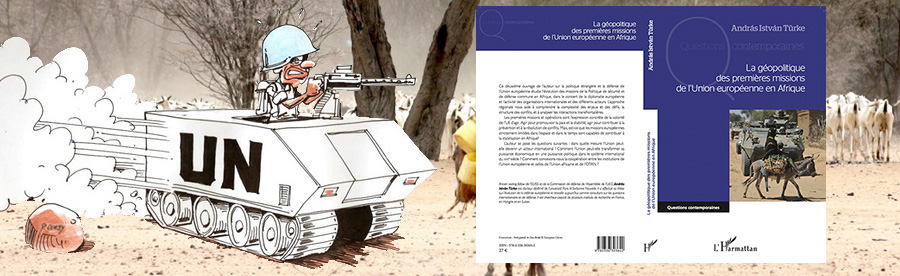
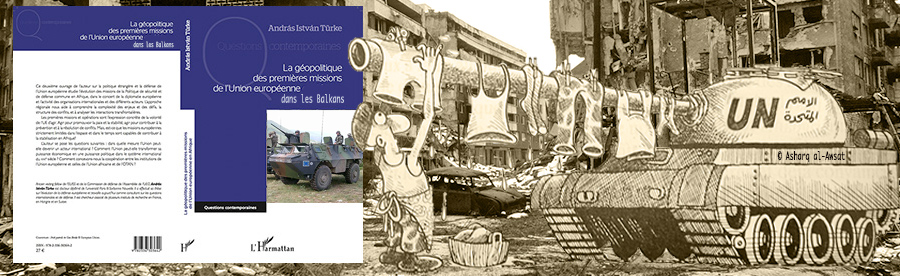
We are looking for sponsors for the English translation of these books, please contact turkeandras(at)gmail(dot)com