
You are here
Feed aggregator
Moszkva – Saját lakása előtt lőtték le Putyin egyik legfontosabb kémtábornokát
Vlagyimir Alekszejev altábornagyot, a GRU igazgatóhelyettesét egy ismeretlen fegyveres lőtte meg. A tábornokot kritikus állapotban szállították kórházba, a támadásért senki nem vállalt felelősséget – írta a Szeretlekmagyarorszag.hu hírportál.
Categories: Afrique, Határon túli magyar portálok összesített hírei
UN Security Council: Reform or Irrelevance
Credit: Denis Balibouse/Reuters via Gallo Images
By Samuel King
BRUSSELS, Belgium, Feb 6 2026 (IPS)
In early January, an emergency UN Security Council meeting on Venezuela followed a familiar path of paralysis. Members clashed over the US government’s abduction of Nicolás Maduro, with many warning it set a dangerous precedent, but no resolution came.
This wasn’t exceptional. In 2024, permanent members cast eight vetoes, the highest since 1986. In 2025, the Council adopted only 44 resolutions, the lowest since 1991. Deep divisions prevented meaningful responses to Gaza and to conflicts in Myanmar, Sudan and Ukraine.
Designed in 1945, the Security Council is the UN’s most powerful body, tasked with maintaining international peace and security, but also crucially protecting the privileged position of the most powerful states following the Second World War. Of its 15 members, 10 are elected for two-year terms, but five – China, France, Russia, the UK and the USA – are permanent and have veto powers. A single veto can block any resolution, regardless of global support. The Council’s anachronistic structure reflects and reproduces outdated power dynamics.
Since launching its full-scale invasion of Ukraine in February 2022, Russia has continually used its veto despite breaching the UN Charter. On Gaza, the USA vetoed four ceasefire proposals before the Council passed Resolution 2728 in March 2024, 171 days into Israel’s assault. By then over 10,000 people had been killed.
When the Council is gridlocked, it means more suffering on the ground. Civilian protection fails, peace processes stall and human rights crimes go unpunished.
The case for reform
Since the UN was established, the number of member states has quadrupled and the global population has grown from 2.5 to 8 billion. But former colonial powers that represent a minority of the world’s population still hold permanent seats while entire continents remain unrepresented.
Calls for reform have been made for decades, but they face a formidable challenge: reform requires amendment of the UN Charter, a process that needs a favourable two-thirds General Assembly vote, ratification by two-thirds of member states and approval from all five permanent Council members.
The African Union has advanced the clearest demand. Emphasising historical justice and equal power for the global south, it calls for the Council to be expanded to 26 members, with Africa holding two permanent seats with full veto rights and five non-permanent seats.
India has been particularly vocal in demanding a greater role on a reformed Council. The G4 – Brazil, Germany, India and Japan – has proposed expansion to 25 or 26 members with six new permanent seats: two for Africa, two for Asia and the Pacific, one for Latin America and the Caribbean and one for Western Europe. New permanent members would gain veto powers after a 10-to-15-year review period.
Uniting for Consensus, a group led by Italy that includes Argentina, Mexico, Pakistan and South Korea, opposes the creation of new permanent seats, arguing this would simply expand an existing oligarchy. Instead, they propose longer rotating terms and greater representation for underrepresented regions.
The five permanent members show varying degrees of openness to reform. France and the UK support expansion with veto powers, while the USA supports adding permanent African seats but without a veto. China backs new African seats, but virulently opposes Japan’s permanent membership, while Russia supports reform in principle but warns against making the Council ‘too broad’.
These positions reflect competition and a desire to prevent rivals gaining power. Current permanent members fear diluted influence, while states that see themselves as rising powers want the status and sway that comes with Council membership.
Adding new members could help redress the imbalance against the global south, but wouldn’t necessarily make the Council more effective, accountable and committed to protecting human lives and human rights, particularly if more states get veto powers.
A French-Mexican initiative from 2015 offers a more modest path: voluntary veto restraint in mass atrocity situations. The proposal asks permanent members to refrain from vetoes in cases of crimes against humanity, genocide and war crimes. This complements efforts to increase the political costs of vetoes, including the Code of Conduct signed by 121 states and General Assembly Resolution 76/262, which requires debate whenever a veto is cast.
New challenges
Now a new challenge has emerged from the Trump administration, which recently launched the Board of Peace at the World Economic Forum in Davos. This has mutated from a temporary institution set up by a Security Council resolution to govern over Gaza into a seemingly permanent one that envisages a broader global role under Trump’s personal control. Its membership skews toward authoritarian regimes, and human rights don’t get a mention in its draft charter.
Instead of legitimising the Board of Peace, efforts should focus on Security Council reform to address the two fundamental flaws of representation and veto power. Accountability and transparency must also be enhanced. Civil society must have space to engage with the Council and urge states to prioritise the UN Charter over self-interest.
Some momentum exists. The September 2024 Pact for the Future committed leaders to developing a consolidated reform model. Since 2008, formal intergovernmental negotiations have addressed membership expansion, regional representation, veto reform and working methods. These became more transparent in 2023, with sessions recorded online, allowing civil society to track proceedings and challenge blocking states.
However, reform efforts faced entrenched interests, geopolitical rivalries and institutional inertia even before Trump started causing chaos. The UN faces a demanding 2026, forced to make funding cuts amid a liquidity crisis while choosing the next secretary-general. In such circumstances, it’s tempting to defer difficult decisions.
But the reform case is clear, as is the choice: act to make the Council fit for purpose or accept continuing paralysis and irrelevance, allowing it to be supplanted by Trump’s Board of Peace.
Samuel King is a researcher with the Horizon Europe-funded research project ENSURED: Shaping Cooperation for a World in Transition at CIVICUS: World Alliance for Citizen Participation.
For interviews or more information, please contact research@civicus.org
Follow @IPSNewsUNBureau
!function(d,s,id){var js,fjs=d.getElementsByTagName(s)[0],p=/^http:/.test(d.location)?'http':'https';if(!d.getElementById(id)){js=d.createElement(s);js.id=id;js.src=p+'://platform.twitter.com/widgets.js';fjs.parentNode.insertBefore(js,fjs);}}(document, 'script', 'twitter-wjs');
Categories: Africa, Diplomacy & Defense Think Tank News
PS: Kaliňáknak a pozsonyi "kukoricára" felbiggyesztett nyári mozija volt a felár a hadsereg megatenderében
2026. 2. 6. A Progresszív Szlovákia (PS) parlamenti sajtótájékoztatója
Categories: Afrique, Határon túli magyar portálok összesített hírei
Le Bénin au rythme des arts à la 4e édition du FInAB
Le Festival international des arts du Bénin (FInAB), plateforme dédiée à la promotion des expressions artistiques et des industries culturelles et créatives, aura lieu cette année 2026, du 20 février au 1er mars à Family Beach à Cotonou. L'annonce a été faite ce jeudi 05 février, lors d'une conférence de presse animée par le président du FInAB, Ulrich ADJOVI, le directeur général de l'Agence de développement des arts et de la culture (ADAC), William CODJO, le directeur artistique du FINAB, Aristide AGONDANOU, et le représentant de l'association des stylistes et professionnels de la mode au Bénin, Félicien CASTERMAN.
« Les industries culturelles et créatives : levier de diversité culturelle, de coopération et de paix », c'est la thématique au cœur de la 4e édition du Festival international des arts du Bénin. Durant 10 jours, le festival fera vibrer les sept disciplines à savoir les arts visuels, la musique, la danse, le cinéma, la mode, le théâtre et la littérature. Cette année, un coup de projecteur particulier est porté sur la mode et la musique, piliers de l'identité et de l'économie créative africaine.
Lors de la rencontre avec la presse ce jeudi 5 février 2026, le président du FInAB, Ulric ADJOVI a évoqué les innovations apporté à cette 4e édition. L'une des principales innovations, a-t-il informé, est la célébration de la coopération culturelle à travers des initiatives telles que le Nigéria Day, le Togo Day, le Liban Day, et le Maroc Day. A l'en croire, des espaces sont réservés pour célébrer la paix, la coopération, et la vie des artistes de ces pays-là.
La mode étant l'une des thématiques au cœur de cette édition, un grand défilé de mode est prévu. A cela s'ajoute des prestations artistiques et un challenge spécial appelé ‘'Chasse au trésor''. Il s'agit dans ce cadre, de découvrir des masques du FInAB posés à des endroits précis dans les villes de Cotonou et d'Abomey-Calavi, pour remporter la somme de un million de francs CFA.
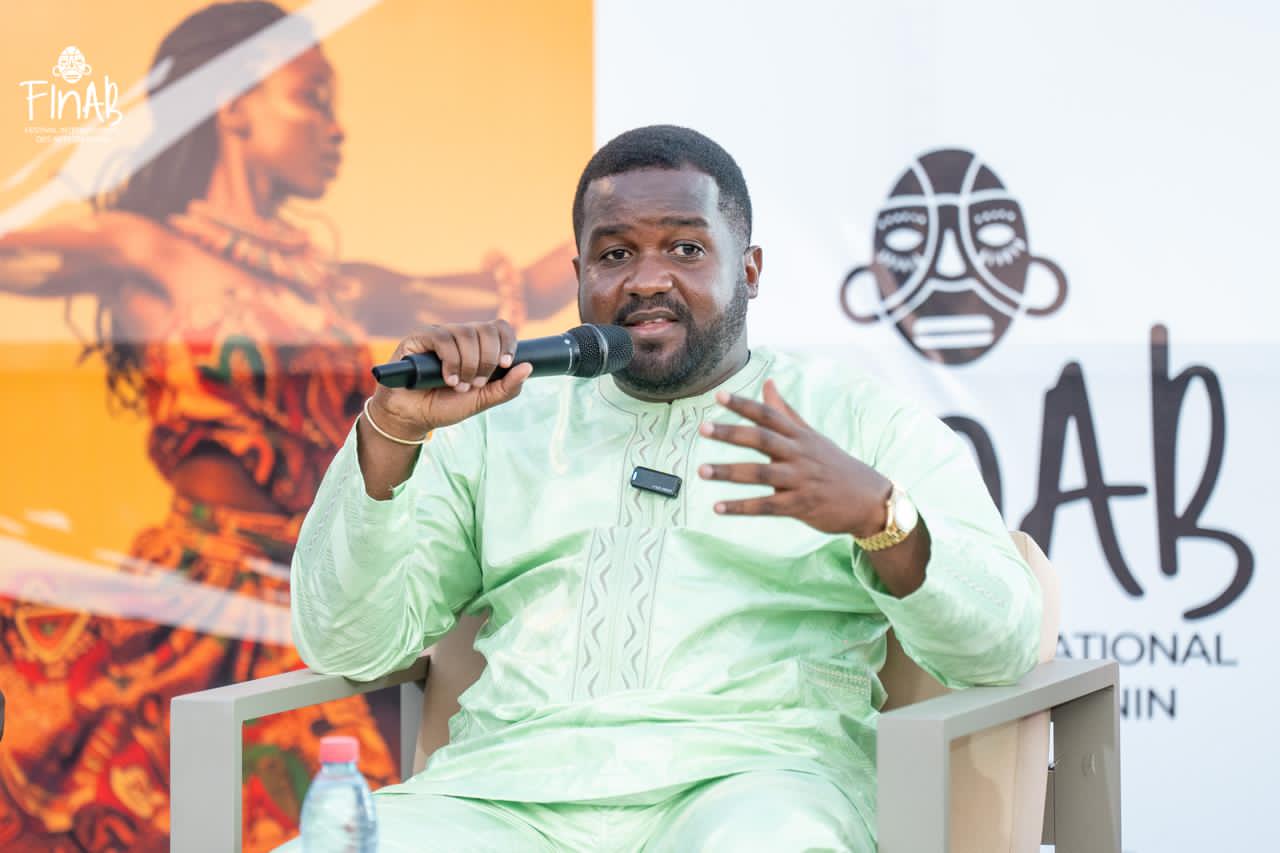
Les assurances des stylistes et créateurs de mode
Félicien CASTERMAN, au nom des stylistes et créateurs de mode rassure que les acteurs de la mode n'auront pas d'autre choix que de montrer « le meilleur d'eux-mêmes » à cette édition du FInAB. La mode, a-t-il souligné, impacte tout individu, quel que soit son statut, et répond à l'un des besoins fondamentaux de l'homme ; celui de se vêtir. C'est un vaste domaine qui regroupe les mannequins, les agences d'association de mannequinats, les promoteurs de mode, les photographes de mode, a fait savoir le président des stylistes et créateurs de mode, a expliqué Félicien CASTERMAN.
Le directeur général de l'ADAC, a rappelé à l'occasion, la politique culturelle du Bénin ; laquelle veut que la culture permette aux professionnels qui évoluent dans les différents disciplines d'expression artistique, de générer des revenus d'abord pour leur profit, et qu'ensuite, que cela puisse ruisseler sur l'ensemble de la société. « Que la culture également contribue à améliorer l'attractivité de nos territoires dans le but de nous permettre de partager notre culture, non seulement avec nous-mêmes mais avec nos voisins et avec le reste du monde », a ajouté William CODJO.
Pour un festival en pleine croissance, l'enjeu selon le DG de l'ADAC, est de « faire en sorte qu'il traverse « de manière heureuse » cette phase de croissance, arrive à maturité, mais n'entre pas dans sa phase de déclin. Et pour cela, il a évoqué le maintien des exigences de rigueur, l'interaction avec les autres pays pour avoir les formules gagnantes, faire un benchmark pour les intégrer et pouvoir également innover. Il a ensuite souhaité qu'on maintienne l'équipe qui porte le festival « soudée », permettre aux membres de gagner en compétences et en expertise afin de pouvoir mettre cette expertise-là de manière continue au service du festival.
Outre Cotonou, la 4e édition du FInAB va se dérouler dans les villes de Porto-Novo, de Ouidah, et Parakou, dans la région septentrionale. Plusieurs pays sont annoncés. Le président Ulrich ADJOVI a cité entre autres, le Togo, la Côte d'Ivoire, le Niger, la Guinée, le Nigéria, la RDC, le Sénégal, le Burkina Faso, le Mozambique, le Brésil, le l'Espagne, la France, le Canada, la Belgique, les USA, etc.
Le FInAB est une initiative de Ulrich ADJOVI, promoteur du Groupe Empire. C'est un festival qui se positionne comme un espace de dialogue, de création et de coopération où les cultures se rencontrent et se révèlent. Véritable carrefour des industries culturelles et créatives, il favorise l'émergence de talents, le développement des filières artistiques et le rayonnement du Bénin à l'international.
F. A. A.
Categories: Afrique
Entretien : la Moldavie est ouverte à une adhésion à l’UE en deux temps, selon le ministre des Affaires étrangères
Toutefois, « l'objectif ultime est, bien sûr, de devenir un État membre à part entière », a rappelé le ministre moldave des Affaires étrangères Mihai Popșoi.
The post Entretien : la Moldavie est ouverte à une adhésion à l’UE en deux temps, selon le ministre des Affaires étrangères appeared first on Euractiv FR.
Categories: Swiss News, Union européenne
Washington rompt le dialogue avec le président du parlement polonais après une controverse autour du Nobel et de Trump
Les États-Unis ont annoncé qu’ils allaient cesser tout contact avec le président du parlement polonais, Włodzimierz Czarzasty, après son refus de soutenir la candidature de Donald Trump au prix Nobel de la paix et ses critiques à l’égard de la politique étrangère américaine.
The post Washington rompt le dialogue avec le président du parlement polonais après une controverse autour du Nobel et de Trump appeared first on Euractiv FR.
Categories: Swiss News, Union européenne
Is the US Planning to Throw a Lifeline to a Sinking UN?
Credit: United Nations
By Thalif Deen
UNITED NATIONS, Feb 6 2026 (IPS)
The current UN financial crisis, described as the worst in the 80-year-old history of the world body, triggers the question: is the US using its financial clout defaulting in its arrears and its assessed contributions to precipitate the collapse of the UN?
If the crisis continues, the UN headquarters will be forced to shut down by August, ahead of the annual meeting of world leaders in September this year, according to a report in the New York Times last week, quoting unnamed senior UN officials.
But apparently there is still hope for survival —judging by a report coming out of the White House.
Asked about the current state of finances, UN Spokesperson Stephane Dujarric told reporters February 5: “We’ve seen cuts by the United States. We’ve seen cuts by European countries over the last year. And every day, I talk to you about what happens when there’s no money, right?”
“Rations are being reduced, health care not being delivered. So, I mean it’s pretty clear. In terms of the Secretariat, should it come to pass, it will impact our ability to run meetings in this building, to do the political work we do, the peacekeeping work that we do”, he pointed out.
About hopes of a possible resolution, he said “I do also have to say that we saw the reports…earlier this week – of the President of the United States signing a budget bill, which includes funding for the United Nations”.
“We welcome that, and we will stay in contact with the US over the coming days and weeks to monitor the transfers of those monies,” said Dujarric.
Meanwhile, in an interview with IPS last week, Sanam Naraghi Anderlini, Founder/CEO, International Civil Society Action Network (ICAN), said the potential financial collapse of the UN is depressing and yet so indicative of these times, when leadership everywhere is devoid of any sense of responsibility and has no care for the future.
They are the antithesis of the UN’s founding fathers and mothers, who, having experienced the hell of war and destitution first hand, committed themselves to creating a global peace and security architecture with the goal of preventing such hell for us – the future generation – their descendants, she argued.
“We all know that the UN system has never been perfect. It has never lived up to its potential. Often this has been due to the shenanigans of the powerful states, who persist in manipulating the institution for their own interests”.
The UN Security Council has long been the insecurity Council, given how the P5 are all implicated in one or other of the worst wars and genocides of the past 25 years, she said.
“But they are not solely to blame. Within the system too, we have seen both leadership and staff with vested interests, benefitting from the inertia, and unwilling to uphold new practices and priorities that would have brought transformative impact”.
“But dysfunction should not lead to abandonment and the dismantling of the system. The UN cannot be stripped and have its key assets and functions sold to the lowest bidder”.
Already, she said, the dystopian (US-created) Board of Peace is akin to the corporate raiders and vulture funds of the finance world – trying to strip the UN of its key functions but with no accountability or guard rails pertaining to its actions.
As it stands, the U.S. currently owes about $2.196 billion to the U.N.’s regular budget, including $767 million for this year and for prior years, according to U.N. sources.
The U.S. also owes $1.8 billion for the separate budget for the U.N.’s peacekeeping operations overseas, and that also will rise.
As of February 5, only 51 countries had paid their dues in full for 2026—that’s 51 out of 193. A breakdown of the last four payments follows: Australia, $65,309,876, Austria, $20,041,168, Croatia, $2,801,889, and Cyprus $1,120,513.
Dr. Stephen Zunes, Professor of Politics and International Studies at the University of San Francisco, told IPS on the one hand, the United States has been in arrears in its payments to the United Nations quite a bit in recent years, but the UN has managed to get by.
However, the extent of the Trump administration’s cutbacks and the ways they are being targeted at particularly vulnerable programs has resulted in this unprecedented fiscal crisis.
“The hostility of the Trump administration to the United Nations is extreme. Trump has made clear he believes there should be no legal restraints on the conduct of U.S. foreign policy, so it is not surprising he would seek to undermine the world’s primary institution mandated with supporting international law and world order,” declared Dr Zunes.
Addressing the UN’s Administrative and Budgetary Committee last week Chandramouli Ramanathan, Assistant Secretary-General, Controller, Management Strategy, Policy said: “The UN staff is progressively losing confidence in the entire budget process,” referring to cash shortages that have led to severe spending and hiring restrictions. The United Nations needs to find a compromise that allows the Organization to function effectively, he added.
Anderlini, elaborating further, told IPS “now more than ever, the institution must be sustained and enabled to thrive and deliver on the promise of the Charter, the Universal Declaration of Human Rights and the body of conventions and policies that have been developed through painstaking work to meet the challenges of today’s world.”
When global military spending is topping $2.6 trillion, she said, the UN’s approved annual budget of $3.45 billion seems like pocket change.
“It is absurd for our governments to be borrowing billions to fund weapons, but nickel and diming the UN, governmental agencies and civil society organizations that work to prevent conflict, build peace and ensure human and environmental security.”
“We live in an era where one man’s assets may soon be valued at over one trillion dollars and the world’s billionaire class wealth increased by $2.5 trillion in just one year 2025. They are lauded and applauded even though their wealth is made on the backs, bodies and lands of “We the people of the United Nations” – whether through tax avoidance or investment in high climate impact sectors such as fossil fuels and mining.”
Perhaps they should be taxed and forced to foot the bill for their complicity in the disasters that the UN is forced to clean up.
Peace and development are good for business, she argued. “They are essential for any society to survive and thrive. The UN and the global ecosystem of institutions and people dedicated to caring for the world give us our humanity – far beyond anything that can be limited to monetary value. But in dollar terms they are a great investment with returns that benefit billions of people worldwide, not just a stockpile of deadly weapons or a handful of billionaires”.
Thanks to member states’ abrogation of responsibility to uphold human rights and prevent the scourge of war, violence cost the world $19.97 trillion in 2024, or 11.6% of global GDP. According the Institute of Economics and peace this represents $2,455 per person, includes military spending, internal security, and lost economic activity, declared Anderlini.
IPS UN Bureau Report
Follow @IPSNewsUNBureau
!function(d,s,id){var js,fjs=d.getElementsByTagName(s)[0],p=/^http:/.test(d.location)?'http':'https';if(!d.getElementById(id)){js=d.createElement(s);js.id=id;js.src=p+'://platform.twitter.com/widgets.js';fjs.parentNode.insertBefore(js,fjs);}}(document, 'script', 'twitter-wjs');
Categories: Africa, Diplomacy & Defense Think Tank News
Pellegrini Milánóban tündököl a téli olimpia megnyitóján...
Pénteken elutazott a milánói Téli Olimpiai Játékok megnyitójára Peter Pellegrini államfő. A San Siro stadionban több ezer sportolóval és a meghívott vendégekkel megtekinti a Harmónia című nyitóünnepséget, amely a sport, a kultúra és az olimpiai mozgalom értékeinek egyesülését szimbolizálja – közölte a TASR-rel az elnöki hivatal.
Categories: Afrique, Határon túli magyar portálok összesített hírei
Press briefing - Informal EU leaders' retreat of 12 February 2026
The press briefing will take place on Tuesday, 10 February at 14.30.
Categories: European Union, Swiss News
Press briefing - Informal EU leaders' retreat of 12 February 2026
The press briefing will take place on Tuesday, 10 February at 14.30.
Categories: Europäische Union, Swiss News
Press briefing - Informal EU leaders' retreat of 12 February 2026
The press briefing will take place on Tuesday, 10 February at 14.30.
Categories: Európai Unió : hírek magyarul, Swiss News
Több lövést kapott egy orosz tábornok Moszkvában, a támadó elmenekült
Euronews: Egy magas rangú orosz hadseregtábornokot többször meglőttek és megsebesült Moszkvában. A hatóságok közleménye szerint Vlagyimir Alekszejev altábornagyot a város északnyugati külvárosában található lakóházban történt támadás után azonnal kórházba szállították, állapotáról nem adtak ki jelentést. Alekszejev az orosz katonai vezérkar (GRU) főigazgatóságának magas rangú tisztje, a legutóbbi magas rangú katonai személyiség, akit az orosz fővárosban célba vettek azóta, hogy Ukrajna teljes körű inváziója majdnem négy évvel ezelőtt elkezdődött. (BBC)
Categories: Afrique, Határon túli magyar portálok összesített hírei
Le fondateur de Telegram accuse l’Espagne de menacer les libertés en ligne, Pedro Sánchez riposte
La récente interdiction des réseaux sociaux aux moins de 16 ans suscite une levée de boucliers des acteurs de la tech.
The post Le fondateur de Telegram accuse l’Espagne de menacer les libertés en ligne, Pedro Sánchez riposte appeared first on Euractiv FR.
Categories: Swiss News, Union européenne
La Grèce arrête un officier de l’armée de l’air soupçonné d’espionnage au profit de la Chine
Les autorités grecques ont arrêté un officier de l’armée de l’air suspecté d’avoir mené des activités d’espionnage. Il aurait collecté puis transmis à la Chine des informations militaires classifiées, dont certains documents liés à l’OTAN.
The post La Grèce arrête un officier de l’armée de l’air soupçonné d’espionnage au profit de la Chine appeared first on Euractiv FR.
Categories: Swiss News, Union européenne
Digital Transformation in Africa: From Gaps to Goals
This chapter analyses the digital divide in Africa by offering both a global perspective and a comparative examination of its various dimensions across and within African states. The main objective is to give an overview of the overall situation and trends in terms of moving African digital access from gaps to goals. In view of this objective, it describes overall trends to provide a continental perspective and does not provide a detailed description as to why individual countries perform differently from others. The chapter was prepared jointly with chapter 5 that analyses key policy dimensions and international cooperation initiatives focused on digital access, with a key focus on the European Union’s Global Gateway and the Italian government’s Mattei Plan.
Categories: Biztonságpolitika, Diplomacy & Defense Think Tank News
Digital Transformation in Africa: From Gaps to Goals
This chapter analyses the digital divide in Africa by offering both a global perspective and a comparative examination of its various dimensions across and within African states. The main objective is to give an overview of the overall situation and trends in terms of moving African digital access from gaps to goals. In view of this objective, it describes overall trends to provide a continental perspective and does not provide a detailed description as to why individual countries perform differently from others. The chapter was prepared jointly with chapter 5 that analyses key policy dimensions and international cooperation initiatives focused on digital access, with a key focus on the European Union’s Global Gateway and the Italian government’s Mattei Plan.
Categories: Central Europe, Diplomacy & Defense Think Tank News
Digital Transformation in Africa: From Gaps to Goals
This chapter analyses the digital divide in Africa by offering both a global perspective and a comparative examination of its various dimensions across and within African states. The main objective is to give an overview of the overall situation and trends in terms of moving African digital access from gaps to goals. In view of this objective, it describes overall trends to provide a continental perspective and does not provide a detailed description as to why individual countries perform differently from others. The chapter was prepared jointly with chapter 5 that analyses key policy dimensions and international cooperation initiatives focused on digital access, with a key focus on the European Union’s Global Gateway and the Italian government’s Mattei Plan.
Categories: Central Europe, Diplomacy & Defense Think Tank News
BERICHT über strategische Sicherheits- und Verteidigungspartnerschaften der EU - A10-0005/2026
BERICHT über strategische Sicherheits- und Verteidigungspartnerschaften der EU
Ausschuss für Sicherheit und Verteidigung
Michał Szczerba
Quelle : © Europäische Union, 2026 - EP
Ausschuss für Sicherheit und Verteidigung
Michał Szczerba
Quelle : © Europäische Union, 2026 - EP
Categories: Diplomacy & Defense Think Tank News, Europäische Union
Elhunyt Vásáry Tamás zongoraművész, karmester
Hirado.hu: Életének 93. évében, csütörtökön (2. 5.) éjjel elhunyt Vásáry Tamás, a nemzet művésze, Kossuth- és Liszt Ferenc-díjas zongoraművész, karmester, a Szent István Rend birtokosa a Magyar Művészeti Akadémia (MMA) rendes tagja – közölte a köztestület pénteken az MTI-vel.
Categories: Afrique, Határon túli magyar portálok összesített hírei
Affaire Epstein : des photos sensibles conservées malgré les révélations
Quatre images examinées par BBC Verify montrent des femmes partiellement vêtues, dont les visages et les corps n’ont pas été masqués.
Categories: Afrique
Pages
the old site is here


© 2012-2015 Europa Varietas Foundation © 2015-2020 Europa Varietas Association
www.europavarietas.org | info(@)europavarietas(dot)org | Switzerland
This is a GDPR ready site
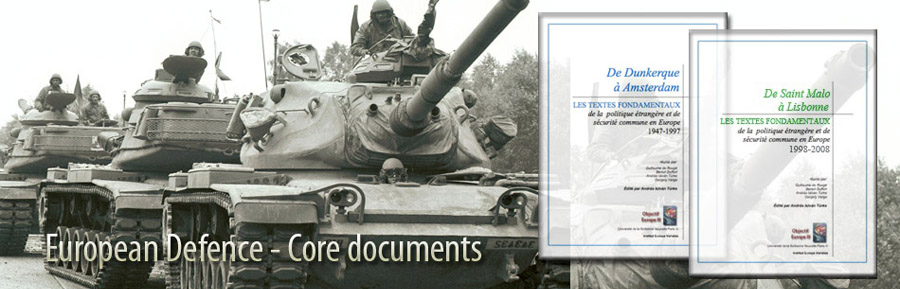
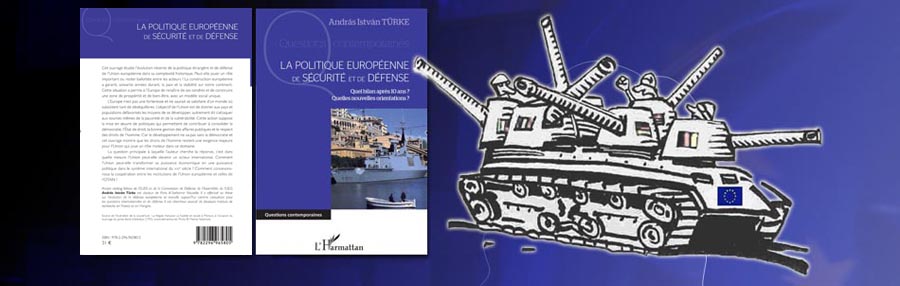
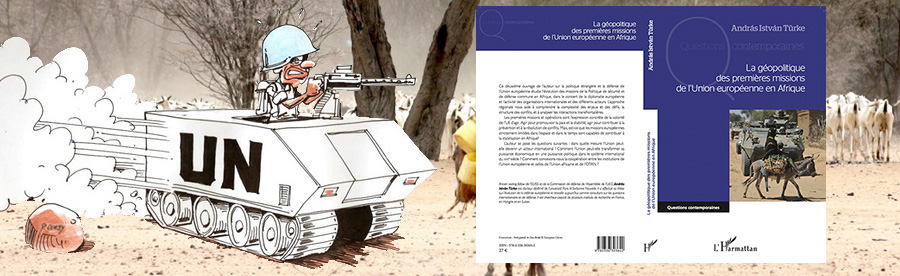
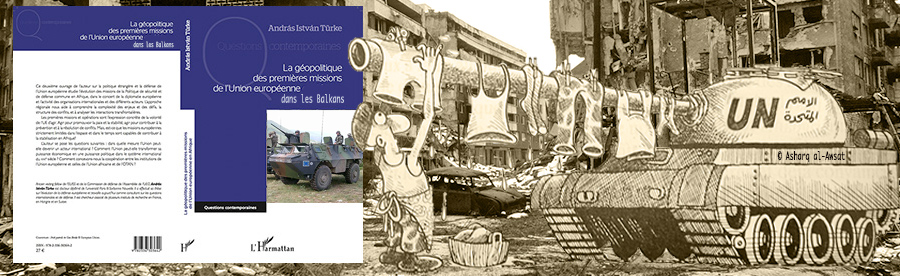
We are looking for sponsors for the English translation of these books, please contact turkeandras(at)gmail(dot)com