
You are here
Feed aggregator
Chiens errants à Alger : la wilaya change d’approche face à ce phénomène urbain
À Alger, la question des chiens errants refait surface sous un angle inédit. Longtemps traitée dans l’urgence ou la controverse, cette problématique urbaine sensible fait […]
L’article Chiens errants à Alger : la wilaya change d’approche face à ce phénomène urbain est apparu en premier sur .
Categories: Afrique
WhatsApp remporte son procès contre les autorités européennes chargées de la protection des données
La Cour de justice de l’Union européenne (CJUE) a statué mardi 10 février que WhatsApp, propriété de Meta, pouvait contester devant les tribunaux européens une décision du Comité européen de la protection des données (CEPD) qui concerne directement ses activités.
The post WhatsApp remporte son procès contre les autorités européennes chargées de la protection des données appeared first on Euractiv FR.
ENTWURF EINES BERICHTS über die Empfehlung des Europäischen Parlaments an den Rat, an die Kommission und die Vizepräsidentin der Kommission und Hohe Vertreterin der Union für Außen- und Sicherheitspolitik zu der sich wandelnden geopolitischen Lage in...
ENTWURF EINES BERICHTS über die Empfehlung des Europäischen Parlaments an den Rat, an die Kommission und die Vizepräsidentin der Kommission und Hohe Vertreterin der Union für Außen- und Sicherheitspolitik zu der sich wandelnden geopolitischen Lage in Ostasien und der notwendigen engeren Zusammenarbeit mit gleichgesinnten Partnern in der Region
Ausschuss für auswärtige Angelegenheiten
Adam Bielan
Quelle : © Europäische Union, 2026 - EP
Ausschuss für auswärtige Angelegenheiten
Adam Bielan
Quelle : © Europäische Union, 2026 - EP
Categories: Europäische Union
EdTech : Zed Academy lève des fonds pour transformer l’éducation en Algérie
La startup algérienne Zed Academy franchit une étape majeure. Elle annonce sa première levée de fonds le 8 février 2026 à Alger. Ce financement propulse […]
L’article EdTech : Zed Academy lève des fonds pour transformer l’éducation en Algérie est apparu en premier sur .
Categories: Afrique
New Zealand rout UAE for second T20 World Cup win
New Zealand make it two wins from two matches at the T20 World Cup after they thrash the United Arab Emirates by 10 wickets in Chennai.
Categories: Africa, Határon túli magyar portálok összesített hírei
Pour relancer la croissance, Ursula von der Leyen propose une Europe à deux vitesses
La présidente de la Commission européenne estime que les États membres devraient pouvoir avancer par groupes restreints plutôt que d’attendre un consensus des Vingt-Sept, alors que l’Union peine à relancer sa croissance.
The post Pour relancer la croissance, Ursula von der Leyen propose une Europe à deux vitesses appeared first on Euractiv FR.
Categories: Africa, Union européenne
When Drought Steals Childhood: How Climate Shocks in Northern Kenya Are Testing the SDGs
Every morning before sunrise, 10-year-old Amina Adan walks away from school and toward a shrinking water pan on the outskirts of Rhamu, Mandera County. By the time her classmates would be opening exercise books, Amina was already balancing a yellow jerrycan almost half her size. Her mother, Fatuma Adan, says the choice is no longer […]
The G7 and climate change
This chapter discusses the uptake of climate change as a global challenge by the G7 and how climate-related policies evolved as items on the G7’s agenda. The focus is in particular on the G7’s role and approach to the implementation of the Paris Agreement and corresponding linkages to international cooperation. Accordingly, it traces the co-evolution of climate change as an emergent issue of international politics and cooperation vis-à-vis the unfolding uptake of climate change on the agenda of the G7/ G8 from the 1990s onwards. It then zooms in closer to review the G7’s major climate-related commitments and initiatives in the decade since the adoption of the Paris Agreement in particular. What have been the G7’s key initiatives with regard to global climate policy and finance? How do they interact with the processes of multilateral climate governance? What has been their impact on international climate cooperation, especially with regard to meeting the objectives of the Paris Agreement? Addressing these questions, the chapter presents a thorough review of G7 initiatives, focusing especially on G7 declarations and designated initiatives since the 2015 G7 Summit in Elmau, Germany, as the summit immediately preceding the adoption of the Paris Agreement.
Categories: Afrique, Diplomacy & Defense Think Tank News
The G7 and climate change
This chapter discusses the uptake of climate change as a global challenge by the G7 and how climate-related policies evolved as items on the G7’s agenda. The focus is in particular on the G7’s role and approach to the implementation of the Paris Agreement and corresponding linkages to international cooperation. Accordingly, it traces the co-evolution of climate change as an emergent issue of international politics and cooperation vis-à-vis the unfolding uptake of climate change on the agenda of the G7/ G8 from the 1990s onwards. It then zooms in closer to review the G7’s major climate-related commitments and initiatives in the decade since the adoption of the Paris Agreement in particular. What have been the G7’s key initiatives with regard to global climate policy and finance? How do they interact with the processes of multilateral climate governance? What has been their impact on international climate cooperation, especially with regard to meeting the objectives of the Paris Agreement? Addressing these questions, the chapter presents a thorough review of G7 initiatives, focusing especially on G7 declarations and designated initiatives since the 2015 G7 Summit in Elmau, Germany, as the summit immediately preceding the adoption of the Paris Agreement.
Categories: Afrique, Diplomacy & Defense Think Tank News
The G7 and climate change
This chapter discusses the uptake of climate change as a global challenge by the G7 and how climate-related policies evolved as items on the G7’s agenda. The focus is in particular on the G7’s role and approach to the implementation of the Paris Agreement and corresponding linkages to international cooperation. Accordingly, it traces the co-evolution of climate change as an emergent issue of international politics and cooperation vis-à-vis the unfolding uptake of climate change on the agenda of the G7/ G8 from the 1990s onwards. It then zooms in closer to review the G7’s major climate-related commitments and initiatives in the decade since the adoption of the Paris Agreement in particular. What have been the G7’s key initiatives with regard to global climate policy and finance? How do they interact with the processes of multilateral climate governance? What has been their impact on international climate cooperation, especially with regard to meeting the objectives of the Paris Agreement? Addressing these questions, the chapter presents a thorough review of G7 initiatives, focusing especially on G7 declarations and designated initiatives since the 2015 G7 Summit in Elmau, Germany, as the summit immediately preceding the adoption of the Paris Agreement.
Categories: Afrique, Diplomacy & Defense Think Tank News
France : du poulet halal contaminé rappelé massivement pour risque de salmonelle
Attention, un rappel massif est en cours pour des aiguillettes de poulet halal vendues, partout en France, notamment chez Carrefour, Intermarché et U, à cause […]
L’article France : du poulet halal contaminé rappelé massivement pour risque de salmonelle est apparu en premier sur .
Categories: Afrique
Qui figure dans les dossiers Epstein ?
Des millions de documents liés à Epstein publiés par le ministère américain de la Justice mentionnent les noms de personnalités riches et puissantes du monde entier.
Categories: Afrique
Qui figure dans les dossiers Epstein ?
Des millions de documents liés à Epstein publiés par le ministère américain de la Justice mentionnent les noms de personnalités riches et puissantes du monde entier.
L’essor d’une Europe ad hoc
Dans l'édition de mardi, également : Euronews, migration, OTAN, commerce américain, ETS
The post L’essor d’une Europe ad hoc appeared first on Euractiv FR.
Categories: Africa, Union européenne
Press release - EP TODAY
Categories: Afrique, European Union
Press release - EP TODAY
Categories: Afrique, Európai Unió : hírek magyarul
Press release - EP TODAY
Categories: Afrique, Europäische Union
Outlook for the 12 February 2026 retreat: Work on competitiveness in the European Council
Written by Annastiina Papunen.
Enhancing the EU’s competitiveness is a key priority for the European Council in the current legislative cycle. In a complex geopolitical environment, in which the international rules-based order is increasingly undermined and core alliances are questioned, it is essential for Europe to be able to stand firmly on its own feet. Strengthening the single market and the EU economic base is ‘an urgent strategic imperative’ in the words of European Council President António Costa, to improve the EU’s competitiveness and develop its strategic autonomy.
On 12 February 2026, EU leaders will meet for an informal leaders’ retreat – ‘a strategic brainstorming session’, according to President Costa – in Alden Biesen, Belgium, to discuss EU competitiveness. This meeting, which 19 EU leaders requested in a letter in October 2025, builds on previous discussions on the topic, notably 1) the informal meeting of 22 January 2026 on transatlantic relations and trade, 2) the strategic discussion on geoeconomy and competitiveness at the December 2025 European Council meeting, and 3) the October 2025 regular meeting on simplification and twin transition. Mario Draghi and Enrico Letta have been invited to join the retreat to share their visions and highlight developments since their groundbreaking reports. European Parliament President Roberta Metsola will also address the meeting; President Costa has met Parliament’s Conference of Presidents ahead of the retreat. No formal conclusions are expected from the strategic debate, but the reflections are likely to feed into the March 2026 European Council conclusions.
Read the complete briefing on ‘Outlook for the 12 February 2026 retreat: Work on competitiveness in the European Council‘ in the Think Tank pages of the European Parliament.
Categories: European Union, Swiss News
“Deepfake Abuse Is Abuse”: UNICEF Sounds Alarm as AI Fuels a New Global Child-Exploitation Crisis
Millions of children are at risk of facing exploitation and abuse through exposure to and having their images being manipulated through generative AI tools. Credit: Ludovic Toinel/Unsplash
By Oritro Karim
UNITED NATIONS, Feb 10 2026 (IPS)
New findings from the United Nations Children’s Fund (UNICEF) reveal that millions of children are having their images manipulated into sexualized content through the use of generative artificial intelligence (AI), fueling a fast-growing and deeply harmful form of online abuse. The agency warns that without strong regulatory frameworks and meaningful cooperation between governments and tech platforms, this escalating threat could have devastating consequences for the next generation.
A 2025 report from The Childlight Global Child Safety Institute—an independent organization that tracks child sexual exploitation and abuse—shows a staggering rise in technology-facilitated child abuse in recent years, growing from 4,700 cases in the United States in 2023 to over 67,000 in 2024. A significant share of these incidents involved deepfakes: AI-generated images, videos, and audio engineered to appear realistic and often used to create sexualized content. This includes widespread “nudification”, where AI tools strip or alter clothing in photos to produce fabricated nude images.
A joint study from UNICEF, Interpol, and End Child Prostitution in Asian Tourism (ECPAT) International examined the rates of child sexual abuse material (CSAM) circulated online across 11 countries found that at least 1.2 million children had their images manipulated into sexually explicit deepfakes in the past year alone. This means roughly one in every 25 children—or one child in every classroom—has already been victimized by this emerging form of digital abuse.
“When a child’s image or identity is used, that child is directly victimised,” a UNICEF representative said. “Even without an identifiable victim, AI-generated child sexual abuse material normalises the sexual exploitation of children, fuels demand for abusive content and presents significant challenges for law enforcement in identifying and protecting children that need help. Deepfake abuse is abuse, and there is nothing fake about the harm it causes.”
A 2025 survey from National Police Chiefs’ Council (NPCC) studied the public’s attitudes toward deepfake abuse, finding that deepfake abuse had surged by 1,780 percent between 2019 and 2024. In a UK-wide representative survey conducted by Crest Advisory, nearly three in five respondents reported feeling worried about becoming victims of deepfake abuse.
Additionally, 34 percent admitted to creating a sexual or intimate deepfake of someone they knew, while 14 percent had created deepfakes of someone they did not know. The research also found that women and girls are disproportionately targeted, with social media identified as the most common place where these deepfakes are spread.
The study also presented respondents with a scenario in which a person creates an intimate deepfake of their partner, discloses it to them, and later distributes it to others following an argument. Alarmingly, 13 percent of respondents said this behavior should be both morally and legally acceptable, while an additional 9 percent expressed neutrality. NPCC also reported that those who considered this behavior to be acceptable were more likely to be younger men who actively consume pornography and agree with beliefs that would “commonly be regarded as misogynistic”.
“We live in very worrying times, the futures of our daughters (and sons) are at stake if we don’t start to take decisive action in the digital space soon,” award-winning activist and internet personality Cally-Jane Beech told NPCC. “We are looking at a whole generation of kids who grew up with no safeguards, laws or rules in place about this, and now seeing the dark ripple effect of that freedom.”
Deepfake abuse can have severe and lasting psychological and social consequences for children, often triggering intense shame, anxiety, depression, and fear. In a new report, UNICEF notes that a child’s “body, identity, and reputation can be violated remotely, invisibly, and permanently” through deepfake abuse, alongside risks of threats, blackmailing, and extortion from perpetrators. Feelings of violation – paired with the permanence and viral spread of digital content – can leave victims with long-term trauma, mistrust, and disrupted social development.
“Many experience acute distress and fear upon discovering that their image has been manipulated into sexualised content,” Afrooz Kaviani Johnson, Child Protection Specialist at UNICEF Headquarters told IPS. “Children report feelings of shame and stigma, compounded by the loss of control over their own identity. These harms are real and lasting: being depicted in sexualised deepfakes can severely impact a child’s wellbeing, erode their trust in digital spaces, and leave them feeling unsafe even in their everyday ‘offline’ lives.”
Cosmas Zavazava, Director of the Telecommunication Development Bureau at the International Telecommunications Union (ITU), added that online abuse can also translate to physical harm.
In a joint statement on Artificial Intelligence and the Rights of the Child, key UN entities, including UNICEF, ITU, the Office of the UN High Commissioner for Human Rights (OHCHR) and the UN Commission of the Rights of the Child (CRC) warned that among children, parents, caregivers and teachers, there was a widespread lack of AI literacy. This refers to the basic ability to understand how AI systems work and how to engage with them critically and effectively. This knowledge gap leaves young people especially vulnerable, making it harder for victims and their support systems to recognize when a child is being targeted, to report abuse, or to access adequate protections and support services.
The UN also emphasized that a substantial share of responsibility lies with tech platforms, noting that most generative AI tools lack meaningful safeguards to prevent digital child exploitation.
“From UNICEF’s perspective, deepfake abuse thrives in part because legal and regulatory frameworks have not kept pace with technology. In many countries, laws do not explicitly recognise AI‑generated sexualised images of children as child sexual abuse material (CSAM),” said Johnson.
UNICEF is urging governments to ensure that definitions of CSAM are updated to include AI-generated content and “explicitly criminalise both its creation and distribution”. According to Johnson, technology companies should be required to adopt what he called “safety-by-design measures” and “child-rights impact assessments”.
He stressed however that while essential, laws and regulations alone would not be enough. “Social norms that tolerate or minimise sexual abuse and exploitation must also change. Protecting children effectively will require not only better laws, but real shifts in attitudes, enforcement, and support for those who are harmed.”
Commercial incentives further compound the problem, with platforms benefitting from increased user engagement, subscriptions, and publicity generated by AI image tools, creating little motivation to adopt stricter protection measures.
As a result, tech companies often introduce guardrails only after major public controversies — long after children have already been affected. One such example is Grok, the AI chatbot for X (formerly Twitter), which was found generating large volumes of nonconsensual, sexualized deepfake images in response to user prompts. Facing widespread, international backlash, X announced in January that Grok’s image generator tool would only be limited to X’s paid subscribers.
Investigations into Grok are ongoing, however. The United Kingdom and the European Union have opened investigations since January, and on February 3, prosecutors in France raided X’s offices as part of its investigation into the platform’s alleged role in circulating CSAM and deepfakes. X’s owner Elon Musk was summoned for questioning.
UN officials have stressed the need for regulatory frameworks that protect children online while still allowing AI systems to grow and generate revenue. “Initially, we got the feeling that they were concerned about stifling innovation, but our message is very clear: with responsible deployment of AI, you can still make a profit, you can still do business, you can still get market share,” said a senior UN official. “The private sector is a partner, but we have to raise a red flag when we see something that is going to lead to unwanted outcomes.”
IPS UN Bureau
Follow @IPSNewsUNBureau
!function(d,s,id){var js,fjs=d.getElementsByTagName(s)[0],p=/^http:/.test(d.location)?'http':'https';if(!d.getElementById(id)){js=d.createElement(s);js.id=id;js.src=p+'://platform.twitter.com/widgets.js';fjs.parentNode.insertBefore(js,fjs);}}(document, 'script', 'twitter-wjs');
Pages
the old site is here


© 2012-2015 Europa Varietas Foundation © 2015-2020 Europa Varietas Association
www.europavarietas.org | info(@)europavarietas(dot)org | Switzerland
This is a GDPR ready site

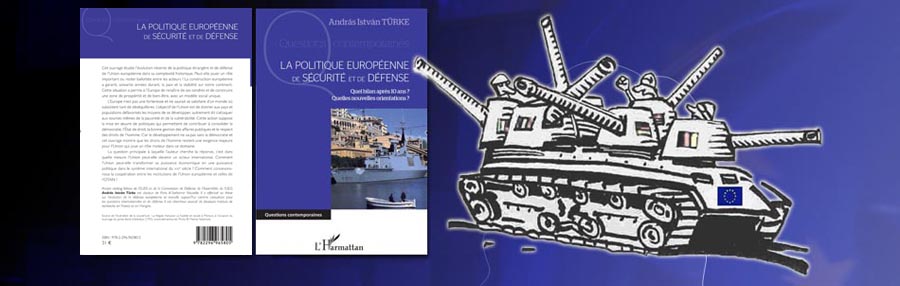
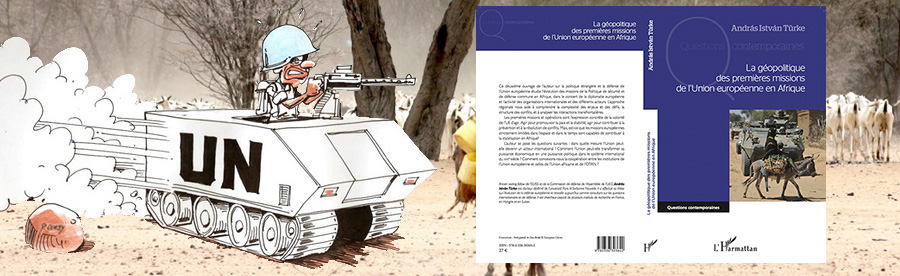
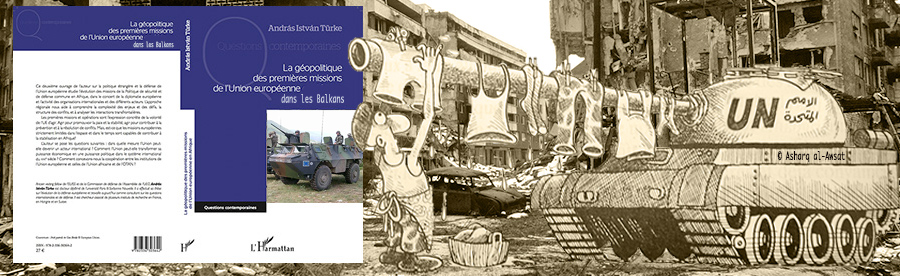
We are looking for sponsors for the English translation of these books, please contact turkeandras(at)gmail(dot)com