
You are here
Feed aggregator
En Turquie, la mobilisation kurde face à la chute du Rojava et à la répression
Les Kurdes de Turquie se mobilisent alors que l'armée syrienne a repris la quasi-totalité des territoires administrés par les forces kurdes dans le nord-est de la Syrie. Manifestations, appels humanitaires et prises de parole politiques se heurtent à une répression accrue, visant aussi les journalistes.
- Articles / Courrier des Balkans, Balkans Syrie, Turquie, Erdogan, Médias, Relations régionales, Populations, minorités et migrations, Relations internationales, Une - Diaporama
Categories: Africa, Balkans Occidentaux
Voici le spécimen du bulletin unique pour la présidentielle
Le spécimen du bulletin unique devant servir à l'élection présidentielle du 12 avril 2026, a été validé ce lundi 9 février lors d'une séance à la Commission électorale nationale autonome (CENA), en présence des représentants des deux duos candidats en lice pour ce scrutin.
Le spécimen du bulletin unique devant servir à l'organisation de la présidentielle d'avril 2026 au Bénin est connu. La CENA a procédé à sa validation lors d'une séance ce lundi 9 février, en présence des représentants des deux duos candidats en lice pour cette élection. Mariam Chabi Talata, colistière de Romuald Wadagni, candidat au poste de président de la République à cette élection, représentait la mouvance présidentielle.
Le parti Force cauris pour un Bénin émergent (FCBE), qui porte la candidature du duo Paul Hounkpè - Judicaël Rock Hounwanou, est représenté par Abdoulaziz Yarou Brisso.
Sacca Lafia, président de la CENA a rappelé à l'occasion, l'objectif de la séance. Une présentation détaillée du document a été ensuite faite à ces deux représentants afin de leur permettre d'apprécier la configuration générale du bulletin.
Les représentants des deux duos ont fait des recommandations à la CENA qui a assuré que l'institution examinerait leurs recommandations dans le strict respect des textes en vigueur.
F. A. A.
Categories: Afrique
Leveraging Artificial Intelligence and Enhancing Countries’ Preparedness
IMF Managing Director Kristalina Georgieva at the World Government Summit, Dubai, UAE 3-5 February 2026. Credit: International Monetary Fund (IMF)
By Kristalina Georgieva
DUBAI, United Arab Emirates, Feb 10 2026 (IPS)
It is a pleasure for me to join His Excellency, Minister Al Hussaini in welcoming you to this important dialogue here in the United Arab Emirates—a fast-growing global AI hub. A recent Microsoft study reports that 64 percent of the UAE’s working age population uses AI, which is the highest rate globally.
This illustrates the dynamism we see in the region—and the major investments and partnerships that some of the world’s biggest tech companies are making here.
Why such a huge commitment to this region? Because the UAE and the members of the GCC all understand just how transformative AI can be. They have made systemically significant investments in human capital over the last decades. IMF estimates show that, with the right measures in place, AI could fuel a boost to global productivity of up to 0.8 percentage points per year. This could raise global growth to levels exceeding those of the pre-pandemic period.
Here in the Gulf region, AI could boost non-oil GDP in Gulf countries by up to 2.8 percent. For economies that have long been dependent on hydrocarbon exports, this presents an enormous opportunity to diversify and build new sources of growth.
Now, major technology changes often bring disruption. And sure enough, we can expect disruption from AI. Especially to labor markets. On average, 40 percent of jobs globally will be impacted by AI—either upgraded or eliminated or transformed. For advanced economies, 60 percent of jobs will be affected. This is like a tsunami hitting the labor market.
We are already seeing the evidence: about one in 10 job postings in advanced economies now require at least one new skill. Workers with in-demand skills will likely see productivity and wage gains. This will create more demand for services, and increase employment and wages among low-skilled workers. But middle-skilled jobs will be squeezed.
That means that young people and the middle class will be hit hardest.
We can expect to see a similar divergence between countries. Those with an economic structure conducive to AI adoption—that is, strong digital infrastructure, more skilled labor forces, and robust regulatory frameworks—are likely to experience the largest and fastest benefits. Countries that don’t may get left behind. This is why we gathered here today. AI looks unstoppable.
But whether or not countries can successfully capitalize on AI’s enormous promise is yet to be determined. And this will largely depend on the policy regimes they put in place. So then, what must be done to ensure AI translates into broad-based prosperity for this region?
First, macro policies. Investment and innovation in AI will boost growth. Fiscal policies can support this by strengthening tax systems and by funding research, reskilling, or sector-based training programs. However, tax systems should not encourage automation at the expense of people. Likewise, effective financial regulation will be essential to ensure financial market efficiency and improved risk management.
Second, guardrails. AI needs to be regulated to ensure it’s safe, fair, and trustworthy—but without stifling innovation. Different countries are taking different approaches, ranging from risk-based frameworks to high-level principles. Whatever approach they take, it’s critical that countries coordinate.
That brings me to my third point: cooperation and partnerships. Scale is a big advantage in AI. But you can’t get scale without cooperation among governments, AI researchers and developers, including when it comes to data sharing and knowledge transfer.
Let me conclude. AI will transform our economies. It will present immense opportunities and pose significant risks. And it falls to you, the world’s policymakers, to ensure that the opportunities are maximized for your countries and the risks controlled.
IPS UN Bureau
Follow @IPSNewsUNBureau
!function(d,s,id){var js,fjs=d.getElementsByTagName(s)[0],p=/^http:/.test(d.location)?'http':'https';if(!d.getElementById(id)){js=d.createElement(s);js.id=id;js.src=p+'://platform.twitter.com/widgets.js';fjs.parentNode.insertBefore(js,fjs);}}(document, 'script', 'twitter-wjs');
Albanie : la famille Trump étend ses convoitises sur la baie de Vlora
Ivanka Trump était en Albanie fin janvier. L'épouse de Jared Kushner et fille du président américain a annoncé que les ambitions de la famille ne se limitaient par l'île de Sazan, réclamant l'ilôt de Zvernëc, où se dresse un prestigieux monastère orthodoxe.
- Pays / Une - Diaporama, Reporter.al, Albanie, Adriatique, PS Albanie, USA Balkans, Tourisme balkans, Economie, Environnement, Une - Diaporama - En premier
Categories: Afrique, Balkans Occidentaux
Albanie : la famille Trump étend ses convoitises sur la baie de Vlora
Ivanka Trump était en Albanie fin janvier. L'épouse de Jared Kushner et fille du président américain a annoncé que les ambitions de la famille ne se limitaient par l'île de Sazan, réclamant l'ilôt de Zvernëc, où se dresse un prestigieux monastère orthodoxe.
- Pays / Une - Diaporama, Reporter.al, Albanie, Adriatique, PS Albanie, USA Balkans, Tourisme balkans, Economie, Environnement, Une - Diaporama - En premier
Categories: Balkans Occidentaux, Europäische Union
Trade Liberalisation Undermines Development
By Jomo Kwame Sundaram
ZAMBOANGA, Philippines, Feb 10 2026 (IPS)
Despite lacking both evidence and theory, many economists claim trade liberalisation accelerates development. But only a few economies have gained many jobs from external market access.
Jomo Kwame Sundaram
Instead, most economies have experienced greater deindustrialisation and food insecurity, besides deepening their vulnerability to recent tariff threats.Multilateral trade liberalisation
In conventional trade theory, gains from trade liberalisation are mainly one-time increases in output and exports due to static comparative advantage.
Post-World War Two (WWII) US foreign policy transformed multilateral relations and transnational institutions, including international economic governance.
With the growing power of transnational corporations, many multilateral institutions, including the United Nations system, have been reconfigured or marginalised.
The General Agreement on Tariffs and Trade (GATT) was a ‘second-best’ compromise after the US Congress vetoed the creation of the International Trade Organisation, despite widespread international enthusiasm for the 1948 Havana Charter.
Almost half a century later, the World Trade Organisation (WTO) was established in 1995, following the 1994 Marrakesh Declaration concluding the Uruguay Round of GATT negotiations.
Trade mahaguru Jagdish Bhagwati argued that multilateral trade has been undermined by plurilateral and bilateral arrangements favouring dominant partners.
With the era of trade liberalisation essentially over since the 2008-09 global financial crisis (GFC), free trade advocacy has received a new lease of life from mythmaking about the ‘pre-Trump’ era.
Uneven, mixed effects
Mainstream trade theory does not entertain the possibility of ‘unequal exchange’, however defined.
Nor does it even incorporate Bhagwati’s notion of ‘immiserising growth’ when productivity gains reduce prices for consumers, rather than increase producers’ earnings.
The three decades of trade liberalisation from the 1980s saw slower, but more volatile growth than the post-WWII quarter-century termed the ‘Golden Age’. More recently, stagnationist tendencies have dominated since the GFC.
With trade liberalisation, many developing countries have experienced greater food insecurity and deindustrialisation, as the manufacturing shares of their national income shrank.
Much import-substituting industrialisation after WWII or independence has since collapsed. Besides resource processing, very few new industries have emerged in Africa.
‘Aid for Trade’ for poorer developing countries implicitly acknowledges trade liberalisation’s adverse effects by mitigating some of them. Why then should they abandon protectionism if they need to be compensated for doing so?
Wealthy nations have also insisted that developing countries end manufacturing tariffs. But as Dani Rodrik has quipped, why rich nations “need to be bribed by poor countries to do what is good for them is an enduring mystery”.
African nations and Caribbean and Pacific small island developing states enjoyed preferential access to European markets, which full multilateral trade liberalisation would eliminate.
Such preferences for Sub-Saharan Africa have pitted African against Asian least developed countries, undermining the collective negotiating strengths of both.
Many countries had expected the current Doha Round to eliminate rich nations’ producer subsidies, tariffs, and non-tariff barriers, but that has not happened.
Cutting farm support in the North could make food agriculture in developing countries more viable, but would also raise food import prices in the interim.
World Bank ‘structural adjustment’ programmes and IMF fiscal discipline requirements have undermined rural infrastructure and productivity, setting back smallholder agriculture in most developing countries.
Setbacks, not gains
Trade liberalisation also reduces tariff revenue. Such losses have hurt developing nations, especially the poorest, for whom tariffs often accounted for up to half of all tax revenue.
Such revenue cuts severely undermined the fiscal means of developing nations, crucial for government spending and investment, including for development and welfare.
Most governments are unable to replace lost tariff revenue with new or higher taxes. Meanwhile, more borrowing to offset lost tariff revenue has worsened indebtedness.
Trade liberalisation advocates are typically vague about how it is supposed to raise exports, incomes, and tax revenue, besides compensating for lost tariff revenue.
Instead, tax burdens typically become more regressive as overall tax revenue declines. Real consumption is supposed to rise as import prices fall with lower tariffs, but could also decline due to increasing consumption taxes.
Less policy space
Trade liberalisation has also reduced available development policy tools, especially those relating to trade, investment, and industrialisation.
The constraints imposed by trade liberalisation and investment agreements have generally limited the scope for and potential of development policy initiatives.
The actual role and impact of trade policy for growth and employment remain moot. But there are no analytical reasons or robust empirical evidence that trade liberalisation per se ensures sustainable development.
World Bank and most other studies acknowledged modest, if not negative, net gains for most developing countries from any realistically achievable outcome.
It is often ignored that realistic expectations of gains from trade liberalisation rely crucially on a strong positive export supply response.
However, such a response is unlikely when internationally competitive, productive and export capacities do not already exist, as in most developing countries, especially the poorest.
Hence, most of the Global South has not been able to overcome the worst consequences of trade liberalisation to achieve sustainable development.
In any case, the WTO Doha Round talks were ended by rich nations in 2015.
With the increasingly blatant self-interested contravention of WTO rules by the US, European and other wealthy nations, developing countries may best enhance their development prospects by reverting to GATT rules.
This would allow them to opt in, as appropriate, rather than resign themselves to the uniform ‘one size fits all’ WTO rules and regulations, regardless of context, circumstances, capacities and capabilities.
IPS UN Bureau
Follow @IPSNewsUNBureau
!function(d,s,id){var js,fjs=d.getElementsByTagName(s)[0],p=/^http:/.test(d.location)?'http':'https';if(!d.getElementById(id)){js=d.createElement(s);js.id=id;js.src=p+'://platform.twitter.com/widgets.js';fjs.parentNode.insertBefore(js,fjs);}}(document, 'script', 'twitter-wjs'); Related Articles
- No African Development from Western Trade Policies
- Trump Undresses Rival Trade Myths
- Trump’s ‘Shock and Awe’ Tariffs
- Trade Liberalisation Kicked Away African Development Ladder
- Trade Deception Returns in Pan-Africanist Guise
- Weaponizing Free Trade Agreements
- Trade Liberalization for Development?
- Agricultural Trade Liberalization Undermined Food Security
Feilschen um Begnadigung von Epstein-Komplizin: Maxwell und auch Trump schweigen
Ghislaine Maxwell schwieg bei einer Kongressanhörung eisern zu Epstein-Themen und berief sich auf ihr Schweigerecht. Auch Trump hält sich bedeckt. Das Schweigen wird zum politischen Pokerspiel, während Maxwell Berichten zufolge einen Antrag auf Begnadigung stellte.
Categories: Afrique, Swiss News
New video game sees Africans fantasise about taking back looted treasures
Imagine it is 2099 and a historic treaty to return African artefacts is falling apart.
Categories: Africa, Balkans Occidentaux
New video game sees Africans fantasise about taking back looted treasures
Imagine it is 2099 and a historic treaty to return African artefacts is falling apart.
Categories: Africa, Swiss News
New video game sees Africans fantasise about taking back looted treasures
Imagine it is 2099 and a historic treaty to return African artefacts is falling apart.
Categories: Africa, European Union
Le temps en Algérie ce mardi 10 février : pluies persistantes, froid et vents forts au programme
L’hiver ne compte visiblement pas céder sa place. Ce mardi 10 février, le temps hivernal continue de s’imposer sur une grande partie du territoire national, […]
L’article Le temps en Algérie ce mardi 10 février : pluies persistantes, froid et vents forts au programme est apparu en premier sur .
Categories: Afrique
Ösi-Legende teilt gegen Mittelmass aus – Lindsey «hat uns einen Dienst erwiesen»: Schwarzenegger erklärt Vonn zur Heldin
Lindsey Vonns Comeback-Drama bei Olympia fasziniert die Welt. Arnold Schwarzenegger nutzt es für ein leidenschaftliches Plädoyer gegen Mittelmass. Er feiert Vonn für ihren Mut. Seine Freundin sei ein wahrer Champion, von dem sich alle eine Scheibe abschneiden sollten.
Categories: Afrique, Swiss News
Blick klärt die unangenehmen Fragen: Hätte Vonn überhaupt bei Olympia starten dürfen?
Lindsey Vonn liegt nach ihrem schweren Sturz in der Olympia-Abfahrt mit einem gebrochenen Unterschenkel in Treviso im Spital. Zehn Tage zuvor hatte sie sich in Crans-Montana das Kreuzband im linken Knie gerissen. Eine unangenehme Frage drängt sich deshalb auf.
Categories: Afrique, Swiss News
«Ich habe meine Seele verkauft»: Schweizer Reality-Star Elia Berthoud packt aus
Vom Hunger-Dasein in Mailand bis zu den Grammys in Los Angeles: Reality-TV-Gesicht Elia Berthoud lebt den kalifornischen Traum. Berthoud spricht im Interview mit Blick über sein Luxus-Loft und seine Geldsorgen.
Categories: Afrique, Swiss News
Schneemangel setzt Pistenbetreibern zu – und macht den Betrieb teurer: Warum wir für wenig Pistenspass trotzdem den Vollpreis zahlen
Viele Skigebiete in der Schweiz verlangen trotz vieler geschlossener Pisten den vollen Preis. Elm und Tschiertschen hingegen senken ihre Tarife. Ein Experte erklärt, wieso das für Skigebiete nicht so einfach ist.
Categories: Afrique, Swiss News
Klatsche für Bundesrat: Schweizer wollen keine Steuererhöhung – weder für Armee noch 13. AHV
Der Bundesrat will die Mehrwertsteuer erhöhen, um Armeeausgaben und die 13. AHV zu finanzieren. Eine Blick-Umfrage zeigt nun: Das Volk lehnt diese Pläne hochkant ab.
Categories: Afrique, Swiss News
Herz statt Hektik: Wie das Alterszentrum am Buechberg den Pflege-Stress besiegt
Im Alterszentrum am Buechberg in Fislisbach AG konnte der morgendliche Zeitdruck reduziert werden. Dank flacher Hierarchien und dem Label «Friendly Work Space» von Gesundheitsförderung Schweiz setzt das Haus auf ein Arbeitsumfeld, das Personal und Bewohnende stärkt.
Categories: Balkans Occidentaux, Swiss News
«Er war ein Pseudo-Profi!»: Weltmeister gab Olympia-Held Deschwanden tritt in den Hintern
Gregor Deschwanden fliegt in Italien sensationell zu Olympia-Bronze. Zu verdanken hat er das unter anderem dem Ex-Skispringer Andreas Küttel.
Categories: Balkans Occidentaux, Swiss News
Ratlosigkeit in der Bundesstadt: «Es ist extrem deprimierend, diesem YB zuzuschauen»
Ein Sieg aus den letzten sechs Super-League-Partien entspricht definitiv nicht dem Anspruch von YB. In Bern liegt eine spürbare Ratlosigkeit über dem gesamten Verein. «Es ist extrem deprimierend, diesem YB zuzuschauen», meint Tobias Wedermann im «FORZA!».
Categories: Balkans Occidentaux, Swiss News
Aufregung um Cup-Halbfinals: «Spricht nicht für die Qualität der höchsten Liga»
Mit Yverdon und SLO stehen gleich zwei Challenge-League-Klubs im Cup-Halbfinal. Die höher klassierten St. Gallen und GC sind aber nicht die klaren Favorite. «Die Halbfinals sprechen nicht für die Qualität der höchsten Liga», wird bei «FORZA!» kritisiert.
Categories: Határon túli magyar portálok összesített hírei, Swiss News
Pages
the old site is here


© 2012-2015 Europa Varietas Foundation © 2015-2020 Europa Varietas Association
www.europavarietas.org | info(@)europavarietas(dot)org | Switzerland
This is a GDPR ready site


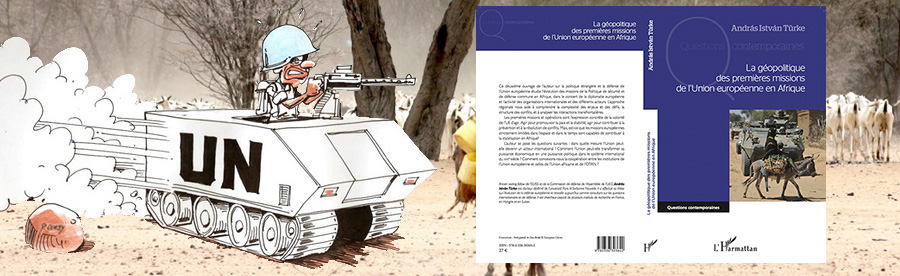
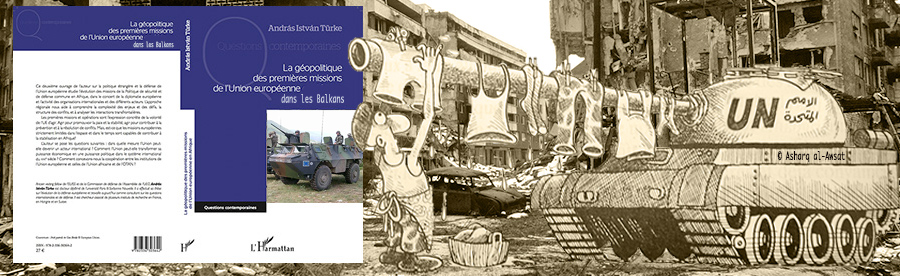
We are looking for sponsors for the English translation of these books, please contact turkeandras(at)gmail(dot)com