
You are here
European Union
Back into Europe where it belongs | The Independent - United Kingdom
Categories: Balkan News, European Union
Debate: Hegseth wants Fort Hood attacker publicly executed
US Defence Secretary Pete Hegseth has announced plans for the country's first military execution in more than 60 years. The execution by firing squad of Nidal Hasan, who killed 13 people in an attack on the Fort Hood military base in 2009, is to be livestreamed. Human rights activists, as well as Democratic and Republican politicians, have sharply criticised the plan. Commentators are also appalled.
Categories: Balkan News, European Union
Just like in Kabul and Pyongyang | Frankfurter Rundschau - Germany
Categories: Africa, European Union
US companies need Ukraine as testing ground | Neatkarīgā - Latvia
Categories: European Union, Swiss News
Press release - EU Parliament hosts conference with Speakers from the Gulf Cooperation Council
On Friday, Parliament will host Gulf Cooperation Council Speakers and representatives to discuss strengthening strategic ties and parliamentary cooperation.
Source : © European Union, 2026 - EP
Source : © European Union, 2026 - EP
Categories: Afrique, European Union
Press release - EU Parliament hosts conference with Speakers from the Gulf Cooperation Council
On Friday, Parliament will host Gulf Cooperation Council Speakers and representatives to discuss strengthening strategic ties and parliamentary cooperation.
Source : © European Union, 2026 - EP
Source : © European Union, 2026 - EP
Categories: Europäische Union, European Union
Press release - EU Parliament hosts conference with Speakers from the Gulf Cooperation Council
On Friday, Parliament will host Gulf Cooperation Council Speakers and representatives to discuss strengthening strategic ties and parliamentary cooperation.
Source : © European Union, 2026 - EP
Source : © European Union, 2026 - EP
Categories: Europäische Union, European Union
Press release - EU Parliament hosts conference with Speakers from the Gulf Cooperation Council
On Friday, Parliament will host Gulf Cooperation Council Speakers and representatives to discuss strengthening strategic ties and parliamentary cooperation.
Source : © European Union, 2026 - EP
Source : © European Union, 2026 - EP
Categories: Európai Unió : hírek magyarul, European Union
Social cohesion and climate-driven planned relocation in urban settlements: evidence from Suva, Fiji
Planned relocation, the process of moving a community from one area of residence to a new one in response to an environmental risk or threat, is an important option for climate change adaptation. Given the acute climate and environmental risks facing them, small island developing states (SIDS) have taken a leading role in developing policies and processes for planned relocation in response to these risks. This policy brief will look at how planned relocation works as an adaptation strategy in informal urban settlements and will examine the role of social cohesion in planned relocation processes. Fiji has become a regional leader in planned relocation policy, with the Human Mobility in Climate Change Contexts (HMCCC) project serving as a magnifier of Fiji’s existing expertise in planned relocation. Since 2017, the Fijian government and civil society in cooperation with the German and New Zealand governments have developed planned relocation standard operating procedures (SOPs) for helping villages in high-risk areas navigate the physical, cultural, social and economic costs of relocating to higher ground or a safer location. These SOPs have become a “gold standard” for other countries to learn from and emulate in their own planned relocation policies.
The next step that the government is starting to undertake involves adapting the SOPs to informal urban settlements that are facing climate and environmental risks. Fiji’s informal urban settlements have faced a number of social, political and economic challenges over the years. These include serious issues with crime, land insecurity and historical political exclusion. Thus, along with the threats that come with climate change, particularly sea-level rise and flooding, any planned relocation policy for informal urban settlements has to simultaneously address trust in institutions, cooperation for the common good, and inclusive identity. The historical case of the Bainiose being relocated from central Suva to a suburb of Suva in the late 1990s offers guidance on how this can be done.
Key policy messages
- Planned relocation for communities in urban settings requires long-term planning for services such as new public transportation connections, schools, secure land tenure and health facilities.
- Measures should be taken to build institutional trust with urban communities, who may lack the traditional mechanisms of chiefly or customary representation that is present in rural settings.
- Community identity is often strong and can be a starting point for policy-makers and communities to identify sustainable options for relocation.
Dr Anawaite Matadradra is a Lecturer at the University of the South Pacific.
Dr Sevanaia Sakai is a Senior Lecturer at the University of the South Pacific.
Unaisi Raileqe is a Project Officer at the Pacific Centre for Peacebuilding.
Dr Timothy Fadgen is a Senior Lecturer at the University of Auckland.
Categories: Diplomacy & Defense Think Tank News, European Union
Social cohesion and climate-driven planned relocation in urban settlements: evidence from Suva, Fiji
Planned relocation, the process of moving a community from one area of residence to a new one in response to an environmental risk or threat, is an important option for climate change adaptation. Given the acute climate and environmental risks facing them, small island developing states (SIDS) have taken a leading role in developing policies and processes for planned relocation in response to these risks. This policy brief will look at how planned relocation works as an adaptation strategy in informal urban settlements and will examine the role of social cohesion in planned relocation processes. Fiji has become a regional leader in planned relocation policy, with the Human Mobility in Climate Change Contexts (HMCCC) project serving as a magnifier of Fiji’s existing expertise in planned relocation. Since 2017, the Fijian government and civil society in cooperation with the German and New Zealand governments have developed planned relocation standard operating procedures (SOPs) for helping villages in high-risk areas navigate the physical, cultural, social and economic costs of relocating to higher ground or a safer location. These SOPs have become a “gold standard” for other countries to learn from and emulate in their own planned relocation policies.
The next step that the government is starting to undertake involves adapting the SOPs to informal urban settlements that are facing climate and environmental risks. Fiji’s informal urban settlements have faced a number of social, political and economic challenges over the years. These include serious issues with crime, land insecurity and historical political exclusion. Thus, along with the threats that come with climate change, particularly sea-level rise and flooding, any planned relocation policy for informal urban settlements has to simultaneously address trust in institutions, cooperation for the common good, and inclusive identity. The historical case of the Bainiose being relocated from central Suva to a suburb of Suva in the late 1990s offers guidance on how this can be done.
Key policy messages
- Planned relocation for communities in urban settings requires long-term planning for services such as new public transportation connections, schools, secure land tenure and health facilities.
- Measures should be taken to build institutional trust with urban communities, who may lack the traditional mechanisms of chiefly or customary representation that is present in rural settings.
- Community identity is often strong and can be a starting point for policy-makers and communities to identify sustainable options for relocation.
Dr Anawaite Matadradra is a Lecturer at the University of the South Pacific.
Dr Sevanaia Sakai is a Senior Lecturer at the University of the South Pacific.
Unaisi Raileqe is a Project Officer at the Pacific Centre for Peacebuilding.
Dr Timothy Fadgen is a Senior Lecturer at the University of Auckland.
Categories: Diplomacy & Defense Think Tank News, European Union
Dopingkontrolle neben toter Mutter – Vorwürfe im Rad-Sport
Die österreichische Radsportlerin Valentina Cavallar (25) musste nach der Tour de France Femmes frühzeitig ihre Saison beenden. Lange war unklar, wieso. Nun meldet sich Cavallar über Instagram, schildert ihre Beweggründe und appelliert an die Sportwelt.
Categories: European Union, Swiss News
Croci-Torti spricht über Trainer-des-Monats-Award
Mattia Croci-Torti spricht über den Trainer-des-Monats-Award von Blick.
Categories: European Union, Swiss News
«Russlands Vorstossfähigkeit ist gebrochen»
Der ehemalige ukrainische Top-General Oleksandr Syrskyi sieht Russland durch seine Angriffsstrategie im Ukraine-Krieg im Nachteil. Moskau habe hohe Verluste eingebüsst, während Kiew die Offensivkraft des Kremls gebrochen habe.
Categories: European Union, Swiss News
Schweizer Devils-Trio taucht gegen Ottawa
Die New Jersey Devils verlieren zu Hause gegen die Ottawa Senators mit 1:4 und bleiben weiterhin im Tabellenkeller stecken.
Enlargement: EU and Montenegro close accession negotiations in the areas of economic and monetary policy, statistics, and social policy and employment
The EU and Montenegro provisionally closed accession negotiations on economic and monetary policy (chapter 17), statistics (chapter 18) and social policy and employment (chapter 19).
Categories: European Union, Swiss News
Pages
the old site is here


© 2012-2015 Europa Varietas Foundation © 2015-2020 Europa Varietas Association
www.europavarietas.org | info(@)europavarietas(dot)org | Switzerland
This is a GDPR ready site
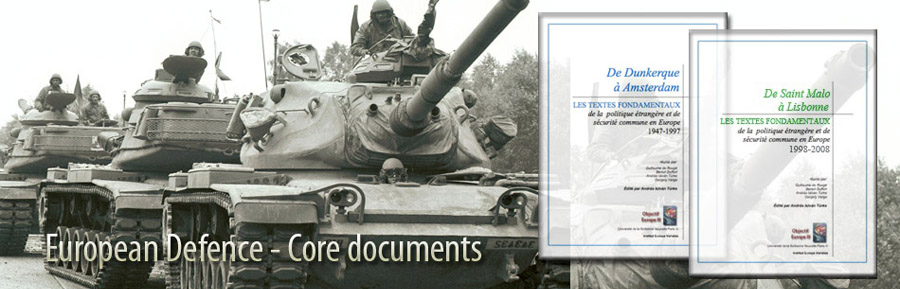
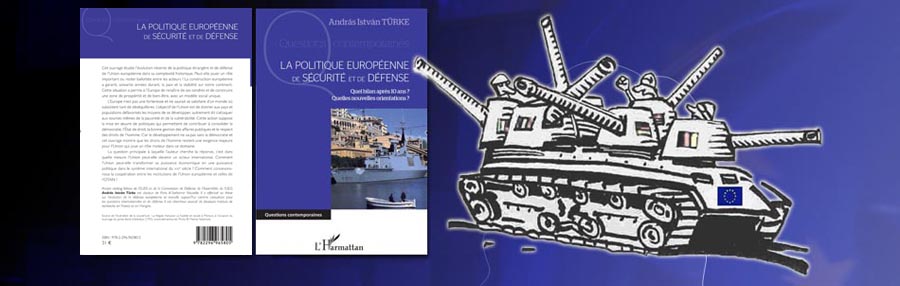
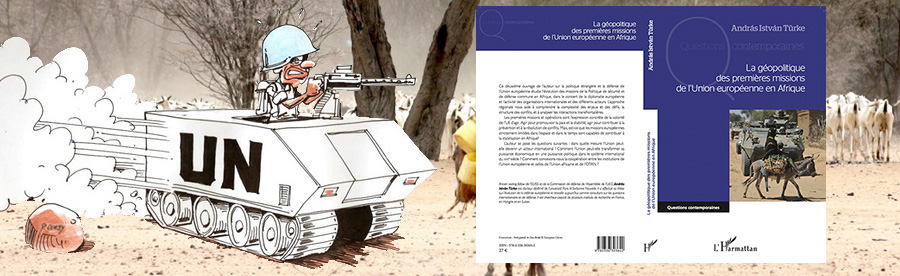
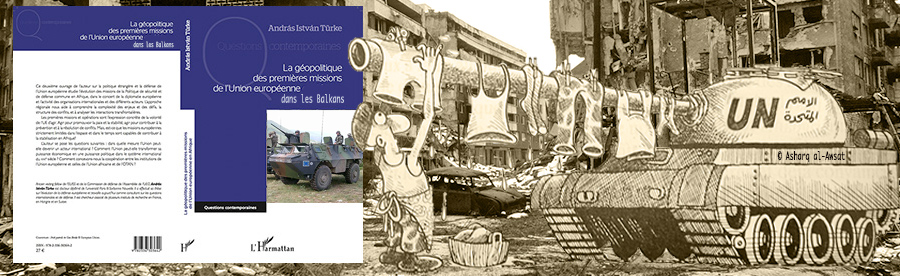
We are looking for sponsors for the English translation of these books, please contact turkeandras(at)gmail(dot)com