
You are here
Határon túli magyar portálok összesített hírei
La BERD mobilise 9,6 millions d'euros pour l'accès au logement au Bénin
La Banque Européenne pour la Reconstruction et le Développement (BERD) a annoncé, ce mardi 4 août 2026, un investissement de 9,6 millions d'euros dans une émission d'obligations sociales d'AFINHAB. Cette opération bénéficiera au Bénin, à la Côte d'Ivoire et au Sénégal en facilitant l'accès au financement du logement abordable, notamment pour les ménages à revenu faible ou modéré.
Dans un communiqué publié, le mardi 4 août 2026, la Banque Européenne pour la Reconstruction et le Développement (BERD), a annoncé un investissement pouvant atteindre 9,6 millions d'euros, soit environ 6,3 milliards de francs CFA, dans la deuxième émission d'obligations sociales d'AFINHAB ex CCRH-UEMOA, d'un montant global de 61 millions d'euros (près de 40 milliards de francs CFA).

Cette intervention permettra à AFINHAB, l'institution régionale de financement de l'habitat de l'Union économique et monétaire ouest-africaine (UEMOA), de refinancer des prêts hypothécaires accordés par ses établissements partenaires au Bénin, en Côte d'Ivoire et au Sénégal. L'objectif est de faciliter l'accès au financement du logement abordable pour les ménages à revenu faible ou modéré, avec une attention particulière portée aux ménages dirigés par des femmes.
Une deuxième émission d'obligations sociales
Réalisée par appel public à l'épargne, cette deuxième émission d'obligations sociales d'AFINHAB sera cotée à la Bourse Régionale des Valeurs Mobilières (BRVM). Pour la BERD, cette opération consolide le rôle d'AFINHAB dans la mobilisation de ressources à long terme au service des priorités sociales de l'UEMOA.
Cet investissement contribuera également à « améliorer l'accès au financement du logement pour les ménages à revenu faible ou modéré, y compris ceux dirigés par des femmes », tout en renforçant l'offre de financements à long terme en monnaie locale, encore limitée dans plusieurs pays de la région.
Au-delà de son apport financier, la BERD accompagnera AFINHAB par un programme d'assistance technique destiné à renforcer ses capacités institutionnelles, sa planification stratégique et son approche du financement inclusif du logement. L'ambition est d'élargir durablement l'accès aux solutions de financement de l'habitat dans l'ensemble de l'espace UEMOA.
Un soutien au logement et aux marchés financiers
La BERD met également en avant les retombées de cette opération sur le développement des marchés de capitaux régionaux. La cotation des obligations à la BRVM doit favoriser la mobilisation de financements à long terme en monnaie locale, au bénéfice du secteur du logement.
Présente en Afrique subsaharienne depuis 2025, la Banque européenne pour la reconstruction et le développement indique avoir investi 350 millions d'euros en moins d'un an. A travers ce nouvel engagement, elle réaffirme sa volonté d'accompagner des projets à fort impact social, tout en soutenant le développement du secteur privé et le renforcement des systèmes financiers africains.
Marc MENSAH
Categories: Afrique, Határon túli magyar portálok összesített hírei
332 millions de dollars de la BAD pour les PME
La Banque Africaine de Développement (BAD) a investi, le 31 juillet 2026, 332 millions de dollars dans une opération menée avec Standard Bank Group afin d'élargir l'accès au financement des PME en Afrique du Sud. Un appui spécifique est également prévu pour les entreprises dirigées par des femmes.
Le Groupe de la Banque Africaine de Développement poursuit son engagement en faveur du secteur privé africain. L'institution a investi 332 millions de dollars américains, soit environ 5,4 milliards de rands sud-africains, dans un titre émis par Standard Bank Group. Cette enveloppe permettra de renforcer les capacités de financement des Petites et moyennes entreprises (PME) en Afrique du Sud, selon une publication en date du 31 juillet 2026.
En complément, le programme Affirmative Finance Action for Women in Africa (AFAWA) a accordé un don d'assistance technique d'un million de dollars afin de soutenir les entreprises dirigées par des femmes. L'appui portera notamment sur le développement d'outils de paiement numériques et le renforcement des capacités des entrepreneures.
Cette opération est structurée autour d'une obligation sociale de type FLAC, un nouvel instrument financier introduit par la Banque centrale sud-africaine. Les fonds seront entièrement orientés vers le financement des PME.

Pour Kennedy Mbekeani, directeur général de la BAD pour l'Afrique australe, cet investissement témoigne de la volonté de l'institution de « renforcer l'architecture financière de l'Afrique » tout en dirigeant des capitaux vers « les petites entreprises et les entrepreneurs sud-africains ». Il souligne qu'en s'associant à Standard Bank Group, la Banque contribue « à soutenir les PME, qui sont le moteur de la création d'emplois et de la croissance inclusive ».
Même engagement du côté de Standard Bank Group. Son directeur général de la banque d'entreprise et d'investissement, Luvuyo Masinda, rappelle que les PME constituent « un moteur essentiel de la croissance économique et de la création d'emplois ». Selon lui, il est indispensable de leur garantir « le soutien et l'accès au financement nécessaires » pour accompagner les ambitions de croissance du pays.
Un partenariat renforcé
Le directeur général de la banque commerciale et d'affaires de Standard Bank Group, Bill Blackie, estime que cet accord « renforce notre capacité à soutenir les entreprises qui sont le moteur d'une croissance économique inclusive ». Il s'est également félicité du don d'assistance technique, qui permettra de financer des initiatives apportant « des avantages directs et concrets aux PME dirigées par des femmes ».
Pour Ahmed Attout, directeur du département du Développement du secteur financier à la BAD, cette opération est appelée à « jouer un rôle catalyseur » en favorisant une adoption plus large des meilleures pratiques internationales dans le secteur bancaire africain.
Ce nouvel accord prolonge un partenariat noué en 2008 entre la BAD et Standard Bank Group. Il intervient après plusieurs opérations conclues en 2024. A la fin de 2025, les financements déjà accordés avaient permis de soutenir 5425 PME, dépassant ainsi l'objectif initial de 4000 entreprises bénéficiaires.
M. M.
Categories: Afrique, Határon túli magyar portálok összesített hírei
Le port de pêche de Cotonou en chantier en octobre pour 57 milliards F
Le futur port de pêche de Cotonou entre en phase de réalisation dès octobre 2026. Dotée d'un investissement de 57 milliards de FCFA, cette infrastructure ambitionne de renforcer la sécurité des pêcheurs, moderniser la filière et créer de nouvelles opportunités économiques.
Le visage du secteur de la pêche maritime est appelé à changer dans les prochaines années au Bénin. A l'occasion de la Journée de l'Indépendance avec le Secteur Privé (JISP 2026), le directeur commercial et marketing du Port autonome de Cotonou, Philippe Gauthier, a présenté les contours du futur port de pêche, l'un des principaux projets inscrits dans le vaste programme de modernisation de la plateforme portuaire.
Espace « étroit » où « les petites pirogues partagent quotidiennement le trafic avec les très grands navires », le port de pêche de Cotonou sera entièrement modernisé.
« Les appels d'offres ont été lancés » et « tout est en train de se compléter pour un début des travaux au mois d'octobre », a indiqué le directeur commercial et marketing du Port autonome de Cotonou le 29 juillet 2026 au lancement des JISP.
Un port pensé pour les pêcheurs et la valorisation des produits
Le nouveau complexe sera aménagé au quartier Xwlacodji sur 8 hectares de plan d'eau et 8 hectares de terre-plein. « Nous allons construire un port aux normes internationales, tout en respectant le travail et les habitudes des acteurs de la pêche », a assuré Philippe Gauthier.
Evalué à 57 milliards de francs CFA, le futur port de pêche constitue l'un des principaux investissements inscrits dans le plan directeur de modernisation de la plateforme portuaire.
La livraison de l'ouvrage est attendue en 2029.
Les installations permettront de meilleures conditions de traitement, de conservation et de commercialisation des produits halieutiques. « Toutes les infrastructures seront modernes (...) pour pouvoir exporter les produits issus de cette activité vers la sous-région et l'international », a-t-il souligné.
Une capacité de 20.000 tonnes par an
Les nouvelles installations permettront d'atteindre une capacité annuelle de 20 000 tonnes de produits de pêche, avec des dispositifs intégrant la gestion de l'énergie, la valorisation des déchets et la préservation de l'environnement.
A terme, le port de pêche actuel cédera sa place à un chantier naval, tandis que cette partie du littoral s'inscrira dans un vaste programme de restructuration urbaine. Pour Philippe Gauthier, ce futur équipement représente « une vision à long terme », destinée à soutenir le développement économique de la filière tout en améliorant les conditions de travail des professionnels de la pêche.
M. M.
Categories: Afrique, Határon túli magyar portálok összesített hírei
World's oldest president reshuffles army as his absence stokes unease
Cameroon's president has been absent for two months while his team denies rumours about his health.
Categories: Africa, Határon túli magyar portálok összesített hírei
Zimbabwe funeral held for family believed to have been murdered in the UK
Relatives describe the mother as "the family's pride and joy".
Categories: Africa, Határon túli magyar portálok összesített hírei
Deadly landslide hits Ethiopia mountain monastery during prayer service
It sent rocks and earth crashing on to those praying at an overnight service, the authorities say.
Categories: Africa, Határon túli magyar portálok összesített hírei
I left my wife and twins behind - why this Nigerian man fled South Africa
Nigerian Richard Itoro is one of tens of thousands who have abandoned their lives in South Africa.
Categories: Africa, Határon túli magyar portálok összesített hírei
Le Groupe ISM Dakar a réuni sa communauté d'Alumni du Bénin et Togo et célébré les diplômés d'ISM Online à Cotonou
Le Groupe ISM Dakar, pionnier et leader de l'enseignement supérieur privé en Afrique subsaharienne depuis 1992 et membre du réseau international Galileo Global Education, a organisé avec succès la Convention ISM Alumni Cotonou 2026, couplée à la cérémonie de Graduation des apprenants d'ISM Online.
Accueilli au Golden Tulip Hôtel Le Diplomate de Cotonou, l'événement a rassemblé les anciens étudiants béninois et togolais du Groupe ISM, les diplômés d'ISM Online, des partenaires institutionnels, des entreprises et plusieurs personnalités, en présence de M. Amadou Diaw, Président Fondateur du Groupe ISM, et de M. Abdou Diouf, Président du Groupe ISM.
Cette rencontre a illustré les liens forts que le Groupe ISM entretient depuis de nombreuses années avec le Bénin et le Togo. Bien que l'institution ne dispose pas de campus dans ces deux pays, de nombreux étudiants béninois et togolais choisissent chaque année de rejoindre le campus du Groupe ISM à Dakar, ou de suivre leurs études à distance grâce à ISM Online (des programmes diplômants et certifiants 100% en ligne), avant d'intégrer un réseau de diplômés présent dans toute l'Afrique.

La Convention Alumni a permis à cette communauté de se retrouver, de partager leurs expériences, de développer leur réseau professionnel et d'échanger avec les dirigeants du Groupe ISM venus de Dakar, sur les perspectives de développement de l'enseignement supérieur africain, de l'employabilité des jeunes et de l'innovation pédagogique.
L'un des moments les plus marquants de la soirée a été la Graduation des apprenants d'ISM Online, venus recevoir leur diplôme de Licence ou de Master. Cette cérémonie a récompensé des professionnels et étudiants ayant choisi un parcours de formation flexible, leur permettant de concilier études, carrière et vie personnelle, tout en bénéficiant des mêmes exigences académiques et de la même reconnaissance que les formations dispensées sur le campus de Dakar.
À travers cette double célébration, le Groupe ISM a réaffirmé sa volonté d'accompagner ses étudiants bien au-delà de leur diplomation. Le réseau ISM Alumni constitue aujourd'hui une véritable communauté de professionnels présents dans de nombreux pays africains, favorisant les opportunités d'emploi, d'entrepreneuriat, de mentorat et de coopération entre diplômés.
Un nouveau campus emblématique à Dakar
Cette rencontre a également été l'occasion de présenter les dernières évolutions du Groupe ISM, notamment l'inauguration, en mai 2026, du nouveau Campus Baobab à Dakar. Véritable vitrine de l'ambition du Groupe, ce campus nouvelle génération offre un environnement d'apprentissage moderne, connecté et ouvert sur le monde. Pensé pour favoriser l'innovation, la collaboration et l'expérience étudiante, il accueille les étudiants sénégalais et internationaux dans des infrastructures répondant aux standards internationaux de l'enseignement supérieur.
En réunissant sa communauté béninoise autour de ses dirigeants, le Groupe ISM confirme sa volonté de renforcer durablement ses liens avec le Bénin et le Togo et de poursuivre sa mission : Former les futurs dirigeants africains à travers une formation de qualité qui répond aux standards nationaux et internationaux.
Plus d'infos sur le Groupe ISM, contactez-nous au +221 33 869 76 77 , sur WhatsApp au +221 76 224 19 40, par mail sur info@ism.edu.sn ou sur www.groupeism.sn
Today ISM, Tomorrow the World !
À propos du Groupe ISM
Pionnier et leader de l'enseignement supérieur privé en Afrique subsaharienne depuis 1992, le Groupe ISM a pour mission de former les futurs dirigeants et leaders africains par une éducation d'excellence répondant aux standards nationaux et internationaux. Depuis 2017, 25 ans après sa création, il rejoint le réseau mondial de Galileo Global Education, 1er opérateur de l'enseignement supérieur privé en Europe et 2e au niveau mondial. Distingué par les classements internationaux pour ses enseignements d'excellence, le Groupe ISM propose des formations de la Licence au Doctorat et regroupe aujourd'hui une école de management, une école de droit, une école d'ingénieurs, un Digital Campus, le Madiba Leadership Institute (un institut de science politique, relations internationales, communication), un programme 100% en ligne (ISM Online), ainsi qu'un réseau de lycées d'excellence et d'espaces élémentaires. Le Groupe ISM compte aujourd'hui +18 000 apprenants issus de +30 pays, +50 000 Alumni partout dans le monde et 11 Campus dont 10 au Sénégal et 1 à Abidjan.
Categories: Afrique, Határon túli magyar portálok összesített hírei
Cette année Moov Africa vous embarque pour des Vacances Manvo Manvo du 22 juin au 16 août
Categories: Afrique, Határon túli magyar portálok összesített hírei
Salaires et carrières harmonisés pour les agents contractuels de la santé
Les Agents contractuels de droit public de la santé de la première promotion de 2025 bénéficient désormais d'un cadre harmonisé pour la gestion de leur carrière et de leur rémunération. Le dispositif est fixé par une circulaire en date du 23 juillet 2026, signée par le ministre délégué chargé du Budget et de la Fonction publique, Rodrigue Chaou.
Le gouvernement béninois uniformise les pratiques de gestion administrative et financière des Agents contractuels de droit public de la santé recrutés il y a six mois. Le cadre fixé est applicable dans les 77 communes du Bénin.
Parmi les principales mesures, les salaires devront être payés au plus tard le 20 de chaque mois, selon le même calendrier que celui des fonctionnaires de l'État. Le texte interdit également aux collectivités d'exiger des pièces non prévues par le manuel de procédure pour le paiement des rémunérations.
La circulaire renforce aussi la protection sociale des agents. Les mairies sont invitées à délivrer avec diligence les documents nécessaires à leur prise en charge sanitaire. Les Secrétaires exécutifs, en collaboration avec les Contrôleurs financiers et les Trésoriers communaux, sont chargés d'achever l'affiliation de tous les agents à la Caisse nationale de sécurité sociale (CNSS).
L'objectif de ce transfert progressif de la gestion administrative et financière des personnels de santé vers les communes est d'assurer une meilleure prévisibilité des carrières et de renforcer la sécurité des agents. Cette réforme devrait, à terme, être étendue à d'autres secteurs, notamment celui de l'éducation.
Categories: Afrique, Határon túli magyar portálok összesített hírei
« Nous allons partir du Vodun pour aller vers le développement » (Prof. Mahougnon Kakpo)
Le Bénin entend faire du Vodun un levier de développement économique à travers le tourisme religieux. Dans cette dynamique, les Vodun Days, l'un des grands rendez-vous de valorisation de ce patrimoine, pourraient passer de trois jours à une semaine lors des prochaines éditions, afin d'accroître les retombées économiques et touristiques de l'événement.
« Dans le concept des nations aujourd'hui, ce que nous avons à apporter de fondamental et d'exceptionnel, c'est le Vodun. Nous allons donc partir du Vodun pour aller vers le développement », a déclaré le Professeur Mahougnon Kakpo, lors de la 2ᵉ édition du Forum Diaspora Connect, ce jeudi 21 juillet 2026 à Cotonou.
Selon le président du Comité des Rites Vodun, le tourisme religieux est une activité économique, culturelle qui génère beaucoup de ressources. Il cite en exemple l'Arabie Saoudite, l'Italie, la France qui tirent d'importants bénéfices de la fréquentation de sites et événements religieux.
Au Bénin, cette orientation se traduit déjà par plusieurs initiatives, notamment la Route des Couvents Vodun, le projet du Musée international du Vodun à Porto-Novo, le Musée d'art contemporain de Cotonou, ainsi que des événements comme les Vodun Days et le Festival des Masques.
Évoquant les Vodun Days, le président du Comité des Rites Vodun a précisé que l'objectif est d'aller au-delà du format actuel. « Au lieu de rester sur trois jours, on est en train de l'étendre sur une semaine d'abord. Donc la prochaine édition, ce ne sera plus trois jours, ce sera sur une semaine », a-t-il annoncé.
Cette évolution vise à mieux valoriser les infrastructures développées autour de l'événement et à favoriser l'activité des différents acteurs économiques. « Lorsque vous êtes dans trois jours, il y a des infrastructures qui sont construites, qui sont inexploitées. À la longue, il faudra trouver un autre moyen pour que ces infrastructures hôtelières, routières (...) génèrent le commerce du service », a-t-il indiqué.
Pour Mahougnon Kakpo, cette stratégie doit également intégrer le tourisme mémoriel et le tourisme diasporique afin de créer une dynamique permanente. « Le tourisme religieux sera accompagné, s'il ne l'est pas déjà, par le tourisme mémoriel et le tourisme diasporique », a-t-il affirmé. Cette approche permet de renforcer l'attractivité du pays tout en créant des opportunités d'emploi, notamment pour les jeunes.
« Les emplois qui sont générés par le tourisme religieux, le tourisme mémoriel, le tourisme diasporique, sont des emplois où on ne demande pas forcément un diplôme avant de faire », a-t-il souligné.
À travers la valorisation du Vodun, le Bénin ambitionne ainsi de transformer son patrimoine culturel et spirituel en un moteur de croissance économique.
Categories: Afrique, Határon túli magyar portálok összesített hírei
Un voleur de moto arrêté quelques heures après son forfait
A peine alertée du vol d'une motocyclette, la Police républicaine a lancé une opération de recherche qui a permis l'interpellation rapide d'un suspect à Koudjinako, dans l'arrondissement de Colli. Un complice présumé est toujours recherché.
La Police républicaine a procédé, samedi 1er août 2026, à l'interpellation d'un homme soupçonné d'avoir participé au vol d'une motocyclette de marque Haojue 115 dans la commune de Toffo.
Les faits se sont déroulés vers 5 heures du matin. La victime, un pâtissier résidant à Houègbo, a signalé au commissariat de l'arrondissement le vol de son engin.
Dès la réception de la plainte, les policiers ont déployé un dispositif de recherche et de bouclage, notamment dans le quartier Koudjinako, situé dans l'arrondissement de Colli.
Les équipes, réparties en plusieurs groupes, ont mené des fouilles qui ont conduit à l'interpellation d'un individu dans les environs du lieu des faits, peu après le vol.
Au cours de son audition, le suspect, présenté comme résident de Sékou, a reconnu son implication dans l'affaire. Il a également livré l'identité d'un complice présumé, déjà connu des services de police.
Une enquête est ouverte.
M. M.
Categories: Afrique, Határon túli magyar portálok összesített hírei
Le Bénin célèbre ses talents et ses figures d'engagement
Le Bénin a rendu hommage à plusieurs de ses filles et fils qui se distinguent par leur parcours, leur créativité et leur engagement. C'est à travers la première édition de la cérémonie nationale du Mérite et de la Mémoire tenue vendredi 31 juillet 2026 au Dôme du Sofitel de Cotonou, dans une atmosphère marquée par la reconnaissance et la solennité.
Initiée par le président de la République, Romuald Wadagni, Grand Maître des Ordres nationaux du Bénin, la cérémonie a été organisée sous l'égide de la Vice-Présidente de la République, Grande Chancelière des Ordres nationaux du Bénin. Elle a permis de distinguer des personnalités issues de plusieurs secteurs, notamment l'éducation, la culture, les arts, le sport, l'agriculture, l'action sociale et l'inclusion.
Pour le chef de l'État, cette célébration vise à mettre en lumière celles et ceux qui contribuent à écrire l'histoire du pays. « Nous allons faire en sorte que les grandes figures qui ont marqué notre histoire contemporaine, que les jeunes qui, par l'excellence de leur travail, dessinent le visage du Bénin de demain, que tout ce monde soit célébré », a déclaré Romuald Wadagni.
Selon lui, cette reconnaissance dépasse le simple hommage. « Une telle célébration, ce n'est pas seulement rendre hommage à ce qui nous rend fiers, mais c'est également faire en sorte que dans la cité, de nouvelles vocations naissent. C'est faire en sorte que la communauté ait envie de se sublimer », a-t-il ajouté.
Parmi les récipiendaires figurent les meilleurs élèves aux examens nationaux du CEP, du BEPC et du Baccalauréat, distingués pour leur excellence scolaire. Plusieurs ambassadeurs de la culture béninoise ont également été honorés, à l'image de Romuald Hazoumè, Julien Sinzogan, Georges Adéagbo et Edwige Akplogan, pour leur contribution au rayonnement artistique du Bénin.
La musique béninoise a aussi été célébrée à travers la distinction de grandes voix ayant marqué l'histoire culturelle du pays, dont Angélique Kidjo, Danialou Sagbohan, Nel Oliver, Séna Joy ou encore Alèkpéhanhou.
La cérémonie a également mis en avant l'engagement social, avec la reconnaissance accordée à la Fondation Claudine Talon, ainsi que les parcours d'anciens sportifs, de journalistes sportifs, d'acteurs du monde agricole et de personnes vivant avec un handicap.
À travers cette initiative, les autorités entendent inscrire durablement la valorisation du mérite dans la mémoire collective nationale et encourager l'excellence dans tous les domaines.
Voici la liste des distinctions par catégories
Voici la liste des distingués
Racines et Couleurs
Romuald Hazoumè
Julien Sinzogan
Georges Adéagbo
Edwige Akplogan
Les Voix éternelles du Bénin
Danialou Sagbohan
Nel Oliver
Séna Joy
Angélique Kidjo
Bluky D'Almeida
Isbath Madou
Kiri Kanta
Michel Aloucou alias Alèkpéhanhou
Vincent Ahehehinnou
Wally Badarou
Yves Gontran Valette
Engagement social
Fondation Claudine Talon
Les Champions de la Nation
Bonaventure Codjia
Georges Boco
Julien Affaton
François-Xavier Adjovi
Saadou Do Rego
Issiaka Soulé
Pierre Ogoudjobi
Achille Takpa
François Moufalilou Liady
Les Mains qui nourrissent
Simon Takpa
Olivier Zaga
Houenoumadji Ado
Boubacar Mama
Roland Vignonfodo
Dignité et Honneurs
Prisca Tchansi
Chantal Gbenakpo
Prudencia Atindokpo
Franck Adomalinkpo
Bastou Odjo
Ahmed Taofik


Categories: Afrique, Határon túli magyar portálok összesített hírei
Les six femmes les plus influentes d'Afrique
Selon McKinsey et Lean In, seulement 54 % des entreprises ont fait de l'aide aux employées pour gravir les échelons hiérarchiques une priorité, contre 90 % il y a quatre ans.
Categories: Afrique, Határon túli magyar portálok összesített hírei
Mali : des frappes américaines peuvent-elles réellement enrayer la progression du JNIM ?
Washington étudie la possibilité de frappes ciblées contre le Groupe de soutien à l'islam et aux musulmans (JNIM). Une telle opération signerait le retour militaire des États-Unis au Mali, dans un Sahel où le dispositif russe n'a pas tenu ses promesses sécuritaires. Mais les expériences française, russe et, plus récemment, nigériane rappellent les limites d'une réponse fondée principalement sur la puissance de feu.
Une option militaire encore incertaine
Selon le Washington Post, l'administration Trump examine plusieurs scénarios visant le JNIM, coalition djihadiste affiliée à Al-Qaida. Aucune décision n'a toutefois été annoncée. Le Pentagone s'est refusé à tout commentaire, tandis que des désaccords subsisteraient au sein de l'exécutif américain sur l'opportunité d'une intervention.Une opération nécessiterait, en principe, l'accord de Bamako, des renseignements suffisamment précis et une coordination avec les forces maliennes et leurs alliés russes d'Africa Corps. L'équation est d'autant plus complexe que les États-Unis ont quitté, en 2024, leur base de drones d'Agadez, au Niger, qui constituait l'un des principaux points d'appui de leur dispositif de surveillance dans la région.
Le bilan accablant du partenariat russe
Le JNIM ne se cantonne plus à ses bastions du nord et du centre du Mali. Il étend désormais son emprise vers l'ouest et le sud, où se concentrent une grande partie de la population, des activités économiques et des voies d'approvisionnement du pays. Selon l'Africa Center for Strategic Studies, près de 20 % des activités violentes attribuées au groupe au Mali ont été enregistrées dans ces régions entre juillet 2024 et juin 2025, contre 8 % au cours des douze mois précédents. En ciblant les routes commerciales, les convois de carburant et les sites industriels, le JNIM cherche moins à conquérir immédiatement Bamako qu'à l'isoler et à l'asphyxier économiquement. Depuis septembre 2025, ses attaques contre les corridors reliant le Mali au Sénégal et à la Côte d'Ivoire ont provoqué des pénuries et des flambées de prix. Dans ce contexte, Washington estime que Moscou s'est révélé être « un partenaire de sécurité inefficace ». Les données de l'ACLED, reprises par Reuters, assombrissent encore le bilan : en 2025, les forces maliennes et leurs alliés de Wagner et d'Africa Corps auraient tué 918 civils, contre 232 attribués au JNIM et à la branche sahélienne de l'organisation État islamique. Ces violences contre les populations, notamment peules, risquent en outre d'alimenter les recrutements djihadistes.
Une frappe ne fait pas une stratégie
Des frappes américaines pourraient détruire des camps, neutraliser des cadres du JNIM et perturber temporairement ses chaînes de commandement. Le précédent nigérian illustre cependant à la fois l'utilité tactique et les limites stratégiques de ce type d'intervention. Le 25 décembre 2025, à la demande d'Abuja, les États-Unis ont frappé deux camps liés à l'organisation État islamique dans l'État de Sokoto. Selon les autorités nigérianes, seize munitions guidées ont été employées ; l'Africom a fait état de la mort de plusieurs combattants. En mai 2026, une série d'opérations aériennes et terrestres conjointes aurait ensuite tué 175 membres du groupe dans le nord-est du Nigeria, dont plusieurs responsables, selon un bilan de l'armée nigériane rapporté par Reuters. Ces opérations ont désorganisé des réseaux et approfondi la coopération en matière de renseignement entre Washington et Abuja. Elles n'ont pourtant pas mis fin à l'insurrection. Boko Haram et l'État islamique en Afrique de l'Ouest conservent d'importantes capacités opérationnelles, tandis que persistent les facteurs qui nourrissent la violence : pauvreté, faiblesse des services publics, conflits locaux et abandon de territoires périphériques. Les États-Unis pourraient obtenir au Mali des résultats tactiques comparables contre le JNIM. Mais après Serval, Barkhane, Wagner et Africa Corps, une leçon s'impose : éliminer des combattants ne suffit pas à rétablir durablement la sécurité. Une frappe peut infléchir momentanément le rapport de force ; elle ne remplace ni l'État, ni la justice, ni une solution politique.
Categories: Afrique, Határon túli magyar portálok összesített hírei
La cohésion nationale célébrée à travers la pétanque
La 2ᵉ édition du Tournoi national de pétanque a été lancée, ce samedi 1er août 2026, sur l'Esplanade de l'Amazone à Cotonou, à l'occasion de la 66e anniversaire d'indépendance du Bénin. La manifestation s'est déroulée en présence du Président de la République, Romuald Wadagni.
L'Esplanade de l'Amazone à Cotonou a accueilli la 2e édition national de pétanque. Elle a été organisée par le Ministère des Sports et de l'Engagement civique (MSEC), avec l'appui technique de la Fédération Béninoise de Pétanque. La compétition a réuni des sélections provenant des 12 départements du Bénin.

« La pétanque incarne des valeurs qui font écho à l'identité de notre nation. Sport accessible et populaire, elle rassemble les générations, les familles, les amis et les communautés autour de ce qui compte le plus : le respect, la solidarité, le partage et le plaisir d'être ensemble », a déclaré le Ministre des Sports et de l'Engagement civique Benoît Dato.
Pour lui, cette initiative traduit la volonté du Gouvernement de promouvoir le sport pour tous. « Ce qui nous rassemble sera toujours plus fort que ce qui nous différencie. Le sport, par son pouvoir de réunir, demeure l'un des plus beaux symboles de cette ambition », a-t-il déclaré.
À travers cette deuxième édition, les autorités entendent faire de la pétanque un vecteur de cohésion nationale et renforcer la pratique du sport sur l'ensemble du territoire.
Categories: Afrique, Határon túli magyar portálok összesített hírei
Stage de fanfare et orchestre des Balkans
Plongez dans l'univers festif des musiques balkaniques !
Du 28 juillet au 2 août 2026, au Tapis Vert, venez apprendre les rythmes et mélodies de Grèce, Bulgarie, Serbie et Turquie dans une ambiance chaleureuse et un cadre naturel !
INSTRUMENTS : flûte, violon / gadulka, kaval, clarinette, trompette, saxophone, accordéon, trombone, percussions, tuba, hélicon, souba
NIVEAU : Les participant.e.s doivent être autonomes avec leurs instruments (connaître ses doigtés pour les instruments à (…)
Why Uganda is winning the battle against Ebola as virus spreads in DR Congo
Uganda discharged its last Ebola patient from hospital roughly two weeks ago.
Categories: Africa, Határon túli magyar portálok összesített hírei
Doom or adaptation? Research findings on the complex interlinkages between climate change and human mobility and their implications for societal and political discourses
In the face of ever-new temperature records and serious natural disasters, the effects of climate change no longer appear to be just abstract visions of
the future. The fears triggered by global warming, particularly in the Global North, are strongly focused on the issues of forced displacement and migration. The fear that climate change could rob millions of people—especially in the Global South—of their homes soon, and that these people could
then set off for Europe or North America as climate refugees, is reflected in countless media reports in recent years. Furthermore, non-governmental
organizations regularly use the alarmist, if not to say doomsday, narrative of a steady increase in the number of climate refugees and the existential
threat posed by climate change to billions of people worldwide to promote their work. The scientific debate on the links between climate change and human mobility has intensified considerably over the last 15 years, and numerous research projects, some of them large-scale, have been launched on the topic of “climate migration.” This chapter wants to reflect on the findings of these research activities, also considering global migration trends. The fundamental implications for the political and (global) social handling of the nexus between climate change and human mobility will be worked out.
Governing the climate-mobility nexus: frameworks, institutions, and perspectives
This chapter deals with climate mobility and how it is addressed in international politics. Yet, no internationally binding convention explicitly addresses climate-related mobility. However, there are a couple of existing agreements, frameworks, policy processes and related institutions offering potential scope to address various aspects of the climate-mobility nexus. The policy landscape shaped in this way cuts across different policy and action areas such as climate policy, disaster risk management, human rights or migration/displacement policy. Particularly relevant frameworks and processes – including, for instance, the Global Compact on Migration or the Sendai Framework – and institutions such as the International Organization for Migration (IOM) are analysed in this chapter. Furthermore, the chapter also highlights focus areas of action in the contemporary policy landscape that has been formed around the topic of climate mobility and briefly explores potential future (coordination) models for this policy landscape.
Pages
the old site is here



© 2012-2015 Europa Varietas Foundation © 2015-2020 Europa Varietas Association
www.europavarietas.org | info(@)europavarietas(dot)org | Switzerland
This is a GDPR ready site


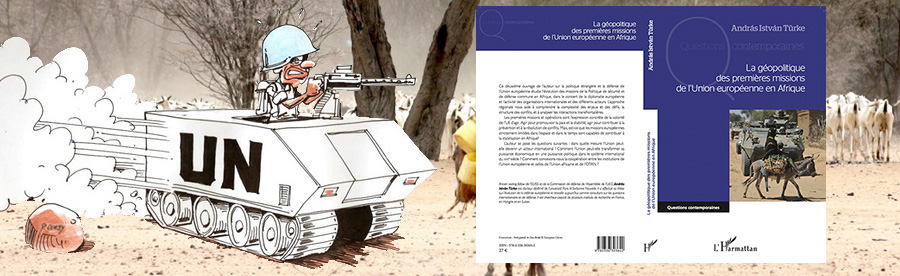

We are looking for sponsors for the English translation of these books, please contact turkeandras(at)gmail(dot)com