
You are here
Határon túli magyar portálok összesített hírei
Highlights im Video: Shaqiri und Sow kombinieren sich durch Meister-Abwehr
In Zusammenarbeit mit blue Sport präsentiert Blick die Highlights der Partie FC Basel – FC Thun (4:2).
Categories: Határon túli magyar portálok összesített hírei, Swiss News
Highlights im Video: Rrudhani-Knaller lässt Vaduz-Goalie keine Chance
In Zusammenarbeit mit blue Sport präsentiert Blick die Highlights der Partie FC Sion – FC Vaduz (3:2).
Categories: Határon túli magyar portálok összesített hírei, Swiss News
Highlights im Video: In der 101. Minute erlöst Görtler die Espen
In Zusammenarbeit mit blue Sport präsentiert Blick die Highlights der Partie FC St. Gallen – FC Lzuzern (2:2).
Categories: Határon túli magyar portálok összesített hírei, Swiss News
Nach mehrfachen Material-Fiaskos: Festsieger Staudenmann hat ein neues Hilfsmittel
Fabian Staudenmann setzt seinen Siegeszug fort. Seit seinem Heimfest sorgt eine Packliste dafür, dass er auch neben dem Sägemehl alles im Griff hat.
Categories: Határon túli magyar portálok összesített hírei, Swiss News
Monster-Trucks in Action: Wir verlosen Tickets für Monster Jam in Zürich
Erlebe die grösste Monster-Truck-Show der Welt im Hallenstadion Zürich. Riesige Trucks, gewaltige Sprünge und atemberaubende Stunts sorgen für ein actiongeladenes Erlebnis. Wir verlosen Tickets für Monster Jam am 5. September in Zürich.
Categories: Határon túli magyar portálok összesített hírei, Swiss News
Grosses Sommerfinale: Wir schicken dich ans Energy Air in Luzern
Am 5. September wird die Allmend Luzern zur grössten Partyzone der Schweiz. Das Energy Air bringt 40'000 Fans zusammen und sorgt für ein spektakuläres Sommerfinale. Die exklusiven Tickets gibt es nur zu gewinnen – auch hier bei uns!
Categories: Határon túli magyar portálok összesített hírei, Swiss News
Burkina Faso’s Cancelled Democracy
Burkina Faso’s junta leader Captain Ibrahim Traoré attends a meeting with Russian president Vladimir Putin in Moscow on 10 May 2025. Credit: Angelos Tzortzinis/AFP
By Andrew Firmin
LONDON, Aug 7 2026 (IPS)
Burkina Faso’s charismatic young military leader, army captain Ibrahim Traoré, has stopped pretending. In April, he declared that people should ‘forget about the question of democracy’ because ‘democracy isn’t for us’. When Traoré seized power in September 2022, ousting a leader who’d staged a coup earlier that year, he promised elections by June 2024. The junta broke that pledge, pushing any transition back to 2029. Now Traoré has confirmed he has no intention of restoring democracy. Instead, Burkina Faso’s military junta is tightening its repression, while working with neighbouring states to internationalise its dangerously undemocratic model.
Crackdown intensifies
Repression has unfolded in a context of jihadist insurgency. Frustration with the democratically elected government’s security failures helped fuel the conditions that led to military rule, but the army hasn’t turned things around. The insurgency has grown, and civilians are paying the price. All sides are accused of crimes against humanity and war crimes, and since the coup, there’s evidence that Burkina Faso’s armed forces and allied militias have increasingly targeted civilians, particularly members of the Fulani ethnic group.
A military seen to be failing against the insurgency and killing civilians would lose any claims to legitimacy. That makes the junta determined to control the narrative, silence dissent and crush any perceived challenge to its power.
Traoré backs his anti-democratic rhetoric with actions. In January, the government dissolved all political parties, claiming they sowed division and weakened the social fabric. The junta is also targeting civil society organisations (CSOs). In recent months, authorities have suspended over a thousand organisations. In April, the government dissolved 118 CSOs, citing non-compliance with a July 2025 law that imposed strict and onerous registration, compliance and reporting requirements. The law supposedly gave CSOs a year to comply, but the government dissolved them before the deadline expired. It targeted human rights organisations such as the African Meeting for the Defence of Human Rights, the Burkinabè Coalition for Women’s Rights and Christian Action for the Abolition of Torture.
Religious associations and student groups have fared little better. Association As Salam and the Coordination of Young Muslims of Burkina have no explicit human rights focus, but authorities have suspended both for alleged public disorder and activities said to fall outside their stated purpose. In May, the government suspended the General Student Union of Burkina Faso, the country’s biggest student group, after it issued a statement criticising the government’s security record, which the government claimed glorified terrorism.
Authorities have suspended several media outlets, typically over their reporting on the security situation. In May, the state media regulator indefinitely suspended French TV channel TV5 Monde, accusing it of siding with terrorist groups.
Anybody who speaks out risks arrest, detention, enforced disappearance, forced conscription into the armed forces and torture. Burkina Faso’s LGBTQI+ people are particularly exposed, since in 2025 the junta criminalised same-sex relations, with jail sentences of up to five years. The government has also granted itself the power to strip citizenship from anyone deemed to be acting against the national interest. Last December, repression took an even more ominous turn when the junta announced its intention to reinstate the death penalty.
Due to these actions, Burkina Faso has recently been added to the CIVICUS Monitor Watchlist, which identifies countries where a severe deterioration in the quality of civic space is taking place.
Repressive alliance
Burkina Faso isn’t working alone. Under Traoré, it has forged close relations with two neighbouring military regimes, Mali and Niger. Together, they’re promoting a model that rejects democracy and international scrutiny. In January 2025, they completed their joint withdrawal from the key regional organisation, the Economic Community of West African States (ECOWAS), a year after forming their rival Alliance of Sahel States. The move was clearly a response to ECOWAS pressure to restore civilian rule.
The three states have now formally begun the process to leave the International Criminal Court (ICC). They’ve denounced the court as a ‘tool of neocolonial oppression’ and promised to set up an alternative, although any body they create is unlikely to retain the ICC’s power to issue arrest warrants against sitting heads of state and other senior figures. For survivors of human rights atrocities, withdrawal from the ICC and the ECOWAS Community Court of Justice removes vital potential routes to justice.
In February, Burkina Faso suspended the UN Human Rights Office, which had operated in the country since 2019, in retaliation for a statement by UN human rights chief Volker Türk urging the junta to reverse its ban on political parties and open up civic space. The UN has now concluded it has no choice but to close its office.
These moves shield military leaders and security forces from external accountability. They’re part of a wider realignment that has seen Burkina Faso and its allies turn away from former colonial power France and other democratic states and towards Russia, a partner with no interest in human rights. Burkina Faso’s relations with Russia have extended beyond military cooperation to stronger economic ties. Last year the two countries signed a gold-mining deal.
Even as he rejects international scrutiny, Traoré has cultivated a global following. Through adept use of social media and a steady stream of disinformation, he casts himself as a pan-African leader in the mould of liberation-era icons such as Thomas Sankara, Burkina Faso’s revolutionary former president. His message taps into real anger about colonialism and the power imbalances in relations with western states.
But the people whose rights he tramples aren’t westerners. The civilians being slaughtered by the army and the activists and journalists being silenced are Burkinabe people. There’s nothing un-African about democratic freedoms, and nothing pan-African about a leader who denies them. African democracies have the most to lose if Traoré’s model spreads, and are the most able to challenge it. They should refuse to normalise his narrative and press him to restore fundamental freedoms, rebuild a path to democratic rule and recognise the value of international accountability.
Andrew Firmin is CIVICUS Editor-in-Chief, co-director and writer for CIVICUS Lens and co-author of the State of Civil Society Report.
For interviews or more information, please contact research@civicus.org
Follow @IPSNewsUNBureau
!function(d,s,id){var js,fjs=d.getElementsByTagName(s)[0],p=/^http:/.test(d.location)?'http':'https';if(!d.getElementById(id)){js=d.createElement(s);js.id=id;js.src=p+'://platform.twitter.com/widgets.js';fjs.parentNode.insertBefore(js,fjs);}}(document, 'script', 'twitter-wjs');
Categories: Africa, Határon túli magyar portálok összesített hírei
The World’s Aid Workers Must Be Protected
Action Against Hunger holds a commemoration event for the 17 staff members killed in Muttur, Sri Lanka on August 4th, 2006. Credit: Action Against Hunger
By Rotimy Djossaya
NAIROBI, Kenya, Aug 7 2026 (IPS)
This summer, an ambush on a marked humanitarian convoy in Duk County, South Sudan, left 17 dead and five injured. While the UN called for an immediate investigation, history suggests the victims’ families will wait indefinitely for answers.
We suspended field movements in the area pending a security review, which means communities already facing crisis levels of hunger lost access to life-saving assistance, at least temporarily.
The emblem on a vehicle or a vest once offered protection: a shared understanding, codified in international law, that those delivering food, water, medical care and other basic relief would not be targets of violence. That understanding is breaking down.
In the past three years, more than 1,000 humanitarian workers have been killed, most notably in Gaza, Sudan, South Sudan, and the Democratic Republic of Congo. Worryingly, 2024 was the worst year on record with 383 aid workers killed worldwide. That’s more than one each day.
This year, the recent ambush brought the toll to 29 in South Sudan alone — and it is only August. Roughly 90% of those attacked are local and national staff, the people furthest from headlines and closest to the danger.
Twenty years ago this month, seventeen of our colleagues were executed in our office in Muttur, Sri Lanka, wearing shirts that clearly identified them as humanitarian aid workers. It remains one of the deadliest attacks of its kind. Two decades later, despite evidence pointing to the likely responsibility of state security forces, no one has been held accountable. We are still calling for a new, independent investigation.
Rotimy Djossaya, Chief Impact Officer for Action Against Hunger
My organization operates in more than 55 countries and is made up of nearly 9,000 people, most of them locals from the communities we serve. When I ask them to travel a road in Jonglei State or run a nutrition site in Sudan, I am asking them to accept a risk that many people in the world would refuse. Donors, governments, and agencies like mine share a duty to reduce that risk so that every humanitarian worker comes home at the end of the day.There is a framework for addressing this. In 2024, the UN Security Council passed Resolution 2730, which calls on States to respect and protect United Nations and humanitarian personnel in accordance with their obligations under international law. Last year saw the introduction of the Declaration for the Protection of Humanitarian Personnel, a commitment to uphold international humanitarian law, prevent attacks, and pursue accountability. Over 110 countries have signed on, from every region and political tradition. While the issue still generates broad agreement, it is increasingly polarized, and the declaration’s enforcement is weak.
When a marked humanitarian vehicle is attacked with impunity, the international laws designed to protect humanity become nothing more than abstract targets.
The recent cuts to international aid budgets make a challenging situation even harder. Although it’s not clear that recent funding cuts led directly to any violence, it’s evident that NGOs have far less money to spend on security response management. The 2025 Aid Worker Security Report documented what the funding collapse means for safety: organizations are cutting security positions, communications, and risk analysis, with the danger falling overwhelmingly on local organizations.
In principle, localization is smart, and the humanitarian reset is a chance to build a system that is locally led, globally supported, and more efficient. But it only works if resources move with the risk. Local NGOs are routinely excluded from security funding, training, and data-sharing. They are expected to work in the world’s most dangerous places without the protections international agencies take for granted. They face a difficult choice: abandon some of the people and places they serve or accept greater risk to the safety of their staff.
The aid workers this summer were traveling in a marked humanitarian convoy. Five of them were staff of our local partner, the John Dau Foundation, an organization founded by one of the “lost boys” of South Sudan, who fled unimaginable violence as a child and answered it by building clinics and feeding children in the very county where this attack took place. That people who devoted their lives to healing were met with this violence shows how badly protections for humanitarian workers have eroded. The markings on their vehicle were supposed to shield them, but they did not.
As we mark World Humanitarian Day on August 19 and approach the UN General Assembly in September, the global community and member states must act. They must mandate and fund security allocations directly for local partners, insist on independent investigations for harmed personnel, and enforce UN Security Council Resolution 2730. Commitments on paper only protect lives when perpetrators face consequences. Those who step into the crossfire to feed the world’s forgotten children should not have to pay for that humanity with their lives.
Together, let’s honor those who have served, stand with those who continue to serve, and act for humanity.
Rotimy Djossaya is, Chief Impact Officer at Action Against Hunger.
IPS UN Bureau
Follow @IPSNewsUNBureau
!function(d,s,id){var js,fjs=d.getElementsByTagName(s)[0],p=/^http:/.test(d.location)?'http':'https';if(!d.getElementById(id)){js=d.createElement(s);js.id=id;js.src=p+'://platform.twitter.com/widgets.js';fjs.parentNode.insertBefore(js,fjs);}}(document, 'script', 'twitter-wjs');
Categories: Africa, Határon túli magyar portálok összesített hírei
US Arms Stockpiles Hit by Iran War
Credit: White House/Getty images
By Thalif Deen
UNITED NATIONS, Aug 7 2026 (IPS)
The highly- unpredictable five-month-old US-Iran war has been plagued by on-again, off-again peace agreements — with such monotonous regularity– the conflict seems never ending. But according to several news reports, the US faces a new threat– it may soon run out of key weapons systems.
According to a CNN report, August 5, the US military has used up nearly 80% of its interceptors for a key missile defense system, leaving stockpiles “dangerously low” as mediators work to revive talks between Washington and Tehran.
“Gulf allies are also worried that dwindling US air defense stockpiles could leave them more vulnerable if President Donald Trump escalates the ongoing conflict. Several of those countries rely on US air defense systems and acknowledge the shortage could hinder their ability to intercept Iranian missile and drone attacks.”
Meanwhile the New York Times of August 4 provided a more detailed breakdown, including the US deployment of 1,200 Patriot missiles (out of a military inventory of 2,330) and more than 1,000 Tomahawk missiles, out of 3,000. The US has also deployed more than 1,100 Joint Air-to-Surface Standoff Missiles out of 4,400 and 190 to 290 Terminal High Altitude Defense or THAAD missiles out of 300, among others
At a Camp David summit last weekend, according to one report, President Trump demanded answers from Defense Secretary Pete Hegseth over “extreme munitions shortages”
But as reports of dwindling arms stockpiles continued to spread widely, President Trump publicly denied the possible shortfall. “We have massive amounts of arms”, he wrote on Truth Social. “Additionally, large amounts are being manufactured and shipped to the U.S. as needed. Defense companies are building the largest number of plants and factories in our country’s history.”
Professor Simon Adams, Academic Chair of Human Rights, School of Humanities, Arts and Social Sciences at Murdoch University, Australia told Inter Press Service (IPS):, “Trump’s war of choice against Iran has not only impacted weapons stockpiles, it has depleted the ability of some politicians in Washington DC to see people and places on a map as more than targets and annoyances that can impact petrol prices.
Iran is a country of 90 million people and not just the Strait of Hormuz. From the 120 schoolgirls who were killed in an airstrike in Minab to the latest civilian casualties, too many innocent people have died. No more blood should be spilled.
Ongoing threats by President Trump to bomb Iran into the Stone Age and annihilate Iranian civilization constitute an open threat to commit war crimes, he said.
Meanwhile Iran’s rulers continue to publicly hang protesters and deny Iranians their fundamental human rights, said Adams, former President and CEO of the Center for Victims of Torture – a leading international human rights and humanitarian NGO.
The only people who are ‘winning’ this senseless war are weapons manufacturers, oil companies and supporters of theocracy and authoritarianism in both Iran and the United States, declared Adams.
Meanwhile some of the agreements that fell by the wayside include:
- • April 2026: An initial short-term, two-week ceasefire was brokered by Pakistan, which was later extended indefinitely before breaking down into intermittent fighting.
• June 15, 2026: President Trump and Iranian officials announced that a framework for an interim peace deal and memorandum of understanding (MOU) had been reached to end hostilities and reopen the Strait of Hormuz.
• June 17, 2026: The two nations formally signed the agreement—often referred to as the Islamabad Memorandum—establishing an expanded ceasefire and kicking off a 60-day window to negotiate a final, comprehensive peace treaty.
IPS UN Bureau Report
Follow @IPSNewsUNBureau
!function(d,s,id){var js,fjs=d.getElementsByTagName(s)[0],p=/^http:/.test(d.location)?'http':'https';if(!d.getElementById(id)){js=d.createElement(s);js.id=id;js.src=p+'://platform.twitter.com/widgets.js';fjs.parentNode.insertBefore(js,fjs);}}(document, 'script', 'twitter-wjs');
Categories: Africa, Határon túli magyar portálok összesített hírei
The Year of Pastoralists Must Be More Than Symbolic
Woman milks a cow in northern Mongolia. Credit by Katiekk, Shutterstock
By Solange Bandiaky-Badji
WASHINGTON DC, Aug 6 2026 (IPS)
This is supposed to be the year the world finally sees and recognizes pastoralists. The United Nations has designated 2026 as the International Year of Rangelands and Pastoralists, bringing long-overdue attention to communities who have sustained some of the world’s most fragile and important landscapes for generations.
Yet right now, the world is on fire… quite literally. All eyes are on the wildfires in France, Spain, and Canada. California is coming up on wildfire season. And scientists are predicting the strongest El Niño in history.
As climate-fueled disasters become more frequent and severe, now is an important moment to learn from pastoralists, whose traditional knowledge, adaptive land management practices, and deep understanding of living with climate variability have helped sustain people and landscapes through centuries of environmental change.
In August, governments will gather in Mongolia for COP17 of the United Nations Convention to Combat Desertification (UNCCD COP17), where rangelands, land degradation and climate resilience will be central to the global agenda.
This will be the first UNCCD COP since the e.stablishment of the Caucus of Indigenous Peoples and the Caucus of Local Communities—hard-won victories at COP16—with “Land and People Day and tenure rights included formally on the COP17 agenda.
Dr. Solange Bandiaky-Badji is Coordinator and President of the Rights and Resources Initiative (RRI)
Yet the scale of what is at stake is enormous. Rangelands cover more of the Earth’s surface than any other land use type, and up to 500 million people directly rely on pastoralism for their livelihoods. These lands are central to food security, biodiversity, climate resilience, and the survival of communities across Africa, Asia, Latin America and beyond. Yet pastoralists remain among the least protected and understood land stewards in the world.
This year of recognition must become more than a symbolic milestone. Unless governments and institutions use this moment to move from visibility to rights, pastoralists will continue to be praised in speeches while being pushed further to the margins in law, policy and investment.
Resilience Is Not Invulnerability
Pastoralists are incredibly resilient. Across drylands, savannahs, mountains and rangelands, they have adapted to shifting seasons, scarce water, and fragile ecosystems through sophisticated systems of mobility, customary governance, and ecological knowledge. Their way of life is one of the world’s most climate-adapted livelihood systems. But resilience should not be confused with invulnerability.
At a New York Climate Week event last year focused on Indigenous pastoralist knowledge and nature-based solutions, pastoralist leaders described the reality their communities face every day. One speaker from the Sahel spoke of droughts, severe flooding and wildfires that continue to destroy livelihoods and cost lives. She recalled stories from her grandmother about struggling to find even a grain to eat in order to survive and warned that extreme weather is threatening their lives.
While Climate change is intensifying the pressures on lands and livelihoods that were already under strain, it is only part of the story. Pastoralists are also being squeezed by policies and development models that misunderstand and overlook how their systems work and focus on a narrative that pastoralists are a threat to ecosystems. Their livelihoods depend on mobility, but many legal frameworks are built around fixed land ownership and permanent settlement. Their governance systems are collective and customary, but many governments recognize only formal administrative structures. Their territories include grazing corridors, water points and seasonal routes, but these are rarely treated as essential infrastructure. Even where policies exist focusing on pastoralism, they often do so from restrictive approaches that only center pastoralists as part of a chain of production or tourism exploitation.
The Gap Between Recognition and Rights
A recent analysis by the Rights and Resources Initiative across Kenya, Niger, Tanzania, Mongolia, Nepal, Bolivia and Peru found a persistent gap between recognition on paper and protection in practice. While governments may acknowledge pastoralist land access in some form, mobility—the foundation of pastoralist livelihoods—is rarely protected in law. Among the countries studied, Niger stands out as the lone exception explicitly recognizing mobility as a fundamental right. The legal gap among the rest of the countries has real consequences.
Across regions, rangelands are being fragmented by agricultural expansion, infrastructure projects, extractive industries, conservation restrictions, carbon initiatives and green energy projects. These pressures are often presented as development or climate solutions. But when they are imposed without pastoralists’ full participation and consent, they deepen inequality, fuel conflict and weaken the very systems that have protected rangelands for generations.
Invisible in Data, Invisible in Policy
That exclusion is also statistical. Pastoralists are too often missing from the data systems that shape national priorities, development financing and climate policy. When governments do not accurately count pastoralist communities, map their mobility routes, measure their economic contributions, or document the pressures they face, their needs and contributions remain invisible. When communities are invisible in the data, they are often invisible in budgets, laws and global commitments.
This is especially alarming given the scale of pastoralists’ contributions. In Africa, pastoralists produce much of the continent’s milk and a significant share of its meat. They sustain local markets, support rural economies, manage vast rangelands and carry knowledge that is essential to climate resilience and biodiversity protection. Yet their contributions are rarely matched by legal protection, public investment or meaningful political representation.
Women face even greater barriers. Pastoralist women are central to livestock economies, food systems, households and community resilience. But they are often excluded from land ownership, mobility rights, leadership and formal decision-making. Any serious effort to strengthen pastoralist systems must address women’s rights directly, not as an afterthought.
Tenure Redefined
At COP17, land tenure returns to the agenda as a standing policy item, carried forward from previous sessions alongside rangelands and pastoralists. That is progress. But tenure conceived as titles, boundaries and fixed parcels cannot secure people whose security depends on movement. The United Nations Declaration on the Rights of Peasants (UNDROP) already names transhumant, nomadic and semi-nomadic communities as rights holders and requires states to protect their land rights, an obligation that cannot be met by extending sedentary tenure models to mobile peoples. Pastoralist tenure must be redefined: adaptive, embedding mobility, recognizing shared use, seasonal occupation and overlapping claims and anchored in customary governance. For pastoralists, secure tenure is flexible tenure.
The Solutions Are Clear
The good news is that pastoralists are not waiting for the world to act on their behalf. They are organizing. There is a growing movement across Africa, Asia and Latin America. They may be communities separated by continents and colonial borders, but they are connected by shared histories, livelihoods and struggles.
First, governments must recognize pastoral mobility as a legal right. Movement is not a weakness of pastoralist systems; it is what allows communities to manage climate variability, protect ecosystems and sustain livestock in changing conditions.
Second, states must protect the physical infrastructure of pastoralism, including grazing corridors, water points, dry season reserves and seasonal migration routes. These are as essential to pastoral economies as roads and ports are to national economies.
Third, customary governance systems must be legally recognized and supported. Pastoralist communities have long managed land, water and conflict through local institutions that are adapted to their realities. Replacing these systems with rigid, top-down frameworks weaken both rights and resilience.
Fourth, pastoralist women must have equal rights to land, mobility, resources and leadership. Climate resilience cannot be built while half the community is excluded from decisions that affect them and shape our collective future.
Finally, climate finance, conservation funding and development investments must reach pastoralist communities directly and respect their rights. Projects that restrict access to land without consent or compensation undermine both livelihoods and global environmental goals.
COP17 in Mongolia is an opportunity to turn this year of recognition into a year of action. Governments should arrive prepared not only to discuss rangelands, but to listen to the people who know them best. Pastoralists must be at the table as rightsholders, experts and partners.
The world cannot meet its goals on climate resilience, food security, biodiversity or land restoration while ignoring the communities already holding these systems together.
This is the year of pastoralists. Now it must become the year the world finally recognizes their rights.
Dr. Solange Bandiaky-Badji, is President and Coordinator, Rights and Resources Initiative
IPS UN Bureau
Follow @IPSNewsUNBureau
!function(d,s,id){var js,fjs=d.getElementsByTagName(s)[0],p=/^http:/.test(d.location)?'http':'https';if(!d.getElementById(id)){js=d.createElement(s);js.id=id;js.src=p+'://platform.twitter.com/widgets.js';fjs.parentNode.insertBefore(js,fjs);}}(document, 'script', 'twitter-wjs');
Categories: Africa, Határon túli magyar portálok összesített hírei
Rohingya Refugees Seeking Safe Haven in Bangladesh Hit by Fresh Disasters
A Rohingya refugee points to the landslide that killed two of Abdu Rozork’s daughters and two of their children in their bamboo shelter in a refugee camp in Cox’s Bazar, Bangladesh, last month. Credit: Mohammed Zonaid/IPS
By Mohammed Zonaid
COX'S BAZAR, Bangladesh, Aug 6 2026 (IPS)
Abdu Rozork awoke suddenly to the sound of children screaming. Heavy monsoon rains had sent a landslide barrelling into the section of their bamboo shelter where the women and children were sleeping.
Neighbours rushed to help dig through the mud with their bare hands, but it was too late. Two of Rozork’s daughters and two grandchildren were killed.
Having fled war in Myanmar only two years earlier, Rozork had believed his family would finally find safety among the over one million Rohingya refugees living in densely packed camps in Cox’s Bazar, southeast Bangladesh.
“I escaped conflict in Rakhine State to save my family,” he told IPS. “But I could not save them here.”
Early waves of Muslim minority Rohingya fleeing violence and persecution in Myanmar were housed in the first large-scale camps set up in Cox’s Bazar in the early 1990s. In 2017 a devastating crackdown by the Myanmar military against the Rohingya community and militants in Rakhine State forced another mass exodus, this time of over 700,000 refugees, creating the world’s largest refugee settlement.
Since 2024 and the disintegration of Myanmar amidst civil war, these overcrowded camps have been joined by further waves of civilians fleeing a complex conflict between the junta and the Arakan Army (AA), an ethno-nationalist insurgent group that has seized control over much of Rakhine State, as well as the involvement of Rohingya militants. According to data released by UNHCR, by June those new arrivals in Cox’s Bazar numbered 153,640.
But no new land has been allocated to this recent wave of refugees for building shelters. Many families now have to share with relatives or build makeshift homes on steep hillsides vulnerable to landslides and flooding. Cutbacks in international funding have also led to cuts in classes for children and reduced food rations.
Days of heavy rain since early July triggered landslides and flooding in several of the camps, killing at least 17 people and displacing more than 3,000, according to Human Rights Watch.
Rozork said he had repeatedly asked humanitarian agencies for help with tarpaulins and to make a retaining wall. His bamboo shelter stood at the foot of a hill, and rainwater was coming in.
But organisations responsible for site management told him assistance was unavailable because his family had only recently arrived in Bangladesh. “No one warned us that the shelter was in a dangerous place,” he said. Days later the mud swept down.
His family’s tragedy is one of many among the newest Rohingya arrivals who escaped one crisis only to enter another.
Mohammed Kayes, now 13, was attending school in Buthidaung Township in northern Rakhine when fighting intensified between the Myanmar military and the AA, spreading towards his village. Schools closed, food became scarce, and medical services disappeared.
His family fled through forests and villages for seven days before reaching the Bangladesh border. During the journey, Kayes said Arakan Army members detained his family. After several days, they released them but later took his father away for what they described as questioning. He never returned.
After finally reaching Bangladesh, tragedy struck again. His mother, suffering from a stomach tumour, died after months of illness despite efforts to obtain treatment.
Kayes now helps care for his younger siblings while living with his grandmother. He receives food rations, but with the loss of his mother, they do not qualify for gas cylinders to cook.
His dream is to become a teacher. “I want to study,” he told IPS. “I want to build my future.”
Sawfowan’s dream is to work for the United Nations, but conflict also engulfed his village in Buthidaung, closing schools. “We heard gunfire almost every day,” the 17-year-old said. The men in the family had to flee over a year ago to avoid forced conscription by the AA.
His family struggled to obtain medicine for his diabetic mother, so in May they also decided to flee. According to Sawfowan, Bangladesh border authorities twice pushed the family back across the frontier, but they managed to enter on a third attempt and reunite with relatives inside the camps. Several families now share a single bamboo and tarpaulin shelter.
“I feel safer here,” he said. “But life is still very difficult.”
Community leaders say such experiences are increasingly common among the newest arrivals.
Mohammed Musa, a Rohingya youth leader, said families consistently report forced displacement, disappearances, movement restrictions and food shortages in Rakhine.
“Many arrive carrying deep trauma after losing relatives or surviving repeated displacement inside Myanmar,” he said. “But once they reach Bangladesh, they face another struggle.”
UNHCR says newly arrived refugees receive food assistance, cooking gas, core relief items and protection services under existing government approvals. However, the agency acknowledges that the absence of new land and severe funding shortages have limited humanitarian efforts to relocate families to safer areas or improve shelter conditions.
“The recent loss of lives due to the heavy monsoon rains is a tragic reminder of how vulnerable the camps remain,” Shari Nijman, UNHCR Bangladesh Communications Officer, said.
As conflict continues in Myanmar, Bangladeshi authorities say Rohingya are crossing the border every week despite tighter controls.
The Arakan Army now controls most of Rakhine State but the capital, Sittwe, and has driven Rohingya from their homes. Survivors and rights groups have documented allegations of forced recruitment and mass killings of Rohingya in the village of Hoyyar Siri by the Arakan Army in May 2024, as well as drone attacks on people gathering on the border, burning of villages, arbitrary arrests, and other abuses. The AA denies it carried out the Hoyyar Siri massacre.
Myanmar military airstrikes also continue to displace civilians across the state.
Rohingya fleeing the violence have also been pushed back at the Bangladesh border, while hundreds have died attempting dangerous sea crossings and falling victim to traffickers.
As in many conflicts worldwide, Bangladesh and the international community are faced with a complex crisis where divisions between refugees and combatants become blurred.
Despite the risks, the exodus has not stopped. “Our reports suggest that every week 50 to 60 new Rohingya are entering Bangladesh,” Refugee Relief and Repatriation Commissioner Mizanur Rahman told The Daily Star in July.
IPS UN Bureau Report
Follow @IPSNewsUNBureau
!function(d,s,id){var js,fjs=d.getElementsByTagName(s)[0],p=/^http:/.test(d.location)?'http':'https';if(!d.getElementById(id)){js=d.createElement(s);js.id=id;js.src=p+'://platform.twitter.com/widgets.js';fjs.parentNode.insertBefore(js,fjs);}}(document, 'script', 'twitter-wjs');
Related Articles
Categories: Africa, Határon túli magyar portálok összesített hírei
CHINA: ‘The Ethnic Unity Law Means There Is One Acceptable Way to Be Chinese’
By CIVICUS
Aug 5 2026 (IPS)
CIVICUS speaks about China’s recently implemented Ethnic Unity Law with Gulchehra Hoja, a correspondent for Reporters Without Borders and a Uyghur activist and journalist known for her reporting on human rights abuses against Uyghur people in China.
Gulchehra Hoja
On 1 July, China’s Law on Promoting Ethnic Unity and Progress came into effect. The law requires state and social bodies to foster a single national identity, gives Mandarin priority in education and government affairs, and can be applied beyond China’s borders to people accused of undermining ethnic unity or inciting separatism. The government says the law is consistent with international practice, but civil society fears it will deepen the forced assimilation of Tibetans and Uyghurs and extend the state’s reach over critics living in other countries.What does the new Ethnic Unity Law state?
This new law means there is one acceptable way to be Chinese and requires every part of society, not just the state, to work towards it. Culture, faith and language become things to be managed rather than rights to be protected.
But none of this is new. The law formalises practices that are already in place and turns repression into official state policy. For years the Chinese government has closed Uyghur-language schools, demolished mosques, imprisoned intellectuals, separated children from their families and sent more than a million Uyghurs and other Turkic peoples into detention camps. Ordinary expressions of Uyghur identity can attract suspicion.
Every government wants security and stability. The question is how those goals are pursued and who ends up defined as a threat. Under this law the answer is anyone whose identity does not fit. The Ethnic Unity Law strengthens Communist Party authority, not minority rights. It tells minorities that loyalty to the Communist Party matters more than their identity and that even the most ordinary parts of life are subject to state control.
Doesn’t China’s constitution protect minority languages and autonomy?
On paper, Article 4 guarantees all ethnic groups the right to use their own languages and preserve their cultures. But there is an enormous gap between what the law says and what happens.
I come from the Xinjiang Uyghur Autonomous Region. For Beijing, it is a strategic asset that connects China to Central Asia, holds vast natural resources and plays a central role in the country’s long-term economic and security ambitions. But for Uyghurs, it’s our home. It is where generations of our people have lived and built their lives.
The region is officially described as autonomous, but autonomy must include genuine local political participation, real cultural protection and the right to use and teach our language freely. Where those are missing, autonomy exists in name only.
Which communities does the law reach, and how is it enforced?
Uyghurs are the first victims, but we are certainly not the only ones. The law reaches Hong Kong activists, religious communities, Southern Mongolians and Tibetans. It can even be applied to Chinese citizens whose beliefs or identities just don’t fit the Communist Party’s vision. And because it applies beyond China’s territory, it reaches all of them wherever they live.
Paramilitary institutions, police, security agencies and universities work together, so every part of society is drawn into monitoring and reshaping people’s identities. Students from China’s National Security College, for example, were sent to East Turkistan to study governance centres, neighbourhood grid management, police stations and the Xinjiang Production and Construction Corps, the state-owned paramilitary body that runs its own cities, courts, police and prisons across the region. This was not an academic visit. It was training in how to put a population under surveillance.
What are the risks of speaking out?
I know them personally. In authoritarian systems, telling the truth can be treated as a crime. I was branded a terrorist not because I committed violence but because I practised journalism and dared to speak out. And it was not only me who paid for it. After I reported on what was happening in East Turkistan, 25 members of my family were detained.
I am not alone in this. The Chinese government fears independent reporting, and that is why it works so hard to control information. Foreign journalists have been expelled, local journalists imprisoned and many Uyghur journalists working for international media have seen relatives disappeared, imprisoned or sent to detention camps simply for continuing to report.
The new law gives Beijing further justification to present peaceful advocacy as a threat to national unity. It also sends a message to Uyghurs living in Canada, Europe, Latin America, Turkey and the USA: we are still watching you. That is what transnational repression means.
What should the international community do?
Governments should not judge this law by its title but by its consequences. They should continue documenting human rights abuses, expose China’s efforts to intimidate critics abroad, sanction the officials responsible for these policies and strengthen protections for Uyghur journalists and refugees. We’ll keep documenting these stories even when access is restricted, but we can’t do it alone.
This is not only about Uyghurs. It is about whether a government can erase a people’s culture, history, language and religion and call it unity. That question should concern everyone.
CIVICUS interviews a wide range of civil society activists, experts and leaders to gather diverse perspectives on civil society action and current issues for publication on its CIVICUS Lens platform. The views expressed in interviews are the interviewees’ and do not necessarily reflect those of CIVICUS. Publication does not imply endorsement of interviewees or the organisations they represent.
GET IN TOUCH
Website
Facebook
LinkedIn
Twitter
YouTube
Gulchehra Hoja/LinkedIn
SEE ALSO
Transnational repression: ‘China feels emboldened to globalise its political red lines’ CIVICUS Lens | Interview with Barbora Bukovská 19.May.2026
China: ‘The state is using generative AI to engineer reality through informational gaslighting’ CIVICUS Lens | Interview with Fergus Ryan 12.Mar.2026
The long reach of authoritarianism CIVICUS Lens 20.Mar.2024
Follow @IPSNewsUNBureau
!function(d,s,id){var js,fjs=d.getElementsByTagName(s)[0],p=/^http:/.test(d.location)?'http':'https';if(!d.getElementById(id)){js=d.createElement(s);js.id=id;js.src=p+'://platform.twitter.com/widgets.js';fjs.parentNode.insertBefore(js,fjs);}}(document, 'script', 'twitter-wjs');
Categories: Africa, Határon túli magyar portálok összesített hírei
A főképviselőnek az Európai Unió nevében tett nyilatkozata egyes országoknak az Uniót vagy annak tagállamait fenyegető kibertámadások elleni korlátozó intézkedésekhez történő csatlakozásáról
A főképviselőnek az Európai Unió nevében tett nyilatkozata egyes harmadik országoknak az Uniót vagy annak tagállamait fenyegető kibertámadások elleni korlátozó intézkedésekről szóló (KKBP) 2019/797 határozat módosításáról szóló, 2026. július 13-i (KKBP) 2026/1713 tanácsi határozathoz történő csatlakozásáról
A főképviselőnek az EU nevében tett nyilatkozata egyes országoknak a Szudán stabilitását és politikai átmenetét aláásó tevékenységekre tekintettel hozott korlátozó intézkedésekhez történő csatlakozásáról
A főképviselőnek az Európai Unió nevében tett nyilatkozata egyes harmadik országoknak a Szudán stabilitását és politikai átmenetét aláásó tevékenységekre tekintettel hozott korlátozó intézkedésekről szóló (KKBP) 2023/2135 határozat módosításáról szóló, 2026. július 13-i (KKBP) 2026/1705 tanácsi határozathoz történő csatlakozásáról.
A főképviselőnek az EU nevében tett nyilatkozata egyes országoknak a súlyos emberi jogi jogsértések és visszaélések elleni korlátozó intézkedésekhez történő csatlakozásáról
A főképviselőnek az Európai Unió nevében tett nyilatkozata egyes harmadik országoknak a súlyos emberi jogi jogsértések és visszaélések elleni korlátozó intézkedésekről szóló (KKBP) 2020/1999 határozat módosításáról szóló, 2026. július 13-i (KKBP) 2026/1723 tanácsi határozathoz történő csatlakozásáról.
A főképviselőnek az EU nevében tett nyilatkozata egyes országoknak a libanoni helyzetre tekintettel hozott korlátozó intézkedésekhez történő csatlakozásáról
A főképviselőnek az Európai Unió nevében tett nyilatkozata egyes harmadik országoknak a libanoni helyzetre tekintettel hozott korlátozó intézkedésekről szóló (KKBP) 2021/1277 határozat módosításáról szóló, 2026. július 17-i (KKBP) 2026/1767 tanácsi határozathoz történő csatlakozásáról.
A főképviselőnek az Európai Unió nevében tett nyilatkozata Iránról
A főképviselőnek az Európai Unió nevében tett nyilatkozata az iráni biztonsági erők által Franciaország teheráni nagykövetségének két diplomatája ellen július 19-én elkövetett agresszióról.
Arrests in Egypt after people allegedly impersonate judges
Egyptian authorities say the alleged scam involved fabricated scenes in court as part of a plot to defraud people.
Categories: Africa, Határon túli magyar portálok összesített hírei
Moov Africa lance ses nouveaux forfaits internet « C'Dosé » à 300F et 500F
– Moov Africa lance ses nouveaux forfaits internet à 300F et 500F à travers la campagne « C'Dosé »
Le forfait à 300F offre 500 Mo et WhatsApp illimité pendant 48h. Celui à 500F donne accès à 1 Go et à un accès illimité aux réseaux sociaux préférés des abonnés (TikTok, Facebook, Snapchat, WhatsApp et YouTube) pendant 24h.
Premier opérateur à lancer ce type d'offre, Moov Africa confirme sa volonté de proposer des forfaits calqués sur les véritables usages de ses abonnés. L'ensemble de la nouvelle grille est disponible en tapant *123#.

Categories: Afrique, Határon túli magyar portálok összesített hírei
Ugandans among athletes 'missing' after Commonwealth Games
Police Scotland said it had received reports of various athletes "unaccounted for" in the aftermath of the Games, which concluded on Sunday.
Categories: Africa, Határon túli magyar portálok összesített hírei
Pages
the old site is here


© 2012-2015 Europa Varietas Foundation © 2015-2020 Europa Varietas Association
www.europavarietas.org | info(@)europavarietas(dot)org | Switzerland
This is a GDPR ready site
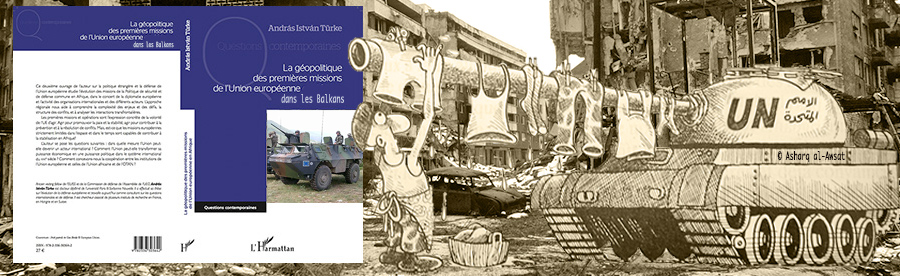
We are looking for sponsors for the English translation of these books, please contact turkeandras(at)gmail(dot)com