
You are here
Feed aggregator
Wärmende Wohlfühlküche: Diese Kürbis-Gnocchi machen Lust auf Herbst
Kürbis, Kartoffeln, knuspriger Speck und aromatischer Salbei: Diese selbst gemachten Gnocchi bringen alles mit, was ein richtiges Herbstgericht braucht. Die Zubereitung ist einfacher, als du vielleicht denkst – und das Ergebnis schmeckt wunderbar nach gemütlichen Abenden.
Categories: Swiss News
Tami über den Fall Xhaka: «Granit wäre als Leader jetzt wichtig fürs Team»
Nati-Captain Granit Xhaka hat sich gefälschte Covid-Zertifikate besorgt. Dies hat der Fussballer am Montagmorgen zugegeben, am Nachmittag äussert sich Nati-Direktor Pierluigi Tami dazu.
Categories: Swiss News
Ein Apfel am Tag: Sechs überraschende Gründe für täglichen Apfelgenuss
«An apple a day keeps the doctor away» – so lautet ein bekanntes Sprichwort. Doch was ist wirklich an dieser Redewendung dran? Wir klären auf und verraten euch, was die süsse Frucht sonst noch alles kann.
Categories: Swiss News
Pilze werden zu schnell braun?: Dieser Trick soll sie länger frisch halten
Champignons und andere Pilze verlieren im Kühlschrank oft schon nach kurzer Zeit ihr frisches Aussehen. Ein ungewöhnlicher Trick mit Pfefferminzöl soll das Braunwerden bremsen. Entscheidend ist allerdings, welches Öl du verwendest und wie du es einsetzt.
Categories: Swiss News
Unfall in Ittigen BE: 94-jähriger Schweizer fällt von Leiter – tot!
Tödlicher Unfall in Ittigen BE: Ein Schweizer stürzte am Montag von einer Leiter und verstarb noch vor Ort. Wie konnte es dazu kommen?
Categories: Swiss News
Le « Made in France » perd du terrain en Algérie : un expert décrypte la dégringolade
Les relations entre les deux pays traversent une phase de tension dont les répercussions ne se limitent plus aux dossiers diplomatiques et migratoires, mais s’étendent […]
L’article Le « Made in France » perd du terrain en Algérie : un expert décrypte la dégringolade est apparu en premier sur .
Categories: Afrique, Határon túli magyar portálok összesített hírei
Le personnel de l'ex-Médiateur de la République rejoint les effectifs du CES
La réforme de la médiation de la République franchit une nouvelle étape au Bénin. Après le transfert de cette mission au Conseil économique et social (CES), les agents qui travaillaient au sein de l'ancienne administration du Médiateur sont désormais rattachés à l'institution.
Le Conseil économique et social ajuste progressivement son organisation à ses nouvelles responsabilités. Dans une décision signée le 31 août 2026, son président, Abdoulaye Bio Tchané, a acté le reversement dans les effectifs du CES du personnel en service dans l'administration de l'ancien Médiateur de la République. Dans le nouvel organigramme, la fonction de Médiateur de la République est rattachée à celle de premier vice-président du CES.
Le nouveau règlement intérieur du CES précise le fonctionnement de ce dispositif. Le texte, adopté par les conseillers le 20 août 2026, a été soumis à la Cour constitutionnelle. La Haute juridiction a rendu sa décision le 27 août, déclarant conformes à la Constitution toutes les dispositions du règlement intérieur.
Avec la décision du 31 août, le personnel qui assurait les activités administratives du Médiateur de la République est désormais comptabilisé dans les effectifs du CES. La décision prend effet à compter de sa signature et prévoit également l'abrogation des dispositions antérieures contraires.


Categories: Afrique, European Union
L'ANIP recrute 6 Data Stewards pour renforcer la qualité des données
L'Agence nationale d'identification des personnes (ANIP) ouvre un recrutement de six Data Stewards, dans le cadre d'un contrat à durée déterminée. Les agents retenus auront notamment pour mission de vérifier, contrôler et fiabiliser les données, avec un volet consacré à l'automatisation de la détection des anomalies. Les candidatures sont ouvertes jusqu'au 25 septembre 2026 à 23h59. Voici les détails.
Categories: Afrique, European Union
Les femmes sont-elles meilleures que les hommes en course d'endurance ?
Ces derniers mois, des femmes ont battu des hommes dans certaines épreuves d'endurance de haut niveau – sont-elles mieux adaptées à ces défis ?
Categories: Afrique, Swiss News
Taux de change en Algérie : légère hausse de l’euro face au dinar ce 21 septembre
Le square Port-Saïd entame la semaine sur une note légèrement haussière. Ce lundi 21 septembre 2026, les cambistes de la place algéroise cèdent la monnaie […]
L’article Taux de change en Algérie : légère hausse de l’euro face au dinar ce 21 septembre est apparu en premier sur .
Categories: Afrique, Határon túli magyar portálok összesített hírei
La combinaison gagnante du tirage de 11 H
LES RÉSULTATS LOTO FORTUNE SONT LÀ !
TIRAGE N°151/26
Lundi 21 septembre 2026 (11H)
65 • 62 • 25 • 09 • 07

Félicitations aux heureux gagnants !
Pas encore gagné ? Gardez le sourire !
Rendez-vous au prochain tirage de 14h pour une nouvelle chance.
Jouez dans les centres de jeux ou en ligne : Tapez 590# ou lnbloto.bj
Jouez avec modération et responsabilité. Le jeu doit rester un plaisir.
Categories: Afrique, European Union
Mohamed Salah given six-month driving ban
The former Liverpool footballer's Rolls-Royce was clocked speeding in Wilmslow in March.
Categories: Africa, Balkan News
Immigration aux États-Unis : plus de 25 000 personnes expulsées vers des pays tiers
Plus de 25 000 personnes expulsées vers des pays sans aucun lien avec elles : c’est le chiffre choc dévoilé ce lundi par une enquête […]
L’article Immigration aux États-Unis : plus de 25 000 personnes expulsées vers des pays tiers est apparu en premier sur .
Categories: Afrique, Határon túli magyar portálok összesített hírei
Les nouveaux tarifs fixés pour les véhicules en fourrière
A travers un arrêté municipal en date du 16 septembre 2026 portant création et fonctionnement de la fourrière communale de véhicules motorisés, la mairie de Cotonou a fixé de nouveaux tarifs pour l'enlèvement et la garde des véhicules. Ces tarifs varient selon le type véhicule.
Dès ce lundi 21 septembre 2026, la mairie de Cotonou engage une opération de libération des espaces publics. Sont concernés, les véhicules abandonnés ou hors d'usage, les épaves et les installations illégales d'activités de réparation automobile. Les frais d'enlèvement et de garde de ces véhicules ont été fixés à travers un arrêté municipal en date du 16 septembre 2026, portant création et fonctionnement de la fourrière communale de véhicules motorisés.
L'article 17 de l'arrêté précise que lorsqu'un véhicule placé en fourrière a un propriétaire inconnu, introuvable ou insolvable, après 90 jours de garde, la commune de Cotonou procède à sa vente aux enchères publiques, par l'intermédiaire d'un commissaire-priseur.
Les tarifs prévus pour chaque type de véhicule :
Deux-roues motorisés
– Enlèvement : 5 000 FCFA
– Fourrière : 2 000 FCFA
Tricycles
– Enlèvement : 10 000 FCFA
– Fourrière : 3 000 FCFA
Véhicules de 4 à 12 places
– Enlèvement : 30 000 FCFA
– Fourrière : 5 000 FCFA
Véhicules de 13 à 30 places
– Enlèvement : 50 000 FCFA
– Fourrière : 10 000 FCFA
Véhicules à partir de 31 places
– Enlèvement : 80 000 FCFA
– Fourrière : 15 000 FCFA
Camions de moins de 5 tonnes
– Enlèvement : 50 000 FCFA
– Fourrière : 10 000 FCFA
Camions de 5 à 10 tonnes
– Enlèvement : 120 000 FCFA
– Fourrière : 15 000 FCFA
Camions de plus de 10 tonnes
– Enlèvement : 150 000 FCFA
– Fourrière : 20 000 FCFA
F. A. A.
Categories: Afrique, European Union
Pourquoi l'homme le plus riche d'Afrique souhaite-t-il vendre une partie de son empire ?
L'homme d'affaires milliardaire Aliko Dangote a lancé la plus grande introduction en bourse jamais réalisée sur le continent, en cotant sa société de raffinage de pétrole à la Bourse du Nigeria. Que savons-nous donc de cet entrepreneur de 69 ans et de sa promesse de contribuer à assurer davantage de prospérité et d'indépendance économique aux Africains ?
Categories: Afrique, Swiss News
Who bears the burden of institutional constraints in Egyptian manufacturing? Evidence on Egypt’s industrial support architecture
This paper draws on the 2020/21 Egyptian Industrial Firm Behaviour Survey of 2,383 manufacturing firms to provide the first systematic, firm-level evidence on how Egypt’s industrial policy institutions are experienced by manufacturing firms. Using firms’ own perceptions of institutional obstacles, the analysis distinguishes between ministries (“institutions”) and subordinate ministerial and corporatist bodies (“entities”), and classifies these entities into capability-building bodies, regulatory gatekeepers, and quasi-public corporatist bodies. This framework allows the identification of systematic differences in firms’ perceptions across types of institutions and entities, as well as across firm types. It also enables the mapping of mandate overlaps among the entities most frequently identified as problematic. Three results emerge. First, firms report entities as substantially more problematic than ministries. Second, reported institutional burdens are unevenly distributed. In particular, regulatory gatekeepers that control licensing, standards, inspections and continued market access are associated with disproportionately higher reported burdens on structurally more vulnerable firms. Reported frictions are systematically higher for domestically oriented non-exporters, small and medium enterprises, firms located outside industrial zones, privately owned firms and especially informal firms. Third, these patterns are consistent with coordination failures arising from overlapping mandates and weak accountability within specialised agencies. The findings suggest several reform priorities centred on predictable and published requirements, a single coordinated front end for firms, end-to-end case handling, outcome-based monitoring and disclosure, and scaling only those programmes with rigorously demonstrated impact.
Categories: Afrique, Diplomacy & Defense Think Tank News
Who bears the burden of institutional constraints in Egyptian manufacturing? Evidence on Egypt’s industrial support architecture
This paper draws on the 2020/21 Egyptian Industrial Firm Behaviour Survey of 2,383 manufacturing firms to provide the first systematic, firm-level evidence on how Egypt’s industrial policy institutions are experienced by manufacturing firms. Using firms’ own perceptions of institutional obstacles, the analysis distinguishes between ministries (“institutions”) and subordinate ministerial and corporatist bodies (“entities”), and classifies these entities into capability-building bodies, regulatory gatekeepers, and quasi-public corporatist bodies. This framework allows the identification of systematic differences in firms’ perceptions across types of institutions and entities, as well as across firm types. It also enables the mapping of mandate overlaps among the entities most frequently identified as problematic. Three results emerge. First, firms report entities as substantially more problematic than ministries. Second, reported institutional burdens are unevenly distributed. In particular, regulatory gatekeepers that control licensing, standards, inspections and continued market access are associated with disproportionately higher reported burdens on structurally more vulnerable firms. Reported frictions are systematically higher for domestically oriented non-exporters, small and medium enterprises, firms located outside industrial zones, privately owned firms and especially informal firms. Third, these patterns are consistent with coordination failures arising from overlapping mandates and weak accountability within specialised agencies. The findings suggest several reform priorities centred on predictable and published requirements, a single coordinated front end for firms, end-to-end case handling, outcome-based monitoring and disclosure, and scaling only those programmes with rigorously demonstrated impact.
Categories: Diplomacy & Defense Think Tank News, Swiss News
Who bears the burden of institutional constraints in Egyptian manufacturing? Evidence on Egypt’s industrial support architecture
This paper draws on the 2020/21 Egyptian Industrial Firm Behaviour Survey of 2,383 manufacturing firms to provide the first systematic, firm-level evidence on how Egypt’s industrial policy institutions are experienced by manufacturing firms. Using firms’ own perceptions of institutional obstacles, the analysis distinguishes between ministries (“institutions”) and subordinate ministerial and corporatist bodies (“entities”), and classifies these entities into capability-building bodies, regulatory gatekeepers, and quasi-public corporatist bodies. This framework allows the identification of systematic differences in firms’ perceptions across types of institutions and entities, as well as across firm types. It also enables the mapping of mandate overlaps among the entities most frequently identified as problematic. Three results emerge. First, firms report entities as substantially more problematic than ministries. Second, reported institutional burdens are unevenly distributed. In particular, regulatory gatekeepers that control licensing, standards, inspections and continued market access are associated with disproportionately higher reported burdens on structurally more vulnerable firms. Reported frictions are systematically higher for domestically oriented non-exporters, small and medium enterprises, firms located outside industrial zones, privately owned firms and especially informal firms. Third, these patterns are consistent with coordination failures arising from overlapping mandates and weak accountability within specialised agencies. The findings suggest several reform priorities centred on predictable and published requirements, a single coordinated front end for firms, end-to-end case handling, outcome-based monitoring and disclosure, and scaling only those programmes with rigorously demonstrated impact.
Categories: Diplomacy & Defense Think Tank News, Swiss News
« À partir de ce 21 septembre » : Algérie Poste réaménage ses horaires d’ouverture
Alors que le pays amorce ce lundi sa rentrée sociale sur fond de reprise générale, Algérie Poste emboîte le pas en officialisant ses nouveaux horaires […]
L’article « À partir de ce 21 septembre » : Algérie Poste réaménage ses horaires d’ouverture est apparu en premier sur .
Categories: Afrique, Határon túli magyar portálok összesített hírei
Debate: After state elections: can Merz keep his job?
In state elections in Berlin and Mecklenburg-Western Pomerania, the CDU has once again suffered major losses. While in the capital Die Linke (The Left Party) emerged as the strongest party, in Mecklenburg-Western Pomerania the AfD will now be the largest group in the state parliament. The CDU didn't even clear the five-percent hurdle necessary to hold seats there. Europe's media examine the results – and the chancellor's chances of retaining his post.
Categories: Defense`s Feeds, European Union
Pages
the old site is here


© 2012-2015 Europa Varietas Foundation © 2015-2020 Europa Varietas Association
www.europavarietas.org | info(@)europavarietas(dot)org | Switzerland
This is a GDPR ready site

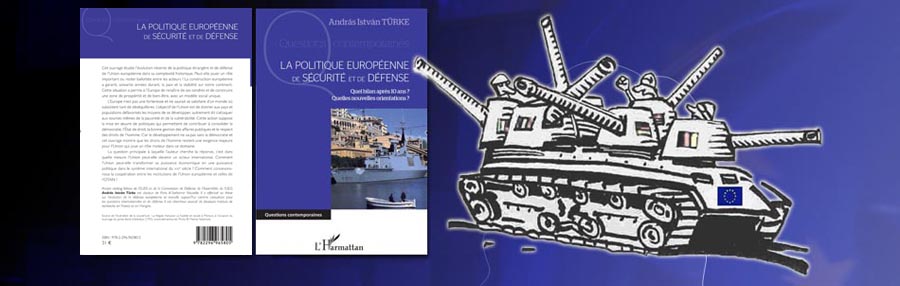
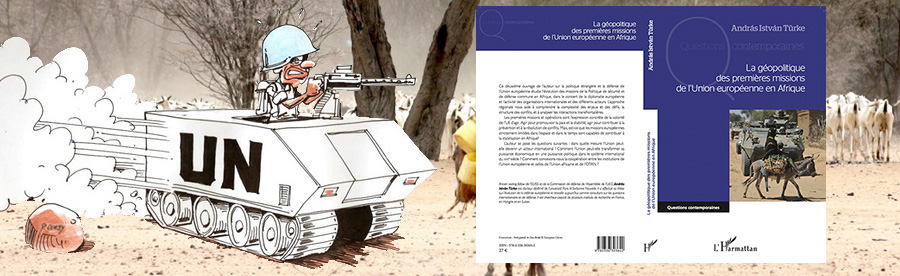
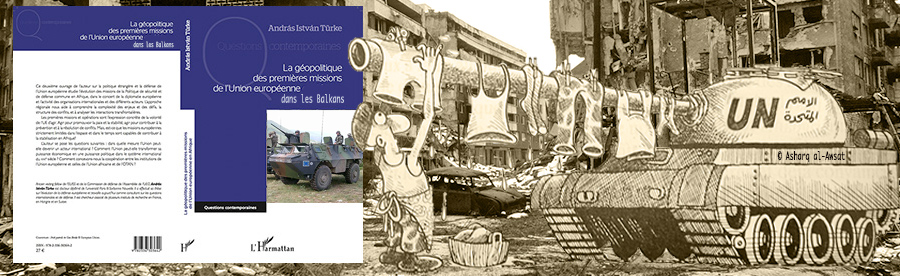
We are looking for sponsors for the English translation of these books, please contact turkeandras(at)gmail(dot)com