
You are here
Határon túli magyar portálok összesített hírei
Dollar System Eroding Slowly, but Still Dominant
By Jomo Kwame Sundaram
KUALA LUMPUR, Malaysia, Oct 13 2026 (IPS)
The protracted demise of dollar-gold convertibility and associated fixed exchange rates did not end dollar hegemony. With crucial and timely help from political allies, confidence in the dollar system has persisted, albeit much diminished.
Jomo Kwame Sundaram
Contingency planning?On August 15, 1971, President Richard Nixon announced that the US would no longer convert dollars into gold, as promised under the 1944 Bretton Woods (BW) agreement.
But the BW payments arrangements and the US promise of dollar convertibility to gold were not sustainable. As Robert Triffin noted in 1960, the system was ‘failing by design’ from the outset, which US authorities denied and refused to address.
Vietnam War spending, rising inflation, and a run on US gold reserves forced this decision after allied Western central banks quietly gave up defending the gold-dollar peg in 1968.
Decades later, then-US Undersecretary for Monetary Affairs Paul Volcker revealed he had initiated a Treasury working group in 1969.
As the US balance of payments was already proving unsustainable, suspending gold-dollar convertibility was no longer considered an option to be avoided at all costs.
Portraying the gold peg’s failure as due to arithmetic, not politics, Volcker argued that suspending it involved implementing contingency planning that the group had long considered.
Two days before, Nixon summoned 15 advisors to a secret retreat at Camp David to draft his announcement. He also imposed a 90-day wage-price ‘freeze’ and a 10% tariff on imports.
Thus, Nixon presented the suspension of dollar convertibility to gold as part of a larger economic policy reform package, rather than as the long-overdue default on earlier US pledges.
With his 1972 re-election campaign approaching, Nixon and his Treasury Secretary, John Connally, claimed to be ‘freeing’ US economic policy by ending dollar-gold convertibility and associated fixed exchange rate obligations.
Clearly, Nixon’s mid-August 1971 announcement was not an improvised response to an emergency or even the sudden break he implied, although the Volcker group preferred a more ‘controlled demolition’.
US dollar, others’ problem
When allied finance ministers were negotiating a replacement arrangement in Rome in November 1971, Connally bluntly told them that the dollar was America’s currency but their problem, belatedly confessing to BW’s true nature.
Nonetheless, their December 1971 Smithsonian Agreement still sought to patch things up rather than explicitly abandon the 1944 arrangement and the later efforts to defend it.
The dollar was devalued against gold for the first time since 1934, with its price rising from $35 to $38 an ounce. Trading bands around other currencies were widened to give central banks more flexibility.
Nixon pronounced the 1971 Smithsonian Agreement the most significant monetary arrangement in world history before the dollar was devalued again 14 months later, in February 1973.
National authorities politically aligned with the US had defended it, but eventually stopped paying to maintain the charade. Thus, a year and a half after August 1971, BW was finally buried.
Within weeks, the major currencies abandoned fixed exchange rates altogether, allowing them to float against one another. Although the transition to floating rates was not smooth, it has survived, with modifications, ever since.
But the ‘settlement gap’ time lag under floating exchange rates is so problematic that international banking regulators have long sought to reform the way cross-border currency trades are cleared.
Charade over?
Although BW is now long gone, the dollar system has proven durable. The end of gold convertibility was not fatal to the dollar’s role at the centre of world finance.
Instead, the end of the BW dollar-gold convertibility obligation removed one constraint on it. After the final break with gold in 1973, the dollar was only backed by US government promises.
Gold’s formal demonetisation was confirmed with the 1976 Jamaica Accords when IMF member governments quietly amended its charter to strip the precious metal of any official role.
Freed from its earlier BW obligation to redeem dollars with gold, the US has financed its trade, current account, and fiscal deficits, as well as foreign and domestic government spending, with ever more dollar debt.
The world has increasingly financed the growth of US debt as the dollar remains the main currency in which most international trade, especially in commodities, is priced and settled.
The IMF had policed fixed exchange rates and gold-dollar convertibility for over two decades after the war. It has since changed roles to oversee floating exchange rates, selectively serve as ‘lender of last resort’ and manage sovereign debt crises.
International oil transactions were mainly settled in ‘petrodollars’, due to an arrangement with Saudi and other Gulf producers to use oil sales revenue to buy US Treasury securities.
The status quo is now based on others’ willingness to hold dollars. But growing concerns about US willingness to honour its commitments have caused governments to consider alternatives. But dollar hegemony has weathered such recent storms so far.
IPS UN Bureau
Related Articles
- The Dollar-Gold Standard’s Lingering Demise
- Dollar Dominance Eroding Slowly but Surely
- Trump’s World Stagflation Also Undermines Dollar Hegemony
- New US Fed Policy Deepens World Stagflation
- Trump De-dollarisation Accelerant
- Central Bank Hedging Triggered Gold Fever
- Western Finance Ruining Economies of the Rest
- US Fed- Induced World Stagnation Deepens Debt Distress
- SWIFT Dollar Decline
- Trade, Currency War Weapons Double-Edged
Categories: Africa, Határon túli magyar portálok összesített hírei
Weshalb die City-Fans mit Bananen gefeiert haben
ManCity-Fans sorgten in Liverpool mit einer ungewöhnlichen Aktion für Aufsehen. Sie schwenkten aufblasbare Bananen – eine Anspielung auf dunkle Zeiten in der Vereinsgeschichte. Die Aktion kommt zu einem Zeitpunkt, an dem City wegen mutmasslicher Verstösse gegen Finanzregeln in der Kritik steht.
Categories: Határon túli magyar portálok összesített hírei, Swiss News
«Einige Männer hätte ich auslassen können»
Ein bekifftes Pferd, schwierige Kindermädchen, Männer und der Gedanke ans Sterben. Darüber und über vieles mehr spricht «Der Bulle von Tölz»-Star Katerina Jacob (68) im grossen Blick-Interview.
Categories: Határon túli magyar portálok összesített hírei, Swiss News
Die französische Autorevolution
An ihrem Heimspiel am Pariser Autosalon übertreffen sich die französischen Hersteller mit coolen Conceptcars. Während der Star der Messe bereits dem Serienmodell entspricht, blicken andere Marken ferner in die Zukunft und lassen ihre Fans träumen.
Categories: Határon túli magyar portálok összesített hírei, Swiss News
Les sept pays africains où les salaires sont les plus élevés
En Afrique de l'Est, le Kenya a fait mieux que ses voisins comme la Tanzanie, l'Ouganda et le Rwanda, mais est resté derrière Djibouti, qui menait non seulement l'Afrique de l'Est, mais aussi l'ensemble du continent avec une moyenne de 2 836 dollars (1 647 007 FCFA) par mois.
Categories: Afrique, Határon túli magyar portálok összesített hírei
Media advisory - General Affairs Council and accession conferences with Albania, the Republic of Moldova and Ukraine of 13 October 2026
Main agenda items, approximate timing, public sessions and press opportunities.
Lebanon: EU establishes new CSDP support mission to strengthen defence and security institutions
The Council has established the EU Support Mission in Lebanon (EUSM Lebanon) to strengthen the Lebanese Armed Forces and Internal Security Forces and support stability in the country.
Russia’s war of aggression against Ukraine: EU agrees largest-ever package of listings targeting almost 1600 individuals and entities in Russia’s military-industrial complex
The Council has adopted restrictive measures against 826 Russian companies and 743 individuals active in Russia’s military-industrial complex in single largest set of listings since the beginning of Russia’s war of aggression against Ukraine.
Ukraine’s territorial integrity: Council lists 77 individuals over the illegal Russian State Duma 'elections' in the temporarily occupied territories of Ukraine
The Council has adopted restrictive measures against 77 individuals who were involved -as either candidates or members of the Central Election Commission of the Russian Federation- in the illegal so-called 'elections' for the Russian State Duma, held in September 2026 in the territories of Ukraine that Russia has temporarily and illegally occupied.
La Totale
C'est comme un accident de la route : carrefour fatal, un mort. Le macronisme meurt à l'intersection qui l'attendait de toute éternité : l'intersection de la route du capital et de la route du peuple. Ici le capital se présente sous sa forme pure, la forme de l'argent qui fait de l'argent, sans médiation : la forme du capital financier. En face : le feu.
- La pompe à phynance / France, Jeunes, Politique, Crise financière
Categories: Défense, Határon túli magyar portálok összesített hírei
Dr Urbain Brito à la tête de la Commission baleinière internationale
Le Directeur des Pêches et de l'Aquaculture au ministère de l'Agriculture, de l'Élevage et de la Pêche, Dr Urbain Brito, préside désormais la Commission baleinière internationale (CBI). Il a été élu le 2 octobre 2026, lors de la 70ᵉ réunion biennale, tenue à Hobart, en Australie.
Un Béninois est à la tête de la Commission baleinière internationale (CBI). Il s'agit de Dr Urbain Brito, directeur des Pêches et de l'Aquaculture au ministère de l'Agriculture, de l'Élevage et de la Pêche. Son élection a eu lieu lors la 70ᵉ réunion biennale, tenue à Hobart, en Australie du 27 septembre au 2 octobre 2026. La vice-présidence est assurée par Anne-Marie Svoboda (Pays-Bas).
Créée en 1946, la Commission baleinière internationale (CBI) ou International Whaling Commission (IWC) est un organe mondial chargé de la gestion de la chasse à la baleine et de la conservation des cétacés. Elle compte aujourd'hui 89 pays membres. Le président et le vice-président sont élus au sein des commissaires. Leur mandat est de quatre ans dont deux ans en tant que vice-président et deux ans en tant que président. Ils dirigent la Commission et le Bureau et animent les réunions de la Commission.
Dr Urbain Brito avait assuré le poste de vice-président de 2024 à 2026.
Categories: Afrique, Határon túli magyar portálok összesített hírei
Voici les délais à respecter pour la visite technique et contre-visite
Le Centre national de sécurité routière (CNSR) rappelle aux conducteurs et propriétaires de véhicules les délais à respecter pour la visite technique et la contre-visite. C'est à travers un communiqué en date du 9 octobre 2026.
Trente jours après la prise de rendez-vous. C'est le délai dont dispose l'usager pour présenter son véhicule dans un centre de contrôle technique. Passé ce délai, le paiement effectué n'est plus valable. Le propriétaire doit alors procéder à un nouveau règlement pour faire contrôler son véhicule.
En cas de défaillances nécessitant des réparations, l'usager dispose de quarante-huit heures, à compter de la notification, pour effectuer les travaux prescrits et présenter son véhicule à la contre-visite. Celle-ci doit se dérouler dans le centre ayant effectué le premier contrôle.
À l'expiration de ce délai, le véhicule est déclaré non conforme au titre de la visite concernée. L'usager doit alors reprendre toute la procédure et payer à nouveau les frais de contrôle.
Un contrôle préalable recommandé
Pour éviter ces désagréments, le CNSR recommande aux conducteurs de faire vérifier leur véhicule avant même la prise de rendez-vous. Cette précaution concerne particulièrement les principaux organes et équipements de sécurité. Selon le Centre, elle permet de limiter les risques de défaillance, d'éviter un rejet au contrôle et de prévenir la reprise de la procédure.
Categories: Afrique, Határon túli magyar portálok összesített hírei
2 Togolais arrêtés avec 1031 boules de chanvre indien
Un contrôle policier nocturne a permis d'intercepter deux convoyeurs présumés à bord d'un minibus Mazda. La cargaison, dissimulée dans onze sacs de jute, était destinée à Kétou.
Le voyage nocturne de deux ressortissants togolais a pris fin à Bantè, dans la nuit du dimanche 11 octobre 2026.
A bord d'un minibus Mazda transportant une importante cargaison de chanvre indien, les deux hommes ont été interpellés par les éléments du commissariat d'arrondissement de Bantè, à la suite d'un signalement du commissariat de Bassila.
Les renseignements faisaient état d'un véhicule suspect transportant des munitions de calibre 12 millimètres.
A la place des munitions, les policiers ont découvert 1031 boules de chanvre indien dissimulées dans onze sacs de jute. Les sacs étaient doublés de sciure, de copeaux et d'écorces d'arbres, un procédé destiné à masquer les odeurs de la marchandise.
L'un des deux suspects a reconnu que le chargement avait été effectué à Aworo, dans la commune de Bassila, avec pour destination Kétou, dans le département du Plateau.
Les deux hommes, originaires de Kouloumbé, au Togo, seront présentés au Procureur de la République.
M. M.
Categories: Afrique, Határon túli magyar portálok összesített hírei
Un scooter électrique fabriqué au Bénin
Léger, rechargeable à domicile, un scooter 100% électrique a été fabriqué au Bénin. Le prototype conçu par un jeune étudiant entend répondre aux besoins de mobilité urbaine.
Fabriquer au Bénin, un engin à deux-roues électrique. C'est le pari relevé par Roland Romuald Toyigbéna Gbohoui. Après plusieurs années de recherches, le jeune technicien béninois a conçu un scooter électrique.
Le scooter pèse environ 35,5 kg et offre une autonomie de 70 km. Il peut être rechargé à domicile et atteint une vitesse maximale de 45 km/h. Selon son concepteur, une recharge complète revient à environ 200 FCFA d'électricité et demande moins de trois heures.
Châssis, fourche et plusieurs éléments de la structure du scooter électrique ont été réalisés localement. « Pour la fabrication, j'ai utilisé tout ce qu'on utilise ici. Pour la soudure, j'ai utilisé le même poste à souder que les soudeurs », explique Roland Romuald Toyigbéna Gbohoui.
La Conception assistée par ordinateur (CAO) a également occupé une place importante dans le processus. Elle a permis au jeune inventeur de travailler virtuellement sur les différentes composantes avant de passer à la fabrication et aux essais.
Quand le freinage sert aussi à récupérer de l'énergie
Le scooter a un système de freinage régénératif. « Lorsque vous lâchez le poignet de gaz, il y a de l'énergie cinétique. (...) Le moteur utilisé est réversible : quand on lui envoie de l'énergie électrique, il tourne et quand on le fait tourner, il donne de l'énergie électrique », explique le concepteur. Cette technologie permet ainsi de récupérer une partie de l'énergie normalement perdue lors des phases de freinage ou de décélération et de la renvoyer vers la batterie. Elle participe à l'amélioration de l'autonomie du véhicule.
En marche, le scooter ne produit pas d'émissions polluantes directes. Pour son concepteur, l'intérêt est donc double : proposer un moyen de déplacement moins coûteux et contribuer à une mobilité moins dépendante. « La plupart des moyens roulants utilisés ici au Bénin sont des véhicules thermiques et ceux qui sont électriques le sont moins. Et de plus, tous ces véhicules, que ce soit thermique ou électrique, sont importés. Rien n'est fait ici », relève le jeune inventeur béninois.
Le projet ne part toutefois pas de zéro. Depuis son enfance, Roland Gbohoui s'intéresse à la fabrication. Fils d'un transporteur, il fréquente les garages et observe le fonctionnement des véhicules. Au collège, ses recherches sur internet l'amènent également à s'intéresser aux avions, aux drones et à différents mécanismes. Il fabrique notamment des répliques de camions et tente de construire un drone à partir de matériaux de récupération.
Cette curiosité finit par l'orienter vers les études d'ingénierie. En juillet 2025, il soutient une licence professionnelle en équipements motorisés à l'École nationale supérieure de génie énergétique et procédés de l'Université nationale des sciences, technologies, ingénierie et mathématiques (UNSTIM Abomey).
Le soutien du Fonds d'appui à l'innovation technologique (FAIT) de l'UNSTIM a notamment contribué à la réalisation du prototype.
L'expérience a également permis au jeune technicien d'obtenir des distinctions. Il a notamment été récompensé dans le cadre d'un concours consacré à l'innovation et à la coopération sino-béninoise. Ces reconnaissances lui ont aussi permis de nouer de nouveaux contacts pour la suite de son projet.
Une mise à l'échelle face à des défis…
Le jeune concepteur fait face à des défis. « Les difficultés que j'ai rencontrées sont moins techniques. C'est un peu lié au financement. Et aussi, il y a certaines pièces dont on a besoin qui ne se trouvent pas directement sur le marché béninois », confie Roland Romuald Toyigbéna Gbohoui.

Le jeune concepteur souhaite améliorer le scooter "Made in Benin'' avant d'envisager sa commercialisation. Son ambition est de mettre en place, à terme, une unité de production capable de fabriquer ces véhicules pour le marché béninois et, plus largement, pour la sous-région.
Roland travaille également sur le rétrofit électrique. Un autre projet qui consiste à transformer un véhicule thermique existant en véhicule électrique.
Une borne de recharge alimentée par l'énergie solaire figure aussi parmi les pistes envisagées. L'objectif serait de produire l'électricité nécessaire à la recharge à partir d'une installation photovoltaïque, plutôt que d'installer directement des panneaux sur le scooter.
« Le troisième millénaire est aussi le nôtre. Et nous ne sommes pas condamnés à toujours importer », conclut, le jeune concepteur de 24 ans.
Marc MENSAH
Categories: Afrique, Határon túli magyar portálok összesített hírei
South Africa's deputy police chief resigns after being charged with sexual offences
Shadrack Sibiya had denied grooming a 16-year-old and raping an 18-year-old.
Categories: Africa, Határon túli magyar portálok összesített hírei
Debate: US-Russia diesel deal: what's the big idea?
US President Donald Trump announced on Friday that he had reached a deal with Russian President Vladimir Putin on diesel shipments and a temporary easing of US sanctions against Russia. Under the deal, which is aimed at bringing down fuel prices in the US, it will receive an initial shipment of 300,000 tonnes of Russian diesel in October, with further deliveries to follow. Europe's media discuss wider implications and the impact on the US's credibility as an ally.
Pages
the old site is here



© 2012-2015 Europa Varietas Foundation © 2015-2020 Europa Varietas Association
www.europavarietas.org | info(@)europavarietas(dot)org | Switzerland
This is a GDPR ready site
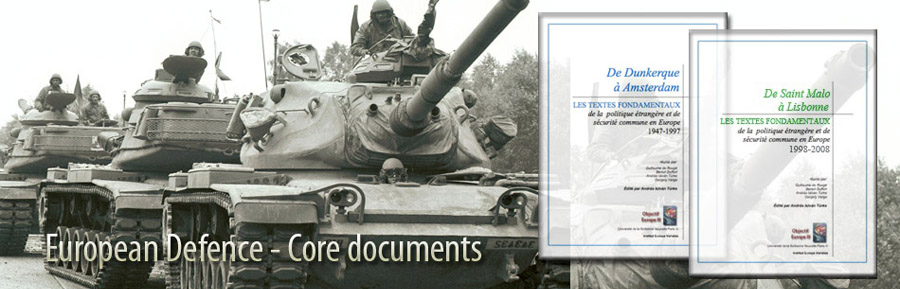

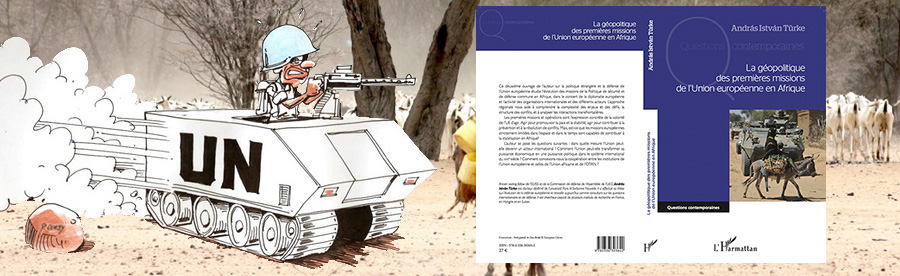

We are looking for sponsors for the English translation of these books, please contact turkeandras(at)gmail(dot)com