
You are here
Afrique
PLF 2027 : importation automobile, vignette, logements, salaires… les grands changements prévus
Plus de 17 800 milliards de dinars de dépenses, 125 675 postes à mobiliser et près d’un million de logements au programme. Le projet de […]
L’article PLF 2027 : importation automobile, vignette, logements, salaires… les grands changements prévus est apparu en premier sur .
Categories: Afrique, Swiss News
Afcon final to play out in court - when will Morocco or Senegal be crowned champions?
The Court of Arbitration for Sport is set to rule on the decision to strip Senegal of their Afcon 2025 title. But fans should not expect an immediate verdict.
3 suspects arrêtés avec des compteurs SONEB et des câbles SBEE
Trois individus ont été interpellés dans la nuit du mercredi 7 au jeudi 8 octobre 2026 à Kétou, alors qu'ils tentaient de dérober des fils électriques sur un bâtiment de l'ex-PTT, au quartier Massafé.
Une équipe de patrouille du commissariat d'arrondissement central de Kétou a surpris dans la nuit du mercredi 7 au jeudi 8 octobre 2026, vers 4 heures du matin, des individus en pleine opération de vol de câbles électriques sur un bâtiment de l'ex-PTT, au quartier Massafé.
L'un des suspects était posté à l'extérieur du bâtiment pour surveiller les environs, tandis que les deux autres se trouvaient sur le toit du bâtiment.
La Police a procédé à l'interpellation des trois individus.
Les vérifications effectuées après leur interpellation ont permis de découvrir trois compteurs de la Société nationale des eaux du Bénin (SONEB) ainsi qu'une quantité importante de fils électriques de la Société béninoise d'énergie électrique (SBEE).
Cette intervention intervient alors que plusieurs actes similaires étaient signalés depuis quelque temps dans la ville. Des câbles électriques ont notamment été sectionnés et des compteurs d'eau dérobés, tandis que des fils étaient arrachés sur des bâtiments en chantier. Les opérations se déroulaient principalement durant la nuit.
Les trois suspects ont été placés en garde à vue. Ils seront présentés au procureur de la République pour la suite de la procédure.
M. M.
Categories: Afrique, Határon túli magyar portálok összesített hírei
De nouveaux travaux annoncés à Klouékanmè et Lokossa
Le gouvernement a autorisé, mercredi 7 octobre 2026, en Conseil des ministres, de nouveaux travaux d'aménagement routier dans les communes de Klouékanmè et de Lokossa.
Les travaux supplémentaires d'aménagement du double giratoire de Klouékanmè et des rues adjacentes, de la voie d'accès à l'Hôpital de Zone de Klouékanmè et de la bretelle Clôture IUT–RN2 à Lokossa seront bientôt réalisés. La décision a été prise ce mercredi 7 octobre 2026, en Conseil des ministres.
Les travaux d'aménagement et de bitumage de la route Azovè-Houégamè-Klouékanmè étant en cours, les autorités locales et les populations ont sollicité l'aménagement d'un giratoire au niveau du marché central de Klouékanmè afin de mieux organiser les flux de circulation en provenance des communes voisines et de l'Hôpital de Zone de la ville. Elles ont également sollicité l'aménagement de la bretelle d'accès audit hôpital afin de faciliter et de sécuriser l'évacuation des malades.
De même, pour optimiser les retombées de la réhabilitation de l'axe Mairie de Lokossa-Sitex-IUT-RN 2 bis, l'aménagement de la bretelle attenante est apparu nécessaire.
Le gouvernement, accédant à leurs requêtes, a donc autorisé ces travaux qui démarrent très bientôt.
Categories: Afrique, Határon túli magyar portálok összesített hírei
Un élève et un apprenti maçon arrêtés pour vol
Un élève et un apprenti maçon ont été interpellés, mercredi 7 octobre 2026 à Zagnanado, après le vol d'une motocyclette.
Dans la matinée du mercredi 7 octobre 2026, le propriétaire d'une moto s'est rendu au commissariat de Zagnanado pour signaler le vol de son engin, survenu dans la nuit à son domicile.
Les recherches engagées à la suite de cette plainte ont conduit, quelques heures plus tard, à l'interpellation d'un élève. Il se trouvait en possession de la motocyclette Dayang de couleur noire recherchée. Plusieurs pièces de l'engin avaient déjà été démontées, apparemment pour compliquer son identification.
Entendu par les enquêteurs, l'élève a reconnu les faits. Il a également mis en cause un apprenti maçon résidant à Ayogo, présenté comme son complice. Ses déclarations ont permis d'étendre les investigations à d'autres faits.
Le jeune suspect a reconnu, avec son présumé complice, le cambriolage d'une maison au cours duquel 25 lapins auraient été emportés. Il a également déclaré avoir participé à plusieurs autres vols commis dans la commune de Zagnanado.
Les forces de sécurité ont pu interpellé le second suspect vers 19 heures. Il a tenté de prendre la fuite après son arrestation, parvenant notamment à retirer ses menottes. Sa tentative n'a toutefois pas abouti.
Les deux suspects ont été placés en garde à vue.
les investigations se poursuivent pour faire la lumière sur les autres faits auxquels les deux suspects pourraient être liés.
M. M.
Categories: Afrique, Határon túli magyar portálok összesített hírei
Christa Pike marche désormais après l'échec de son exécution aux États-Unis, a déclaré son avocat à la BBC
Un avocat affirme que la meurtrière de Colleen Slemmer se déplace dans sa chambre d'hôpital après avoir survécu à deux injections mortelles.
Categories: Afrique, Swiss News
Christa Pike marche désormais après l'échec de son exécution aux États-Unis, a déclaré son avocat à la BBC
Un avocat affirme que la meurtrière de Colleen Slemmer se déplace dans sa chambre d'hôpital après avoir survécu à deux injections mortelles.
Categories: Afrique, Határon túli magyar portálok összesített hírei
Aéroports saoudiens frappés, trois morts : une Algérienne parmi les victimes
Une ressortissante algérienne figure parmi les trois personnes tuées dans les attaques visant les aéroports d’Abha et du Roi Khaled, en Arabie saoudite. Trente-six autres […]
L’article Aéroports saoudiens frappés, trois morts : une Algérienne parmi les victimes est apparu en premier sur .
Categories: Afrique, Swiss News
S'agissait-il de la peste ? Les versions contradictoires concernant la mort d'une technicienne de laboratoire russe
Le décès d'une technicienne de laboratoire russe dans un centre de recherche sur la peste en Sibérie a alimenté les spéculations quant à une possible fuite de données au sein du laboratoire.
Categories: Afrique, Határon túli magyar portálok összesített hírei
18.000 km de pistes à traiter pour la campagne 2026-2027
Au Bénin, le gouvernement veut mettre en œuvre un programme de réfection des pistes rurales et des routes en terre classées, au titre de la campagne 2026‑2027. La décision a été prise ce mercredi 7 octobre 2026, en Conseil des ministres.
Un programme de réfection des pistes rurales et des routes en terre classées mis en œuvre au titre de la campagne 2026‑2027. C'est l'une des décisions prises ce mercredi 7 octobre 2026, en Conseil des ministres.
Selon le compte rendu de la réunion des membres du gouvernement, 18.000 km de pistes seront traités, et les travaux de réfection intègrent également des interventions confortatives sur les axes ayant subi des dégradations sévères, notamment : la construction de 21 dalots de diverses sections en remplacement de ceux effondrés ou dégradés sur le tronçon Gomparou-Kandérou avec un rehaussement partiel de la chaussée ; la construction de dalots au PK 1+342 de la piste Pèrèrè Centre-Soubado ; la construction d'un dalot au PK 28+250 du tronçon Tanguiéta-Tanongou ; la réparation de l'ouvrage effondré au PK 10+800 (Koumagou) sur le tronçon Boukoumbé-Manta ; et le renforcement et l'assainissement partiel des axes Zakpota Centre-Kpakpamè (11,7 km), Sinwè Kpota- Akiza (14,1 km) et Zogbodomey-Akiza (17,5 km).
Selon le communiqué du gouvernement, sont pris en compte dans le cadre de ce programme, 75,385 km d'axes stratégiques qui présentent des dégradations sévères alors qu'ils jouent un rôle essentiel dans la mobilité rurale, l'accès aux services sociaux de base et l'évacuation des produits agricoles.
Il s'agit de l'axe Gomparou-Founougo (18 km), des voies d'accès aux Lycées Techniques Agricoles de Kpataba (12 km) et d'Akodéha (26 km), indispensables au fonctionnement de ces établissements stratégiques ; ainsi que des tronçons Djondjizoumè Centre-Lokotan (4,317 km), Ouèdèmè-Monoto (9,527 km) et Kessawé-Vèha-Dessa-Cessahoukanmè (10,541 km).
Pour l'Exécutif béninois, l'aménagement de cet ensemble de pistes s'avère indispensable pour garantir la continuité du trafic et soutenir les activités socio-économiques locales dans le but de garantir la sécurisation des flux agricoles et le désenclavement des localités.
Categories: Afrique, Határon túli magyar portálok összesített hírei
DIGITAL 08H : les résultats
DIGITAL 08H : Avez-vous tenté votre chance ?
Le tirage DIGITAL 08H N°247 a livré son verdict !
Jeudi 08 Octobre 2026
Avez-vous joué ?
Avez-vous misé sur vos numéros porte-bonheur ?
RÉSULTAT : 35 • 74 • 38 • 86 • 53
Félicitations aux heureux gagnants !
Pas encore cette fois ? Gardez le sourire.
Rendez-vous à 11H pour le prochain tirage.
Jouez dans les points de vente ou : Tapez *590# ou rendez-vous sur lnbloto.bj
Jouez avec modération et responsabilité. Le jeu doit rester un plaisir.
A TOI DE JOUER #XòGbɔnAlɔkpaVo
#LNBSA #JeuResponsable #LaChanceAvecModération
LA CROIX DU JOUR

Categories: Afrique, Határon túli magyar portálok összesített hírei
Abimbola s'engage à faire rayonner le Bénin
Nommé ambassadeur extraordinaire et plénipotentiaire du Bénin en France, Jean-Michel Abimbola dit accueillir cette nouvelle mission avec « une profonde gratitude » et « un sentiment élevé du devoir ».
Jean-Michel Abimbola réagit à sa nomination. Dans un message publié après la décision du Conseil des ministres du mercredi 7 octobre 2026, l'ancien ministre de la Culture exprime sa reconnaissance au chef de l'Etat pour la confiance placée en lui. « C'est avec une profonde gratitude et un sentiment élevé du devoir que j'accueille la décision du Conseil des ministres de ce jour », écrit-il.
Le nouvel ambassadeur du Bénin en France considère cette nomination comme une « marque de confiance ».
« Après avoir eu le privilège de servir notre pays en tant que Ministre, cette nouvelle mission s'inscrit dans la continuité de mon engagement républicain », a-t-il indiqué.
Faire rayonner le Bénin
A Paris, Jean-Michel Abimbola s'emploiera « avec rigueur et détermination à mettre en œuvre la vision du Chef de l'Etat, et à faire rayonner le Bénin ».
L'ancien ministre annonce une attention particulière à la communauté béninoise relevant de sa juridiction. « Une attention toute particulière sera également accordée à la communauté béninoise de chaque pays et institution sous ma juridiction », indique-t-il.
Pour lui, les Béninois de l'extérieur doivent également être considérés comme des acteurs du développement. Il estime que leurs « talents et leur énergie constituent un pilier essentiel du développement national ».
« C'est animé par un espoir immense pour l'avenir du Bénin et porté par cette détermination que j'entame ce nouveau chapitre », conclut Jean-Michel Abimbola.
M. M.
Categories: Afrique, Határon túli magyar portálok összesített hírei
La combinaison gagnante du tirage DIGITAL 00 H
DIGITAL 00H : Avez-vous tenté votre chance ?
Le tirage DIGITAL 00H N°246 a livré son verdict !
Jeudi 08 Octobre 2026
Avez-vous joué ?
Avez-vous misé sur vos numéros porte-bonheur ?
RÉSULTAT : 84 • 33• 53 • 49 • 05
Félicitations aux heureux gagnants !
Pas encore cette fois ? Gardez le sourire.
Rendez-vous à 08H pour le prochain tirage.
Jouez dans les points de vente ou : Tapez *590# ou rendez-vous sur lnbloto.bj
Jouez avec modération et responsabilité. Le jeu doit rester un plaisir.
A TOI DE JOUER #XòGbɔnAlɔkpaVo
#LNBSA #JeuResponsable #LaChanceAvecModération
Categories: Afrique, Határon túli magyar portálok összesített hírei
How AI-Powered War Drives the Critical Minerals Race
Ore containing copper, cobalt, and nickel, critical minerals that power the use of emerging technologies. Credit: Unsplash/Paul-Alain Hunt
By Oritro Karim
UNITED NATIONS, Oct 8 2026 (IPS)
The demand for critical minerals is accelerating as world powers scramble to stay on top of emerging technologies. Meanwhile, the environment and frontline communities are paying a steep price.
Such was the basis of the discussion held by the Oakland Institute on September 30, during their webinar: ‘How War and AI Fuel the Critical Minerals Race‘. The event convened experts and frontline activists to examine how artificial intelligence (AI) drives mineral extraction, transforms war technologies, and affects communities entrenched in protracted conflict.
Building on the Institute’s July report, RUSH: Global Scramble for Minerals Wages War on People and Planet, the event highlighted the correlation between rising military spending and the proliferation of AI systems. Panelists stressed that as the demand for critical minerals reaches new peaks, frontline communities bear the brunt of adverse environmental and social impacts.
Anuradha Mittal, founder and Executive Director of the Oakland Institute, noted that military operations account for less than 10 percent of total critical mineral use. Despite this, she warned that the global AI “boom” and increasing competition between world powers over strategic supply chains could trigger a sharp rise in extraction.
Expanding data centers will demand increasingly higher quantities of critical minerals, including copper, gallium, indium, palladium, magnesium, tungsten, germanium, and tantalum. Mittal projected that by 2030, data centers could require an additional 512,000 tons of copper, alongside a 37 percent increase in germanium and an 85 percent increase in gallium by 2033.
She highlighted the United States military-industrial complex as a specific area of concern, describing it as an “AI-first warfighting force.” Under the Trump administration’s proposed 2027 defense budget, military spending would reach a record high of 1.5 trillion USD, nearly twice that of 2023. As the U.S. races to counter China’s dominance across global supply chains, extraction, and processing, the Trump administration has enacted rapid measures to secure minerals internationally.
“Since 2025, the (Trump) administration claims to have signed 38 mineral agreements with countries ranging from Ukraine, India, the DRC, the Philippines, UAE, Australia, Argentina, and Saudi Arabia…Competition with China is bolstering this strategy,” said Mittal. “The Department of War has allocated 75 billion USD to AI-driven programs and another 9 billion to data centers, while the Pentagon requested 13.4 billion dollars in 2026 for autonomous systems. This has driven the U.S. to start stockpiling minerals as strategic assets.”
Other panelists detailed how the impacts of the critical minerals race extend far beyond the global scramble for resources. Frontline communities are not only subjected to environmental degradation, but those in conflict zones are routinely exploited by tech and defense corporations as testing sites for novel military technologies before they are introduced to global markets.
Leila, representing the U.S.-based and Palestinian-led advocacy group Adalah Justice Project (AJP), warned that Gaza has served as an “enormous blueprint for AI-powered war,” noting that Israeli companies have historically used the enclave to test emerging technologies relating to surveillance.
“We have facial recognition drones, different kinds of spyware companies that can hack into phones, and all kinds of AI-assisted targeting programs that, of course, we really learned about through the last couple of years in the genocide,” said Leila. “These tools were developed and tested by Israeli companies in real time, and then sold to the world as sort of ‘battle-proven.’”
Leila also stressed the urgency of the Deadly Merger, a legislative proposal in the U.S. National Defense Authorization Act (NDAA) to expand the integration of the U.S. and Israel’s military technology, intelligence, and surveillance systems. AJP posits that the Merger could intensify violence against Palestinians, drive heightened surveillance in the U.S., and impose a “new techno-fascist world order.”
Katerina Canyon, Executive Director of Peace Economy Project—a non-profit organization that advocates for the redirection of military spending toward human needs—introduced the concept of a “peace economy”, where critical resources are used to strengthen healthcare and social infrastructure rather than fund military operations.
Canyon stated that rare earths, lithium, cobalt, nickel, graphite, and other critical minerals are not only necessities for the proliferation of AI but also are cornerstone resources for the green energy transition. She emphasized that a peace economy must prioritize an equitable environment for civilians over military defensives.
“For nearly fifty years, our organization has challenged militarism and asked what would happen if public resources were directed toward human needs rather than preparation for war,” said Canyon. “My core argument is simple: critical minerals are not politically neutral. The same mineral can become part of a wind turbine, an electric bus, a medical device, or a missile guidance system. Geology does not make that distinction; policy does, government budgets do, procurement decisions do, and industrial strategy does.”
“So the real question is not simply whether we need critical minerals; it is what kind of economy are we building around them,” she continued. “A peace economy starts with a different definition of security. One centered on whether people have safe communities, have healthcare, clean energy, transportation, housing, and a livable environment.”
IPS UN Bureau Report
A Rash of Hard-Hitting Questions—Which May Remain Evasive–for Candidates Running for UN Chief
By Thalif Deen
UNITED NATIONS, Oct 8 2026 (IPS)
The seven candidates, still in the running for the post of UN Secretary-General (SG), have so far faced a barrage of questions, mostly from delegates and the news media.
But some of the more politically-sensitive and heavily-loaded questions, have been avoided — either intentionally or by accident– primarily because the answers could trigger a veto from the P-5.
Do you subscribe to Diversity, Equity and Inclusion (DEI) policies at the UN? If so, will you help implement this policy, which excludes gender empowerment, and is strongly advocated by the Trump administration?
The US has dismissed climate change as a “hoax”. Where do you stand on global warming and climate change? Any reaction to the US view?
As Secretary-General, what will be your leadership philosophy?
The ICC has determined that the Israeli Prime minister is a war criminal and is accused of committing genocide in Gaza. Do you agree? If not, what are your thoughts?
Do you consider Taiwan an integral part of the People’s Republic of China (PRC)? And, as Secretary-General, will you initiate negotiations to prevent a possible new military conflict in the region?
Is the Russian invasion of Ukraine a violation of the UN charter? And is Russia responsible for war crimes in Ukraine?
Thomas G. Weiss, Presidential Professor Emeritus, Political Science, Director Emeritus, Ralph Bunche Institute for International Studies, the CUNY Graduate Center, told Inter Press Service (IPS) the absence of probing questions from governments is easier to understand than from journalists who should be shedding light on and exposing the relative degree of spinelessness in candidates.
“The last two SGs demonstrate that what passes for acceptable among the P5 is not what the UN requires. The planet requires boldness and a willingness to speak truth to power. Alas, what gets a candidate elected and what is required are two different things,’ he pointed out.
Mandeep S. Tiwana, Secretary-General CIVICUS, a global alliance of civil society organizations (CSOs) and activists, told IPS practically speaking, in order to successfully navigate the present political minefield, it could be considered wise for candidates to steer clear of questions they deem contentious.
But what does that say about the process for the appointment of the next Secretary General? he asked.
“The United Nations is supposed to be the conscience of the world. So, in principle answering a question on the value of diversity and equity or calling out the reality of complicity in genocide and war crimes by powerful states should not be so hard for someone who aspires to be the leader of the world body”.
Unfortunately, traditions have taken hold where senior UN officials see themselves more as bureaucrats beholden to the representatives of states – some of whom don’t even conduct free and fair elections – rather than as servants of the peoples of the world in whose name the UN was established, said Tiwana.
“The UN draws its legitimacy from its founding values. It is our hope that whoever is appointed will break the mold. Crucially, it is time for a woman to head the UN and govern it with feminist leadership values of consensus building, courage, power-sharing and radical inclusion. At the same time, they should be able to hear and feel deeply for victims of the very violations the UN was established to prevent,” declared Tiwana.
Richard Gowan, Director for Global Issues and Institutions, and a longtime UN watcher at the Brussels-based Crisis Group told IPS there is an old saying that “politicians campaign in poetry but govern in prose.”
But aspiring UN Secretaries-General don’t even get to campaign poetically. They have to tread extremely carefully to avoid offending the veto powers. This leads them to make lowest common denominator statements and avoid hard topics, he said.
“That means these races are disappointing for UN watchers and boring for journalists. However, at the end of the day the world’s top diplomat must be diplomatic, so the race is all about showing who can be most tactful not most brilliant”.
It is worth saying that even the best UN leaders did not say much that was exciting during the campaign phase. Dag Hammarskjold, U. Thant and Kofi Annan all took office without making waves.
Hammarskjold, he pointed out, was famously prone to periods of introspective silence even once he was in office. So, I don’t think that out-spokeness is necessarily a decisive criterion in this race, he declared.
Meanwhile, the seven official candidates running to succeed António Guterres as the next UN Secretary-General (starting January 1, 2027) are listed below, alongside former candidate Michelle Bachelet who withdrew from the race:
IPS UN Bureau Report
Why Zimbabwe tycoon 'Sir Wicknell' was loved and hated in Africa
Wicknell Chivayo divided opinion in life and continues to do so in death.
Le gouvernement annonce la construction de 14 centres de santé
En Conseil des ministres ce mercredi 7 octobre 2026, le gouvernement a marqué son accord pour les travaux de construction de 14 centres de santé répartis dans plusieurs département du pays. Les travaux d'achèvement du centre de santé de Lougba, dans la commune de Bantè, ont été également autorisés.
Afin de rapprocher davantage les services de santé des populations, de nouveaux centres de santé seront bientôt construits dans plusieurs localités du Bénin. La décision a été prise ce mercredi 7 octobre 2026, en Conseil des ministres.
Selon le communiqué du gouvernement, ces travaux portent sur la reconstruction complète de quatorze (14) centres de santé répartis dans onze (11) départements du pays. Il s'agit, selon ce communiqué, des centres de santé d'Akassato, Ouèdo, Abomey-Calavi, Zèbou, Comè, Adjohoun, Tchi-Ahomadégbé, Idigny, Kpakpamè, Savalou Aga, Kountori, Liboussou, Copargo et Dunkassa.
En outre, dans le cadre des travaux engagés pour réhabiliter les infrastructures sanitaires dans la commune de Bantè, détaille le Conseil des ministres, les centres de santé de Okouta-Ossé et de Djagbalo ont été achevés tandis que celui de Lougba était en arrêt en raison de la défaillance de l'entreprise en charge des travaux.
Ce qui a motivé la décision de confier la poursuite et l'achèvement des travaux à une autre entreprise.
F. A. A.
Categories: Afrique, Union européenne
SILA 2026 : « Bab El Mahroussa et les clés emprisonnées », le nouveau voyage fantastique de Zineb Ouannes
À la croisée du conte, de l’aventure et de la légende, « Bab El Mahroussa et les clés emprisonnées » entend faire voyager le lecteur […]
L’article SILA 2026 : « Bab El Mahroussa et les clés emprisonnées », le nouveau voyage fantastique de Zineb Ouannes est apparu en premier sur .
Des conditions d'accès plus souples aux logements sociaux
Le Gouvernement revoit les modalités de commercialisation des logements sociaux et économiques afin de faciliter l'accès aux logements déjà disponibles.
Réuni ce mercredi 7 octobre 2026, le Conseil des ministres a décidé de revoir les modalités d'attribution et de cession des logements sociaux et économique, après avoir constaté des difficultés dans leur commercialisation.
La réforme vise principalement à lever certaines restrictions qui limitaient l'accès aux logements.
Le Gouvernement rappelle qu'une première actualisation des modalités de commercialisation était intervenue en décembre 2025 « afin de faciliter l'accès du plus grand nombre de nos concitoyens à ces logements ». Mais, malgré cet assouplissement, des obstacles ont persisté.
Le compte rendu du Conseil des ministres relève notamment « l'étroitesse des cibles notamment pour ce qui concerne les logements sociaux » ainsi que la restriction de l'accès aux seuls primo-accédants. Pour y remédier, le Conseil a marqué son accord pour « la révision des modalités initiales d'attribution et de cession ».
Pour les logements sociaux, la principale évolution concerne l'élargissement de la cible. Désormais, « l'accessibilité est ouverte à tous les fonctionnaires et agents publics, quel que soit le niveau de leurs revenus ».
La cible est également étendue au secteur privé. Commerçants, artisans, salariés du privé et acteurs des professions libérales peuvent désormais prétendre à ces logements, sous réserve des conditions applicables. Le Gouvernement entend ainsi élargir la portée sociale du programme au-delà du seul secteur public.
La nouvelle mesure permet « d'ouvrir désormais l'acquisition d'un logement social à tout demandeur remplissant les conditions, qu'il soit déjà propriétaire d'un bien bâti ou non sur l'étendue du territoire national ». En conséquence, la condition selon laquelle le demandeur devait « ne disposer d'aucun bien bâti sur l'étendue du territoire national » est supprimée.
Des logements sociaux pourront ainsi être acquis en bloc pour certaines cibles spécifiques, notamment par des sponsors ou de grandes entreprises institutionnelles.
Les ajustements concernent également les logements économiques. Leur acquisition n'est plus l'unique voie d'accès. Le Conseil a décidé d'ouvrir « les acquisitions à la location simple, sous condition de disponibilité ».
Le même mécanisme d'achat en bloc au comptant est autorisé pour certaines cibles spécifiques, notamment les sponsors et les grandes entreprises institutionnelles, au bénéfice de leurs salariés.
Le Conseil précise que les nouvelles mesures « s'appliquent aux logements disponibles en stock et prêts pour l'habitation ». Elles « sont donc susceptibles de modifications et/ou d'extension, au besoin, à d'autres phases du Programme 20.000 logements ».
M. M.
Categories: Afrique, Europäische Union
Six centres de santé réceptionnés, une nouvelle entreprise pour achever l'hôpital de zone
Les travaux de construction des centres de santé de Tchatchou, Alafiarou, Goro, Bétérou, Sanson et Kika, dans la commune de Tchaourou, sont achevés, et les ouvrages réceptionnés. L'annonce a été faite mercredi 7 octobre 2026, en Conseil des ministres. Pour ce qui concerne l'hôpital de zone de la commune, une entreprise devra sélectionnée pour l'achèvement des travaux.
Dans le cadre de sa politique visant à rapprocher les infrastructures sanitaires des populations et à assurer la mise aux normes des plateaux techniques, l'Etat béninois a engagé les travaux de construction et d'équipement de l'hôpital de zone de Tchaourou ainsi que de six (6) centres de santé (Tchatchou, Alafiarou, Goro, Bétérou, Sanson et Kika).
A date, les travaux de construction de centres de santé dans les localités sus mentionnées sont achevés, et les ouvrages réceptionnés.
Mais pour ce qui concerne l'hôpital de zone de Tchaourou, après un taux d'exécution physique de 54,27%, l'entreprise en charge des travaux s'est montrée défaillante, et il a été procédé à la résiliation du contrat de marché.
En Conseil des ministres ce mercredi 7 octobre, le gouvernement a alors approuvé, pour son achèvement, la contractualisation avec une nouvelle entreprise. Les ministres concernés par le projet devront, selon le communiqué du gouvernement, veiller à sa bonne exécution.
Categories: Afrique, Europäische Union
Pages
the old site is here



© 2012-2015 Europa Varietas Foundation © 2015-2020 Europa Varietas Association
www.europavarietas.org | info(@)europavarietas(dot)org | Switzerland
This is a GDPR ready site


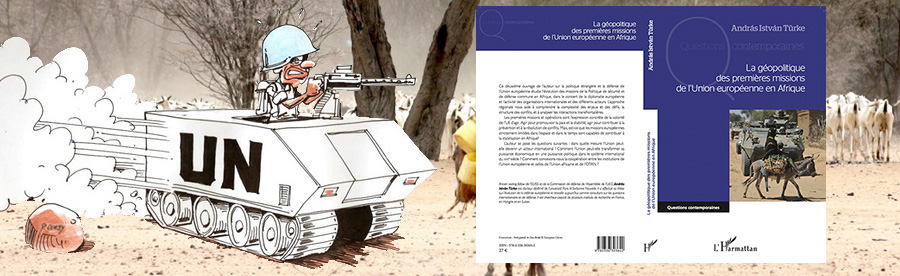

We are looking for sponsors for the English translation of these books, please contact turkeandras(at)gmail(dot)com