
You are here
Feed aggregator
J'ai suivi une chimiothérapie pendant 11 ans pour un cancer que je n'avais pas
Becky Jones fait partie des plus de 40 personnes qui ont engagé une action en justice contre le conseil d'administration d'un hôpital du centre de l'Angleterre.
Categories: Afrique, Swiss News
Visa Schengen : nouveaux frais, restrictions… l’UE prépare de nouvelles règles
Frais supplémentaires, démarches ajustées et nouvelles restrictions en vue : l’Union européenne prépare un virage majeur pour la délivrance des visas Schengen de court séjour. […]
L’article Visa Schengen : nouveaux frais, restrictions… l’UE prépare de nouvelles règles est apparu en premier sur .
Futuring politics of cooperation and perseverance: a possible world in 2040
Today’s disruptions and reforms are paving the way for a wide range of possible futures. A key endeavour of IDOS is to contribute to sustainable futures in an increasingly multipolar order, which we are convinced requires cooperative approaches. While people and societies around the world are
facing disruptions and uncertainties collectively – albeit unevenly – our intention at IDOS is to co-shape concrete action that enables us to respond to and navigate these challenges productively. Our aspiration with this final, more exploratory, contribution to the publication is to provide a coherent scenario for a desirable (preferred) future based on the sector-specific recommendations made by the authors in this volume. In this futuring exercise, we describe the state of the world in the year 2040 – understood as an important intermediate point at which our joint vision of sustainable futures is reachable. We aim to showcase an accessible, optimistic narrative depicting a world in which our proposed reform options have been adopted and are part of a broader global push towards cooperation and sustainable development. Envisioning this scenario can provide strategic orientation for the reform pathways we have to choose today. It can be used to highlight the long-term implications of policy shifts and the potential of agency to overcome existing path dependencies. Its value lies in broadening the sense of what is possible and highlighting our agency. […]
Categories: Diplomacy & Defense Think Tank News, Swiss News
Futuring politics of cooperation and perseverance: a possible world in 2040
Today’s disruptions and reforms are paving the way for a wide range of possible futures. A key endeavour of IDOS is to contribute to sustainable futures in an increasingly multipolar order, which we are convinced requires cooperative approaches. While people and societies around the world are
facing disruptions and uncertainties collectively – albeit unevenly – our intention at IDOS is to co-shape concrete action that enables us to respond to and navigate these challenges productively. Our aspiration with this final, more exploratory, contribution to the publication is to provide a coherent scenario for a desirable (preferred) future based on the sector-specific recommendations made by the authors in this volume. In this futuring exercise, we describe the state of the world in the year 2040 – understood as an important intermediate point at which our joint vision of sustainable futures is reachable. We aim to showcase an accessible, optimistic narrative depicting a world in which our proposed reform options have been adopted and are part of a broader global push towards cooperation and sustainable development. Envisioning this scenario can provide strategic orientation for the reform pathways we have to choose today. It can be used to highlight the long-term implications of policy shifts and the potential of agency to overcome existing path dependencies. Its value lies in broadening the sense of what is possible and highlighting our agency. […]
Futuring politics of cooperation and perseverance: a possible world in 2040
Today’s disruptions and reforms are paving the way for a wide range of possible futures. A key endeavour of IDOS is to contribute to sustainable futures in an increasingly multipolar order, which we are convinced requires cooperative approaches. While people and societies around the world are
facing disruptions and uncertainties collectively – albeit unevenly – our intention at IDOS is to co-shape concrete action that enables us to respond to and navigate these challenges productively. Our aspiration with this final, more exploratory, contribution to the publication is to provide a coherent scenario for a desirable (preferred) future based on the sector-specific recommendations made by the authors in this volume. In this futuring exercise, we describe the state of the world in the year 2040 – understood as an important intermediate point at which our joint vision of sustainable futures is reachable. We aim to showcase an accessible, optimistic narrative depicting a world in which our proposed reform options have been adopted and are part of a broader global push towards cooperation and sustainable development. Envisioning this scenario can provide strategic orientation for the reform pathways we have to choose today. It can be used to highlight the long-term implications of policy shifts and the potential of agency to overcome existing path dependencies. Its value lies in broadening the sense of what is possible and highlighting our agency. […]
Categories: Balkan News, Diplomacy & Defense Think Tank News
La combinaison gagnante du tirage de 11 H
LES RÉSULTATS LOTO STAR SONT LÀ !
TIRAGE N°113/26
Dimanche 20 septembre 2026 (11H)
60 • 43 • 28 • 89 • 77

Félicitations aux heureux gagnants !
Pas encore gagné ? Gardez le sourire !
Rendez-vous au prochain tirage de 14h pour une nouvelle chance.
Jouez dans les centres de jeux ou en ligne : Tapez 590# ou lnbloto.bj
Jouez avec modération et responsabilité. Le jeu doit rester un plaisir.
Categories: Afrique
Training competencies to navigate tectonic shifts and shape change
When we speak of tectonic shifts, we usually refer either to geology or to the international order. In geology, tectonic plates shift and build up tension until it is released. Likewise, since the end of the Cold War, the international order has experienced mounting pressure, and seemingly entrenched
global structures have begun to shift. At the same time, societies and cooperation systems are under internal pressure from the growing impacts of environmental and climatic change, younger generations’ demands for new opportunities, and technological advances, not least in artificial intelligence. In reaction to both external and internal pressures, reforming complex systems is challenging and requires skilled, dedicated people and well-connected institutions (Reiber & Reiners, 2019). Transnational knowledge cooperation has thus gained substantial relevance (see Lynders, 2024).
Categories: Africa, Diplomacy & Defense Think Tank News
Training competencies to navigate tectonic shifts and shape change
When we speak of tectonic shifts, we usually refer either to geology or to the international order. In geology, tectonic plates shift and build up tension until it is released. Likewise, since the end of the Cold War, the international order has experienced mounting pressure, and seemingly entrenched
global structures have begun to shift. At the same time, societies and cooperation systems are under internal pressure from the growing impacts of environmental and climatic change, younger generations’ demands for new opportunities, and technological advances, not least in artificial intelligence. In reaction to both external and internal pressures, reforming complex systems is challenging and requires skilled, dedicated people and well-connected institutions (Reiber & Reiners, 2019). Transnational knowledge cooperation has thus gained substantial relevance (see Lynders, 2024).
Training competencies to navigate tectonic shifts and shape change
When we speak of tectonic shifts, we usually refer either to geology or to the international order. In geology, tectonic plates shift and build up tension until it is released. Likewise, since the end of the Cold War, the international order has experienced mounting pressure, and seemingly entrenched
global structures have begun to shift. At the same time, societies and cooperation systems are under internal pressure from the growing impacts of environmental and climatic change, younger generations’ demands for new opportunities, and technological advances, not least in artificial intelligence. In reaction to both external and internal pressures, reforming complex systems is challenging and requires skilled, dedicated people and well-connected institutions (Reiber & Reiners, 2019). Transnational knowledge cooperation has thus gained substantial relevance (see Lynders, 2024).
Categories: Afrique, Diplomacy & Defense Think Tank News
Le CES se dote d'un budget de 5,29 milliards FCFA
Le Conseil économique et social (CES), a examiné et approuvé le mercredi 16 septembre 2026, son projet de budget pour l'exercice 2027. D'un montant de 5,295 milliards de francs CFA, le projet de budget a été approuvé à l'unanimité lors des travaux de la deuxième session ordinaire de l'institution au titre de l'année 2026.
Le CES franchit une étape importante dans la préparation de l'exercice budgétaire 2027, avec l'adoption de son projet de budget. D'un montant de 5,295 milliards de francs CFA, ce projet de budget connait une progression de 13,94% par rapport au budget consolidé de 2026. Il s'inscrit dans les prévisions du cadre des dépenses à moyen terme 2025-2029, avec pour finalité, d'accompagner la mise en œuvre des actions programmées par l'institution.
Le projet budgétaire s'articule autour du bilan d'exécution de la gestion 2026, des prévisions pour l'année 2027, et des orientations destinées à soutenir les activités du CES.
Avant son adoption, le document de budget a d'abord été présenté à la plénière après la commission de l'économie, des finances et de l'entrepreneuriat.
F. A. A.
Categories: Afrique
Resilience in knowledge infrastructures: science at a juncture
Academic freedom and independent scientific knowledge production are fragile achievements – first secured during the Enlightenment in Europe in the 17th and 18th centuries – that now face substantial headwinds. In the United States in 2026, the Trump administration has advanced further proposals to reduce science spending (Grimm & Hornidge, 2025). Most notably, the White House foresees a 55 per cent cut in funding for the National Science Foundation in 2027 compared with 2026 levels (Garisto & Nature Magazine, 2026). However, the threats to science systems in the United States and beyond cannot be reduced to – drastic – budget cuts alone. Political interference in scientific quality assurance and decisions about which research receives funding is also reported to have increased substantially, particularly in the United States (e.g. Finucane, 2026). Although the Trump administration’s actions are notably blatant, attacks on science systems, academic freedom and knowledge cooperation, whether overt or subtle, can be observed in countries across income levels and continents. In Germany, the German Research Foundation recently published a position paper on threats to academic freedom and the German science system, explicitly referencing the positioning and influence of the right-wing political party AfD, as set out in its “government programme” for the state election in Saxony-Anhalt (Ad-hoc-Arbeitsgruppe, 2026). At the same time, the Organisation for Economic Cooperation and Development announced in 2026 that China’s research spending had reached parity with that of the United States (OECD, 2026). This is also the year in which the African Union Commission and the African Union Development Agency (AUDA-NEPAD) launched the Science, Technology and Innovation Strategy for Africa 2034 Implementation Plan. According to the AUDA-NEPAD, this marks “Africa’s determination to move beyond overreliance on imported technologies and towards the sovereign production of globally competitive knowledge, stronger industrial capabilities, and socioeconomic value creation” (AUDA-NEPAD, 2026). Moreover, in 2026 the European Commission adopted a recommendation on the first-ever European Union (EU) framework for science diplomacy. Finally, on the multilateral level, 2026 marks two years since the launch of the UNESCO International Decade of Sciences for Sustainable Development, with UNESCO holding a large international conference with the ambition to “spotlight how transdisciplinary research, open science and strengthened science-policy-society interfaces can drive more inclusive and equitable futures for all” (UNESCO, 2026). With these developments shaping science systems in 2026, how is Germany positioning itself through national science policy to further develop its science and innovation systems and invest in transregional science cooperation as an engine for mutual learning, innovation and change? In early 2026, the German Science Council addressed the rise of anti-pluralist and anti-academic forces in a paper envisioning Germany’s science system in 2040 (Wissenschaftsrat, 2026). In it, the Council identifies four possible scenarios. Two scenarios assume substantial investment in science and in the science system as a whole: Scenario one outlines a well-funded German science and innovation system in a geopolitically turbulent world marked by high levels of societal polarisation, security risks and non-alignment with EU partners; scenario four envisages a global research area in which science cooperation is closely coordinated by a supranational organisation, creating cross-regional innovation spaces but also less localisation, and a decoupling of research and education as well as of research and society and policy. The two remaining scenarios give science far lower priority. Scenario two envisions a system in which science is predominantly instrumentalised for economic gain, while scenario three depicts science as marginalised, struggling for funding and political attention, and barely able to realise its potential. In the following, we explore selected developments in science policy in 2026, differentiate between different types of innovation policy and argue for the role of knowledge cooperation in creating shared innovation spaces. Finally, we bring this analysis together with the German Science Council’s scenario perspective and propose an additional, more visionary scenario that policy- and science-system-related decision-makers should strive to realise.
Resilience in knowledge infrastructures: science at a juncture
Academic freedom and independent scientific knowledge production are fragile achievements – first secured during the Enlightenment in Europe in the 17th and 18th centuries – that now face substantial headwinds. In the United States in 2026, the Trump administration has advanced further proposals to reduce science spending (Grimm & Hornidge, 2025). Most notably, the White House foresees a 55 per cent cut in funding for the National Science Foundation in 2027 compared with 2026 levels (Garisto & Nature Magazine, 2026). However, the threats to science systems in the United States and beyond cannot be reduced to – drastic – budget cuts alone. Political interference in scientific quality assurance and decisions about which research receives funding is also reported to have increased substantially, particularly in the United States (e.g. Finucane, 2026). Although the Trump administration’s actions are notably blatant, attacks on science systems, academic freedom and knowledge cooperation, whether overt or subtle, can be observed in countries across income levels and continents. In Germany, the German Research Foundation recently published a position paper on threats to academic freedom and the German science system, explicitly referencing the positioning and influence of the right-wing political party AfD, as set out in its “government programme” for the state election in Saxony-Anhalt (Ad-hoc-Arbeitsgruppe, 2026). At the same time, the Organisation for Economic Cooperation and Development announced in 2026 that China’s research spending had reached parity with that of the United States (OECD, 2026). This is also the year in which the African Union Commission and the African Union Development Agency (AUDA-NEPAD) launched the Science, Technology and Innovation Strategy for Africa 2034 Implementation Plan. According to the AUDA-NEPAD, this marks “Africa’s determination to move beyond overreliance on imported technologies and towards the sovereign production of globally competitive knowledge, stronger industrial capabilities, and socioeconomic value creation” (AUDA-NEPAD, 2026). Moreover, in 2026 the European Commission adopted a recommendation on the first-ever European Union (EU) framework for science diplomacy. Finally, on the multilateral level, 2026 marks two years since the launch of the UNESCO International Decade of Sciences for Sustainable Development, with UNESCO holding a large international conference with the ambition to “spotlight how transdisciplinary research, open science and strengthened science-policy-society interfaces can drive more inclusive and equitable futures for all” (UNESCO, 2026). With these developments shaping science systems in 2026, how is Germany positioning itself through national science policy to further develop its science and innovation systems and invest in transregional science cooperation as an engine for mutual learning, innovation and change? In early 2026, the German Science Council addressed the rise of anti-pluralist and anti-academic forces in a paper envisioning Germany’s science system in 2040 (Wissenschaftsrat, 2026). In it, the Council identifies four possible scenarios. Two scenarios assume substantial investment in science and in the science system as a whole: Scenario one outlines a well-funded German science and innovation system in a geopolitically turbulent world marked by high levels of societal polarisation, security risks and non-alignment with EU partners; scenario four envisages a global research area in which science cooperation is closely coordinated by a supranational organisation, creating cross-regional innovation spaces but also less localisation, and a decoupling of research and education as well as of research and society and policy. The two remaining scenarios give science far lower priority. Scenario two envisions a system in which science is predominantly instrumentalised for economic gain, while scenario three depicts science as marginalised, struggling for funding and political attention, and barely able to realise its potential. In the following, we explore selected developments in science policy in 2026, differentiate between different types of innovation policy and argue for the role of knowledge cooperation in creating shared innovation spaces. Finally, we bring this analysis together with the German Science Council’s scenario perspective and propose an additional, more visionary scenario that policy- and science-system-related decision-makers should strive to realise.
Categories: Défense, Diplomacy & Defense Think Tank News
Resilience in knowledge infrastructures: science at a juncture
Academic freedom and independent scientific knowledge production are fragile achievements – first secured during the Enlightenment in Europe in the 17th and 18th centuries – that now face substantial headwinds. In the United States in 2026, the Trump administration has advanced further proposals to reduce science spending (Grimm & Hornidge, 2025). Most notably, the White House foresees a 55 per cent cut in funding for the National Science Foundation in 2027 compared with 2026 levels (Garisto & Nature Magazine, 2026). However, the threats to science systems in the United States and beyond cannot be reduced to – drastic – budget cuts alone. Political interference in scientific quality assurance and decisions about which research receives funding is also reported to have increased substantially, particularly in the United States (e.g. Finucane, 2026). Although the Trump administration’s actions are notably blatant, attacks on science systems, academic freedom and knowledge cooperation, whether overt or subtle, can be observed in countries across income levels and continents. In Germany, the German Research Foundation recently published a position paper on threats to academic freedom and the German science system, explicitly referencing the positioning and influence of the right-wing political party AfD, as set out in its “government programme” for the state election in Saxony-Anhalt (Ad-hoc-Arbeitsgruppe, 2026). At the same time, the Organisation for Economic Cooperation and Development announced in 2026 that China’s research spending had reached parity with that of the United States (OECD, 2026). This is also the year in which the African Union Commission and the African Union Development Agency (AUDA-NEPAD) launched the Science, Technology and Innovation Strategy for Africa 2034 Implementation Plan. According to the AUDA-NEPAD, this marks “Africa’s determination to move beyond overreliance on imported technologies and towards the sovereign production of globally competitive knowledge, stronger industrial capabilities, and socioeconomic value creation” (AUDA-NEPAD, 2026). Moreover, in 2026 the European Commission adopted a recommendation on the first-ever European Union (EU) framework for science diplomacy. Finally, on the multilateral level, 2026 marks two years since the launch of the UNESCO International Decade of Sciences for Sustainable Development, with UNESCO holding a large international conference with the ambition to “spotlight how transdisciplinary research, open science and strengthened science-policy-society interfaces can drive more inclusive and equitable futures for all” (UNESCO, 2026). With these developments shaping science systems in 2026, how is Germany positioning itself through national science policy to further develop its science and innovation systems and invest in transregional science cooperation as an engine for mutual learning, innovation and change? In early 2026, the German Science Council addressed the rise of anti-pluralist and anti-academic forces in a paper envisioning Germany’s science system in 2040 (Wissenschaftsrat, 2026). In it, the Council identifies four possible scenarios. Two scenarios assume substantial investment in science and in the science system as a whole: Scenario one outlines a well-funded German science and innovation system in a geopolitically turbulent world marked by high levels of societal polarisation, security risks and non-alignment with EU partners; scenario four envisages a global research area in which science cooperation is closely coordinated by a supranational organisation, creating cross-regional innovation spaces but also less localisation, and a decoupling of research and education as well as of research and society and policy. The two remaining scenarios give science far lower priority. Scenario two envisions a system in which science is predominantly instrumentalised for economic gain, while scenario three depicts science as marginalised, struggling for funding and political attention, and barely able to realise its potential. In the following, we explore selected developments in science policy in 2026, differentiate between different types of innovation policy and argue for the role of knowledge cooperation in creating shared innovation spaces. Finally, we bring this analysis together with the German Science Council’s scenario perspective and propose an additional, more visionary scenario that policy- and science-system-related decision-makers should strive to realise.
Categories: Afrique, Diplomacy & Defense Think Tank News
AI’s potential to facilitate more agile development cooperation
Two features of AI stand out among technological innovations: It is exceptionally powerful, and its (computing) power is increasing faster than any previous technology in human history. AI is not a tool that can simply be added to the existing arsenal just for the sake of task automation and increased efficiency (Sinanoglu, 2025a). Its consequences are so profound that using it to advance broader development objectives requires changes to some of the ways development cooperation works. In this chapter, we go beyond more general assessments (OECD, 2025) of the use of AI by governments (OECD, 2026) and of the global development risks posed by AI (United Nations Independent International Scientific Panel on Artificial Intelligence, 2026). We argue that successful development cooperation for sustainable futures depends on collaboration with others in iterative and adaptive ways to exploit opportunities for positive change more effectively in challenging contexts. To this end, current development-cooperation structures and processes should be reformed to facilitate and encourage organisational learning (Brandi & Büge, 2026) and adopt a more iterative approach to cooperation. To what extent does development cooperation currently deploy AI tools for such organisational learning? By “AI”, we mean generative and agentic artificial intelligence. We also distinguish between “AI in development” and “AI for development”. Whereas the former refers to how AI is used in middle- and low-income countries, the latter refers to how the development sector can use AI. We catalogued how the supply side of development cooperation (donors, ministries, agencies, development banks, United Nations (UN) entities, humanitarian implementers and funders) uses AI in its own operations, programming, advisory work and evaluations. The database comprises 172 AI deployments and, while not exhaustive, provides a comprehensive primary-source snapshot that lets us answer three questions empirically: Who is deploying AI? What for? And how far has it matured? (See Figure 9) Our data suggest that almost 60 per cent of recorded uses fall into just two functions: getting services to people in the field (programme delivery) and speeding up the back office at headquarters (internal operations). Together, the functions most closely tied to organisational learning – monitoring, evaluation, planning and coordination – account for only roughly 19 per cent of deployments. In short, the sector is now using AI to do its existing work faster, but not yet to change how it works and learns.
AI’s potential to facilitate more agile development cooperation
Two features of AI stand out among technological innovations: It is exceptionally powerful, and its (computing) power is increasing faster than any previous technology in human history. AI is not a tool that can simply be added to the existing arsenal just for the sake of task automation and increased efficiency (Sinanoglu, 2025a). Its consequences are so profound that using it to advance broader development objectives requires changes to some of the ways development cooperation works. In this chapter, we go beyond more general assessments (OECD, 2025) of the use of AI by governments (OECD, 2026) and of the global development risks posed by AI (United Nations Independent International Scientific Panel on Artificial Intelligence, 2026). We argue that successful development cooperation for sustainable futures depends on collaboration with others in iterative and adaptive ways to exploit opportunities for positive change more effectively in challenging contexts. To this end, current development-cooperation structures and processes should be reformed to facilitate and encourage organisational learning (Brandi & Büge, 2026) and adopt a more iterative approach to cooperation. To what extent does development cooperation currently deploy AI tools for such organisational learning? By “AI”, we mean generative and agentic artificial intelligence. We also distinguish between “AI in development” and “AI for development”. Whereas the former refers to how AI is used in middle- and low-income countries, the latter refers to how the development sector can use AI. We catalogued how the supply side of development cooperation (donors, ministries, agencies, development banks, United Nations (UN) entities, humanitarian implementers and funders) uses AI in its own operations, programming, advisory work and evaluations. The database comprises 172 AI deployments and, while not exhaustive, provides a comprehensive primary-source snapshot that lets us answer three questions empirically: Who is deploying AI? What for? And how far has it matured? (See Figure 9) Our data suggest that almost 60 per cent of recorded uses fall into just two functions: getting services to people in the field (programme delivery) and speeding up the back office at headquarters (internal operations). Together, the functions most closely tied to organisational learning – monitoring, evaluation, planning and coordination – account for only roughly 19 per cent of deployments. In short, the sector is now using AI to do its existing work faster, but not yet to change how it works and learns.
Categories: Défense, Diplomacy & Defense Think Tank News
AI’s potential to facilitate more agile development cooperation
Two features of AI stand out among technological innovations: It is exceptionally powerful, and its (computing) power is increasing faster than any previous technology in human history. AI is not a tool that can simply be added to the existing arsenal just for the sake of task automation and increased efficiency (Sinanoglu, 2025a). Its consequences are so profound that using it to advance broader development objectives requires changes to some of the ways development cooperation works. In this chapter, we go beyond more general assessments (OECD, 2025) of the use of AI by governments (OECD, 2026) and of the global development risks posed by AI (United Nations Independent International Scientific Panel on Artificial Intelligence, 2026). We argue that successful development cooperation for sustainable futures depends on collaboration with others in iterative and adaptive ways to exploit opportunities for positive change more effectively in challenging contexts. To this end, current development-cooperation structures and processes should be reformed to facilitate and encourage organisational learning (Brandi & Büge, 2026) and adopt a more iterative approach to cooperation. To what extent does development cooperation currently deploy AI tools for such organisational learning? By “AI”, we mean generative and agentic artificial intelligence. We also distinguish between “AI in development” and “AI for development”. Whereas the former refers to how AI is used in middle- and low-income countries, the latter refers to how the development sector can use AI. We catalogued how the supply side of development cooperation (donors, ministries, agencies, development banks, United Nations (UN) entities, humanitarian implementers and funders) uses AI in its own operations, programming, advisory work and evaluations. The database comprises 172 AI deployments and, while not exhaustive, provides a comprehensive primary-source snapshot that lets us answer three questions empirically: Who is deploying AI? What for? And how far has it matured? (See Figure 9) Our data suggest that almost 60 per cent of recorded uses fall into just two functions: getting services to people in the field (programme delivery) and speeding up the back office at headquarters (internal operations). Together, the functions most closely tied to organisational learning – monitoring, evaluation, planning and coordination – account for only roughly 19 per cent of deployments. In short, the sector is now using AI to do its existing work faster, but not yet to change how it works and learns.
Categories: Afrique, Diplomacy & Defense Think Tank News
Global health beyond 2030: protecting ambition in a fragmented world
The Sustainable Development Goals (SDGs) were agreed in 2015 in a political environment in which broad multilateral agreement still appeared possible. They reflected the belief that universal goals, shared language and collective implementation could organise international cooperation, even if
they were never free from contestation (Biermann, Kanie, & Kim, 2017; Chaturvedi et al., 2020). For global health, this mattered. The 2030 Agenda broadened the health agenda beyond selected infectious diseases and maternal and child health. It included universal health coverage, non-communicable diseases, mental health, sexual and reproductive health and rights, and the wider social, economic and environmental determinants of health (Murray, 2015; WHO, 2015). With only a few years left until 2030, progress remains uneven and many health-related targets are off track. At the same time, the political context for a future global development framework has changed substantially. Global health cooper-
ation is increasingly shaped by donor retrenchment, weaker multilateralism, geopolitical competition and ideological polarisation (Held, Kickbusch, McNally, Piselli, & Told, 2019; Kickbusch & Liu, 2022). Issues such as gender equality, vaccination, climate action and migration have become more contested. These tensions now affect financing, normsetting, institutional stability and the conditions under which cooperation remains possible. Three shifts are particularly important. First, financing has become more uncertain. Aid cuts and donor retrenchment weaken multilateral health institutions and create incentives for selective, interest-driven cooperation (Poddar & Rao, 2025; Witter et al., 2025). Second, ideological polarisation makes established health commitments more contested, especially around sexual and reproductive health and rights, vaccination, and climate and health (Greene, 2026; Khosla & Allotey, 2025). Third, the global health order is becoming more multipolar. Regional organisations, middle powers,
South-South cooperation and issue-based coalitions are gaining influence (Bull & Banik, 2025; Franz et al., 2024; Lal, 2026). Together, these shifts affect who leads, which priorities are defended and how ambition is defined. At stake is not only whether new commitments can be agreed, but whether the core principles of global health cooperation can be preserved. These include rights-based commitments, universality and equity, national ownership in implementation and international solidarity through coordinated collective action. These principles are grounded in the normative framework of the World Health Organization (WHO) and reflected, although unevenly, in the 2030 Agenda and subsequent declarations on universal health coverage (UN, 2015, 2019, 2023; WHO, 1948). The risk is not only stagnation. A more serious risk is selective rollback. Commitments that seemed relatively stable during the SDG period may become vulnerable in post-2030 negotiations. This applies particularly to sexual and reproductive health and rights, vaccination and climate-related health commitments (Haeuser et al., 2025; Khosla & Allotey, 2025; Romanello et al., 2024). If consensus becomes harder to reach, the price of agreement may be dilution. A future framework may preserve the language of multilateralism while narrowing the substance of global health ambition (see also Berger & Leininger in this volume).
Global health beyond 2030: protecting ambition in a fragmented world
The Sustainable Development Goals (SDGs) were agreed in 2015 in a political environment in which broad multilateral agreement still appeared possible. They reflected the belief that universal goals, shared language and collective implementation could organise international cooperation, even if
they were never free from contestation (Biermann, Kanie, & Kim, 2017; Chaturvedi et al., 2020). For global health, this mattered. The 2030 Agenda broadened the health agenda beyond selected infectious diseases and maternal and child health. It included universal health coverage, non-communicable diseases, mental health, sexual and reproductive health and rights, and the wider social, economic and environmental determinants of health (Murray, 2015; WHO, 2015). With only a few years left until 2030, progress remains uneven and many health-related targets are off track. At the same time, the political context for a future global development framework has changed substantially. Global health cooper-
ation is increasingly shaped by donor retrenchment, weaker multilateralism, geopolitical competition and ideological polarisation (Held, Kickbusch, McNally, Piselli, & Told, 2019; Kickbusch & Liu, 2022). Issues such as gender equality, vaccination, climate action and migration have become more contested. These tensions now affect financing, normsetting, institutional stability and the conditions under which cooperation remains possible. Three shifts are particularly important. First, financing has become more uncertain. Aid cuts and donor retrenchment weaken multilateral health institutions and create incentives for selective, interest-driven cooperation (Poddar & Rao, 2025; Witter et al., 2025). Second, ideological polarisation makes established health commitments more contested, especially around sexual and reproductive health and rights, vaccination, and climate and health (Greene, 2026; Khosla & Allotey, 2025). Third, the global health order is becoming more multipolar. Regional organisations, middle powers,
South-South cooperation and issue-based coalitions are gaining influence (Bull & Banik, 2025; Franz et al., 2024; Lal, 2026). Together, these shifts affect who leads, which priorities are defended and how ambition is defined. At stake is not only whether new commitments can be agreed, but whether the core principles of global health cooperation can be preserved. These include rights-based commitments, universality and equity, national ownership in implementation and international solidarity through coordinated collective action. These principles are grounded in the normative framework of the World Health Organization (WHO) and reflected, although unevenly, in the 2030 Agenda and subsequent declarations on universal health coverage (UN, 2015, 2019, 2023; WHO, 1948). The risk is not only stagnation. A more serious risk is selective rollback. Commitments that seemed relatively stable during the SDG period may become vulnerable in post-2030 negotiations. This applies particularly to sexual and reproductive health and rights, vaccination and climate-related health commitments (Haeuser et al., 2025; Khosla & Allotey, 2025; Romanello et al., 2024). If consensus becomes harder to reach, the price of agreement may be dilution. A future framework may preserve the language of multilateralism while narrowing the substance of global health ambition (see also Berger & Leininger in this volume).
Categories: Défense, Diplomacy & Defense Think Tank News
Global health beyond 2030: protecting ambition in a fragmented world
The Sustainable Development Goals (SDGs) were agreed in 2015 in a political environment in which broad multilateral agreement still appeared possible. They reflected the belief that universal goals, shared language and collective implementation could organise international cooperation, even if
they were never free from contestation (Biermann, Kanie, & Kim, 2017; Chaturvedi et al., 2020). For global health, this mattered. The 2030 Agenda broadened the health agenda beyond selected infectious diseases and maternal and child health. It included universal health coverage, non-communicable diseases, mental health, sexual and reproductive health and rights, and the wider social, economic and environmental determinants of health (Murray, 2015; WHO, 2015). With only a few years left until 2030, progress remains uneven and many health-related targets are off track. At the same time, the political context for a future global development framework has changed substantially. Global health cooper-
ation is increasingly shaped by donor retrenchment, weaker multilateralism, geopolitical competition and ideological polarisation (Held, Kickbusch, McNally, Piselli, & Told, 2019; Kickbusch & Liu, 2022). Issues such as gender equality, vaccination, climate action and migration have become more contested. These tensions now affect financing, normsetting, institutional stability and the conditions under which cooperation remains possible. Three shifts are particularly important. First, financing has become more uncertain. Aid cuts and donor retrenchment weaken multilateral health institutions and create incentives for selective, interest-driven cooperation (Poddar & Rao, 2025; Witter et al., 2025). Second, ideological polarisation makes established health commitments more contested, especially around sexual and reproductive health and rights, vaccination, and climate and health (Greene, 2026; Khosla & Allotey, 2025). Third, the global health order is becoming more multipolar. Regional organisations, middle powers,
South-South cooperation and issue-based coalitions are gaining influence (Bull & Banik, 2025; Franz et al., 2024; Lal, 2026). Together, these shifts affect who leads, which priorities are defended and how ambition is defined. At stake is not only whether new commitments can be agreed, but whether the core principles of global health cooperation can be preserved. These include rights-based commitments, universality and equity, national ownership in implementation and international solidarity through coordinated collective action. These principles are grounded in the normative framework of the World Health Organization (WHO) and reflected, although unevenly, in the 2030 Agenda and subsequent declarations on universal health coverage (UN, 2015, 2019, 2023; WHO, 1948). The risk is not only stagnation. A more serious risk is selective rollback. Commitments that seemed relatively stable during the SDG period may become vulnerable in post-2030 negotiations. This applies particularly to sexual and reproductive health and rights, vaccination and climate-related health commitments (Haeuser et al., 2025; Khosla & Allotey, 2025; Romanello et al., 2024). If consensus becomes harder to reach, the price of agreement may be dilution. A future framework may preserve the language of multilateralism while narrowing the substance of global health ambition (see also Berger & Leininger in this volume).
Categories: Afrique, Diplomacy & Defense Think Tank News
Domestic revenue mobilisation, the financing gap and why tax expenditures matter
As governments increasingly prioritise national interests, security concerns and geopolitical competition over collective global responsibilities, traditional development finance mechanisms are being weakened, repurposed or redirected towards advancing narrow strategic objectives. The Organisation for Economic Co-operation and Development projects a 23 per cent decline in official development assistance (ODA) between 2024 and 2025 (OECD, 2026). This reduction not only has immediate consequences for the lives and livelihood of millions of people in low-income countries (LICs) who depend on external assistance, but also creates uncertainty for partner countries, disrupts long-term development planning, and undermines the legitimacy and effectiveness of development cooperation. At the same time, development finance needs have risen sharply and continue to rise due to the climate crisis, the impacts of the COVID-19 pandemic, supply chain disruptions and rising food and energy prices. Together, these pressures have contributed to a projected USD 6.4 trillion financing gap for achieving the Sustainable Development Goals (SDGs) by 2030 (OECD, 2025a). Against this backdrop, mobilising greater volumes of private capital aligned with the SDGs has become increasingly important (on the need for the European Union to become more adept at facilitating private investment, see the contribution by Keijzer & Furness in this volume). In particular, blended finance has frequently been promoted as one key instrument to achieve this objective (on domestic revenue mobilisation as another key approach, see the contribution by Sen & von Haldenwang in this volume). However, despite growing attention from policy-makers and development institutions, the scale of blended finance has remained well below expectations and so far made only a limited contribution to closing the SDG financing gap. Although transaction volumes increased from USD 11.5 billion in 2020 to USD 18.3 billion in 2024, they remain small relative to the estimated USD 4 trillion annual SDG financing gap (Convergence, 2025; OECD, 2025a). As such, the Sevilla Commitment (UNCTAD, 2025) calls for scaling up private capital mobilisation through blended finance and a broader use of risk-sharing instruments. This chapter discusses the benefits and limits of blended finance as well as reforms that are needed at different levels to scale up blended finance and enhance its development impact.
Pages
the old site is here


© 2012-2015 Europa Varietas Foundation © 2015-2020 Europa Varietas Association
www.europavarietas.org | info(@)europavarietas(dot)org | Switzerland
This is a GDPR ready site

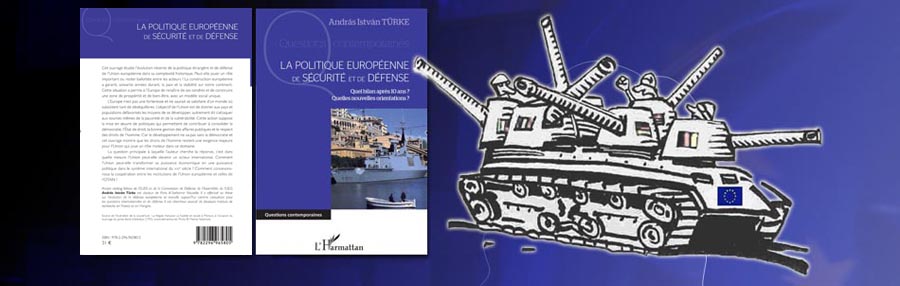
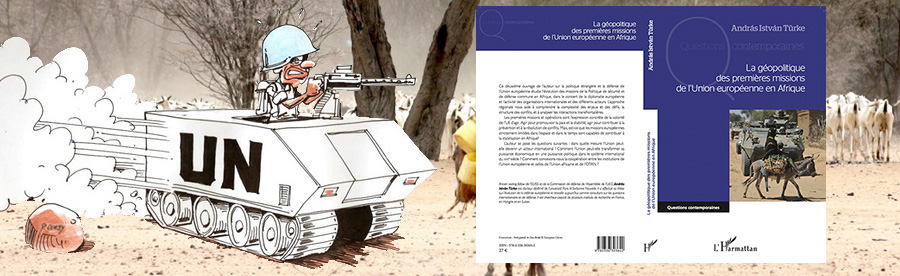
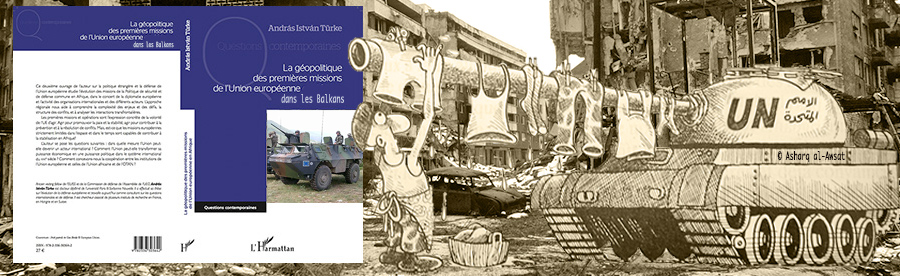
We are looking for sponsors for the English translation of these books, please contact turkeandras(at)gmail(dot)com