
You are here
Feed aggregator
Institutionalization of citizen participation in Africa
Citizen participation, in various forms, has long played a part in African societies, with mixed results. In line with recent constitutional/decentralization reforms, Morocco and Kenya have shown political will and institutional commitment to invest more in participation. The chapter analyzes the two countries’ participatory approaches as a political agenda that is closely tied to decentralization politics and therewith to power plays between different stakeholders, including donors. Based on a comparison of the two cases, the chapter examines how the newly introduced spaces enable or disenable citizens to challenge power structures. The chapter finds that, despite positive effects in terms of citizen mobilization and partial accountability, the limited scope and scale of participatory institutions means that the outcomes of the approach are procedural rather than politically transformative. At the same time, the different trajectories of the two countries illustrate the importance of embedding the assessment of each case in the history of participatory practices and local political economy.
Categories: Diplomacy & Defense Think Tank News, Union européenne
Institutionalization of citizen participation in Africa
Citizen participation, in various forms, has long played a part in African societies, with mixed results. In line with recent constitutional/decentralization reforms, Morocco and Kenya have shown political will and institutional commitment to invest more in participation. The chapter analyzes the two countries’ participatory approaches as a political agenda that is closely tied to decentralization politics and therewith to power plays between different stakeholders, including donors. Based on a comparison of the two cases, the chapter examines how the newly introduced spaces enable or disenable citizens to challenge power structures. The chapter finds that, despite positive effects in terms of citizen mobilization and partial accountability, the limited scope and scale of participatory institutions means that the outcomes of the approach are procedural rather than politically transformative. At the same time, the different trajectories of the two countries illustrate the importance of embedding the assessment of each case in the history of participatory practices and local political economy.
Institutionalization of citizen participation in Africa
Citizen participation, in various forms, has long played a part in African societies, with mixed results. In line with recent constitutional/decentralization reforms, Morocco and Kenya have shown political will and institutional commitment to invest more in participation. The chapter analyzes the two countries’ participatory approaches as a political agenda that is closely tied to decentralization politics and therewith to power plays between different stakeholders, including donors. Based on a comparison of the two cases, the chapter examines how the newly introduced spaces enable or disenable citizens to challenge power structures. The chapter finds that, despite positive effects in terms of citizen mobilization and partial accountability, the limited scope and scale of participatory institutions means that the outcomes of the approach are procedural rather than politically transformative. At the same time, the different trajectories of the two countries illustrate the importance of embedding the assessment of each case in the history of participatory practices and local political economy.
Sawe loses 'rRock, paper, scissors' for London Marathon dates
A game of rock, paper, scissors is used to determine when the elite female and male races will take place at next year's two-day London Marathon.
Sommet Russie-Afrique, le voyage en vaut-il le risque ?
À un mois du troisième sommet Russie-Afrique, prévu les 28 et 29 octobre à Moscou, la sécurité aérienne s'ajoute au bilan des promesses russes. Air Tanzania a suspendu puis rétabli sa liaison. L'Europe déconseille de voler dans l'ouest de la Russie. Et les échanges restent loin de l'objectif annoncé en 2019.
Air Tanzania, un signal africain
Début septembre, Air Tanzania a suspendu ses vols entre Dar es Salaam et Moscou à compter du 4 septembre, avant d'annoncer, quelques heures plus tard, leur reprise pour le 7. La compagnie a invoqué une évaluation des risques liés à l'exploitation de la liaison, sans préciser les éléments ayant motivé ce revirement.Cette brève suspension souligne les incertitudes qui pèsent sur la desserte de la capitale russe. Pour les délégations africaines attendues au sommet, la sécurité du voyage s'ajoute désormais aux enjeux diplomatiques de la rencontre.
Une alerte jusqu'en janvier 2027
L'Agence de l'Union européenne pour la sécurité aérienne (EASA) déconseille aux compagnies relevant de son champ d'application de voler dans l'espace aérien russe à l'ouest du 60ᵉ méridien est, quelle que soit l'altitude. La région de Moscou fait partie des cinq zones concernées. Actualisée le 24 juillet 2026, cette alerte reste valable jusqu'au 31 janvier 2027.L'agence pointe le risque qu'un avion civil soit pris pour une cible militaire, ainsi que les dangers liés à l'activation des défenses antiaériennes et au brouillage des systèmes de navigation par satellite. Elle relève que la plupart des incidents se sont produits dans des espaces maintenus ouverts au trafic civil pendant des attaques de drones ou des opérations de défense antiaérienne. Cette alerte ne constitue toutefois pas une interdiction générale des vols vers Moscou.
Deux drames, 336 morts
Le 17 juillet 2014, le MH17 a été détruit par un missile Buk au-dessus de l'est de l'Ukraine : 298 morts. Le 25 décembre 2024, l'accident d'Azerbaijan Airlines près d'Aktau, au Kazakhstan, a fait 38 morts. En octobre 2025, Vladimir Poutine a reconnu que des missiles russes avaient explosé à proximité de cet appareil lors d'une riposte contre des drones.Ces catastrophes totalisent 336 victimes. Elles concernent des lieux et des circonstances différents : ce total ne mesure pas la probabilité d'un accident à Moscou. Il rappelle les conséquences possibles de la coexistence entre aviation civile et opérations militaires.
Commerce : 31 % sous la promesse
Le bilan économique pose une autre question. En 2019, Poutine promettait de doubler les échanges avec l'Afrique, d'environ 20 à 40 milliards de dollars. Pour 2025, Irina Abramova, directrice de l'Institut d'Afrique de l'Académie russe des sciences, avance 27,7 milliards.
Sur cette base, le commerce atteint 69,3 % de la cible, laissant un écart de 12,3 milliards, soit 30,8 %. Ce calcul repose sur une valeur nominale annoncée, sans corriger l'inflation ni mesurer les retombées pays par pays. À Moscou, l'enjeu sera double : sécuriser les déplacements et démontrer, chiffres à l'appui, ce que le partenariat apporte aux économies africaines.
Un troisième sommet sous le signe du doute
À quelques mois du rendez-vous de Moscou, deux questions se posent aux partenaires africains : dans quelles conditions leurs délégations pourront-elles s'y rendre et quels résultats concrets peuvent-ils attendre de cette coopération ? Entre risques aériens et promesses économiques encore partiellement tenues, ce troisième sommet Russie-Afrique s'annonce comme un test de crédibilité pour le Kremlin. Au-delà des déclarations de partenariat, Moscou devra apporter des garanties de sécurité et des engagements dont les retombées puissent être mesurées.
Categories: Afrique
Debate: Labour Party Conference: Burnham announces wave of reforms
British Prime Minister Andy Burnham has announced far-reaching reforms in areas such as social care, pensions, energy and housing at the Labour Party Conference in Liverpool. He also announced plans to seek closer cooperation between the UK and the EU. The UK had been on the wrong track for too long and its course must be corrected, he explained. Commentators see this as a turning point but their interpretations vary.
Categories: European Union, Swiss News
Nostalgia to counter shift to the right | taz, die tageszeitung - Germany
Categories: European Union, Swiss News
Visions for distant future not enough | Financial Times - United Kingdom
Categories: European Union, Swiss News
Debate: Spain: can the government solve the housing crisis?
The eviction of an 87-year-old tenant in Madrid has sparked massive protests across Spain. The government has now passed two decrees providing stronger protection for tenants, including a ban on evictions of particularly vulnerable people until 2030. The Spanish press debates whether the measures will be enough to alleviate the housing crisis.
Categories: European Union, Swiss News
Emergency measures are not effective housing policy | La Vanguardia - Spain
Categories: European Union, Swiss News
Debate: Serbia: Vučić resigns ahead of general election
Serbia's President Aleksandar Vučić announced his early resignation on Sunday, as he had already indicated back in June. He will now stand as the lead candidate for the Serbian Progressive Party (SNS) in the snap parliamentary election on 25 October. If he wins the election he could continue to pull the strings in Belgrade as prime minister. The media speculate on whether his strategy will pay off.
Categories: European Union, Swiss News
Pages
the old site is here


© 2012-2015 Europa Varietas Foundation © 2015-2020 Europa Varietas Association
www.europavarietas.org | info(@)europavarietas(dot)org | Switzerland
This is a GDPR ready site
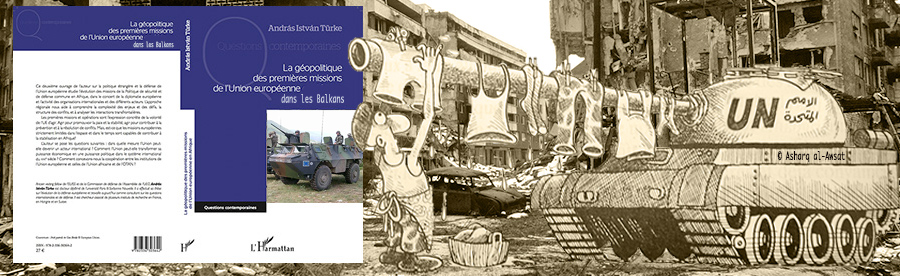
We are looking for sponsors for the English translation of these books, please contact turkeandras(at)gmail(dot)com