
You are here
Africa
Ex-refugee's 'full circle' Commonwealth Games win
Cyrille Tchatchet II is "very proud and honoured" to represent England and take home a silver medal.
Accepting What It Cannot Control, CARICOM Focuses on What It Can
Dominica's geothermal power plant. As Caribbean countries seek to reduce their dependence on imported fossil fuels, renewable energy remains a key pillar of the regional resilience agenda advanced by CARICOM leaders. Credit: Alison Kentish/IPS
By Alison Kentish
GROS ISLET, Saint Lucia , Aug 3 2026 (IPS)
From wars that drive up fuel prices to supply chain disruptions, inflation and increasingly frequent climate disasters, Caribbean leaders say many of the forces shaping the region’s future lie beyond their control.
Their response, however, is not resignation.
Instead, leaders of the Caribbean Community (CARICOM), the region’s largest economic grouping, are pursuing a strategy built on strengthening the systems they believe they can influence, hoping to make one of the world’s most climate-vulnerable regions more resilient to external shocks. These include food and energy security, transportation, healthcare, artificial intelligence and regional trade.
At their recent summit in Saint Lucia, the leaders argued that CARICOM must be judged less by declarations than by whether regional cooperation improves people’s daily lives.
“Our discussions have been guided by one central objective, ensuring that CARICOM delivers results that people can see and feel in their everyday lives,” CARICOM Chairman and Saint Lucia Prime Minister Philip J. Pierre said as he outlined the meeting’s outcomes.
“Heads of government focused on the issues that matter most to the people of the region.”
Those priorities included the rising cost of living, food security, affordable transportation, disaster resilience and the challenge of building stronger economies in an uncertain global environment.
Leaders acknowledged that inflation in food, fuel, freight and electricity has largely been driven by global conflicts, supply chain disruptions and commodity price shocks, which small island economies have little ability to influence. While several governments have introduced temporary measures to cushion households, they argued that lasting relief will require deeper regional cooperation on transportation, consumer protection and trade.
“We will work together,” said Barbados Prime Minister Mia Amor Mottley, who leads CARICOM’s work on the Caribbean Single Market and Economy. “None of us is omniscient, none of us has all the answers, and none of us are omnipotent as well.”
One of the summit’s most tangible initiatives was renewed work toward an affordable intra-regional ferry service, long viewed as critical to reducing freight costs, improving travel and strengthening food security. Leaders said the proposal would begin with a proof of concept using existing ferry capacity while governments harmonise regulations governing licensing, insurance and vehicle movement across borders.
The initiative complements CARICOM’s “25 by 2025 Plus Five” programme, which aims to reduce the region’s food import bill by expanding agricultural production and strengthening regional supply chains. Leaders argued that producing and transporting more food within the Caribbean would make the region less vulnerable to global disruptions.
Energy security emerged as another defining theme.
Prime Minister Terrance Drew of St Kitts and Nevis said that the Caribbean’s greatest vulnerability is not a lack of energy resources but its continued dependence on imported fossil fuels.
“We don’t have an energy issue,” Drew said. “We have an energy-harnessing issue.”
Pointing to the region’s abundant solar, geothermal, wind and wave resources, Drew said renewable energy offers perhaps the greatest long-term opportunity to stabilise Caribbean economies, reduce electricity costs and improve living standards.
“There’s nothing that can really stabilise our economy, or transform our economy, or deal with this constant up and down, like stabilising our energy sources,” he said.
Recognising that technological change will also reshape the region’s future, CARICOM agreed to establish a regional Blue Ribbon Commission on Artificial Intelligence. Leaders said the commission will develop regional guidance on AI, helping member states capitalise on its benefits while managing risks around jobs, privacy and ethics.
Climate resilience also remained central to the discussions.
Leaders reaffirmed their commitment to limiting global warming to 1.5 degrees Celsius while continuing to advocate internationally for the special circumstances of Small Island Developing States. They also advanced work on a regional insurance and reinsurance strategy aimed at improving financial protection for governments, businesses and households, as climate-related disasters become more frequent and more costly.
Historical justice remained firmly on the regional agenda. Leaders endorsed renewed efforts to advance CARICOM’s Ten-Point Plan for Reparatory Justice through closer engagement with the African Union, upcoming Commonwealth meetings and other international forums.
The agenda set in Gros Islet, Saint Lucia, has effectively set CARICOM’s agenda for the months ahead. From advancing ferry connectivity and renewable energy to strengthening food security, disaster resilience and artificial intelligence governance, the challenge now is implementation.
For Caribbean citizens, the measure of success will not be the number of declarations adopted but whether regional cooperation delivers tangible improvements in everyday life.
IPS UN Bureau Report
Follow @IPSNewsUNBureau
!function(d,s,id){var js,fjs=d.getElementsByTagName(s)[0],p=/^http:/.test(d.location)?'http':'https';if(!d.getElementById(id)){js=d.createElement(s);js.id=id;js.src=p+'://platform.twitter.com/widgets.js';fjs.parentNode.insertBefore(js,fjs);}}(document, 'script', 'twitter-wjs');
Related Articles
- CARICOM Leaders Gather in Saint Lucia as Caribbean Confronts Mounting Global, Regional Challenges
- UN Weather Agency Warns of Escalating Climate Extremes Across Caribbean and Latin America
Excerpt:
Unable to influence wars, global fuel prices or supply chain disruptions, Caribbean leaders are focusing on strengthening the systems that will make the region more resilient.
Categories: Africa, European Union
Who picks up the tab for AI’s unbridled genius?
By Daud Khan and Thomas McMahon
ROME / RICCIONE, Italy, Aug 3 2026 (IPS)
For the last few years, Artificial intelligence has been making increasingly intrusive demands for our attention.
It burst onto the scene like a child prodigy, enthralling us with feats of brilliance. With consummate ease, it removed drudgery from our tasks and began helping us achieve our personal and workplace objectives.
Daud Khan
But AI has now grown into an unruly adolescent. It is disrupting how we work and think; it is demanding constant attention; and it is distracting us from other important activities and tasks.As is the case with adolescents, there have been calls to set rules and regulations on AI, applying appropriate limits on what AI can and cannot do. The aim being to allow us time to deal with its immediate impacts on, for example, the jobs market, on media and communication, and on its military use.
But would government imposed regulations solve the problem? The answer is no for several reasons.
Firstly, there is the siren call of easier access to vast stores of knowledge, top quality writing skills and polished images and infographics. It is hard to resist the temptation to delegate boring tasks to AI, such as drafting emails that respond to routine messages. From there it is a slippery slope towards AI writing our university or job applications, office memos, or manuals and instructional content. However, these are tasks that define who we are and how others perceive us. And this reliance on AI kills creativity, individuality and human relations – there is no longer a turn of phrase or a spelling mistake that makes the message special.
Thomas McMahon
Just ask yourself: would you rather get a handwritten note of appreciation from someone who works for you or who you supervise, where some words are illegible and the paper is smudged; or an email with perfect grammar that you know they are not capable of authoring?Secondly, AI Psychosis is becoming a pervasive disruptor of social relations. AI models are purposely designed for “engagement farming” – a fancy term for hooking people into an ever-increasing reliance on these services. It achieves this through sycophantic responses that feed one’s ego or anxieties, releasing endorphins and creating a craving for more.
We can now access gratifying, yet wholly synthetic, social interactions at our fingertips via chatbots. Consequently, we risk crafting individualised reality bubbles that are unchecked by the social norms we experience in the real world. Will it become easier and more pleasurable to interact with an intelligent machine to fulfill our need to talk, to discuss books, or for emotional engagement without fear of rejection – at any time of day or night?
Thirdly, if we allow machines to shape our thoughts and emotions, we risk destroying diversity of opinion, crushing creativity and resulting in a unified, monolithic narrative that is controlled by the megacorporations providing these AI services.
Pope Leo XIV expressed this concern in his recent encyclical where he warned of “the idolatry of profit that sacrifices the weak, a uniformity that neutralizes differences, and the pretense that a single language — even a digital one — can translate everything, including the mystery of the person, into data and performance”.
Lastly, it is essential to consider how the mismanagement of AI has the potential to drive a further wedge between rich and poor populations. The Pope cautions us of being misled by “a technology that promises to free us from all weakness, and models of wellbeing that leave behind entire populations”.
Increased focus is being placed on the impact of data centers within local communities, given their inordinate usage of electricity and water and the constant noise pollution these facilities generate. At full capacity, processing a daily 10 billion Gigabytes of data, a 100 MW data center consumes up to 2.4 million KWh of electricity and 2 million litres of water per day – more than a small city.
The human brain can process 74 Gigabytes of data while sipping a tiny 0.3 KWh of electricity (260 calories or 12% of total daily energy intake). Our bodies require a daily ration of 2.5 litres of water to function normally. Contrast this with preparing a 100-word email using ChatGPT, where each prompt-and-response interaction consumes the water in a standard 500 ml bottle. Even from a strictly environmentally-conscious viewpoint, surely it would be better to use our brains for this instead?
However, whatever our concerns, the genie is out of the bottle and there is no going back – we must learn to use AI properly. We need to better understand its limitations and where it delivers greatest impact, given the resources required.
AI should not be seen as a substitute for human expertise but instead complementary to it. Indeed, the more expertise one has in any given field, the more valuable a contribution AI makes. Experts can better formulate more pertinent questions and redirect the conversation should the AI meander off course. Experts also detect errors more easily in what may appear to be perfectly valid responses.
It is essential that we encourage people, particularly our young people, to continue learning and perfecting their chosen crafts, ignoring the wild marketing claims that various professions have been largely solved by AI already. The more knowledge and expertise the younger generation can build, the more judiciously and selectively they can deploy AI in their work and for society’s future benefit.
Daud Khan is a retired UN staff based in Rome. He has degrees in economics from LSE and Oxford, where he was a Rhodes Scholar; and a degree in Environmental Management from Imperial College London.
Thomas McMahon is a Data Engineer who specialises in developing bespoke AI systems for UN agencies.
IPS UN Bureau
Follow @IPSNewsUNBureau
!function(d,s,id){var js,fjs=d.getElementsByTagName(s)[0],p=/^http:/.test(d.location)?'http':'https';if(!d.getElementById(id)){js=d.createElement(s);js.id=id;js.src=p+'://platform.twitter.com/widgets.js';fjs.parentNode.insertBefore(js,fjs);}}(document, 'script', 'twitter-wjs');
Categories: Africa, European Union
Semenyo hails Maresca style of play as 'music to my ears'
Manchester City forward Antoine Semenyo hails new manager Enzo Maresca's style of play as "music to my ears" after showcasing early signs of his role under the Italian.
Rohingya Repatriation: A Roadmap Without a Road
Rohingya refugees cross the Naf River on a makeshift raft while fleeing violence in Myanmar, on their way to Bangladesh. Credit: UNICEF/Mackenzie Knowles-Coursin
By Mohammad Zaman
VANCOUVER B.C., Canada, Aug 3 2026 (IPS)
The Rohingya crisis remains one of the most enduring humanitarian and political failures in South and Southeast Asia. Since the 2017 mass expulsion from Myanmar’s Rakhine State, Bangladesh has hosted more than one million refugees in Cox’s Bazar and Bhasan Char, while Myanmar has failed to create conditions for safe return. What began as an emergency response has hardened into protracted displacement marked by statelessness, insecurity, aid dependency, and diplomatic fatigue. Repatriation is repeatedly presented as the preferred durable solution, yet every major attempt has failed because the core political question remains unresolved: the Rohingya cannot safely return to a state that denies them citizenship, protection, and equal belonging.
In 2017, only months after the largest influx, Bangladesh and Myanmar signed a bilateral Memorandum of Arrangement. It promised a time-bound repatriation process, but it was non-binding, weakly enforced, and silent on the guarantees most essential to return: citizenship, freedom of movement, property restitution, and independent monitoring inside Rakhine. Bangladesh, facing demographic, environmental, and political pressure, needed a pathway to reduce the burden of hosting refugees. Myanmar, by contrast, had incentives to delay, control, and symbolically manage the process without addressing the legal and security conditions that caused the exodus.
Three major repatriation efforts since 2017 reveal the same pattern. Attempts in 2018 and 2019 collapsed because refugees refused to return without credible guarantees of safety, citizenship, and dignity. A China-facilitated initiative in 2023 proposed a pilot return of several thousand people and arranged verification visits by Rohingya representatives to Rakhine. It also stalled. Cyclone damage, renewed fighting, and widening armed conflict made even limited returns impractical. More importantly, refugees remained unconvinced. Their reluctance was not resistance to return; it was a rational response to risk. Returning to fenced villages, transit camps, or controlled areas without rights would merely convert exile in Bangladesh into containment in Myanmar.
Dr Mohammad Zaman
These failures expose the central flaw in the repatriation agenda: it has prioritized the movement of people over the creation of a solution. Success cannot be measured by border crossings alone, but by whether returnees can live safely as citizens with restored rights, homes, livelihoods, and community security. For the Rohingya, Myanmar’s 1982 citizenship framework, restrictions on movement, communal segregation, and discriminatory administration remain decisive barriers. The 2021 military coup further weakened prospects for accountability and reform. Since then, Myanmar has fragmented into multiple conflict zones, and Rakhine has become a battlefield involving the military, the Arakan Army, and other armed actors. Bangladesh is therefore no longer dealing only with a reluctant state authority; it must navigate a shifting territorial reality in which non-state actors control or contest areas central to any return.The political problem is both domestic and regional. Domestically, Myanmar’s state-building project has excluded the Rohingya by portraying them as outsiders rather than citizens. Without recognition of Rohingya identity and legal status, administrative repatriation will remain cosmetic. Regionally, the crisis is shaped by strategic interests. China has mediated because stability in Myanmar affects its investments and influence, but its diplomacy has emphasized state-to-state negotiation more than rights-based accountability. India has balanced humanitarian concern with security and geopolitical interests, while ASEAN has struggled to move beyond cautious consensus and non-interference. Western governments have condemned atrocities and supported accountability efforts, but sanctions and legal cases have not changed conditions on the ground. The result is a fragmented diplomatic landscape in which no actor has combined sufficient leverage, consistency, and political will to compel Myanmar toward a rights-based solution.
Bangladesh’s position is increasingly difficult. Its initial humanitarian generosity has become a long-term national burden. The camps place pressure on land, forests, water, public services, and local labour markets. Security concerns have grown as trafficking, armed activity, and criminal networks exploit a population with limited mobility, education, and livelihood opportunities. Declining humanitarian funding has deepened frustration: reduced food rations, health services, and education increase despair and encourage dangerous onward movement by sea to Indonesia, Malaysia, and Thailand, where conditions are often insecure. Yet Bangladesh’s legitimate burden cannot justify premature repatriation. Any return must be voluntary, safe, rights-based, and dignified.
A critical analysis must also recognize the limits of humanitarianism. Aid keeps people alive, but it cannot resolve statelessness or political exclusion. The international response has often separated relief, justice, and diplomacy into disconnected tracks: humanitarian agencies sustain survival in Bangladesh; lawyers pursue accountability; diplomats negotiate repatriation frameworks; and development actors support host communities. Each track is necessary, but together they have not formed a coherent strategy. The Rohingya have too often been treated as beneficiaries rather than political stakeholders. A durable solution requires their participation in defining return conditions, monitoring mechanisms, citizenship pathways, education policy, and community security arrangements. The newly formed Rohingya Repatriation Committee has to address all of the above in finding a sustainable solution.
The road ahead must be realistic rather than rhetorical. Repatriation should remain the long-term objective, but only when it is safe, voluntary, dignified, and sustainable. This requires verifiable changes inside Rakhine: citizenship or a credible pathway to citizenship, freedom of movement, access to services, restoration or compensation for property, and protection from military, police, and armed-group abuse. Any future framework must include independent international monitoring with meaningful access to return areas. Diplomacy must also adapt to Myanmar’s altered conflict map by engaging relevant actors without legitimizing abuses or abandoning principles. Bangladesh will need pragmatic but principled engagement with the junta, the Arakan Army, regional powers, and international organizations.
Meanwhile, the camps in Bangladesh cannot remain waiting rooms for an indefinitely delayed return. Refugees need education, skills training, legal protection, and limited livelihood opportunities to prevent social deterioration and prepare for eventual reconstruction in Rakhine. These measures should not be framed as local integration against Bangladesh’s wishes, but as human-capital preservation and crisis management. International burden-sharing must become concrete: donors should sustain aid, expand resettlement for vulnerable cases, support host communities, and coordinate pressure on Myanmar. Accountability mechanisms should continue because impunity is one reason repatriation remains unsafe.
Ultimately, the Rohingya repatriation crisis is not a logistical failure but a political one. Buses, refugee lists, reception centres, and pilot projects cannot substitute for rights, security, and recognition. Bangladesh seeks relief, Myanmar seeks control, regional powers seek stability, and donors seek a manageable humanitarian file. The Rohingya seek what repatriation is supposed to mean: return to their homeland as citizens with dignity. Until diplomacy is anchored in that principle, repatriation attempts will continue to produce announcements without arrivals, agreements without trust, and roadmaps without roads. The way forward requires pressure, patience, and a shift from counting potential returnees to building the conditions under which return becomes a restoration of justice rather than an act of desperation.
Dr. Mohammad Zaman is an internationally recognized expert in resettlement and development. He has contributed many op-eds on the Rohingya crisis. Dr. Zaman’s recent edited book (co-editors Robert Anderson and Kawser Ahmed) is titled Rohingya Stories: History and Geopolitics in a Multipolar World (Springer, 2025).
IPS UN Bureau
Follow @IPSNewsUNBureau
!function(d,s,id){var js,fjs=d.getElementsByTagName(s)[0],p=/^http:/.test(d.location)?'http':'https';if(!d.getElementById(id)){js=d.createElement(s);js.id=id;js.src=p+'://platform.twitter.com/widgets.js';fjs.parentNode.insertBefore(js,fjs);}}(document, 'script', 'twitter-wjs');
Categories: Africa, European Union
Final medal table as Nigeria lead for Africa at Glasgow 2026
Australia finish the 2026 Commonwealth Games with 70 golds and 171 medals overall, while England finish a distant second in the standings.
Why Uganda is winning the battle against Ebola as virus spreads in DR Congo
Uganda discharged its last Ebola patient from hospital roughly two weeks ago.
Categories: Africa, Határon túli magyar portálok összesített hírei
Oshoala revives Nigeria's Wafcon and World Cup bid
Asisat Oshoala scores the only goal as Nigeria beat Zambia at Wafcon 2026 to revive the West Africans' hopes of reaching the 2027 Women's World Cup.
Brentford sign Sangare for club record fee
Brentford confirmed the signing of Mali midfielder Mamadou Sangare from Lens for a club record fee.
Ethiopian death row inmates desperate to escape execution in Saudi Arabia call the BBC
Dozens, many from Tigray, are awaiting execution - some called the BBC to tell their stories.
Categories: Africa, Határon túli magyar portálok összesített hírei
Idi Amin's grandson fights at Commonwealth Games
The grandson of former Ugandan dictator Idi Amin has caused controversy at the Commonwealth Games after being disqualified for headbutting his opponent.
What triggered the mass migrant crossings into Ceuta?
An estimated 60,000 migrants from Morocco have crossed into Ceuta, with dozens dying during the journey.
East Asia and Pacific Faces a USD 900 Billion Maritime Investment Challenge
A container port in Bukit Merah, Singapore. Credit: Unsplash/CHUTTERSNAP
By Maximilian Malawista
UNITED NATIONS, Jul 31 2026 (IPS)
East Asia and the Pacific’s (EAP) maritime system has powered the region’s rise as the world’s largest trading and manufacturing center, but the infrastructure supporting that system has become increasingly vulnerable.
According to a new World Bank report, EAP will require nearly USD 900 billion in maritime investment through 2040, as aging vessels, growing trade volumes, and the transition towards alternative fuels place pressure on vital shipping networks propping up the region’s rapid economic growth.
Container trade across the region is projected to grow by 3.5 percent to 4 percent annually over the next decade, meaning ports have to build the additional capacity to accommodate approximately 300 million twenty-foot equivalent units (TEUs) by 2040. The World Bank estimates that modernizing ports will require USD 180 billion through 2040, while more than USD 280 billion will be needed to replace and upgrade regional and domestic fleets.
Such investment comes as maritime transport remains a major contributor to economic activity across the region. Maritime trade in the region supports up to USD 3.7 trillion in economic activity, moving over 6 billion tons of cargo, approximately half of the entire seaborne cargo trade. For every ton of cargo moved through the region’s ports, approximately USD 155 in overall economic output is generated, alongside USD 75 in direct GDP. A ton of imported steel, for example, can become an input for manufacturers producing automobiles, machinery or construction materials, generating additional economic activity well beyond the initial movement of the cargo through the port.
EAP’s role in global maritime trade is particularly significant when looking at the countries that border the Strait of Malacca, where an estimated 38 percent of global maritime trade passed through in 2023, according to the OECD. More than 100,000 vessels transit the Strait of Malacca annually, making it the busiest maritime chokepoint globally, with more than twice the traffic of the Strait of Hormuz under normal conditions.
In Singapore, merchandise trade–the combined value of goods imported and exported– reached USD 964 billion in 2024, equivalent to approximately 179 percent of the country’s USD 540 billion GDP. Singapore’s ports simultaneously handled approximately 41 million TEUs of container traffic, and processed 295 million tons of seaborne trade, making it the second busiest container port in the world. In neighboring Malaysia, merchandise trade reached approximately USD 631 billion, equivalent to nearly 150 percent of its USD 422 billion GDP, while its ports handled another 28 million TEUs, processing 447 million tons of seaborne trade, with Port Klang, Malaysia’s main port, being the 10th-busiest port in the world. Indonesia processed the greatest volume of the three nations, at 900 million tons.
China demonstrates the scale at which the region’s largest ports are already operating, and how investment in automation and digital infrastructure can increase their capacity. The Port of Shanghai became the first in the world to handle more than 50 million TEUs in 2024, while its newest automated terminals require approximately 70 percent less labor while achieving 30 percent higher productivity. Container vessels spend an average of only 1 to 1.2 days at Chinese ports, compared with the Port of Los Angeles where container vessels spend an average of two days. For reference, six of the top 10 busiest ports in the world are located in China, demonstrating its role in global maritime connectivity.
Beyond the direct costs of port operations, ships can spend up to 9 percent of their time waiting at anchorage. These delays can leave vessels with less time to complete subsequent legs of a voyage, encouraging higher sailing speeds and increasing fuel consumption and operating costs. An IMO-backed study found that optimizing container-ship speeds around expected port arrival times could reduce average fuel consumption by approximately 14 percent per voyage. Greater predictability and faster turnaround can therefore allow ports and vessels to move cargo more efficiently while reducing fuel costs and emissions—an increasingly important advantage as EAP prepares to accommodate an additional 300 million TEUs by 2040.
While premier global ports require significant investments in automation and new technology to increase efficiency and expand potential TEU throughput, smaller ports can achieve substantial results through simpler, less capital-intensive infrastructure improvements.
At the Port of Funafuti in Tuvalu, improvements as basic as paving cargo-handling areas and improving drainage reduced cargo-handling breakdowns by 80 percent and cut average vessel turnaround from seven days to between two and three days. These gains show that the approach to modernizing ports in the region is not uniform. Some ports will require more advanced technology and higher investment while others simply need to revitalize their existing systems, in accordance with the volume of cargo their ports already receive.
Modernizing ports, however, addresses only one side of the region’s maritime infrastructure challenge. The vessels docking at ports are themselves aging. Replacing and upgrading vessels operating within and between economies across EAP will require more than USD 280 billion through 2040. Of that total, approximately USD 150 billion will be needed to renew domestic fleets and another USD 97 billion to replace regional vessels, with dual-fuel capability adding USD 36.5 billion in additional costs.
The investment is not solely about expanding capacity. Significant portions of the region’s fleets are already more than 25 years old, making vessels more expensive to maintain, less fuel efficient and more susceptible to breakdowns and accidents. The World Bank estimates that replacing just 30 percent of domestic vessels by 2035 with ships meeting international standards could cut accident rates in half.
The reliability of these vessels also carries consequences beyond the shipping industry, particularly for the region’s archipelagic economies. In the Philippines, 98 percent of inter-island trade in food, fuel, and other goods depends on domestic shipping. Across Southeast Asia in general, maritime networks are critical to regional food trade, with rice shipments alone supplying more than 60 million people across EAP.
Disruptions caused by aging or unreliable vessels can therefore extend beyond higher costs for shipping companies, affecting the movement and price of essential goods in communities dependent on maritime transport.
Yet the largest individual component of the region’s maritime investment requirement lies not in ports or vessels, but in the fuels that will power them.
Developing supply chains for alternative marine fuels could require approximately USD 433 billion through 2040. Green ammonia alone could require approximately USD 310 billion, followed by USD 81 billion for green methanol and USD 42 billion for renewable liquefied natural gas (LNG).
The scale of the required investment reflects how early the transition remains. More than 99 percent of marine fuel consumed in 2025 was still conventional fuel, while fuel accounts for approximately 40 to 60 percent of vessel operating costs, according to the report.
Transitioning away from those fuels requires more than replacing engines. New fuels must be produced, transported, stored, and ultimately supplied to vessels through new bunkering infrastructure at ports, effectively requiring the development of new maritime energy supply chains alongside the existing system.
The transition also presents a coordination challenge. Shipowners have limited incentive to pay premiums for dual-fuel vessels without confidence that alternative fuels will be widely available, while ports and fuel producers face similar uncertainty about investing in bunkering and production infrastructure without sufficient demand. The World Bank argues that predictable regulation and coordinated investment will be necessary to develop vessels, fuel production and port infrastructure simultaneously.
The nearly USD 900 billion investment requirement ultimately extends across every link of the maritime system. Ports will have to accommodate hundreds of millions of additional containers through a combination of new capacity, automation and basic infrastructure improvements, while aging domestic and regional fleets will require replacement on a massive scale. At the same time, the transition toward alternative fuels will require not only new vessels, but the development of entirely new production, storage, transport and bunkering networks.
Financing this maritime venture through 2040 is not the only challenge. The investment must be coordinated across ports, vessels, and fuel supply chains so that each leg of the network can develop alongside others, matching the volume of cargo that moves through rapidly growing region.
IPS UN Bureau Report
Follow @IPSNewsUNBureau
!function(d,s,id){var js,fjs=d.getElementsByTagName(s)[0],p=/^http:/.test(d.location)?'http':'https';if(!d.getElementById(id)){js=d.createElement(s);js.id=id;js.src=p+'://platform.twitter.com/widgets.js';fjs.parentNode.insertBefore(js,fjs);}}(document, 'script', 'twitter-wjs');
Categories: Africa, European Union
Tyla's Nigeria date removed from world tour as South African stars face backlash
Nigerians urged Tyla to cancel her concert in Lagos over anti-migrant protests in South Africa.
Categories: Africa
ARMENIA: ‘Anti-LGBTQI+ Discourse Is Increasingly Tied to Anti-democratic Narratives’
By CIVICUS
Jul 31 2026 (IPS)
CIVICUS discusses disinformation campaigns targeting the LGBTQI+ community in Armenia with Hripsime Kizogyan, Executive Director of Pink Armenia, a community-based organisation that defends the human rights of LGBTQI+ people and advocates for policy change.
Hripsime Kizogyan
Ahead of Armenia’s recent parliamentary election, a coordinated online campaign tried to portray Prime Minister Nikol Pashinyan’s government as secretly backing the LGBTQI+ community. The campaign spread AI-generated images showing Pashinyan at a Pride event that never happened and falsely claimed Pink Armenia was behind the event, as part of a wider effort to present LGBTQI+ organisations as vehicles for foreign agendas. Campaigns such as these help drive hostility against LGBTQI+ people.What was the fake Pride campaign about?
In late January, online stories started appearing that claimed that Armenia’s first LGBTQI+ Pride march would take place in the capital, Yerevan, on 7 April, supported by our organisation and personally led by Nikol Pashinyan. The date was no accident, because 7 April is a religious holiday and Mother’s Day in Armenia.
None of it was true. The stories first appeared on a brand-new website that had been created only 11 days earlier. It used an AI-generated image of Pashinyan and disappeared shortly after. But the damage was done. Georgian and Turkish media outlets and dozens of Facebook and Twitter/X accounts had already picked up the story.
The same false campaign came back in April, this time amplified by pro-Kremlin Telegram channels and Russian outlets. It came with two new claims, both equally false: that Pink Armenia helped write same-sex marriage into a supposedly leaked new draft of the Armenian constitution, and that we’re funded by the US Agency for International Development. We denied this publicly, but by then the story had travelled.
The fake Pride story was just one piece of a much bigger campaign against our organisation and, more broadly, against LGBTQI+ people. A fake account impersonating Pink Armenia on Twitter/X managed to buy a verification checkmark before being suspended. Someone also set up a lookalike domain and sent emails in the name of our former president, telling schools that an LGBTQI+ curriculum would be introduced in 2027.
We also know that foreign bloggers were approached and offered paid trips to Yerevan to publicly urge Pashinyan to ‘support Pride’ as a show of solidarity with Europe. Someone pasted images of same-sex couples on walls in Yerevan, then photographed them as ‘evidence’ of activism that wasn’t happening.
What was the campaign trying to achieve?
Whoever was behind the fake Pride campaign wanted two things: to provoke fear and hostility towards LGBTQI+ people and to damage the government and its pro-European course by association. The false claims reinforced a familiar storyline in which European integration will bring the imposition of ‘foreign values’ and LGBTQI+ rights are the leading edge of that imposition.
This rhetoric didn’t come out of nowhere. Across the region, anti-LGBTQI+ discourse is increasingly tied to anti-democratic narratives, attacks on civil society and conspiracy theories that portray human rights organisations as foreign agents and threats to national identity. The same thing happened in Moldova and elsewhere in the region, with LGBTQI+ rights used to split the electorate ahead of a vote.
Although Armenia isn’t like neighbouring countries where anti-LGBTQI+ campaigns are written into state policy, the election showed our community being used when politically convenient. That kind of rhetoric makes the public environment hostile, legitimises discrimination and creates conditions in which hate speech and violence become more socially acceptable.
What has changed, and what hasn’t, for LGBTQI+ rights in Armenia?
Some things have improved. Earlier this year, Pink Armenia was formally included in public advisory councils at the health, internal affairs, justice, and labour and social affairs ministries. This means we can now raise issues directly with them.
But the law hasn’t changed. Armenia still hasn’t recognised same-sex partnerships. There’s no anti-discrimination protection covering sexual orientation and gender identity in most areas of life. When someone is the victim of a hate crime just for being LGBTQI+, that still doesn’t count as an aggravating factor.
Social attitudes are the other barrier. LGBTQI+ people still face discrimination in education, employment, family settings and healthcare. Being open about who you are still carries a risk, so many people hide it or leave Armenia in search of safety.
How is Pink Armenia countering disinformation?
We monitor media and social media systematically, documenting disinformation and hate speech targeting LGBTQI+ people and tracking the politicians and outlets pushing it. This gives us the evidence to respond publicly, take issues to policymakers and, when needed, go to court.
When false claims about us circulate, we answer them directly. We issue public clarifications and work with independent fact-checkers such as the Fact Investigation Platform and Media.am.
On digital security, we report impersonating accounts and fraudulent lookalike domains so they get taken down, and we warn partner institutions such as schools when fake messages go out in our name.
What support does Armenian civil society need?
We need stronger international cooperation to deal with disinformation networks that operate across borders to spread anti-gender narratives. Sharing of advocacy strategies, best practices, digital security expertise and research would strengthen civil society across the region.
We also need long-term support, not just project funding that responds to one crisis at a time. We need funds that are sustainable and flexible enough to keep our services running while we react quickly to disinformation campaigns and security threats.
International partners can do something else too: keep raising discrimination, hate speech and attacks on civil society in their diplomatic conversations with Armenian authorities. Public attention and international scrutiny make it harder to treat these issues as optional.
Ultimately, supporting LGBTQI+ rights in Armenia isn’t only about one community. It’s about defending democratic values, protecting civic space and making sure no group is excluded from human rights because it has become a politically convenient target.
CIVICUS interviews a wide range of civil society activists, experts and leaders to gather diverse perspectives on civil society action and current issues for publication on its CIVICUS Lens platform. The views expressed in interviews are the interviewees’ and do not necessarily reflect those of CIVICUS. Publication does not imply endorsement of interviewees or the organisations they represent.
GET IN TOUCH
Website
Facebook
Instagram
YouTube
SEE ALSO
Armenia: ‘Foreign interference was real and documented, but its impact is hard to measure’ CIVICUS Lens | Interview with Samvel Martirosyan 16.Jul.2026
Armenia’s westward turn overshadowed by personal rule CIVICUS Lens 18.Jun.2026
Armenia/Azerbaijan: ‘Civil society has an essential role in preparing societies for peace’ CIVICUS Lens | Interview with Konul De Moor 19.Sep.2025
Follow @IPSNewsUNBureau
!function(d,s,id){var js,fjs=d.getElementsByTagName(s)[0],p=/^http:/.test(d.location)?'http':'https';if(!d.getElementById(id)){js=d.createElement(s);js.id=id;js.src=p+'://platform.twitter.com/widgets.js';fjs.parentNode.insertBefore(js,fjs);}}(document, 'script', 'twitter-wjs');
Categories: Africa, European Union
US Casualty Figures Keep Fluctuating in War with Iran
Images of the Pentagon, Washington DC. Credit: Kevin Doyle / Unsplash
By Thalif Deen
UNITED NATIONS, Jul 31 2026 (IPS)
An age-old axiom in Statistics reads : Figures Cannot Lie, But Liars Can Figure.
And more so, in military conflicts, including the five-month-old US-Iran war, where casualty figures are difficult to track down because of lack of transparency and false accounting.
According to CNN, the Pentagon updated its war casualty database last week, recording more than 140 additionally wounded, and restoring the four soldiers killed due to Iranian strikes amid questions about a lack of transparency over the war’s toll.
The Pentagon drew scrutiny from media outlets and lawmakers last week when the number of US troops killed and wounded decreased in the Defense Casualty Analysis System, or DCAS, as Iranian attacks continued. CNN observed fluctuating casualty totals when monitoring the site on a minute-by-minute basis last week.
Pentagon updates Iran war casualty count to 624, restoring 4 deaths to tally, CNN’s Davis Winkie reports on why casualty numbers decreased & were later revised.
The Iranian government, not surprisingly, hasn’t provided any casualty figures at all.
In a bygone era, the United States reportedly suffered 58,281 military deaths in the Vietnam War and 2,459 military deaths during the war in Afghanistan.
The exact breakdown of total casualties—including deaths and those wounded in action (WIA)—differs significantly between the two conflicts:
Stephen Zunes, a professor of Politics at the University of San Francisco specializing in Middle Eastern politics, told Inter Press Service (IPS) many thousands of Iranians, Lebanese, and others have been killed as a result of the U.S. war on Iran but Americans–as in previous wars–tend to focus on U.S. casualties. Though they have thankfully been limited, the eighteen fatalities and more than 600 wounded–some of them seriously–have become a major focus of war opponents.
Trump has tried to downplay and manipulate these figures by comparing the casualties with other U.S. wars which included significant ground operations, claiming without evidence that the dead soldiers strongly supported the war, and undercounting those wounded by initially only listing those with severe injuries, said Zunes.
More recently, he pointed out, the administration was caught placing those killed and wounded, subsequent to the collapse of the Memorandum of Understanding with Iran, in a separate category than those killed and wounded during the first phase of the war, thereby lessening the overall total.
“Such efforts are only strengthening antiwar sentiment in Washington and elsewhere, adding to the upset by veterans and others over Trump’s draft dodging during the Vietnam War and his insults of those who fought in unpopular conflicts, including war heroes”.
During his 2016 campaign against Hillary Clinton, and to a somewhat lesser extent in his 2024 campaign against Kamala Harris, he portrayed himself as the antiwar candidate who opposed Democrats’ “forever wars” and who as a president would “bring our troops home.” As U.S. casualties in the Middle East mount, his credibility will only be eroded further, declared Zunes.
Meanwhile, a group of Democratic Senators sent a letter last week to Defense Secretary Pete Hegseth requesting a “comprehensive accounting” about the number of service members wounded or killed.”
The Senators wrote: “First, we wish to honor the service members who have lost their lives in Operation Epic Fury and extend our deepest condolences to their families. We thank all those who continue to serve in harm’s way. Their sacrifice is why we write to express our concern regarding the Department of Defense’s (DoD or the Department) public reporting and statements on U.S. military casualties associated with Operation Epic Fury.
We formally request a comprehensive accounting of the number of service members who have been killed, wounded, or injured in support of the operation. The American people, Congress, service members, and their families are entitled to a full and accurate accounting of the human costs of war. The information currently available to the public suggests that the Department has not consistently provided timely and comprehensive public casualty reporting throughout the conflict.
The Pentagon’s Defense Casualty Analysis System (DCAS), which the Department has described as being “regularly updated,” has reported inconsistent casualty figures, raising additional questions about the transparency and reliability of the Department’s public reporting and statement.”
IPS UN Bureau Report
Follow @IPSNewsUNBureau
!function(d,s,id){var js,fjs=d.getElementsByTagName(s)[0],p=/^http:/.test(d.location)?'http':'https';if(!d.getElementById(id)){js=d.createElement(s);js.id=id;js.src=p+'://platform.twitter.com/widgets.js';fjs.parentNode.insertBefore(js,fjs);}}(document, 'script', 'twitter-wjs');
Categories: Africa, European Union
Boxer's Commonwealth Games racism claim rejected
Claims made by boxer Aziz Abdul that racism was behind his disqualification at the Commonwealth Games are rejected.
Rangers move a 'dream come true' for South Africa's Makhanya
South Africa defender Olwethu Makhanya becomes Rangers' eighth summer signing, joining for an undisclosed fee from Philadelphia Union.
Dual Crises in Eastern DRC as Ebola Surges and Hunger Deepens
By Shuli Wong
UNITED NATIONS, Jul 30 2026 (IPS)
The Democratic Republic of Congo (DRC) is battling the fastest-growing Ebola outbreak on record, with United Nations officials warning that hunger is actively undermining efforts to contain the spread.
“Ebola feeds on delay, fear and hunger,” said Carl Skau, acting director of the World Food Programme (WFP) on Wednesday, July 29.
The current outbreak, declared on May 15th and caused by the Bundibugyo species of Ebola, is the third largest outbreak ever recorded, said Dr. Chikwe Ihekweazu, Executive Director of the World Health Organization’s (WHO) Health Emergencies Programme. The outbreak in the DRC is reaching unprecedented levels, Dr. Ihekweazu noted. “Over the last few days, we’ve seen some of the highest numbers of new infections in a single day.”
As of July 29th, the DRC outbreak has reached over 3,200 cases, with the virus spreading to 48 health zones across five provinces in eastern DRC. Unfortunately, WHO’s modeling has indicated that the true scale of the outbreak could be two to four times higher than the reported cases. Furthermore, 80 percent of new cases are coming from unknown chains of transmission, and many newly reported deaths are from people who never reached a health care facility or received care.
Julien Harneis, the UN’s Senior Ebola Coordinator, discussed how a critical driver for Ebola transmission is the fact that people are dying in their communities rather than in the care of a hospital or treatment center.
“Roughly 60 percent of deaths are occurring in the community, at the point when viral load — and risk to caregivers — is highest,” said Mr. Harneis.
WHO officials have mirrored this concern, calling deaths that occur outside of health facilities “the most alarming finding.” While there is no approved treatment for the Bundibugyo species of Ebola, the chances of survival are significantly higher with early supportive care.
On top of the outbreak is a severe hunger crisis that is exacerbating the impact and spread of Ebola. Across eastern DRC, nearly 10 million people are facing crisis- or emergency-level hunger. Ituri, the epicenter of the outbreak, is also the DRC’s most severe hunger hotspot, with 1.9 million people at crisis levels of food insecurity or worse. Mr. Skau emphasized how “food assistance is frontline Ebola containment. It helps families stay home, supports safe isolation, builds trust with communities and keeps health teams moving.”
The WFP has already delivered more than 160,000 hot meals to patients and frontline workers across 17 treatment and isolation centers. Dry food rations have been provided to 23,000 people, including 14,000 under quarantine, and an additional 36,000 people in Ebola-affected zones have been provided general food assistance. While discussing WFP’s work, Mr. Skau stressed how food logistics support is central to containing the outbreak. “You cannot force people to choose between hunger and health,” he said.
However, funding to tackle the interconnected hunger and Ebola crisis remains critically underfunded. WFP needs USD 293.6 million over the next six months to sustain all operations in DRC, including $76 million for the regional Ebola responses and $50 million for food and nutrition assistance.
“$76 million is the ask and that’s frankly just peanuts, if you look at the bigger scheme of things,” said Mr. Skau. Furthermore, while WFP’s logistics have been somewhat funded, the food element has received no funding. Mr. Skau emphasized, “if you want to be effective, you need to have an all rounded response. It’s not only the health response that is needed to be able to contain that.” Mr. Harneis added that in addition to the food assistance needed, the broader $1 billion Humanitarian Needs and Response Plan is only 45 percent funded.
WHO and WFP officials are urging the international community not to lose focus, as Dr. Ihekweazu warned: “now is not the time to drop the ball.” Mr. Harneis and Mr. Skau called for further action and to “scale up the Ebola response, three, four, five times of what we are doing now.”
Mr. Skau linked the urgent funding need to a broader appeal for political attention, describing the DRC as “exhausted from years of conflict, from repeated displacement, from crisis after crisis after crisis.” He argued that ending the outbreak will require more than just medical and food assistance: “We need peace, we need security…for all of this, we need funding…the funding that is coming here is far from enough and we need political attention.” In the weeks ahead, a rapid increase in funding and political will is needed to change the outbreak’s trajectory.
IPS UN Bureau Report
Follow @IPSNewsUNBureau
!function(d,s,id){var js,fjs=d.getElementsByTagName(s)[0],p=/^http:/.test(d.location)?'http':'https';if(!d.getElementById(id)){js=d.createElement(s);js.id=id;js.src=p+'://platform.twitter.com/widgets.js';fjs.parentNode.insertBefore(js,fjs);}}(document, 'script', 'twitter-wjs');
Categories: Africa, European Union
From the Foothills of Mount Kilimanjaro, Magnolia Athletics Camp Is Helping Girls Stay in School, Pursue Athletics and Escape the Pressures of Harmful Traditional Practices
Josephine Sembeyo (in blue) competes during Kenya's World Athletics Under-20 trials in May, where she qualified for the World Athletics Under-20 Championships in Oregon. Credit: Robert Kibet/IPS
By Robert Kibet
OLOITOKTOK, Kenya, Jul 30 2026 (IPS)
Before sunrise each morning, 19-year-old Josephine Sembeyo joins dozens of teenage runners leaving Magnolia Athletics Camp for training beneath the shadow of Mount Kilimanjaro.
The quiet morning air is broken only by the rhythm of footsteps along the dusty roads that have shaped generations of Kenyan distance runners.
But for Sembeyo, every kilometre represents far more than preparation for the 2026 World Athletics Under-20 Championships, where she will represent Kenya in the 1,500 metres.
Running has given her a chance she once feared might never come: to complete her education, support her family and make choices about her own future.
“Life hasn’t been easy for us. My father married a second wife and left my mother to raise us on her own. Seeing everything my mother has gone through motivates me every day. I want to succeed in athletics and education so that one day I can support her and my siblings and give them a better life,” Sembeyo says.
Girls from Magnolia Athletics Camp during a daily road training session in Oloitokitok, Kenya. Credit: Robert Kibet/IPS
A Camp Creating New Possibilities
Sembeyo is among 45 girls from pastoralist communities living and training at Magnolia Athletics Camp in Oloitokitok, near Kenya’s border with Tanzania.
The camp provides full scholarships covering education, accommodation, meals, athletics training and safeguarding support.
For many of the girls, athletics is not only about competition. It has become a pathway to education, confidence and opportunities that might otherwise remain out of reach.
The girls’ journey comes as they mark the International Day for Women and Girls of African Descent on July 25, a day that recognises the contributions, resilience and experiences of women and girls of African descent while highlighting the need to address discrimination and inequality.
For girls growing up in marginalised communities, access to education, safe spaces and opportunities can be a powerful tool for breaking cycles of poverty and exclusion.
Coach Andrew Lesuuda says Magnolia was created not only to identify talented runners but also to give girls a safe environment where they can develop academically and personally.
“When we started Magnolia Athletics Camp, our vision was not only to identify talented runners. We wanted to create an environment where girls could discover their potential, stay in school and believe that they can achieve more in life,” Lesuuda says.
“Athletics gives them an opportunity to dream, but education gives them the foundation to build a future beyond sport.”
Sports Against Early Marriage and FGM
Many of the girls joining Magnolia come from communities where opportunities for girls remain limited and where some continue to face risks linked to female genital mutilation (FGM) and child marriage.
According to UNICEF, more than 230 million girls and women alive today have undergone FGM. The United Nations says progress towards ending the practice remains too slow to meet the Sustainable Development Goal target of eliminating FGM and child marriage by 2030.
Kenya outlawed FGM in 2011 and has made progress through legislation and awareness campaigns, but the practice continues in some communities, particularly among sections of pastoralist populations.
The struggles facing girls in vulnerable communities are part of a wider global challenge.
Sarah Hendriks, a UN Women spokesperson, in a recent press conference said no country in the world has achieved full legal equality between women and men, leaving millions of girls exposed to harmful practices and unequal opportunities.
“No country in the world has achieved full legal equality between women and men. More than half of the world’s countries do not actually define rape by law on the basis of consent. Nearly three-quarters — 74% of the world’s countries — still allow child marriage by law, allowing girls to be married as children,” Hendriks said.
At Magnolia, athletics has become a tool for changing that reality by keeping girls in school and giving them opportunities beyond traditional expectations.
A Second Chance Through Running
Before joining Magnolia, Sembeyo feared her education could end early and that she might face an early marriage.
Today, she believes the camp has transformed her future.
“Had it not been for Magnolia Athletics Camp, I believe my life would have been very different. I was at risk of an early and forced marriage, but coming here gave me the chance to stay in school, train and dream about a better future. Today, I’m happy because I know my life has a direction,” she says.
Her daily routine starts before sunrise with training, followed by school and another athletics session in the afternoon before homework in the evening.
“Every morning when I train, I remind myself why I’m doing it. I know every session brings me closer to my dream and gives me another opportunity to change my family’s life,” she says.
When Climate Change Threatens Dreams
Sembeyo is joined at Magnolia by Jeska Lenawatop, a 1,500-metre runner from Lkuroto village in Samburu County, a pastoralist region in northern Kenya.
Before joining the camp, Jeska’s life revolved around helping her family care for goats and sheep, the main source of livelihood for many pastoral households.
But recurring droughts have devastated livestock and deepened economic hardship for communities that depend on animals for survival.
“Before Magnolia, my life was mainly about grazing goats and sheep. With droughts destroying livestock, our family’s main source of income, I had little hope for the future. This camp gave me a chance to stay in school and pursue my dreams,” Jeska says.
Through athletics and education, Jeska now sees a future beyond the challenges facing her community.
Building Confidence Through Education
Another athlete benefiting from Magnolia is Felister Naimutie, a 400 m and 800 m runner from Lolgorian village in Kilgoris.
She says drought and limited opportunities affected many girls growing up in her community.
“Growing up, I saw how drought affected our families and made life difficult. Many girls had few choices beyond pastoral duties and early marriage. Magnolia gave me hope through education and athletics,” Felister says.
For her, the camp represents more than a training facility. It is a place where she can continue learning while pursuing her sporting ambitions.
Beyond the Finish Line
Barnaba Korir, Athletics Kenya’s Youth Development Director, says community-based programmes, such as Magnolia, complement national efforts to identify young talent while ensuring athletes remain in school.
He says sport can build confidence, leadership and opportunities for young people.
At Magnolia, parents, teachers, community leaders and anti-FGM advocates also engage with families to promote girls’ education and challenge harmful practices.
As another training session ends beneath Mount Kilimanjaro, the girls jog back to camp laughing and encouraging one another.
For Sembeyo, the finish line is no longer defined only by medals.
Her selection to represent Kenya at the World Athletics Under-20 Championships has strengthened her belief that athletics can transform not only her life but also those of her family.
“Being selected to represent Kenya at the World Under-20 Championships means everything to me. It’s proof that hard work pays off, and I believe it is opening opportunities that can change my life. I want to make my family proud and show other girls that they should never give up on their dreams,” she says.
One day, she hopes to stand on an international podium wearing Kenya’s colours.
But her greatest ambition goes beyond medals.
“I want girls from communities like mine to know that education and sport can change their lives. If someone believes in you and gives you an opportunity, you can achieve your dreams. My dream is not only to win medals for Kenya but also to make sure my mother and my siblings have a better life,” Sembeyo says.
Perhaps Magnolia’s greatest achievement will not be measured by medals but by the number of girls who leave the camp with education, confidence and the freedom to choose the futures they want.
IPS UN Bureau Report
Follow @IPSNewsUNBureau
!function(d,s,id){var js,fjs=d.getElementsByTagName(s)[0],p=/^http:/.test(d.location)?'http':'https';if(!d.getElementById(id)){js=d.createElement(s);js.id=id;js.src=p+'://platform.twitter.com/widgets.js';fjs.parentNode.insertBefore(js,fjs);}}(document, 'script', 'twitter-wjs');
Related Articles
Categories: Africa, European Union
Pages
the old site is here


© 2012-2015 Europa Varietas Foundation © 2015-2020 Europa Varietas Association
www.europavarietas.org | info(@)europavarietas(dot)org | Switzerland
This is a GDPR ready site

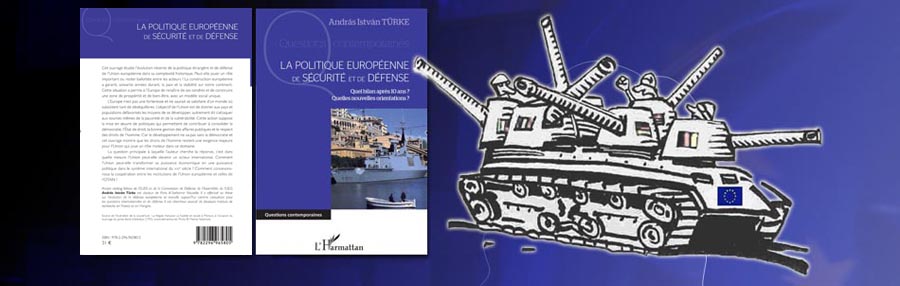
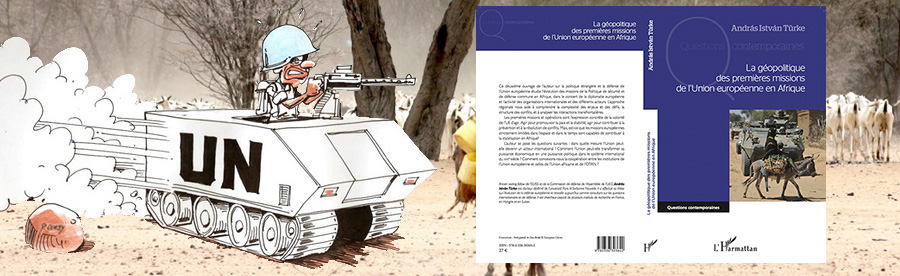
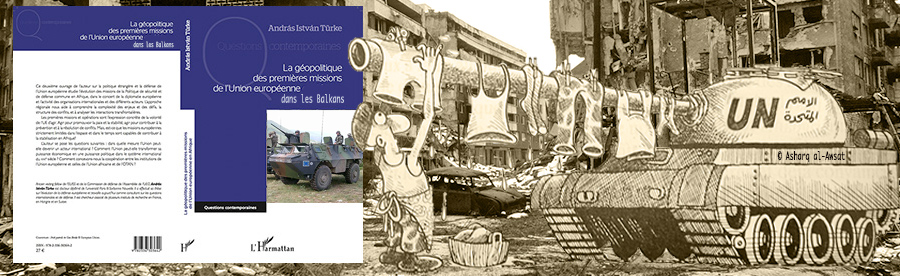
We are looking for sponsors for the English translation of these books, please contact turkeandras(at)gmail(dot)com