
You are here
Swiss News
Speed-Asse beim Schneetraining in Südamerika: Von Allmen lässts krachen – Odermatt wieder auf Kurs
Wie läuft es bei Marco Odermatt nach seinem Verletzungs-Rückschlag im August? Und welcher Schweizer hat im Trainingslager in Chile serienweise Bestzeiten aufgestellt? Die Antworten erhalten Sie hier.
Categories: Határon túli magyar portálok összesített hírei, Swiss News
Formcheck vor Saisonstart: So geben Von Allmen und Odermatt in Chile Gas
Wie läuft es bei Marco Odermatt nach seinem Verletzungs-Rückschlag im August? Und welcher Schweizer hat im Trainingslager in Chile serienweise Bestzeiten aufgestellt? Die Antworten gibts im Video.
Categories: Határon túli magyar portálok összesített hírei, Swiss News
Tom Hiddleston am ZFF: «Ich lernte in den Schweizer Alpen Skifahren»
Das ZFF 2026 ist eröffnet. Zur Eröffnung gibt sich die nationale und internationale Prominenz auf dem grünen Teppich beim Kongresshaus die Klinke in die Hand. Mit dabei sind auch Hollywood-Stars Tom Hiddleston und Willem Dafoe. Blick ist live vor Ort.
Categories: Africa, Swiss News
Île Maurice en voiture : un road trip en famille d’une semaine, étape par étape
L’île Maurice attire de plus en plus de familles algériennes, et on comprend pourquoi : des lagons tièdes, une cuisine où l’on mange halal sans […]
L’article Île Maurice en voiture : un road trip en famille d’une semaine, étape par étape est apparu en premier sur .
Categories: Afrique, Swiss News
Teurer Sprit als Treiber: Schweizerinnen und Schweizer sind immer heisser auf Stromer
Die Benzin- und Dieselpreise in der Schweiz explodieren. Vor allem Letzterer jagt von einem Rekord zum nächsten. Das lässt die Nachfrage nach Elektroautos durch die Decke gehen – und übertrifft sogar den Boom vom Frühling.
Categories: Africa, Swiss News
Nach Gerüchten um Ösi-Star: Neuer Alaba-Klub macht Transfer offiziell
David Alaba wechselt nach einer langen Vereinssuche zu Udinese Calcio. Der Klub aus der Serie A bestätigt entsprechende Gerüchte am Donnerstag mit der offiziellen Transfer-Mitteilung.
Categories: Africa, Swiss News
Wirre Penalty-Situation: Das sind keine Psychospielchen
In der bolivianischen Liga stellt sich ein Goalie beim Penalty einfach mit dem Rücken zum Ball neben den Pfosten. Fast für mehr Diskussionen sorgt aber die Szene, die dem Penalty voraus ging.
Categories: Africa, Swiss News
Algériens, préparez vos valises : 50 destinations à découvrir en 2027 selon Lonely Planet
Envie d’évasion et de pépites méconnues pour vos prochaines vacances ? Le guide de référence Lonely Planet dévoile enfin son palmarès exclusif des 50 meilleures […]
L’article Algériens, préparez vos valises : 50 destinations à découvrir en 2027 selon Lonely Planet est apparu en premier sur .
Categories: Afrique, Swiss News
Press release - Highlights of the next AGRI meeting
Committee on Agriculture and Rural Development (AGRI) to meet on Monday 28 September from 15:00 to 18:30
Committee on Agriculture and Rural Development
Source : © European Union, 2026 - EP
Committee on Agriculture and Rural Development
Source : © European Union, 2026 - EP
Categories: European Union, Swiss News
Press release - Highlights of the next AGRI meeting
Committee on Agriculture and Rural Development (AGRI) to meet on Monday 28 September from 15:00 to 18:30
Committee on Agriculture and Rural Development
Source : © European Union, 2026 - EP
Committee on Agriculture and Rural Development
Source : © European Union, 2026 - EP
Categories: Európai Unió : hírek magyarul, Swiss News
Giga-complexe de transformation du phosphate à Souk Ahras : Le coup d’envoi officiel est donné
Une étape majeure vient d’être franchie dans la concrétisation des grands projets structurants de l’industrie nationale. Le ministre d’État, ministre des Hydrocarbures, Mohamed Arkab, a […]
L’article Giga-complexe de transformation du phosphate à Souk Ahras : Le coup d’envoi officiel est donné est apparu en premier sur .
Categories: Afrique, Swiss News
Stefan Bach: „Energiegeld für Geringverdienende und Pendelnde statt Tankrabatt – als Weihnachtsgeld“
Am morgigen Freitag wird der Bundestag über den von der Koalition beschlossenen Tankrabatt entscheiden. Stefan Bach, Steuerexperte am Deutschen Institut für Wirtschaftsforschung (DIW Berlin), empfiehlt eine für Geringverdienende und Pendelnde zielgenauere Alternative über den Direktauszahlungsmechanismus.
Der neue Tankrabatt ist kein zielgenaues Instrument zur Entlastung der Bevölkerung, da er nach dem Gießkannenprinzip auch Haushalten mit hohen Einkommen zugutekommt oder Freizeitfahrten fördert. Zugleich wird der notwendige Anreiz zum Energiesparen abgeschwächt. Eine zielgenauere Alternative wäre ein einkommensdifferenziertes Energiegeld. Dieses muss zunächst über den Direktauszahlungsmechanismus an alle ausgezahlt werden. Technisch steht dieser Mechanismus bereit, doch haben bisher nur wenige ihre Kontoverbindung hinterlegt. Aber wenn ein Energiegeld von beispielsweise 200 Euro ausgelobt würde, stiege die Erfassung wohl innerhalb weniger Wochen rasant an. Wer sich nicht registriert, könnte zu Weihnachten einen Gutschein über einen geringeren Betrag per Post erhalten.
Die weitere Herausforderung liegt in der Differenzierung nach den individuellen Einkommen, damit es zielgenau nur an Geringverdienende geht. Eine Einkommensprüfung bereits bei Auszahlung ist administrativ zu aufwendig, da die Finanzbehörden die aktuellen Einkommen nicht kennen. Stattdessen sollte das pauschal ausgezahlte Energiegeld bei der Einkommensteuererklärung im Folgejahr über einen gesonderten Tarif versteuert werden. Denkbar wäre beispielsweise, dass die unteren 40 Prozent der Einkommensverteilung das Energiegeld vollständig steuerfrei behalten dürfen. Bei mittleren Einkommen würde es mit steigenden Einkommen schrittweise belastet, während es die oberen 40 Prozent vollständig zurückzahlen müssen.
Ein Energiegeld von beispielsweise 200 Euro – als Weihnachtsgeld bis Mitte Dezember an alle ausgezahlt – würde den Staat zunächst mehr als 16 Milliarden Euro kosten. Durch die nachträgliche Einkommensdifferenzierung ließen sich die fiskalischen Kosten jedoch um die Hälfte reduzieren. Das wäre zwar immer noch teurer als der Tankrabatt, aber dafür zielgenau.
Pendelnden könnte man zusätzlich ein Mobilitätsgeld von beispielsweise 3 Cent je Entfernungskilometer zahlen. Das würde zusätzlich 0,8 Milliarden Euro kosten, wenn man es der oberen Einkommenshälfte bei der Einkommensteuer wieder abzieht.
Categories: Diplomacy & Defense Think Tank News, Swiss News
AMENDMENTS 103 - 404 - Draft report Shaping the EU's external action to address the human rights challenges posed by artificial intelligence - PE792.048v02-00
AMENDMENTS 103 - 404 - Draft report Shaping the EU's external action to address the human rights challenges posed by artificial intelligence
Committee on Foreign Affairs
Nacho Sánchez Amor
Source : © European Union, 2026 - EP
Committee on Foreign Affairs
Nacho Sánchez Amor
Source : © European Union, 2026 - EP
Categories: Europäische Union, Swiss News
Norway’s Development Rethink Should See Ocean Investment as a Strategic Interest
Credit: Amanda Cotton / Ocean Image Bank
By Gareth Johnstone and Jan Thomas Odegard
OSLO, Norway, Sep 24 2026 (IPS)
As Norway undertakes Vendepunkt, or “Turning Point,” its reflection on the future of Norwegian development policy, it is critical that oceans remain a priority. Donors around the world are running similar audits, deciding which long-term partnerships to keep, and why. Norway has decades of expertise to offer, but also something significant at stake: healthy and well-governed oceans underpin food, livelihoods and economic activity in partner countries while supporting global seafood supply chains in which Norway itself participates.
West Africa demonstrates what sustained investment in oceans can achieve. More than a decade of cooperation on illegal fishing has helped countries strengthen their own capacity to monitor and protect their waters. But the ocean cannot be managed country by country. Fish stocks are shared, vessels move across borders, and climate change is shifting marine resources into new waters. Strong national capacity must therefore be matched by the ability of countries to cooperate.
That cooperation depends on the relationships between countries that allow information to be shared, trust to develop and authorities to act together. These relationships are not simply a by-product of capacity building. They are essential development infrastructures particularly when the resources being protected cross borders.
Gareth Johnstone
Fisheries are also fundamental to food security on each side of this relationship. In West Africa, fish is a critical source of nutrition for millions of people and supports the livelihoods of coastal communities. FAO estimates that aquatic foods make up 19 percent of consumed animal protein across Africa on average, rising above 50 percent in some countries. In Norway, seafood is both part of the national food supply and the foundation of a major industry. Protecting fish stocks and ensuring they are sustainably and legally managed is as much an economic question as it is an ecological one.The connection between West Africa and Norway makes this tangible. Fish caught off West Africa enters international supply chains as fishmeal and fish oil, including feed used in aquaculture thousands of kilometres away. A fish caught off Guinea-Bissau can ultimately help feed a salmon in a Norwegian fjord. In one investigation supported by TMT, authorities took action against the factory vessel TIAN YI HE 6 after it received fish from a Turkish-flagged vessel, with the resulting fishmeal transported onwards to international markets. The case resulted in fines for unauthorized fishing operations, illegal transshipment and obstruction of inspectors.
Jan Thomas Odegard
In January 2026, Guinea-Bissau banned fishmeal and fish oil production. Within months, vessels involved in the trade had moved to Sierra Leone. Enforcement can improve in one jurisdiction while the challenges simply moves to another.Technology has transformed what fisheries authorities can do. An inspector can now examine a vessel’s movements and history before deciding whether it should enter port. Recorded use of the Vessel Tracking Tool, developed by fisheries intelligence organisaiton, TMT, more than doubled between 2024 and 2025.
Despite this, turning information into action requires trained officials, functioning institutions and trust between agencies and countries. In the West African region where TMT, and its partners have focused support, the relationships resulted in the deterrence of illegal fishing took more than a decade to build. An independent assessment by Poseidon Aquatic Resource Management of this work, supported by Norway, found that some of the strongest results came when governments shared information regionally.
One case began with a concern raised by a fisheries inspector in Ghana about the vessel NOVA ZEELANDIA. Officials in Côte d’Ivoire, Angola and South Africa checked their records and shared information. Angola subsequently fined associated trawlers for unauthorized transshipment and barred NOVA ZEELANDIA from its waters, while Cameroon separately fined the vessel owners US$2.1 million for breaches of inspection rules.
The vessel later changed its name and flag and remains in operation. It is a reminder that effective ocean governance requires sustained cooperation across jurisdictions.
Relationships are development infrastructure
Development programmes routinely count the numbers of people trained, systems established and institutions strengthened. The value of the relationships built alongside them is harder to measure. Yet a fisheries officer knowing who to contact in a neighbouring country can be as important as the technology on their desk.
These relationships take years to build and can be fragile. One or two funding cycles may establish a system or deliver training, yet they are less likely to embed the institutional memory, expertise and relationships that allow it to survive and adapt.
Long-running development partnerships and support should therefore not automatically be viewed as evidence that localisation has failed to materialise. A better test is whether they are evolving toward stronger national institutions, greater regional leadership and with less dependence on external technical expertise, while preserving cooperation where challenges remain shared.
Oceans belong in Norway’s Turning Point
Norway brings decades of experience in fisheries management, marine research and ocean governance. Norway is itself a fishing and aquaculture nation, connected through the same ocean systems and global seafood supply chains.
Norway’s investment in oceans can therefore combine locally led capacity with international cooperation because illegal vessels do not respect borders.
The evidence from West Africa shows why sustained investment matters. National enforcement capability and regional networks have been built over more than a decade. Withdrawing support before those systems are sufficiently resilient risks losing hard-won gains, continuing to invest allows national leadership to deepen and relationships to mature.
Norway’s challenge is not unique. Development partners are increasingly being asked to make harder choices and reduce dependency without dismantling the relationships and cooperation needed to address problems that are inherently international. As Turning Point asks where Norway has particular strengths and where its development cooperation can have greatest impact, oceans deserve a prominent place in the answer.
The question should not simply be which partnerships Norway can eventually leave. It should also be which are worth sustaining and deepening because the same fish stocks, vessels and networks are what is at stake. Strong national capacity and international relationships are not competing goals. One makes the other possible. And in an ocean that connects Guinea-Bissau’s fishing communities with Norway’s fjords, Norway has both the expertise and the interest to keep investing in both.
Gareth Johnstone is the Executive Director of Norwegian based fisheries intelligence organization, Trygg Mat Tracking (TMT). He has over 30 years’ experience as an environmental scientist, researcher and policy expert. He is also the former Director General of WorldFish.
Jan Thomas Odegard is a Norwegian environmental and development expert with 30 years’ experience spanning the UN, NGOs, private sector and research. He is co-founder and Chair of the Trygg Mat Tracking Board and former Secretary General of Friends of the Earth Norway.
IPS UN Bureau
Excerpt:
As Norway considers the future of its development cooperation, West Africa offers an important lesson: investing in the same seas can create benefits on both sides of the partnership.
Categories: Africa, Swiss News
Scandale ALRIM : le verdict tombe, prison ferme et confiscation des biens
Le dossier de corruption qui ébranlait l’Algérienne de réalisation d’équipements et ouvrages métalliques, connue sous le sigle ALRIM, vient de connaître son épilogue judiciaire. Le […]
L’article Scandale ALRIM : le verdict tombe, prison ferme et confiscation des biens est apparu en premier sur .
Categories: Afrique, Swiss News
Justice : 13 wilayas dotées de nouveaux tribunaux de commerce, voici leur champ d’action
Le Ministère de la Justice a procédé, ce jeudi, à l’installation de 13 nouveaux tribunaux de commerce spécialisés au sein des sièges des cours de […]
L’article Justice : 13 wilayas dotées de nouveaux tribunaux de commerce, voici leur champ d’action est apparu en premier sur .
Categories: Afrique, Swiss News
ENTWURF EINES BERICHTS über die Empfehlung des Europäischen Parlaments an den Rat, die Kommission und die Vizepräsidentin der Kommission und Hohe Vertreterin der Union für Außen- und Sicherheitspolitik zu den politischen Beziehungen zwischen der EU und...
ENTWURF EINES BERICHTS über die Empfehlung des Europäischen Parlaments an den Rat, die Kommission und die Vizepräsidentin der Kommission und Hohe Vertreterin der Union für Außen- und Sicherheitspolitik zu den politischen Beziehungen zwischen der EU und Norwegen
Ausschuss für auswärtige Angelegenheiten
Łukasz Kohut
Quelle : © Europäische Union, 2026 - EP
Ausschuss für auswärtige Angelegenheiten
Łukasz Kohut
Quelle : © Europäische Union, 2026 - EP
Categories: Europäische Union, Swiss News
Corsica Linea : une grève de 48 heures menace les traversées entre la France et l’Algérie
Vous avez prévu de voyager vers ou depuis l’Algérie la semaine prochaine ? Prudence : la CGT de la Corsica Linea a déposé un préavis […]
L’article Corsica Linea : une grève de 48 heures menace les traversées entre la France et l’Algérie est apparu en premier sur .
Categories: Afrique, Swiss News
Biens récupérés : Sifi Ghrieb inaugure une nouvelle usine de composants automobiles (IMAGES)
La filière automobile algérienne accueille une nouvelle unité de production. Le Premier ministre Sifi Ghrieb s’est rendu ce jeudi 24 septembre à Tissemsilt pour inaugurer […]
L’article Biens récupérés : Sifi Ghrieb inaugure une nouvelle usine de composants automobiles (IMAGES) est apparu en premier sur .
Categories: Afrique, Swiss News
From Vienna to New York: Nuclear Governance Faces New Tests Ahead of First TPNW Review Conference
Credit: IAEA
IAEA’s 70th General Conference highlights growing strains on safeguards and nuclear security as attention shifts to the first review of the Nuclear Weapons Ban Treaty.
By Katsuhiro Asagiri
VIENNA, Sep 24 2026 (IPS)
The international nuclear order is facing another test as governments move from an inconclusive review of the Nuclear Non-Proliferation Treaty (NPT) in New York to renewed disputes over safeguards and nuclear security in Vienna—and toward the first Review Conference of the Treaty on the Prohibition of Nuclear Weapons (TPNW) later this year.
The 70th General Conference of the International Atomic Energy Agency (IAEA), held in Vienna from September 14 to 18, came less than four months after the 11th NPT Review Conference ended without consensus on a substantive outcome.
It was the third consecutive NPT Review Conference, following those in 2015 and 2022, to conclude without agreement on substantive conclusions and recommendations—underscoring the growing difficulty of reaching consensus amid heightened nuclear risks and geopolitical tensions.
UN Secretary-General António Guterres expressed disappointment at the outcome while reaffirming the NPT as a cornerstone of the global nuclear disarmament and non-proliferation regime.
The IAEA does not negotiate nuclear disarmament. Its responsibilities include promoting the peaceful uses of nuclear energy and applying safeguards to verify that nuclear material is not diverted to nuclear weapons or other nuclear explosive devices.
Yet the issues confronting the Agency—from Iran and North Korea to Ukraine and naval nuclear propulsion—show how safeguards, nuclear security and armed conflict are increasingly intertwined with wider questions about the future of the international nuclear order.
Map of Iran
Iran Puts Verification Under PressureIran remains one of the most difficult issues facing the Agency.
For the IAEA, the central question is not simply the political dispute surrounding Iran’s nuclear programme, but whether it can maintain the continuity and credibility of independent verification.
Restrictions on access and uncertainty surrounding nuclear material, including highly enriched uranium, have intensified concerns about the effectiveness of safeguards.
The issue has taken on an additional dimension following attacks on Iranian nuclear facilities. Beyond competing political and military claims lies a wider question for the international community: how can nuclear facilities—and the verification system surrounding them—be protected during armed conflict?
Ukraine Tests Nuclear Safety in Wartime
Ukraine presents another challenge.
The war has placed major nuclear facilities in or near areas of military operations, with the Zaporizhzhia Nuclear Power Plant remaining at the centre of international concern.
The IAEA has maintained experts at the site as part of efforts to reduce risks to nuclear safety and security.
Russia and Ukraine have repeatedly accused each other of actions threatening nuclear installations. While those claims remain contested, the underlying issue extends beyond this war: international nuclear governance mechanisms must now operate in circumstances where a major nuclear facility can be exposed to prolonged armed conflict.
Water is used to cool processes at the Zaporizhzhya Nuclear Power Plant in Ukraine. Credit: IAEA/Fredrik Dahl
North Korea and the Limits of Verification
Credit: journal-neo.org
North Korea remains another major test of the non-proliferation regime.The IAEA continues to monitor developments in the Democratic People’s Republic of Korea from outside the country and maintains its readiness to resume verification activities should political circumstances permit.
The case illustrates a fundamental limitation of international verification: even sophisticated monitoring institutions ultimately depend on access and cooperation.
More broadly, the Vienna conference reflected the growing difficulty of achieving consensus. Political divisions are increasingly affecting debates even within an institution whose work is largely technical, encompassing safeguards, nuclear safety and security, and peaceful nuclear applications.
At the same time, progress in other safeguards cases shows that multilateral verification can produce results when governments provide access, transparency and sustained cooperation.
Civil Society Bridges the NPT and TPNW
Hideto Matsuura, head of Nihon Hidankyo, addresses an event hosted at the sidelines of the 2026 NPT Review Conference. Credit Naureen Hossain/IPS
The debate over the future of nuclear disarmament is not confined to governments.At the 2026 NPT Review Conference, Soka Gakkai International (SGI) was among civil society organizations advocating nuclear disarmament education, nuclear risk reduction and greater attention to the humanitarian and environmental consequences of nuclear weapons.
On April 30, SGI and the Nuclear Age Peace Foundation co-organized a side event examining extended nuclear deterrence through the lens of the humanitarian impact of nuclear weapons.
Hideto Matsuura, an atomic bomb survivor representing Nihon Hidankyo, described how radiation-related illnesses continue to affect Hibakusha more than eight decades after the atomic bombings.
The discussion raised a question that lies at the heart of the continuing debate over nuclear deterrence: whether security should be viewed primarily from the standpoint of states or also through the lens of human security.
Such civil society engagement provides a link between the NPT process and the humanitarian approach that contributed to the emergence of the TPNW.
From Vienna to New York
The next major stage of the 2026 nuclear diplomacy cycle now moves back to New York.
From November 30 to December 4, states parties to the TPNW will hold the treaty’s first Review Conference at United Nations Headquarters.
United Nations Headquarters. Credit: Katsuhiro Asagiri
The TPNW does not replace either the NPT or the IAEA.
The NPT combines three pillars—nuclear non-proliferation, nuclear disarmament and the peaceful uses of nuclear energy—while the IAEA provides much of the safeguards and verification machinery supporting the non-proliferation regime.
Credit: IAEA
The TPNW approaches the nuclear question from a different direction. It prohibits activities including the development, testing, production, possession, use and threat of use of nuclear weapons and establishes a legal framework aimed at their elimination.The three frameworks therefore address distinct but interconnected dimensions of the nuclear order.
The 2026 NPT Review Conference demonstrated the difficulty of reaching political agreement on disarmament and non-proliferation. Vienna, meanwhile, highlighted the practical challenges confronting verification and nuclear security amid armed conflict, regional proliferation disputes and geopolitical divisions.
The first TPNW Review Conference will now examine what the prohibition treaty can contribute under these conditions.
Nuclear-armed states remain outside the TPNW, placing clear limits on what the treaty can achieve on its own. At the same time, its states parties and supporting civil society organizations have placed the humanitarian consequences of nuclear weapons and their elimination at the centre of international debate.
When delegates gather in New York on November 30, the discussion will therefore extend beyond the implementation of a single treaty.
After another NPT Review Conference ended without substantive consensus, a broader question remains: how can established and newer multilateral frameworks work alongside one another to reduce nuclear risks, strengthen verification and advance nuclear disarmament?
From Vienna to New York, that question is set to remain at the centre of nuclear diplomacy in 2026.
This article is brought to you by INPS Japan in collaboration with Soka Gakkai International in consultative status with UN ECOSOC.
IPS UN Bureau
Categories: Africa, Swiss News
Pages
the old site is here


© 2012-2015 Europa Varietas Foundation © 2015-2020 Europa Varietas Association
www.europavarietas.org | info(@)europavarietas(dot)org | Switzerland
This is a GDPR ready site
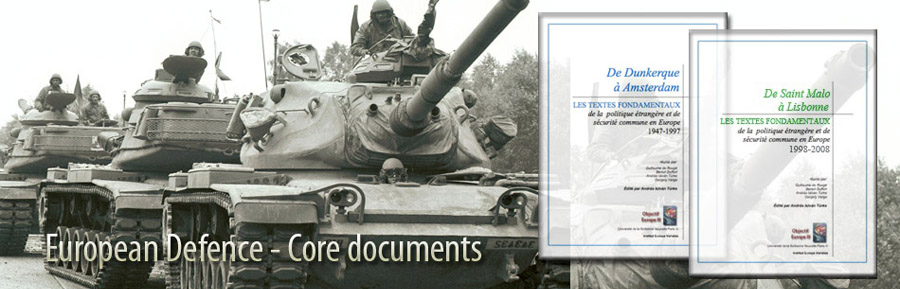

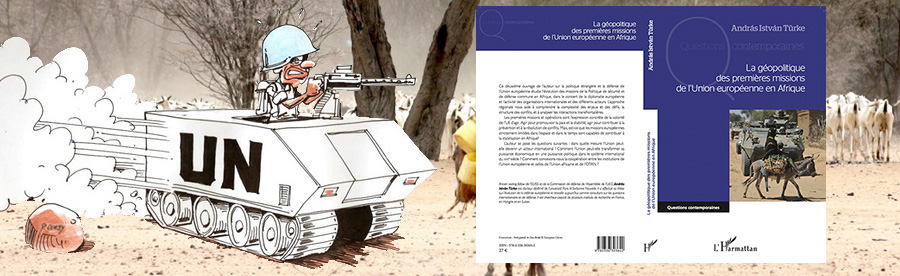
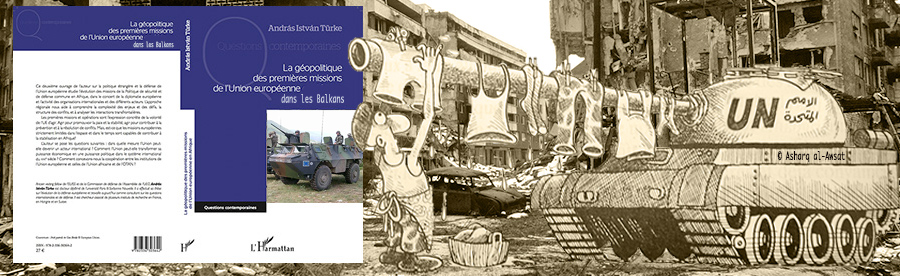
We are looking for sponsors for the English translation of these books, please contact turkeandras(at)gmail(dot)com