
You are here
European Union
112/2025 : 4 September 2025 - Opinion of the Advocate General in the case C-572/23 P
Puigdemont i Casamajó and Others v Parliament
Advocate General Szpunar proposes that three grounds of appeal brought by Mr Antoni Comín against the judgment of the General Court dismissing his action against the waiver of his immunity by the European Parliament be rejected
Advocate General Szpunar proposes that three grounds of appeal brought by Mr Antoni Comín against the judgment of the General Court dismissing his action against the waiver of his immunity by the European Parliament be rejected
Categories: Europäische Union, European Union
111/2025 : 4 September 2025 - Opinion of the Advocate General in the case C-43/24
Shipov
Advocate General Richard de la Tour: the Member State of origin of a transgender person is obliged to issue identity documents consistent with the persons lived gender identity
Advocate General Richard de la Tour: the Member State of origin of a transgender person is obliged to issue identity documents consistent with the persons lived gender identity
Categories: Europäische Union, European Union
‘Tell Us When the Next Storm Will Come’—Human Stories From Kashmir’s Deadliest August
The Kishtwar cloudburst on August 26 buried Chesoti village beneath a torrent of mud and boulders, killing at least 65 people, with several still missing. Credit: Umar Manzoor Shah/IPS
By Umar Manzoor Shah
SRINAGAR & KISTIWAR, India, Sep 4 2025 (IPS)
The relentless rain that battered the mountains and valleys of Jammu and Kashmir this August shattered lives and records.
In the span of just 31 days, more than 100 lives were lost, scores of families were displaced, and entire communities devastated, not just by the sheer force of nature but by the uncertainty and chaos that followed.
August 2025 will be remembered for the sheer scale and frequency of the natural disasters it experienced. According to the India Meteorological Department (IMD), Jammu and Kashmir saw its sixth wettest August in 125 years, with 319.3 mm of rainfall; this was 73 percent above the norm.
“We recorded over 30 extreme weather events this month, including flash floods, cloudbursts, landslides, gusty winds, and thunderstorms. At least 14 of these led to fatalities,” confirmed Dr. Mukhtar Ahmad, Director of the Meteorological Department, to Inter Press Service.
The destruction was widespread. Among the most devastating incidents was the Kishtwar cloudburst on August 26, which buried Chesoti village beneath a torrent of mud and boulders, killing at least 65 people, with several still missing. Just days later, a landslide along the Vaishno Devi route in the Jammu division claimed 35 more lives, many of them Hindu pilgrims.
Inside a makeshift shelter near Chesoti, 45-year-old Ghulam Nabi recounted the horror of that night.
“We heard a roar like a thousand waterfalls. There wasn’t even time to scream. The earth shook, and then everything was dark and wet.”
He lost his wife and two children—their bodies found days later by rescue teams sifting through the debris.
“I never thought the mountain would come for us. We always feared the river, but it was the hillside that swallowed my family,” Nabi told IPS News.
In Reasi, 13-year-old Manisha Devi stands at the edge of her ruined home, clutching a photograph of her elder brother, who had traveled to the Vaishno Devi shrine to work as a porter.
“He sent me money so I could buy books. Now, he is gone, and so is our house,” she said.
Experts say the frequency and intensity of these disasters cannot be dismissed as mere chance.
“There is clear evidence that climate change is making rainfall events more erratic and intense, especially in mountainous terrain,” explained Faizan Arif Keng, an independent weather forecaster. “Doda received 290 percent more rainfall than normal. Udhampur, Ramban, and Samba were also hit with more than double their usual rain.”
“The weather patterns are changing. We’re seeing more cloudbursts, intense rainfall in a very short time, triggering flash floods and landslides. These are not isolated events but symptoms of a larger problem,” said Ahmed.
In Ladakh, the story was even more dramatic. “Kargil recorded a 1,530 percent surplus, and Leh almost 900 percent above average. These numbers are unprecedented and should be a wake-up call,” said Keng.
If the rain brought tragedy for some, it spelled economic ruin for others. The closure of the Srinagar–Jammu National Highway, the only road link connecting the landlocked Kashmir valley with the outer world, left thousands of trucks loaded with apples, pears, and plums stranded for days. The result: rotting fruit and plummeting prices.
At north Kashmir’s Sopore Fruit market [Mandi], Asia’s second-largest trading hub, the atmosphere was grim.
“We are staring at losses of around Rs 200 crore (about USD 22 million). If the trucks can’t reach the markets on time, growers lose everything. Last year, we survived a similar crisis, but how many more can we take?” Fayaz Ahmed Malik, president of the Mandi, told IPS.
Grower Abdul Rashid, standing beside his damaged Gala apple boxes, shared his frustration. “I spent all year in the orchard. Now, the apples are ruined. The buyers pay half the rate, sometimes less. How do I feed my family or pay my debts?”
The Kashmir region has endured its deadliest month in living memory. In 31 days, more than 100 lives were lost, scores of families were displaced, and entire communities were left shattered due to rain and landslides. Credit: Umar Manzoor Shah/IPS
The mandi chairman, Bashir Ahmad Basheer, called for urgent government intervention: “Partial traffic movement is not enough. We need priority passage for all fruit trucks. The growers’ livelihoods depend on timely delivery. Every day’s delay is a disaster.”
With the crisis mounting, India’s Ministry of Home Affairs announced the formation of Inter-Ministerial Central Teams (IMCTs) to assess the damage not just in Jammu and Kashmir but across the northern states battered by extreme weather. Teams, comprising senior officials from various ministries, are expected to tour affected districts, evaluate relief efforts, and recommend further aid.
An official from the administration, who asked not to be named, told IPS that the process is now faster than before. The center releases funds quickly after the assessment, without waiting for lengthy paperwork from the states. But the ground reality is that search and rescue operations are still ongoing in several districts.
Official figures show that, in the current financial year alone, Rs 2,090 million (about USD 11.9 million) was released to Jammu and Kashmir under the State Disaster Response Fund, with more sanctioned under the National Disaster Relief Fund.
Despite these efforts, experts warn that more must be done. “We have to move beyond just relief and compensation. There needs to be investment in community-level disaster preparedness, early warning systems, and stricter regulation of construction in vulnerable zones. The people living in these mountains are tough, but they need help adapting to new realities,” says Mudasir Ahmad Mir, a researcher from the University of Kashmir who is working on his thesis on Kashmir’s natural disasters and their impact on livelihoods in the region.
In Chesoti, Ghulam Nabi’s voice carries a plea: “We are simple people. We don’t ask for much. But we want to live without fear every time it rains. Can someone tell us when the next storm will come?”
Not all is lost. Community solidarity has served as a source of hope. Volunteers from neighboring villages, religious organizations, and NGOs have distributed food, clothes, and medicines.
“It’s the people who save each other when the government is stretched thin,” said Manzoor Ahmad, a teacher from Ramban who has been helping coordinate aid efforts.
But the scars run deep. For children like Manisha, every thunderstorm brings back memories of loss. For farmers like Abdul Rashid, the fear of financial collapse shadows the joy of harvest.
“August will end,” said Fayaz Malik at Sopore mandi, “but its wounds will take much longer to heal. We need help, yes, but also understanding and empathy from those in power.”
IPS UN Bureau Report
Follow @IPSNewsUNBureau
!function(d,s,id){var js,fjs=d.getElementsByTagName(s)[0],p=/^http:/.test(d.location)?'http':'https';if(!d.getElementById(id)){js=d.createElement(s);js.id=id;js.src=p+'://platform.twitter.com/widgets.js';fjs.parentNode.insertBefore(js,fjs);}}(document, 'script', 'twitter-wjs'); Related Articles
Categories: Africa, European Union
Entwurf der Tagesordnung - Montag, 8. September 2025 - PE776.878v01-00 - Ausschuss für Sicherheit und Verteidigung
Quelle : © Europäische Union, 2025 - EP
Categories: Europäische Union, European Union
110/2025 : 4 September 2025 - Opinion of the Advocate General in the case C-147/24
Safi
Advocate General Tamara Ćapeta: EU citizenship encompasses the right not to move
Advocate General Tamara Ćapeta: EU citizenship encompasses the right not to move
Categories: Europäische Union, European Union
109/2025 : 4 September 2025 - Judgment of the Court of Justice in Case C-305/22
C.J.
Area of Freedom, Security and Justice
A judicial authority cannot refuse to execute a European arrest warrant and assume responsibility itself for the enforcement of the sentence without the consent of the State that issued that warrant
Area of Freedom, Security and Justice
A judicial authority cannot refuse to execute a European arrest warrant and assume responsibility itself for the enforcement of the sentence without the consent of the State that issued that warrant
Categories: Europäische Union, European Union
108/2025 : 4 September 2025 - Judgment of the Court of Justice in Case C-225/22
AW "T"
Principles of Community law
A national court must consider the judgment of a higher court that does not constitute an independent and impartial tribunal previously established by law to be null and void
Principles of Community law
A national court must consider the judgment of a higher court that does not constitute an independent and impartial tribunal previously established by law to be null and void
Categories: Europäische Union, European Union
107/2025 : 4 September 2025 - Judgment of the Court of Justice in Case C-413/23 P
EDPS v SRB
The Court of Justice clarifies the scope of the concept of personal data in the context of a transfer of pseudonymised data to third parties
The Court of Justice clarifies the scope of the concept of personal data in the context of a transfer of pseudonymised data to third parties
Categories: Europäische Union, European Union
AMENDMENTS 1 - 294 - Draft report EU-US political relations - PE776.839v01-00
AMENDMENTS 1 - 294 - Draft report EU-US political relations
Committee on Foreign Affairs
Michał Szczerba
Source : © European Union, 2025 - EP
Committee on Foreign Affairs
Michał Szczerba
Source : © European Union, 2025 - EP
Categories: Europäische Union, European Union
Climate Change is Deepening Child Poverty in Latin America and Caribbean
A family prepares a banner to protest the effects of climate change on children outside their house in the village of Patzité, Quiché, Guatemala. Credit: UNICEF/Patricia Willocq
By Oritro Karim
UNITED NATIONS, Sep 4 2025 (IPS)
2025 has been marked by a significant escalation of the climate crisis and its effects on vulnerable populations, as the World Meteorological Organization (WMO) warn that average global temperatures could exceed the 1.5°C threshold within the next five years. In Latin America and the Caribbean, rising temperatures and emissions continue to strain access to essential services and deepen poverty, particularly among children.
“Children and adolescents bear the greatest burden of climate change,” said Roberto Benes, the Regional Director for Latin America and the Caribbean for the United Nations Children’s Fund (UNICEF). “Not only because their developing bodies are more vulnerable to extreme phenomena such as cyclones or heatwaves, but also because these events disrupt their families’ livelihoods and their education. If children and young people don’t have the resources to meet their basic needs and develop their potential, and if adequate social protection systems are not in place, the region’s inequalities will only be perpetuated.”
On August 28, the Economic Commission for Latin America and the Caribbean (ECLAC) and UNICEF published a joint report: The Impact of Climate Change on Child and Youth Poverty in Latin America, which details the impact of climate change on youth poverty in the region as well as current government and humanitarian initiatives aimed at climate adaptation and loss mitigation.
According to the report, poverty rates in Latin America have risen sharply since the COVID-19 pandemic, pushing an additional 22 million people into poverty. It is estimated that roughly 94 million children and adolescents are living in poverty, making up 52 percent of the region’s poor population. Despite youth making up only 39 percent of the total population, roughly 40 percent of all children under the age of 15 live in poverty.
The frequency of extreme weather events in Latin America has skyrocketed in recent years, reaching nearly 30 per year in the early 2020s. In the Caribbean, some countries are already experiencing monthly temperature increases that exceed the 1.5°C threshold. Meanwhile, Latin American countries such as Argentina and Chile do not exceed 1°C and face volatile precipitation patterns that increase flooding, particularly for low-lying coastal communities.
According to UNICEF’s Child Climate Risk Index, as a result of climate change, roughly 55 million children in Latin America and the Caribbean face water shortages, 60 million experience cyclones, and 45 million are exposed to extreme heat. Furthermore, there has been an increase in the frequency of floods and landslides from heavy torrential rains, which have damaged numerous critical infrastructures that children depend on, such as schools, healthcare centers, and water, sanitation, and hygiene (WASH) facilities. Floods and rising temperatures have also given way to a rise in waterborne and vector-borne diseases, such as diarrhea, malaria, zika, and dengue.
Additionally, agriculture and food production has been hindered by persistent droughts, particularly in northeastern Brazil, areas in the Southern Cone, and the Central American dry corridor. Poor children and adolescents in these regions face extended periods of nutritional deprivation, which heightens the risk of malnutrition. It is estimated that anywhere between 570,000 and over 1 million children under 5 could suffer from stunted growth by 2030 due to climate change.
Estimated economic losses from natural disasters have increased nearly tenfold since the 1960s.“These increasing impacts divert resources towards damage repair and adaptation instead of investing in infrastructure, education, or innovation. This creates an opportunity cost by limiting potential growth and perpetuates development gaps, hindering the reduction of inequalities in Latin America,” the report said.
Current climate adaptation policies and funding fail to adequately prioritize the needs of children, with critical services such as health, nutrition, education, water, and sanitation being limited, jeopardizing cognitive and physical development. It is projected that by 2030, at least 5.9 million additional children, adolescents, and youth could be pushed into poverty—a figure that could triple to nearly 17.9 million if funding and humanitarian action remain insufficient.
Although children and adolescents are the most climate-vulnerable populations in Latin America and the Caribbean, climate financing directed toward youth accounts for just 3.4 percent of the region’s multilateral climate funding, totaling at roughly USD 743 million. However, these funds are primarily reserved for education projects and do not cover investment needs for other basic sectors such as healthcare, which is urgent in the face of rising child morbidity in the region. Additionally, child-sensitive climate funds only reach children in six countries in Latin America and the Caribbean: Brazil, Cuba, Guatemala, Haiti, Trinidad and Tobago, and Uruguay.
The report also highlights that climate change risks worsening existing wealth disparities and gender inequality in the region. Latin America and the Caribbean — described as the “most unequal region in the world” — are projected to see poorer families experience higher rates of poverty, hindered recovery, and greater challenges adapting to natural disasters. Women and girls are disproportionately affected, facing higher levels of unemployment, difficulty reentering the workforce, relative asset losses, and increased school dropout rates.
“Without investment in resilient services for children, and without sustained political will from countries and other sectors to reduce greenhouse gas emissions, the children and youth of 2030 will continue to be deprived of their rights,” said UNICEF climate advisor Reis López. “This will only perpetuate inequality in one of the most unequal regions of the world.”
IPS UN Bureau
Follow @IPSNewsUNBureau
!function(d,s,id){var js,fjs=d.getElementsByTagName(s)[0],p=/^http:/.test(d.location)?'http':'https';if(!d.getElementById(id)){js=d.createElement(s);js.id=id;js.src=p+'://platform.twitter.com/widgets.js';fjs.parentNode.insertBefore(js,fjs);}}(document, 'script', 'twitter-wjs');
Categories: Africa, European Union
Trump’s Tariff Tsunami Hits Brazil
Families in northeastern Afghanistan have been devastated by last Sunday's earthquake. Credit: IOM
By Monica Hirst
RIO DE JANEIRO, Brazil, Sep 4 2025 (IPS)
Since January 2025, Donald Trump’s second presidency has been focused on securing the global supremacy of the United States. It justifies a package of international coercive and intimidatory measures, accompanied by an aggressive, arrogant rhetoric. Right at the outset, the new administration announced a veritable tsunami of tariffs and immediately implemented them as a sign of its new independence.
This demonstrated Washington’s willingness to turn access to the US market into a challenge fraught with uncertainty and protracted bilateral negotiations. This massive blow to the global trading system affects all of the United States’ economic relations – including those with Brazil.
In addition to a general 10 per cent increase in all tariffs on US imports, a differential treatment policy for countries and regions was introduced based on varying and sometimes opaque criteria. The US President interprets the need to combat the American trade deficit as a national emergency that justifies the imposition of counter-tariffs.
By August, 94 countries were already affected by this contentious policy. Some, including Vietnam, South Korea, the United Kingdom and the European Union, managed to reach tariff agreements, but only at the cost of various concessions and often significant losses.
An ideology-driven policy
In the first few months of Trump’s term in office, Brazil kept a safe distance from Washington’s coercive measures. The Lula government managed to continue its active and self-confident foreign policy.
Brasília’s claim to influence, whose voice is heard on issues of global governance, was bolstered by its role as host of high-level multilateral meetings held this year, including the G20 summit, the meeting of BRICS heads of state and government, and, before long, the COP30 world climate conference.
Relations with China, Brazil’s most important trading partner, accounting for 28 per cent of Brazilian foreign trade, also gained new significance; both sides signed 36 agreements on a wide range of economic, technological and cultural issues.
While the Lula administration sought dialogue with the White House to address the consequences and potential damage of the new US tariff policy – as Brazil’s second-largest trading partner, the United States accounts for 12 per cent of the country’s exports – it was only a matter of time before the US administration’s aggressive stance on trade and tariffs would have an impact on Brazil’s economy.
On 18 July, the American government informed President Lula da Silva in a letter that tariffs of 50 per cent would henceforth be levied on imports from Brazil, marking the start of a heated exchange with the Planalto, the seat of the president’s government.
By executive order, Trump imposed an additional 40 per cent tariff on Brazilian imports, supplemented by a list of 700 exceptions.
The justification for increasing tariffs to offset the bilateral trade deficit proved unfounded, as the trade balance has consistently shown a surplus in favour of the United States for more than 15 years.
Additionally, the American president’s letter went beyond trade policy arguments and addressed political issues related to the court proceedings against former President Bolsonaro and the rulings of the Brazilian Supreme Federal Court (STF), which affect the interests of US digital platform companies.
Lula’s government perceived the letter as ‘unacceptable blackmail,’ leading to growing tensions that were exacerbated by repeated public statements by the US president and his staff. Value judgements were made about Brazilian democracy and its institutions, and the priorities of Brazilian foreign policy were called into question, including the organisation of the BRICS, which Brazil currently chairs.
This was followed by an investigation by the Office of the United States Trade Representative (USTR) based on Section 301, which allows unilateral retaliatory measures to protect national interests. By executive order, Trump finally imposed an additional 40 per cent tariff on Brazilian imports, supplemented by a list of 700 exceptions.
The Trump administration also began to question the competitive conditions for North American companies in Brazil, attacking the PIX instant payment system and criticising environmental policy, anti-corruption policy, the handling of digital platforms and the effects of preferential trade agreements with third countries.
Right-wing circles seized the opportunity to blame Lula for the escalation with Washington.
A further boost to this ideologically motivated campaign came from the close ties between individual actors and political organisations on the American and Brazilian far right, particularly between Trumpism and Bolsonarism.
The influence of the United States in Latin America, especially in Brazil, is not a new phenomenon, but in this case it took on a new form: Digital media channels were mobilised in coordination with the ideological crusades of the local right against the institutions of the Brazilian republic — especially the judicial system.
Creating fault lines between Brazil’s political forces, exacerbated by the real economic costs that the tariff shock entailed for Brazilian industries. Right-wing circles seized the opportunity to blame Lula for the escalation with Washington.
The timing of Trump’s tariff shock, coinciding with the court ruling against former President Jair Bolsonaro – for his responsibility in the attempted coup in 2023 – further fuelled the fire. The Magnitsky Act was instrumentalised to sanction STF judges and stylise Bolsonaro as a victim of human rights violations in the eyes of Trumpists.
At the same time, Washington rejected the dispute settlement mechanisms of the World Trade Organisation, justifying this with security policy arguments that increasingly dominate Trump’s narrative.
Trump’s criticism of Brazil’s international policy is also becoming increasingly vocal in this context. The political steadfastness and keen sense of economic opportunity that have characterised Lula’s foreign policy to date will be powerless against the thorny and delicate prospects in the short to medium term.
The country’s right to determine its position in the world autonomously is being called into question. The Planalto’s response to the repeated political coercion of Trump’s tariffs is based on the inseparability of sovereignty, autonomy and the defence of democracy.
Alternative partnerships
The Brazilian government does not see this as a lonely crusade, but is increasingly seeking partners and allies in all directions. Opening the doors to Japan, Indonesia and Vietnam is intended to add further counterweights to the connection with China and better link the Brazilian economy with the dynamic Asian value chains.
At the same time, Brasília is focusing on dialogue with India – a key partner in the BRICS – on issues of global governance, investment, agribusiness and digital technologies. Within the region itself, the aim is to overcome the inertia that has long prevented greater progress in relations between Brazil and Mexico.
The Trump nightmare is a strong incentive to overcome the mutual indifference that has stood in the way of sustainable cooperation between Latin America’s two largest economies. As far as European countries are concerned, Brazil is keen to expand the agenda of common interests at the bilateral and multilateral levels.
The European Union is currently one of Brazil’s most important trading partners, with a trade volume of over nine billion dollars. Of particular note is the Brazilian government’s commitment to concluding the long-delayed EU-Mercosur agreement, driven by the need to expand common interests and opportunities in areas such as energy transition, technology and strengthening multilateralism.
Closer cooperation with the world’s democracies is taking on new significance – as a safeguard for the rule of law in Brazil itself.
So far, the European Union has treated the BRICS and the Global South with palpable scepticism and has avoided acknowledging their contributions to negotiations on international policy issues. Instead of taking note of the neutral and pragmatic positions and initiatives of many states, the EU is dominated by the interpretation – shared by Trump – that these are anti-Western groups.
It would be a mistake not to develop a dialogue with the emerging powers of the South to address issues such as the genocide in Gaza, an understanding with Iran or a just peace between Russia and Ukraine.
Even if this does not reduce the costly strategic dependence on the US in the short term, these steps would enable European governments to engage in inclusive and constructive projects on the changing world stage.
Undoubtedly, the Lula government would be the first to support moving the political game in this direction. Closer cooperation with the world’s democracies thus takes on new significance – as a safeguard for the rule of law in Brazil itself.
Monica Hirst is a research fellow at the National Institute for Science and Technology Studies in Brazil.
Source: International Politics and Society (IPS), Brussels
IPS UN Bureau
Follow @IPSNewsUNBureau
!function(d,s,id){var js,fjs=d.getElementsByTagName(s)[0],p=/^http:/.test(d.location)?'http':'https';if(!d.getElementById(id)){js=d.createElement(s);js.id=id;js.src=p+'://platform.twitter.com/widgets.js';fjs.parentNode.insertBefore(js,fjs);}}(document, 'script', 'twitter-wjs');
Categories: Africa, European Union
French chaos bleeds into Brussels
In today’s edition: the Coalition of the Willing meets in Paris to discuss security guarantees, French regulators fine Google and Shein record sums over cookie breaches, and experts warn US isolationism is draining Europe of expertise and funding
Categories: Europäische Union, European Union
Destabilize, dissolve, and dominate: Le Pen’s new gamble
Le Pen's new message: dissolution or chaos
Categories: Europäische Union, European Union
Europe’s tariff deal is the height of strategic incoherence
Europe is congratulating itself on avoiding a new tariff war. But avoiding conflict is not a strategy
Categories: Europäische Union, European Union
Lokossa se mobilise pour le candidat du peuple
Ce mercredi 3 septembre 2025, Lokossa, la ville de l'espérance, s'est transformée en un haut lieu de célébration politique.
La population de Lokossa s'est rassemblée massivement, ce mercredi 3 septembre 2025, pour exprimer sa reconnaissance envers le Chef de l'État, suite à la désignation de Romuald Wadagni comme candidat de la mouvance présidentielle pour 2026.
Dès les premières heures du matin, le stade de la ville de l'espérance a commencé à se remplir. Chants, danses, drapeaux et ovations rythmaient l'ambiance. Des familles entières ont fait le déplacement, habillées aux couleurs nationales, prêtes à vivre un moment fort.

Pour de nombreux habitants, cette journée représente plus qu'un événement politique. Elle incarne une reconnaissance partagée pour les actions du Président Talon et une adhésion au profil de Romuald Wadagni, perçu comme une figure de compétence, de jeunesse et de continuité.
« Ce choix inspire confiance. C'est un signe fort que l'avenir est entre de bonnes mains », témoigne un participant rencontré sur place.
M. M.
Categories: Afrique, European Union
1000 milliards FCFA pour la gouvernance sanitaire et le bien-être des populations
Le gouvernement a adopté, ce mercredi 3 septembre 2025, le Plan national de développement sanitaire pour la période 2026-2030.
Un nouveau Plan national de développement sanitaire adopté au Bénin. Il s'agit selon le gouvernement, d'un document de référence pour l'ensemble des acteurs du secteur de la Santé, en lien avec l'atteinte des objectifs de la Politique nationale de Santé sur la période 2018-2030. Sa finalité est de favoriser l'amélioration de l'état de santé et le bien-être des populations et s'inscrit dans les perspectives des Objectifs de Développement durable (ODD). Le contenu dudit plan tient compte des faiblesses de la précédente édition conformément à l'évaluation qui en a été faite et intègre les nouveaux défis du secteur.
D'un coût estimatif de 996.391.637.000 FCFA, sa mise en œuvre permettra, entre autres, de renforcer la gouvernance du secteur de la Santé, d'améliorer les prestations de service et la qualité des soins, dans un environnement où la disponibilité des produits de santé ainsi que des infrastructures et des équipements traduisent les avancées notables du secteur.
Categories: Afrique, European Union
Brussels’ US energy, investment pledges ‘totally unrealistic’, says EU Parliament trade chief
Both commitments are central to July’s EU-US framework agreement, which hits most EU exports with a 15% levy
Categories: Europäische Union, European Union
Parakou en première ligne pour porter Wadagni
La commune de Parakou, à travers sa première autorité, a annoncé son soutien à la candidature de Romuald Wadagni pour la présidentielle de 2026.
Membre du Bloc Républicain, le maire de Parakou, Inoussa Zimé Chabi, a annoncé au candidat désigné par la mouvance à la présidentielle de 2026.
L'édile voit dans le choix de Romuald Wadagni une continuité.
Selon lui, l'alliance entre le Bloc Républicain et l'Union Progressiste le Renouveau s'inscrit dans la logique des réformes engagées par Patrice Talon. « Là où certains promettaient, il a agi ».
Le maire a salué la rigueur et la transparence de Wadagni. Il a rappelé son rôle dans la crédibilité internationale du Bénin. Inoussa Zimé Chabi a mis en avant les réalisations concrètes du président Talon à Parakou et dans tout le Bénin. Routes, énergie, climat des affaires : les acquis sont visibles, a-t-il insisté.
Un appel à l'unité autour de Parakou
« Là où certains promettaient, il a agi », a déclaré le maire.
Dans sa déclaration, le maire a appelé les forces vives de Parakou à se rassembler. Il invite la région septentrionale à s'unir derrière Wadagni. Pour lui, il s'agit d'un choix d'évidence et non d'un pari.
Categories: Afrique, European Union
Bopa affiche son soutien à Romuald Wadagni
La désignation du ministre Romuald Wadagni comme candidat à la présidentielle de 2026 continue de susciter des soutiens.
À Bopa, dans le département du Mono, les jeunes et plusieurs acteurs ont annoncé ce 3 septembre 2025, leur soutien dans les circonscriptions, communes et villages au candidat Romuald Wadagni.
Le professeur Kakpo Mahougnon salue l'élan d'unité qui se forme autour du ministre. Pour lui, cette candidature fédère les énergies et ouvre « la grande porte de l'unité » dans la commune.
Ensemble nous pouvons, affirme le professeur Kakpo, convaincu que la mobilisation autour de Romuald Wadagni dépasse le cadre local pour toucher toute la 18e circonscription, le Mono-Couffo et, plus largement le territoire national.
Selon lui, l'échéance de 2026 doit être celle de la victoire et de l'unité nationale.
M. M.
Categories: Afrique, European Union
La Cour constitutionnelle recrute des délégués électoraux
La Cour constitutionnelle annonce le recrutement de délégués pour l'observation des différentes phases des élections législatives du 11 janvier 2026. Les dossiers de candidatures doivent être envoyés sur la plateforme erecrutement.courconstitutionnelle.bj du 15 septembre au 14 octobre 2025. Lire les pièces à fournir.


Categories: Afrique, European Union
Pages
the old site is here


© 2012-2015 Europa Varietas Foundation © 2015-2020 Europa Varietas Association
www.europavarietas.org | info(@)europavarietas(dot)org | Switzerland
This is a GDPR ready site

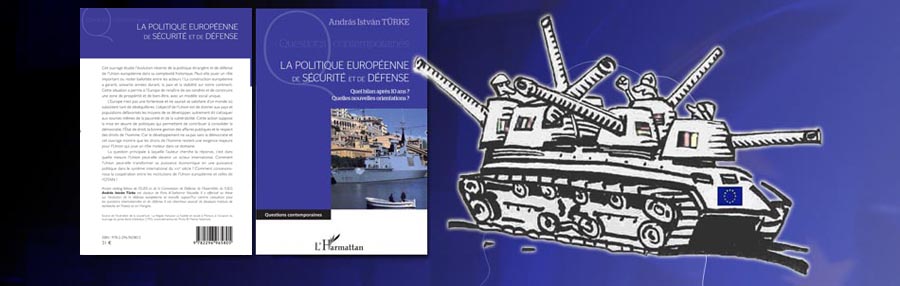
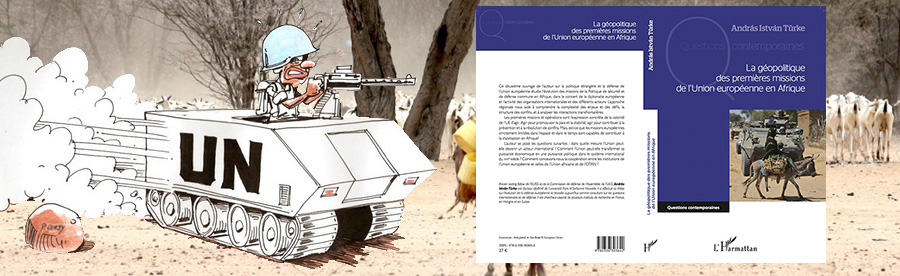
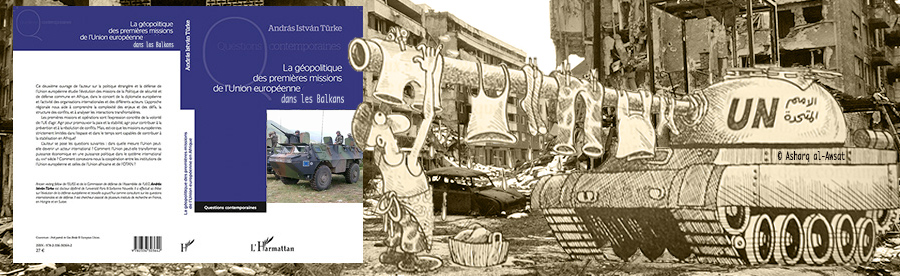
We are looking for sponsors for the English translation of these books, please contact turkeandras(at)gmail(dot)com