
You are here
European Union
Agenda - Holiday recess
Parliament’s offices will be closed from Tuesday 23 December until Friday 2 January, inclusive.
Source : © European Union, 2026 - EP
Source : © European Union, 2026 - EP
How migration is papering over Europe’s security divide
European solidarity often crumbles in crises, and Brussels is struggling to get the continent on board with a common security policy
Patrice Talon passe le réveillon aux côtés des citoyens
Le Président de la République, Patrice Talon, a créé la surprise en se rendant sur l'Esplanade de l'Amazone, ce jeudi 1er janvier 2026, où se tient l'événement « Susu Night 2025 ».
Patrice Talon aux côtés de ses concitoyens aux premières heures du nouvel an. Accueilli dans une ambiance festive et chaleureuse, le Chef de l'État a partagé ces instants symboliques avec de nombreux citoyens, visiblement émus et heureux de vivre ce moment à ses côtés. Cette présence inattendue renforce le sentiment de proximité entre le Président et la population, dans un esprit de communion et de convivialité.
Le ministre d'État, chargé de l'Économie et des Finances, Romuald Wadagni, a également fait le déplacement. Entre musique, joie et ferveur populaire, l'Esplanade de l'Amazone s'est ainsi transformée en un lieu de partage pour accueillir 2026 sous le signe de l'unité et de l'espérance.
Categories: Afrique, European Union
Les vœux de Patrie Talon à la Nation Béninoise
A l'orée de la nouvelle année, le chef de l'Etat Patrice Talon a sacrifié à la tradition formulant à l'endroit de toute la Nation Béninoise, ses vœux de nouvel an. S'adressant à la représentation nationale lors de son message sur l'état de la Nation, il a souhaité à toutes les béninoises et à tous les béninois, ses vœux de bonne santé, de prospérité, de patience, de patriotisme, d'amour de soi et de l'autre ainsi que la joie de vivre.
L'année 2026 selon Patrice Talon, s'annonce avec pleine d'allégresse et de réussites pour le Bénin. Il a souhaité qu'elle apporte à chacune et à chacun, la bonne santé, la prospérité, la patience, le patriotisme, l'amour de soi et de l'autre ainsi que la joie de vivre. Face à la représentation nationale lors de son message sur l'état de la Nation, il a exprimé sa « reconnaissance infinie » pour l'honneur et la confiance que les béninois de l'intérieur et de l'extérieur lui ont faits en lui confiant, durant deux mandats successifs, le destin, la direction du pays.
Lire le message de vœux du président de la République
Je voudrais exprimer à toutes les Béninoises et à tous les Béninois de l'intérieur et de l'extérieur, de tous âges et de toutes conditions, ma reconnaissance infinie pour l'honneur et la confiance qu'ils m'ont faits en me confiant, durant deux mandats successifs, le destin, la direction de notre beau et grand pays.
Je veux leur dire que j'ai pris et gardé, tout le long des deux mandats, la mesure de leurs attentes, que j'ai donné le meilleur de moi-même, jour et nuit, avec bonne foi et abnégation, pour être à la hauteur de leur confiance.
Je veux leur dire aussi que j'ai le regret de ne pas avoir tout réussi.
Mais je veux davantage leur dire, alors que la fin de ma mission est toute proche, que j'ai la certitude qu'ensemble nous avons accompli de grandes choses, dont certaines nous paraissaient même impossibles.
Je veux enfin leur dire, que surtout, notre état d'esprit a considérablement changé.
Que désormais, plus rien ne nous est impossible.
Que le Bénin a véritablement et définitivement trouvé son chemin pour se développer enfin et offrir, peu à peu, à chacun, le bien-être légitimement attendu, et qui est de plus en plus espéré, mais qui est désormais à notre portée.
Le développement, le bien-être attendu depuis tant de temps par tous, ce bien-être, il est désormais à notre portée et nous cheminons chaque jour ensemble pour le conquérir.
Bientôt, de nouveaux conseils communaux prendront le relais dans nos communes, une nouvelle législature succédera à la présente ici à Porto-Novo, un nouveau Président de la République prendra les rênes du Bénin.
Tous ces changements qui s'annoncent matérialisent la dynamique de la vie, et sont le symbole du renouvellement inéluctable, gage d'espérance et de progrès.
Les élections générales qui, à cet effet se préparent, seront paisibles et sereines parce que chacun, quelles que soient son appréciation et son appartenance, aura compris que le seul véritable enjeu c'est le Bénin.
Mesdames et Messieurs les députés, représentants de la Nation tout entière,
Par vous, à travers vous et vous prenant encore à témoin, je voudrais dire à tous, aux Béninois et aux Béninoises, de l'intérieur et de l'extérieur, que nous n'avons aucune raison de craindre l'avenir.
Je veux leur dire et le répéter, que nous avons trouvé notre chemin.
Je veux leur demander de faire confiance au Bénin, de faire confiance aux générations successives désormais actives pour notre bien commun, pour notre développement.
Je veux leur dire : n'ayons donc aucune crainte, l'âme du Bénin veillera et le meilleur est à venir.
Tels sont ma prière et mon vœu pour l'année 2026 qui s'annonce pleine d'allégresse et de réussites pour le Bénin.
Puisse-t-elle apporter à chacune et à chacun, la bonne santé, la prospérité, la patience, le patriotisme, l'amour de soi et de l'autre ainsi que la joie de vivre.
Categories: Afrique, European Union
Paris mayoral race heats up as right eyes end to socialist rule
The outcome in Paris could offer early clues about the alliances that will emerge ahead of the 2027 presidential race
Categories: Africa, European Union
Comment les pertes militaires russes augmentent-elles dans la guerre en Ukraine ?
La BBC a estimé les pertes russes en se basant sur des chiffres officiels, des journaux et les réseaux sociaux.
Categories: Afrique, European Union
What is the 28th regime, and is the Parliament supporting it?
Written by Anna Flynn.
Start-ups are important in boosting competitiveness, which is a key priority during the EU’s 2024-2029 legislative term.
So, the EU is taking steps to foster its strategic innovation agenda, both financially and through policy measures. Evidence shows that the EU is falling behind competitors here (especially the US and China) – notably in the sectors of AI, biotech, clean tech, and defence tech.
The need for reform was highlighted by two 2024 papers – the Letta and Draghi reports, which set out recommendations to strengthen the EU’s single market and competitiveness, respectively.
Building on these reports, in January 2025, the Commission adopted the competitiveness compass. The compass is an economic framework that outlines three ‘imperatives’ – closing the innovation gap, decarbonising the economy, and reducing foreign dependencies.
Following this, the Commission launched the start-up and scale-up strategy (SSS) in May 2025. The aim is to make Europe an attractive place to set up and grow innovative companies. The SSS is linked to other initiatives such as the savings and investments union, the single market strategy, and the union of skills. In addition, the SSS will also encompass a 28th regime, with a focus on supporting startups.
The 28th regime is a long-standing concept. It would be a separate initiative that creates a single set of rules for businesses in the EU. The objective is to simplify laws and mitigate the fact that there are varying national regulations that create barriers for companies. The Letta report states that this ‘would be a transformative step towards a more unified single market’. The 28th regime would replace national law where the EU has exclusive competence, and it would supplement national legislation in other cases. It would also address relevant laws such as insolvency, labour, and tax rules. The Commission has indicated that the legislative proposal for this is scheduled for the first quarter of 2026.
ERPS has identified four challenges relevant to the 28th regime; to help the European Parliament’s Committee on Legal Affairs (JURI) prepare a legislative-initiative report supporting the proposal’s development. The four issues are that:
- the European financing ecosystem has a low appetite for risk and cross-border investment;
- Member States and innovative European companies struggle to attract skilled, entrepreneurial workers;
- the high cost of failure and restructuring for innovative European companies;
- high geographical variation in legal frameworks and innovation across the EU.
EPRS studies have corroborated that a transnational, pro-innovation perspective would bring economic benefit to the EU: a coordinated approach at EU level, instead of Member States acting alone, could add 0.9 % (or, with a more ambitious integrated approach, 2.6 %) to GDP by 2035.
Amid Parliament’s preparatory work, during a plenary debate on 7 October 2025, some MEPs noted that the 28th regime could consolidate the single market, while others expressed reservations about the potential impact on national laws.
JURI’s legislative-initiative report is expected to be voted in plenary during the January 2026 session.
Links- The 28th regime
- Savings and investments union: Overview and state of play
- Scaling up European innovation – What is the potential European added value of a 28th regime?
- Single market strategy
- Union of skills
- A competitive compass for the EU
- Cost of non-Europe in strategic innovation
- Deepening the single market in the light of the Letta and Draghi reports
Categories: European Union, Union européenne
Wawrinka prägte Thiem-Karriere: Tennis-Legenden adeln den Altmeister
Auf seiner Abschiedstournee dürften noch zahlreiche Würdigungen auf Stan Wawrinka warten. Vier Weggefährten ehren den Romand jetzt schon.
Categories: European Union, Swiss News
Steuern sparen dank Zuger WG-Zimmer: «Sozialhilfebezüger werden mit Detektiven beschattet. Bei den Reichsten schauen wir weg»
Wer in Zug wohnt, spart Steuern: Das versuchen auch findige Vermieter für sich zu nutzen. Sie bieten WG-Zimmer als Briefkastenadressen an für Leute, die nie an ihrer Adresse auftauchen sollen. Die Behörden kennen das Spiel inzwischen.
Categories: European Union, Swiss News
Bald zurück im TV: SRF-Moderatorin Tanya König spricht über Mutter-Glück
Die ehemalige «Gesichter und Geschichten»-Moderatorin erlebt momentan kürzere Nächte. Aber ist trotzdem voller Tatendrang – die Vorfreude auf ihre TV-Rückkehr ist gross.
Categories: European Union, Swiss News
Inferno in Crans-Montana VS – Chronologie einer Katastrophe: «Frau auf Schulter einer anderen schwenkte Wunderkerzen»
Das Inferno von Crans-Montana erschüttert die Schweiz und die Welt. Über 40 Tote und 115 Verletzte nach einem Brand in der Bar «Le Constellation» in Crans-Montana. Blick rekonstruiert die Todesnacht mit allen offiziellen Angaben und Augenzeugenberichten.
Categories: European Union, Swiss News
Viele bis zur Unkenntlichkeit verkohlt: Die schwierige Identifizierung der Leichen
Nach dem tödlichen Brandinferno an einer Neujahrsparty im Wallis läuft die schwierige Identifizierung der rund 40 Todesopfer. Forensiker rechnen wegen starker Verkohlungen mit einem langwierigen Einsatz über Tage bis Wochen.
Categories: European Union, Swiss News
Kauf ohne Risiko möglich: Das ändert sich 2026 im Automarkt
Carvolution ergänzt das Auto-Abo mit einer neuen Möglichkeit: Nach Ablauf des Abos kann das Fahrzeug als Occasion gekauft werden. Die maximale Entscheidungsfreiheit bietet mehrere Vorteile für verschiedene Bedürfnisse.
Categories: European Union, Swiss News
«Wir rufen alle Spitäler an»: Mutter sucht verzweifelt nach ihrem Giovanni (16)
Mindestens 40 Menschen sind bei der Brandkatastrophe in Crans-Montana gestorben, rund 115 wurden verletzt. Über die Opfer sind bis jetzt wenige Details bekannt. Unter den vermissten Italienern ist aber mindestens ein 16-jähriger Junge.
Categories: European Union, Swiss News
Grossaufgebot mit Helikopter: Schwelbrand im Luxusresort in Andermatt – 20 Menschen evakuiert
In Andermatt UR läuft aktuell ein Grosseinsatz mit Helikoptern – es brennt im neuen Luxusresort. 20 Menschen mussten laut Leserreporter evakuiert werden – verletzt wurde niemand.
Categories: European Union, Swiss News
Ship seized in Finland carried EU-sanctioned Russian steel
The EU's top diplomat Kaja Kallas said Thursday that Europe 'remains vigilant' as its critical infrastructure was 'at high risk of sabotage'
Algérie Poste annonce une mesure exceptionnelle au profit de ses clients
Dans le cadre du renforcement de ses services, l’établissement public Algérie Poste a annoncé, ce jeudi, l’ouverture exceptionnelle de plusieurs de ses structures à travers […]
L’article Algérie Poste annonce une mesure exceptionnelle au profit de ses clients est apparu en premier sur .
Categories: Afrique, European Union
Bulgaria adopts the euro, nearly 20 years after joining the EU
According to the latest Eurobarometer survey, 49% of Bulgarians were against the switch
Categories: European Union, Swiss News
Europe ‘not at the mercy of great powers’, EU leaders insist
As many Europeans start the year with sore heads, the New Year's tidings of political optimism beg the question: How much worse can it get?
Categories: European Union, Swiss News
US seeks unpaid local interns at Greenland consulate as annexation threats loom
The interns would receive financial support from Danish taxpayers, at the same time as Trump threatens to annex the semi-autonomous Danish territory
Categories: European Union, Swiss News
Pages
the old site is here


© 2012-2015 Europa Varietas Foundation © 2015-2020 Europa Varietas Association
www.europavarietas.org | info(@)europavarietas(dot)org | Switzerland
This is a GDPR ready site
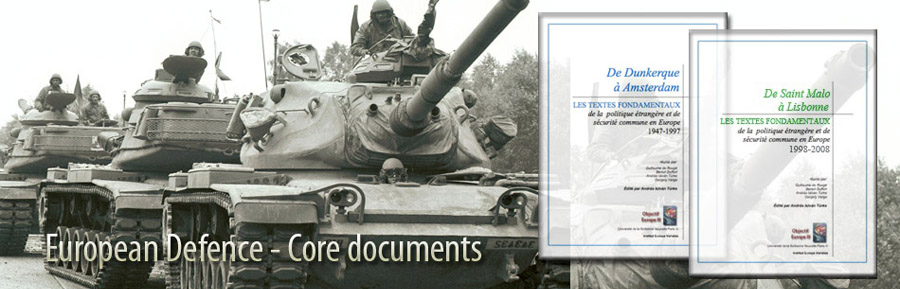
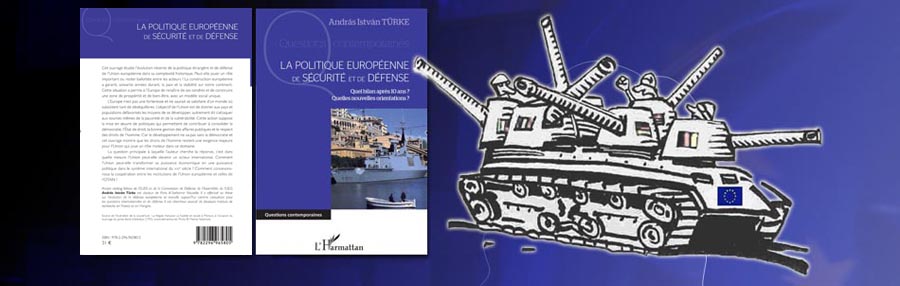
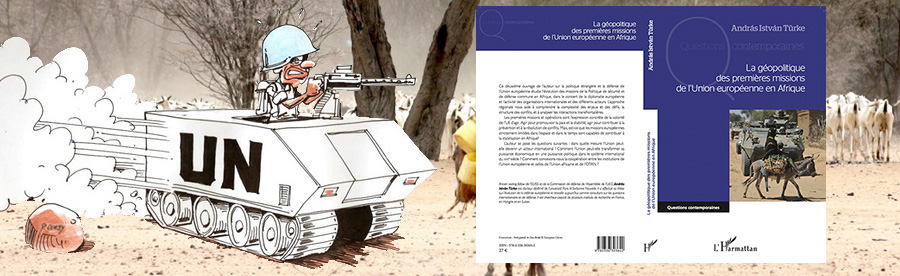
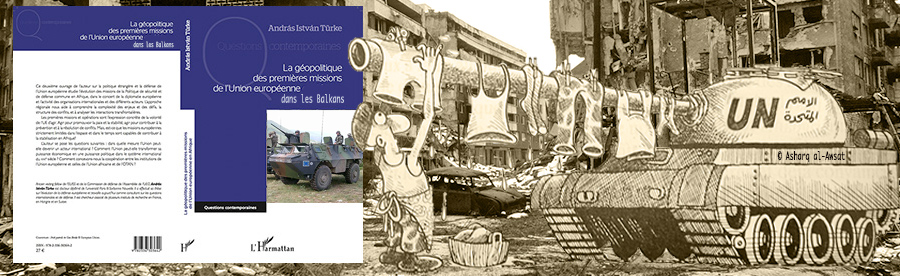
We are looking for sponsors for the English translation of these books, please contact turkeandras(at)gmail(dot)com