
You are here
European Union
Les Israéliens exigent des comptes sur les défaillances du 7 octobre, trois ans après les attentats.
Le Premier ministre Benjamin Netanyahu a refusé d'assumer une quelconque responsabilité personnelle dans ce qui s'est passé ou d'ordonner une enquête d'État.
Categories: Afrique, European Union
Nearly 50,000 Women and Girls Killed or Severely Injured in Gaza in Three Years of War – One in 21 Gazan Women and Girls
Children in Gaza wait in the hope of receiving food. Credit: UN News
By UN Women
UNITED NATIONS, Oct 9 2026 (IPS)
Since October 2023, 50,000 women and girls in Gaza have been killed or seriously injured.
- • UN Women estimates that nearly 50,000 women and girls in Gaza have been killed or severely injured since the onset of war in October 2023 [1], amounting to one in 21 Gazan women and girls losing their life or living with lifelong disabilities [2].
• More than 38,000 women and girls have been killed and 11,700 severely injured, the result of Israeli airstrikes and land military operations.
• While most of the casualties recorded took place during the first two years of the war, women and girls continue to be targeted despite a ceasefire agreement entering into effect in October 2025. Two hundred seventy-seven women and girls are among those who have been killed in Gaza over the past year.
Nearly every woman and girl in Gaza is displaced.
- • More than 150 evacuation and movement orders have been issued across Gaza by the Israeli Defense Forces since October 2023, forcing nearly one million women and girls from their homes – nearly every woman and girl in Gaza.
• The majority of women and girls in Gaza live in tents or in the ruins, with no privacy. In conditions that are incompatible with survival and dignity, women and girls are caring for children, the sick, the injured, and for the elderly, cooking and cleaning without the basic means to carry out these responsibilities.
• Women are being forced to deliver babies in unsafe and unsanitary conditions, putting their lives at risk. At the same time, the number of miscarriages reached almost 4,000 in the first six months of 2026, triple the number recorded during the last six months of 2025.
The number of widows and those assuming the role of head of household in Gaza has doubled since October 2023.
- • Nearly one in four households in Gaza – an estimated 86,290 households – is now reportedly headed by a woman, compared to the pre-October 2023 rate of one in nine.
• For women-headed households, the impact extends beyond the grief of losing a husband, father or other loved one. Many are now carrying sole responsibility for providing for, protecting, and holding their families together in increasingly devastating conditions.
Despite the ceasefire, women and girls in Gaza continue to face severely limited access to food, shelter, safe water, and hygiene supplies, alongside ongoing hostilities and insecurity.
- • Intense and widespread bombing has leveled homes, businesses, hospitals, schools, and shops, making it extremely hard for women and girls to access essential services and basic goods.
• Restrictions on humanitarian access and bombardment continue to cause immense suffering. Between July and December 2026, an estimated 702,000 women and girls are projected to face high levels of acute food insecurity (IPC Phase 3+, crisis or worse), with devastating effects on their health, including the risk of malnutrition [3].
The steepest recorded decline in aid is threatening a lifeline to women and girls in Gaza: women’s organizations.
- • UN Women surveyed women’s organizations working on the frontlines of the response in Gaza and the occupied West Bank. Thirteen of the 14 organizations surveyed reported that the level of need among women and girls has increased since 2025. All organizations surveyed had seen an increase in gender-based violence, poverty, and mental health distress since 2025. Thirteen of the 14 organizations had seen an increase in child marriage.
• At the same time, 13 of the 14 organizations surveyed by UN Women reported that they do not have the capacity to meet the growing needs of women and girls. To cope with the lack of funding, nearly two thirds of the organizations told UN Women they had been forced to put women and girls on waiting lists or turn them away.
UN Women is on the ground in Gaza. We work with women-led and women’s rights organizations to provide lifesaving and critical support to women and girls, including protection services and gender-based violence case management, legal aid, mental health and psychosocial support, and emergency cash and livelihoods assistance.
From fitting women and girls with prosthetics and offering counselling to survivors, to ensuring that the humanitarian response is shaped by the experiences and perspectives of women and girls, our support is helping them to stay afloat. But women and girls in Gaza need peace.
UN Women calls for the ceasefire in Gaza to be fully implemented. We call for international law to be upheld, accountability for violations, and the protection of women and girls and all civilians. Humanitarian assistance must reach those in need – at scale and without obstruction. Women and girls must be placed at the centre of response and recovery efforts.
[1] The proportion was calculated by combining women and girls killed or injured (38,000 and 11,700, respectively).
[2] The proportion was calculated by dividing the combined figure of 49,700 women and girls killed or injured (38,000 and 11,700, respectively) by PCBS’s estimated female population of Gaza at the end of 2025 (approximately 1.06 million). This gives 4.69 per cent, equivalent to approximately one in 21 women and girls. The calculation assumes no overlap between the reported deaths and injuries. Population source: PCBS, 8 March 2026.
[3] UN Women estimate based on the IPC Gaza Strip Special Brief, published 13 August 2026. The estimated 702,000 women and girls facing acute food insecurity at crisis-level or worse (IPC Phase 3+) during July–December 2026 is calculated by applying PCBS’s 2025 female population share (49.7 per cent) to the IPC projected caseload of 1,412,421 people. The calculation assumes proportional representation of women and girls across IPC phases and is rounded to the nearest thousand.
IPS UN Bureau
Categories: Africa, European Union
Cars torched and shops looted as anti-migrant violence erupts in South Africa
South Africa has experienced recurrent outbreaks of violence, often targeting migrants from neighbouring countries.
Categories: Africa, European Union
Protection That Holds: Keeping Nature Safe From Extraction
By Madhu Rao and Tyson Miller
SINGAPORE, Oct 9 2026 (IPS)
When governments gather in Yerevan this month for the 17th UN Convention on Biological Diversity, they will weigh a promise nearly 200 countries adopted six years ago: to effectively conserve at least 30 percent of land, inland waters, and sea by 2030. Achieving the ambitious 30×30 target is essential to sustaining the systems humanity relies on for survival—including crop pollination, purification of water and air, and climate regulation—as well as the biodiversity that underpins food production, fisheries, and tourism.
Unfortunately, the world is not on track to achieve this target. Moreover, the emphasis on the quantitative dimension of the 30×30 target has often overshadowed its more critical objective: ensuring that areas of high biodiversity value are protected, conserved, and connected through effective and equitable management.
The struggle to deliver on international commitments reflects a fundamental challenge. The Global Biodiversity Framework requires countries to halt and reverse biodiversity loss while pursuing economic growth, and businesses are increasingly expected to mitigate nature-related impacts. The ongoing expansion in infrastructure, mining, and the energy transition places additional pressure on biodiversity-rich ecosystems, creating difficult trade-offs that must be carefully managed.
The fundamental question remains: how do we reconcile economic development with meeting biodiversity commitments?
A new analysis of tropical countries contains insights vital to answering that question. Most importantly, it found that oil and gas concessions overlap nearly 61 million hectares—roughly two and a half times the size of the United Kingdom—of protected and conserved areas. Mining concessions overlap another 43 million hectares. Such conditions can turn protected and conserved areas into ‘paper parks’: places protected in law but vulnerable to extractive industries in practice.
What the Maps Reveal
The analysis examined a wide range of some of the world’s most vital ecosystems and the industrial pressures closing in on them—oil and gas, mining, industrial logging, and large-scale agriculture—across the Amazon, Central America, the Congo Basin, and Southeast Asia, with further examples from the Global North. The report focused on the tropical forests and marine ecosystems that not only harbor irreplaceable biodiversity but also remain at the center of conflicts between extraction and conservation.
Senegal, for example, is close on paper to protecting 30 percent of its territory, yet oil and gas blocks cover 99 percent of both the country’s protected areas and identified Key Biodiversity Areas. The remaining undisturbed forest in Cambodia largely lies inside protected areas, yet a fifth of those areas face mining concessions and most contain land of interest to oil and gas companies. In the Democratic Republic of Congo, nearly three-quarters of the ambitious new Kivu-Kinshasa Green Corridor overlaps with oil and gas blocks included in a recent licensing round.
This contradiction between conservation in policy and extraction in practice can also be seen in high income countries. The United States has opened Bears Ears National Monument to mining and is threatening new oil drilling in the Arctic National Wildlife Refuge, and the UK also allows fossil-fuel companies to drill in protected areas.
There is further tension. Some of the mining pushing into protected areas is for minerals fueling the energy transition. Securing a stable climate and securing nature are both essential, and one should not be pursued by quietly sacrificing the other.
We need to consider not only how much additional territory must be brought under protection by 2030, but whether areas already counted as protected and conserved are genuinely conserved, effectively managed, and delivering meaningful biodiversity outcomes.
The Path Forward
High-integrity implementation of 30×30 means prioritizing places that matter most for biodiversity and ensuring they remain ecologically intact, connected, effectively conserved, and equitably governed. It means upholding Indigenous Peoples’ and local community rights and protecting these places from incompatible extractive and large-scale industrial activities.
There are four critical components. The first is the mitigation hierarchy, which calls for avoiding harm whenever possible before considering other measures. Areas of highest biodiversity value, including strictly protected areas, should be no-go zones for extractive industry.
The second is policy coherence. A protected area sits with a ministry of environment while a mining concession sits with a ministry of mines or energy, and unless biodiversity is built into the decisions of every economic sector, the two will keep colliding.
The third is biodiversity-inclusive spatial planning, which enables governments to clearly recognize where nature is protected and where development can proceed. Protect here, develop there.
Finally, effective and equitable governance, including rights-based approaches, is essential. Indigenous peoples and local communities steward some of the world’s most intact and biodiverse lands, including many areas of global importance for biodiversity. Their rights, knowledge and leadership are central to effective conservation.
With only four years left, the commitment worth making in Yerevan is durable protection for the areas that matter most, so they remain intact, connected, and free of the industries that would undermine them. We must make sure that 30×30 is not a promise that only exists on a map, but is a pathway to true biodiversity protection for our collective survival.
Madhu Rao, Chair of the IUCN World Commission on Protected Areas and Tyson Miller, Executive Director of Earth Insight
IPS UN Bureau
Categories: Africa, European Union
Doute sur un diagnostic en neurochirurgie ? Conseils pour obtenir un second avis fiable
Une tumeur au cerveau, une hernie qui écrase un nerf, une malformation des vaisseaux cérébraux : en neurochirurgie, une décision engage la vie quotidienne pour […]
L’article Doute sur un diagnostic en neurochirurgie ? Conseils pour obtenir un second avis fiable est apparu en premier sur .
Categories: Afrique, European Union
Remarks by Kyriakos Pierrakakis following the Eurogroup meeting of 8 October 2026
Remarks by Eurogroup President Kyriakos Pierrakakis on global energy markets, the effectiveness of public finances and fiscal challenges, progress on the capital markets union, and international economic developments.
Categories: Africa, European Union
European Council of 15-16 October 2026 - Invitation letter by President António Costa to the members of the European Council
European Council President António Costa invited leaders to the meeting of 15 and 16 October 2026 in Brussels, during which they will discuss competitiveness, Ukraine, the next Multiannual Financial Framework, Middle East, defence and security, migration, and enlargement and reforms.
Categories: Africa, European Union
Russia’s hybrid activities: Council prolongs restrictive measures until October 2027
The Council extended EU restrictive measures against those responsible for Russia’s destabilising activities against the EU and its member states and partners by one year, until 9 October 2027.
Categories: Africa, European Union
Le gouvernement lance un audit du secteur hôtelier et de la restauration
En Conseil des ministres ce mercredi 7 octobre 2026, le gouvernement a autorisé une mission d'audit qualité, d'hygiène et de sécurité alimentaire, de recensement, de classement, de chiffrage et de définition de la stratégie de déploiement des politiques de mise à niveau du parc hôtelier et de la restauration du grand Nokoué.
Vers l'établissement d'un état des lieux du secteur de l'hôtelier et de la restauration du grand Nokoué (Sèmè-Podji, Porto-Novo, Abomey-Calavi, Ouidah, Cotonou). La décision a été prise ce mercredi 7 octobre en Conseil des ministres. Une mission d'audit qualité, d'hygiène et de sécurité alimentaire, de recensement, de classement, de chiffrage et de définition de la stratégie de déploiement des politiques de mise à niveau, a été autorisée.
Sa réalisation, selon le communiqué du gouvernement, s'inscrit dans la dynamique de transformation structurelle de l'économie ; laquelle positionne le tourisme comme une filière de développement créatrice de richesses et d'emplois. L'objectif visé est de prendre des « dispositions idoines pour conformer les produits et les services aux standards internationaux ».
Cette démarche selon le gouvernement, implique la connaissance exhaustive de la situation réelle des établissements, l'appréciation des écarts par rapport aux standards applicables et la détermination des investissements nécessaires à leur mise à niveau dans le cadre d'une démarche unique, méthodique et professionnelle. Le ministre du tourisme et du commerce extérieur, en charge de l'industrie et de la promotion de l'investissement privé, a donc été instruit pour accomplir les diligences requises afin de permettre au cabinet spécialisé identifié, d'accomplir sa mission dans les règles de l'art.
Categories: Afrique, European Union
Trois présumés voleurs interpellés avec 7 cabris aux museaux attachés
Trois présumés voleurs de cabris ont été interpellés, dans la nuit du mardi 6 au mercredi 7 octobre 2026, par le commissariat de Toui, dans la commune de Ouèssè.
Des présumés voleurs dans les mailles de la Police à Toui (Ouèssè). L'intervention ayant conduit à leur interpellation fait suite à une alerte reçue vers 3 heures du matin. Informés de la présence suspecte d'un véhicule transportant plusieurs animaux, les policiers se sont rendus sur les lieux et sont parvenus à intercepter les trois individus.
À bord d'un véhicule de marque Toyota, les suspects transportaient sept cabris dont les museaux avaient été « solidement » attachés. Selon les premiers éléments recueillis par la police, cette méthode aurait pour objectif d'empêcher les animaux de bêler et, ainsi, d'éviter d'attirer l'attention des riverains.
Le comportement des convoyeurs a toutefois éveillé les soupçons. Alors que les riverains commençaient à s'intéresser à leur présence, les trois individus ont tenté de prendre la fuite. Mais ils ont été rattrapés et interpellés par les forces de l'ordre.
Au cours des premières auditions, les mis en cause ont reconnu être impliqués dans des faits de vol de cabris. Ils auraient également expliqué que l'attachement des museaux permettait de réduire les bruits susceptibles d'alerter le voisinage.
Les trois suspects ont été placés en garde à vue. Des vérifications complémentaires sont en cours afin de déterminer l'origine des sept cabris et d'établir les responsabilités dans le cadre de la procédure judiciaire.
F. A. A.
Categories: Afrique, European Union
La 4e édition du FIC ouvre le débat sur des territoires africains plus sobres
Le ministre du Cadre de Vie et des Transports, chargé du Développement Durable, Georges Alé, a procédé, jeudi 8 octobre 2026, à l'ouverture officielle de la 4e édition du Forum international du Cadre de Vie (FIC), au Dôme du Sofitel de Cotonou. L'événement réunit décideurs publics, investisseurs, entreprises et experts autour de solutions concrètes pour des villes plus sobres et plus résilientes.
« Économie des territoires africains : accélérer la transition vers la sobriété carbone », c'est le thème de cette 4e édition du Forum international du Cadre de Vie qui se tient du 8 au 10 octobre à Cotonou. Le rendez-vous se veut un cadre d'échanges, de réflexion et de propositions sur les enjeux liés à l'urbanisation, au logement et à l'aménagement du territoire.
« Le cadre de vie n'est pas un sujet abstrait. Il se mesure chaque jour dans la qualité de l'habitat, la sécurité des bâtiments, le fonctionnement des espaces publics, la mobilité et notre capacité à faire face aux aléas climatiques », a déclaré le président du Comité d'organisation, Victor Kouassi Ananouh. Il a également fait le point sur les recommandations issues du FIC 2025. Sur les 25 recommandations retenues, 12 ont déjà été exécutées, tandis que les autres sont en cours d'exécution.
Cette édition s'accompagne de plusieurs innovations, dont, entre autres, le lancement du FIC Investor Circle, destiné à réunir investisseurs institutionnels, fonds d'investissement, banques commerciales et investisseurs privés.
Pour Ismaïl Yasso, directeur général de la Construction et de l'Habitat, l'enjeu dépasse désormais la seule augmentation du nombre de constructions. « Pour nous, la question n'est plus seulement comment construire davantage, mais elle devient : comment construire mieux dès aujourd'hui ? », a-t-il déclaré. Cette ambition passe, selon lui, par trois évolutions : concevoir des bâtiments adaptés au climat, prendre en compte le coût réel des constructions sur leur durée de vie et rendre les exigences de durabilité mesurables.
« La transition vers une construction plus durable ne se décrète pas. Elle s'organise, elle se mesure, elle se contrôle », a insisté Ismaïl Yasso.
Dans son discours officiel, le ministre du Cadre de Vie et des Transports, chargé du Développement Durable, Georges Alé, a souligné que l'action en faveur du cadre de vie s'inscrit dans une ambition plus large d'amélioration des conditions de vie des populations. « Le président de la République place l'amélioration durable des conditions de vie des populations au cœur de l'action », a-t-il affirmé. Cette ambition se traduit, selon lui, par« la poursuite du développement des infrastructures, la modernisation de la mobilité, l'accès au logement, la rénovation des quartiers vulnérables, la protection du domaine public et la promotion de l'économie circulaire ».
Dans le domaine des transports et des infrastructures, le ministre estime nécessaire de « passer d'une logique d'infrastructure isolée à une approche systémique où le logement, la voirie, l'assainissement, les transports et les technologies de l'information et de la communication, ainsi que l'énergie, sont conçus comme des composants d'un même ensemble ».

Georges Alé a également évoqué la politique de développement des pôles territoriaux. « Qu'il s'agisse d'une route, d'une plateforme logistique, d'un ouvrage d'assainissement ou d'un service de transport, chaque réalisation doit répondre à une activité productive et à des besoins identifiés localement », a-t-il indiqué.
« Nous prenons l'engagement, informe-t-il, de travailler pour ce faire avec des acteurs territoriaux afin d'ordonner les projets et de mesurer ce qui change concrètement dans le quotidien de nos populations », a-t-il ajouté.
Des échanges autour des solutions durablesLa cérémonie d'ouverture a été marquée par un entretien avec l'architecte burkinabè Francis Kéré, autour du thème « Habiter l'Afrique autrement : construire avec le climat, les ressources et les communautés ». Son intervention s'inscrit dans les réflexions sur une architecture adaptée aux réalités africaines.
Un panel ministériel consacré à la transformation des villes africaines a réuni Nounagnon Aristide Djidjoho, secrétaire général de la Présidence de la République, Janvier Yahouédéou, ministre de la Décentralisation et de la Gouvernance locale, Olushegun Adjadi Bakari, ministre du Tourisme et du Commerce extérieur, chargé de l'Industrie et de la Promotion de l'investissement privé, ainsi que Georges Alé.
L'EXPO-FIC, consacrée aux innovations durables, a été inaugurée à l'occasion de cette 4e édition. Le programme prévoit des conférences de haut niveau, des panels, des master classes, des ateliers et un hackathon.
Akpédjé Ayosso
Categories: Afrique, European Union
Un apprenant poursuivi pour avoir publié des photos modifiées par IA de son enseignante
Un jeune homme d'une vingtaine d'années a comparu, ce jeudi 8 octobre 2026, devant la Cour de répression des infractions économiques et du terrorisme (CRIET). Apprenant dans un centre de formation professionnelle, il est poursuivi pour des faits présumés de harcèlement par le biais d'une communication électronique et d'escroquerie via internet.
Un apprenant publie les photos de son enseignante et se retrouve devant la justice. Son procès a lieu ce jeudi 8 octobre 2026, à la CRIET.
Selon les déclarations à la barre, le prévenu a pris en photo son enseignante et modifié les images à l'aide de l'intelligence artificielle, avant de les publier sur les réseaux sociaux.
Alertée par des proches, l'enseignante a saisi les autorités et porté plainte contre l'apprenant indélicat. L'enquête a permis de constater que le prévenu menait également des activités d'escroquerie en ligne. Des faits qu'il a contestés.
Au cours de l'audience, le substitut du procureur a indiqué que l'enseignante avait finalement retiré sa plainte quelques jours après les faits. Le parquet a néanmoins poursuivi son action concernant les autres faits reprochés au prévenu.
Dans ses réquisitions, le ministère public a demandé à la Cour de tenir compte du statut d'apprenant du jeune homme. Il a toutefois requis sa condamnation pour les faits présumés d'escroquerie via internet à une peine de 36 mois de prison, soit trois ans, assortie d'une amende de deux millions de francs CFA.
Le parquet a par ailleurs demandé à la juridiction de ne pas tenir compte des poursuites concernant le harcèlement par le biais d'un système électronique.
Le dossier est mis en délibéré.
F. A. A.
Categories: Afrique, European Union
La combinaison gagnante de la Double Chance
LES RÉSULTATS DOUBLE CHANCE SONT LÀ !
LOTO FORTUNE Tirage N°161/26
Jeudi 08 Octobre 2026 (14H)
– Zone A (5 premiers numéros) :
73 • 85 •.57 • 59 • 16
– Zone B (5 derniers numéros) :
67 • 18 • 53 • 72 • 64
Félicitations aux heureux gagnants.
Pas encore cette fois ? Gardez le sourire !
Rendez-vous à 18H pour le prochain tirage.
Jouez avec modération et responsabilité. Le jeu doit rester un plaisir.
A TOI DE JOUER #Akaxòa
#LNBSA #XòGbɔnAlɔkpaVo #JeuResponsable #LaChanceAvecModération
Categories: Afrique, European Union
Grosseinsatz in Bayern – mindestens ein Toter
Im bayerischen Berngau fielen am Donnerstag mehrere Schüsse. Eine Person wurde getötet, eine weitere schwer verletzt. Die Polizei hat ein Wohnhaus umstellt.
Categories: European Union, Swiss News
«Ich lebe, als ob es mein letztes Jahr in Bern wäre»
Tristan Scherwey muss in seiner 18. Saison beim SCB damit umgehen, dass er nicht immer erste Wahl ist. Eine neue und herausfordernde Situation.
Categories: European Union, Swiss News
Thailand will Touristen bei der Ausreise neu Geld abknöpfen
Thailand plant eine neue Ausreisesteuer von 25 Franken für Flugreisende. Die Abgabe soll ab 2027 direkt beim Ticketkauf erhoben werden. Auch Einheimische und im Land lebende Ausländer wären betroffen. Widerstand ist da vorprogrammiert.
Categories: European Union, Swiss News
Une femme poursuivie pour avoir contracté un prêt au nom de son mari
Une affaire d'abus de confiance présumé et de faux certificat impliquant un couple a été examinée, mercredi 7 octobre 2026, au tribunal d'Abomey-Calavi. À l'origine de la plainte, un homme d'une soixantaine d'années, accuse son épouse, âgée d'environ 45 ans, d'avoir utilisé certaines de ses pièces d'identité à son insu pour contracter un prêt bancaire.
Un couple devant le tribunal pour une affaire de faux certificat et d'abus de confiance. Selon les déclarations du mari à la barre, son épouse aurait utilisé sa carte d'identité sans son consentement, pour contracter un prêt bancaire. Une démarche qu'il dit avoir découverte et qui aurait fortement entaché la confiance au sein du couple. Visiblement déterminé à tourner la page, l'homme a fait savoir qu'il ne souhaitait plus poursuivre la vie de couple avec sa conjointe. Il a exprimé son souhait de mettre fin au mariage et sollicité le divorce.
Poursuivie avec mandat de dépôt, l'épouse a reconnu les faits qui lui sont reprochés. Elle a précisé que les pièces concernées se trouvent déjà au commissariat de Togba, où le dossier avait précédemment été traité.
Après les échanges à la barre, le tribunal a ordonné la restitution des pièces au plaignant. Une consignation de 50 000 francs CFA a également été fixée à la charge de la prévenue.
Le dossier a été renvoyé au 21 octobre 2026 pour la poursuite de la procédure.
F. A. A.
Categories: Afrique, European Union
Debate: How real is the threat of war in Europe?
A growing number of official bodies are warning of the possibility of Russia launching military operations against Europe. Germany's Federal Intelligence Service said on Monday that there was an increased risk of hybrid attacks by Moscow, and Belgian Defence Minister Theo Francken has said the continent faces a "dark winter" and called for drone defence to become top priority. Denmark's intelligence service has also warned of the growing risk of a limited military attack on a Nato country in the coming months.
Categories: European Union, Swiss News
Putin targeting German trauma | Frankfurter Allgemeine Zeitung - Germany
Categories: European Union, Swiss News
Pages
the old site is here


© 2012-2015 Europa Varietas Foundation © 2015-2020 Europa Varietas Association
www.europavarietas.org | info(@)europavarietas(dot)org | Switzerland
This is a GDPR ready site
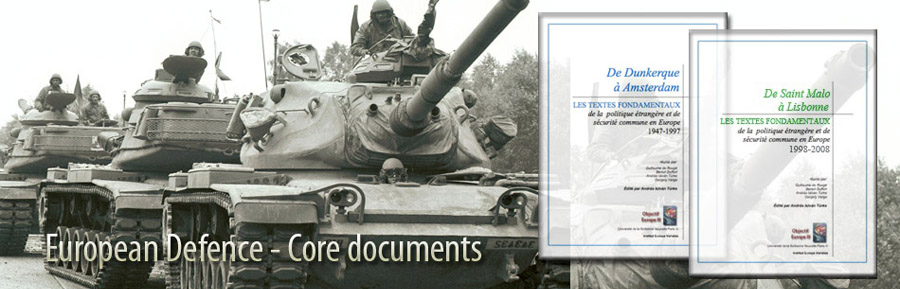

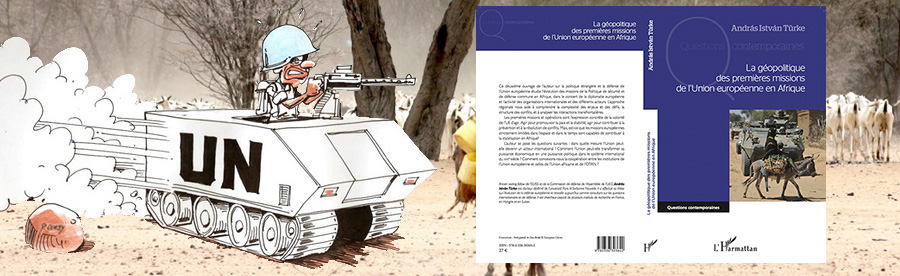
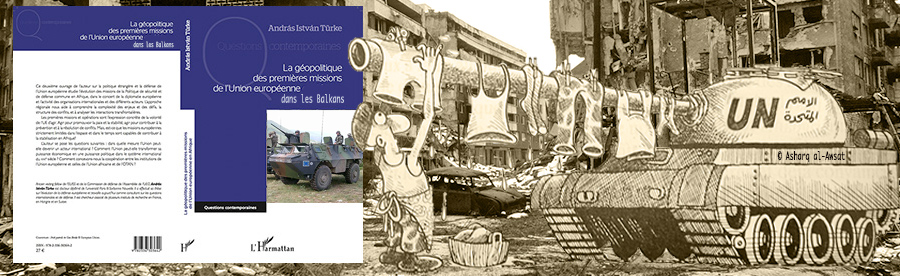
We are looking for sponsors for the English translation of these books, please contact turkeandras(at)gmail(dot)com