
You are here
Feed aggregator
Investing in Nature: The Competitive Edge for a Resilient Economy
Our economy relies on nature, yet the economy also impacts nature in profound ways. This Op-Ed highlights the need for policy to support financial flows for Nature-based Solutions (NbS) to build a more resilient and competitive economy.
Categories: European Union, Swiss News
Borús, langyos szerda – helyenként eső vagy ködszitálás
A Szlovák Hidrometeorológiai Intézet (SHMÚ) előrejelzése szerint langyos, felhős/borús időjárás várható szerdán (10. 22.). Napközben csak elvétve szakadozhat fel átmenetileg a felhőzet. Helyenként eső vagy ködszitálás fordulhat elő, a Tátra bércei felett havazás valószínű.
Categories: Határon túli magyar portálok összesített hírei, Swiss News
When Taliban Shut Down the Internet, Women Lost their Lifeline to Aid, Education & Each Other
Women’s rights have steadily eroded in Afghanistan since 2021. Credit: UN Women
The recent blackout exposed how vital the Internet has become for Afghan women and how, when that connection is lost, hope fades and isolation takes hold.
By UN Women
NEW YORK, Oct 22 2025 (IPS)
When the Taliban recently cut off the Internet and phone networks across Afghanistan, millions of women and girls were silenced. For those with connectivity, the blackout severed their last link to the outside world – a fragile connection that had kept education, work, and hope alive.
Many women in Afghanistan still lack access to the Internet, a basic phone, or the literacy to use digital tools. For those that do, that connection is a rare lifeline to life-saving services and the outside world.
For now, access has largely been restored. But the message was clear: in Afghanistan, this valuable gateway to learning, expression, and services for women and girls can be shut down at any moment.
Afghan women are already banned from secondary and higher education, from most forms of work, and public spaces such as parks, gyms, and sports clubs.
Many women are also receiving humanitarian aid, including in earthquake-affected eastern Afghanistan, and among those returning – many forcibly – from Iran and Pakistan.
The digital and phone blackout intensified feelings of stress, isolation and anxiety among women and girls.
Women entrepreneurs participate in business development training in a UN Women-supported Multi-Purpose Women’s Centre in Parwan province, eastern Afghanistan in January 2025. Photo: UN Women/Ali Omid Taqdisyan
What happens when Afghan women and girls go offline?
In Afghanistan, the impact of Internet and phone blackouts falls more heavily on women and girls. It eliminates what is, for many, a final means of learning, earning, and connecting.
When women and girls lose Internet access, they lose the ability to:
- • Access aid: Those who are connected can use the Internet or phones to find out about support available, and aid agencies rely on connectivity to continue operations.
• Learn about disasters: Recent data shows 9 per cent of women use the Internet to access information on climate disasters.
• Seek services and reporting mechanisms for survivors of gender-based violence or those at risk.
• Learn: Online classes and study groups were a lifeline for girls banned from secondary schools, and women banned from universities.
• Work: Online businesses are a vital source of income for many women to sustain their families after being pushed out of many formal roles.
• Connect: Social apps and social media provided safe spaces to support one another and exchange information.
• Be visible: For women already excluded from public life, the digital world is one the last places to exist and resist.
For more on what life looks like for women in Afghanistan today, see our FAQs.
Going dark in the middle of humanitarian crises
The national internet blackout started a month after a 6.0 earthquake struck eastern Afghanistan on 31 August, with major aftershocks continuing throughout September and the emergency response and early recovery continuing.
Despite facing many challenges, women-led organizations have played a crucial role delivering life-saving aid and services to women and girls affected by the earthquake, and Afghan women and girl returnees from neighbouring Iran and Pakistan.
During the blackout, NGOs were forced to halt humanitarian operations and cease field missions to emergency sites. Staff could not process payments or place orders for essential goods destined for women and their families.
When banks went offline, women affected by humanitarian crises were unable to access emergency cash assistance to buy essentials such as food.
The shutdown also made it much harder for survivors of gender-based violence to access help at a time when household tensions were rising across the country, and the risk of violence was escalating.
A UN Women team assessed the earthquake damage in Nurgal, one of the worst affected districts in Kunar province, northeastern Afghanistan.
Online livelihoods switched off
In Afghanistan, waves of directives banning women from most jobs and restricting their movement without a male guardian have systematically pushed them out of public life.
For many women entrepreneurs, the Internet offers a rare space to work, build small businesses, and sell their products – such as nuts, spices, handicrafts, clothes and artworks – to customers within Afghanistan and overseas.
“There is no space for us to work outside our homes,” explained business owner Sama*, from Parwan in eastern Afghanistan. “There’s also no local market where we can display and sell our products.”
With the support of UN Women, Sama built an online shop selling knitted bags, purses and jewelry.
“Through my online shop, I became well known,” she says. “I’m earning money, solving my financial problems, and becoming self-sufficient.”
When the blackout struck, women like Sama lost their only source of income overnight – a warning that for many Afghan women, connectivity is not a luxury, but a lifeline.
From blackout to global action
The Internet blackout in Afghanistan was a stark reminder that the digital world is not neutral. It can be space of empowerment. It can also be a tool of exclusion and isolation.
The stories of Afghan women remind us what is at stake: education, mental health, livelihoods, and hope. When women are silenced online, they are cut off further from opportunity and from the world.
How UN Women is supporting women and girls in Afghanistan
Through its flagship programme, Rebuilding the Women’s Movement, UN Women in Afghanistan partnered with 140 women-led organizations across 24 provinces and supported 743 women staff with salaries and training – amplifying resilience even as public life is restricted.
Read more about our work in Afghanistan.
*Name was changed to protect her identity.
IPS UN Bureau
Follow @IPSNewsUNBureau
!function(d,s,id){var js,fjs=d.getElementsByTagName(s)[0],p=/^http:/.test(d.location)?'http':'https';if(!d.getElementById(id)){js=d.createElement(s);js.id=id;js.src=p+'://platform.twitter.com/widgets.js';fjs.parentNode.insertBefore(js,fjs);}}(document, 'script', 'twitter-wjs');
2026 Dongfeng Nammi 01: Dieser China-Stromer kostet unter 7000 Franken
Die neuste Version des Dongfeng Nammi bietet moderne Ausstattung und Platz zum Tiefstpreis. Ganz so billig wie in China wird er in der Schweiz aber nicht werden.
Categories: Swiss News
Health ‘disappeared’: Parliament on EU’s 2026 work programme
Lawmakers welcome biotech focus but disappointed by lack of clear health agenda
Categories: European Union, Swiss News
Danish PM Frederiksen pulled back into mink scandal
Adding to the pressure, the case is due to reach its five-year statute of limitations in less than two weeks
Categories: European Union, Swiss News
Kein Schnee, kein Problem: Ragettli zeigt seine Tricks auf Gras
Egal ob auf Schnee, Schotter oder auf Gras: Für Andri Ragettli ist kein Untergrund nicht befahrbar. Im Grossteil der Schweiz herrschen noch keine winterlichen Verhältnisse – für Ragettli kein Problem.
Categories: Swiss News
«Sasumata» gibts seit Jahrhunderten: Japaner verkaufen kurioses Gadget gegen Messerangreifer
Die japanische Polizei nutzt das kuriose Gadget «Sasumata», um Messerangreifer zu stoppen. Die meisten Modelle sind 1,8 Meter lang und zwischen ein und zwei Kilogramm schwer. Die Stangen sind auch für Zivilisten erhältlich.
Categories: Swiss News
Deforestation proposal eases rules for farmers – but will Parliament approve?
Brussels faces pressure as MEPs weigh fast-track approval before year-end
Categories: European Union, Swiss News
‘We won’t stop’: Spain vows not to give up on Catalan language recognition
Germany and others are blocking the move, which Pedro Sánchez sees as crucial for shoring up support for his fragile coalition
Categories: European Union, Swiss News
Force EU railways to show competitors’ offers, NGO says
Passengers missing a connection should also be allowed to hop on the next one
Categories: European Union, Swiss News
NATO tests anti-drone tech, and its relationship with the EU
For NATO's supreme commander, 'cost per shot' is the most trusted metric for procurement, but it is NATO rather than the EU that can carry out tests
Categories: European Union, Swiss News
The world is a Wild West for multinationals, and Europe is doing nothing about it
What has been adopted is a complete unravelling of the very idea of the due diligence directive. The law that was supposed to make corporate offenders pay has been turned into a licence for impunity
Categories: European Union, Swiss News
INVESTIGATION: European Parliament tells Belgian prosecutor to stay in lane on corruption probes
A showdown over Belgium's role in policing Europe's institutions looms as Parliament pushes back on corruption probes
Categories: European Union, Swiss News
Belarusian opposition urges EU to keep up pressure on Lukashenko
Trump’s outreach to Minsk and a possible Putin meeting cast a shadow over Tsikhanouskaya’s appeal to the European Parliament
Categories: European Union, Swiss News
Noch 13 in Gaza vermutet: Hamas übergibt zwei weitere tote Geiseln
Die Hamas hat die Leichen zweier weiterer getöteter Geiseln übergeben, darunter der 85-jährige Arie Salmanowich. Die Suche nach weiteren Toten gestalte sich schwierig, sagt die Terrorgruppe.
Categories: Swiss News
Lawmakers voice concern over US drug tariffs as EP studies trade deal
The European Parliament's international trade committee is preparing for EU-US trade deal negotiations, the vibes aren't great
Categories: European Union, Swiss News
«Erfolgreicher Treffer»: Ukraine beschiesst Rüstungsfabrik in Russland
Russland führt einen Angriffskrieg gegen die Ukraine. Im Ticker halten wir dich über die neusten Entwicklungen auf dem Laufenden.
Categories: Swiss News
Desalination is Booming in Chile, but Farmers Hardly Benefit
View of a plant owned by Aguas Antofagasta, a company created 20 years ago that now has three desalination plants to supply drinking water to 184,000 families in that desert city in northern Chile. Credit: Courtesy of Acades
By Orlando Milesi
SANTIAGO, Oct 22 2025 (IPS)
Desalination projects are booming in Chile, with 51 plants planned to process seawater and a combined investment of US$ 24.455 billion. However, these initiatives hardly benefit small-scale farmers, who are threatened by the prolonged drought, and cause environmental concerns.
A survey by the Capital Goods Corporation and the Chilean Desalination and Reuse Association (Acades) revealed that these projects, already in the engineering and construction phases, will add 39,043 liters of water per second in production capacity."Using seawater, desalinated or saline, and reusing wastewater relieves pressure on rivers and aquifers, ensuring water for people, ecosystems, and productive activities" –Rafael Palacios.
Fifteen of these projects belong to the mining sector, eight to the industrial sector, eight to the water utility sector, and 20 are linked to green hydrogen, a clean fuel but very water-intensive, which the country aims to be a major producer of.
Of the future plants, 17 are located in the desert region of Antofagasta, in the far north of this elongated South American country, which lies between the Andes mountain range and the Pacific Ocean.
There are 11 projects in the southern region of Magallanes, followed in number by the regions of Atacama, Coquimbo, and Valparaíso, in the north and center of Chile, which concentrate most of the investment.
Rafael Palacios, executive director of Acades, told IPS that this country “faces a scenario in which water availability in northern and central Chile could decrease by up to 50% by 2060, so we cannot continue to depend solely on continental sources.”
“Using seawater, desalinated or saline, and reusing wastewater relieves pressure on rivers and aquifers, ensuring water for people, ecosystems, and productive activities,” he emphasized.
Currently, 23 desalination plants are already operating in Chile with a capacity of 9,500 liters per second. They primarily serve mining needs, but also industrial and human consumption.
One of the large greenhouses for the hydroponic cultivation of vegetables irrigated with desalinated water, on the farm of one of the 90 members of the Association of Agricultural Producers of Altos de la Portada, in the northern Chilean region of Antofagasta. Credit: Courtesy of the Association of Agricultural Producers of Altos de la Portada.
Small-scale farmers benefit
Dolores Jiménez has been president for the last eight years of the Association of Agricultural Producers of Altos de la Portada, in Antofagasta. The association has 90 active members who collectively own 100 hectares where they have created a Hydroponic City.
“We have no water problems thanks to an agreement with Aguas Antofagasta. We have an oasis which we would otherwise not have without that agreement,” Jiménez told IPS by telephone from Antofagasta, the capital of the region of the same name.
Aguas Antofagasta is a private company that desalinates water in the north of this country of 19.7 million inhabitants. The company draws water from the Pacific Ocean using an outfall that extends 600 meters offshore to a depth of 25 meters.
In desalination, outfalls are the underwater pipes that draw seawater and return and disperse the brine in a controlled manner, far from the coast and at an adequate depth.
Founded 20 years ago, the company currently desalinates water in three plants in the municipalities of Antofagasta, Tocopilla, and Tal Tal, supplying 184,000 families in that region.
Dolores Jiménez, president of the Association of Agricultural Producers of Altos de la Portada, shows the strength of the crops thanks to the use of desalinated water that reaches small farmers due to an agreement with Aguas Antofagasta. Credit: Courtesy of the Association of Agricultural Producers of Altos de la Portada
In its project to supply the general population, it included the association of small-scale farmers who grow carrots, broccoli, Italian zucchini, cucumbers, medicinal herbs, and edible flowers.
“They support us with water from the pipeline that goes to Mejillones (a coastal city in the region). They financed the connection for us to fill six 30,000 liter tanks, installed on a plot at the highest point. From there, we distribute it using a water tanker truck,” informed Jiménez.
“Now, thanks to a project by the (state) National Irrigation Commission, we were able to secure 280 million pesos (US$294,000) for an inter-farm connection that will deliver water through pipes to 70 plots,” she added.
This will mean significant savings for the farmers.
Jesús Basáez in his farm in Pullally, on the central coast of Chile. There he grows quinoa, which he irrigates with highly saline water that the grain tolerates without problems. Previously, that saline water forced him to stop producing strawberries. Credit: Orlando Milesi / IPS
In Pullally, in the municipality of Papudo, in the central Valparaíso region, 155 kilometers northwest of Santiago, Jesús Basáez used to grow strawberries alongside a dozen other small farmers. But the crop failed due to the salinity of the groundwater, apparently caused by the drought affecting the La Ligua and Petorca rivers and proximity to the sea.
He then switched to quinoa, which tolerates salinity well. Today he is known as the King of Quinoa, a grain valued for its nutritional properties and versatility, which was an ancestral food of Andean highland peoples and has now spread among small Chilean farmers.
Basáez has three hectares planted with white, red, and black varieties of quinoa, which he irrigates with water obtained from a well, as he told IPS during a visit to his farm.
The public University of Playa Ancha, based in the city of Valparaíso, installed a mobile desalination plant on his farm that uses reverse osmosis to remove components from the saltwater that are harmful for irrigation. Pressure is applied to the saltwater so that it passes through a semipermeable membrane that filters the water, separating the salts.
After successful tests, Basáez is now about to resume his strawberry cultivation.
“It was three years of research, and it was concluded that it is viable to produce non-brackish water to grow strawberries again. The problem is that the cost remains very high and prevents replicating this experience for other farmers,” he said. The mobile plant cost the equivalent of US$ 84,000.
The mobile desalination plant installed on Jesús Basáez’s farm to research the high salinity of the water at the site. For three years, teachers and students from the University of Playa Ancha, in the central Chilean region of Valparaíso, researched how to reduce the water salinity on this agricultural property. Credit: Orlando Milesi / IPS
Debating the effects of desalination
Since 2010, Chile has been facing a long drought with water deficits of around 30%. There was extreme drought in 2019 and 2021, and the country benefited from a normal period in 2024, although the resource deficit persists, in a country where water management is also privatized.
A report from the Climate and Resilience Center of the public University of Chile, known as CR2, indicated that current rates of groundwater use are higher than the recharge capacity of the aquifers, causing a decline in reserves.
In the 23 already operational desalination plants, seawater is extracted using outfalls that are not very long, installed along the coastline of a shore that has numerous concessions and uses dedicated to aquaculture, artisanal fishermen, and indigenous communities.
The main problem is the discharge of brine following the industrial desalination process.
“I will never be against obtaining water for human consumption. Although this highly concentrated brine that goes to the seabed has an impact where a large part of our benthic resources (organisms from the bottom of water bodies) are located. On a local scale, except in the discharge area, this impact has never been evaluated,” Laura Farías, a researcher at the public University of Concepción and at CR2, told IPS.
“There is literature that points out that there is undoubtedly an impact. There are different stages of biological cycles, from larvae to settled organisms. There is even an impact on pelagic organisms that have the ability to move. And also an impact at the ecosystem level,” the academic specified by telephone from Concepción, a city in central Chile.
She added that this impact is proportional to the volume of desalinated water.
Jesús Basáez, in the municipality of Papudo, poses showing a mature quinoa plant in one hand and in the other a container designed to sell each kilogram of the grain he produces in its white, red, and black varieties. Credit: Orlando Milesi / IPS
According to Farías, the water crisis has led to desalination being part of the solution, despite its impact on marine ecosystems, coastal vegetation, and wildlife.
“It is a maladaptation, because in the end it will have impacts that will affect the coastal inhabitants who depend on those resources,” she emphasized.
There are currently initiatives to legislate on the use of the coastal zone, but according to Farías, they seek to “normalize, regularize, and standardize those impacts, after these plants already exist and there are others seeking approval.”
Palacios, the director of Acades, has a different opinion.
The concerns about the environmental impact of desalination on coastal ecosystems are legitimate, but current evidence and technology demonstrate that this impact can be managed effectively, he says.
“In Chile, recent studies show no evidence that the operation of desalination plants has so far caused significant environmental impacts, thanks to constant monitoring and advanced diffusion systems,” he detailed.
He added that “in most cases, the natural salinity concentration is restored within two or three seconds and at less than 20 meters from the outfalls.”
Palacios explained that research by the Environmental Hub of the University of Playa Ancha “confirms increases in salinity of less than 5% within 100 meters.” And in areas like Caldera, a coastal city in the northern Atacama region, they are “less than 3% within 50 meters, limiting the areas of influence to small zones.”
“We are already implementing the first Clean Production Agreement in desalination and water reuse, promoted together with the (state) Agency for Sustainability and Climate Change, advancing towards voluntary standards for sustainable management, transparency, and strengthening the link with communities,” he emphasized.
Categories: Africa, Swiss News
Le temps en Algérie ce mardi 22 octobre : quels caprices nous réserve la météo aujourd’hui ?
Alors que le mois d’octobre tire doucement à sa fin, la météo en Algérie affiche une stabilité apparente, mais quelques perturbations viendront troubler le calme […]
L’article Le temps en Algérie ce mardi 22 octobre : quels caprices nous réserve la météo aujourd’hui ? est apparu en premier sur .
Categories: Afrique, Swiss News
Pages
the old site is here



© 2012-2015 Europa Varietas Foundation © 2015-2020 Europa Varietas Association
www.europavarietas.org | info(@)europavarietas(dot)org | Switzerland
This is a GDPR ready site


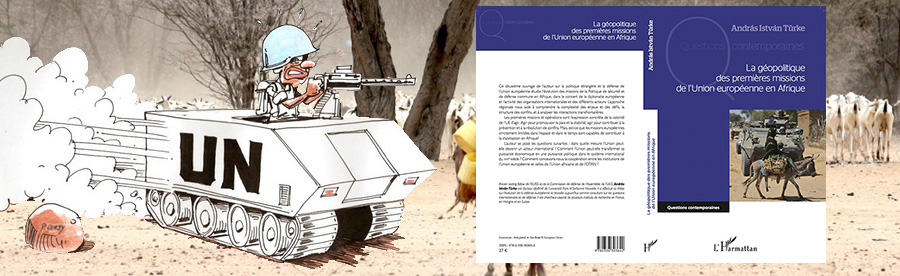

We are looking for sponsors for the English translation of these books, please contact turkeandras(at)gmail(dot)com