
You are here
Africa
When will Africa get its next Ballon d'Or winner?
Sadio Mane and Achraf Hakimi have been nominated for this year's Ballon d'Or - but when will an African claim football's top individual prize for the first time since 1995?
Categories: Africa, Swiss News
Sudan's healthcare system on brink of collapse after cuts, medical charity warns
Médecins Sans Frontières is urging world leaders to increase funding to help the millions who need aid.
Categories: Africa, European Union
Le Bénin et la BAII consolident leur partenariat
Présente à Cotonou dans le cadre d'une visite de travail, la présidente de la Banque Asiatique d'Investissement pour les Infrastructures (BAII/AIIB), Zou JIAYI, a été reçue par le chef de l'Etat, Romuald WADAGNI, ce mardi 8 septembre 2026.
Le Bénin et la Banque Asiatique d'Investissement pour les Infrastructures renforcent leur collaboration. La présidente l'institution financière, Zou JIAYI, a été reçue par le chef de l'Etat ce mardi 8 septembre 2026.
Au terme des échanges, elle a réaffirmé la volonté de la BAII/AIIB à accompagner le Bénin dans la réalisation de ses ambitions de développement. Ceci, à travers le financement de projets d'infrastructures stratégiques.
Zou JIAYI et sa délégation ont tenu une séance de travail avec plusieurs membres du gouvernement. Cette rencontre selon les services de communication de la Présidence de la République, a été suivie de la signature d'un Mémorandum d'entente (MoU) entre l'AIIB et la République du Bénin, consacrant ainsi le renforcement de leur coopération dans le domaine du financement des infrastructures.
Liste des 30 prétendants à l'édition 2026
France Football a dévoilé ce mardi 8 septembre 2026, la liste des 30 joueurs en lice pour succéder au Français, Ousmane Dembélé, vainqueur de l'édition 2025 du Ballon d'Or. Parmi les grands noms retenus pour cette édition, on retrouve Kylian Mbappé, Lamine Yamal, Harry Kane, Rodri, Michael Olise et Khvicha Kvaratskhelia.
Liste des nommés
1. Kylian Mbappé
2. Lamine Yamal
3. Harry Kane
4. Rodri
5. Ousmane Dembélé
6. Khvicha Kvaratskhelia
7. Michael Olise
8. Fabián Ruiz
9. Lionel Messi
10. Erling Haaland
11. Jude Bellingham
12. Vinicius Junior
13. Pedri
14. Cole Palmer
15. Lautaro Martínez
16. Raphinha
17. Mohamed Salah
18. Viktor Gyökeres
19. Declan Rice
20. Bukayo Saka
21. Florian Wirtz
22. Jamal Musiala
23. Achraf Hakimi
24. Virgil van Dijk
25. Gianluigi Donnarumma
26. Nuno Mendes
27. Serhou Guirassy
28. Ferran Torres
29. Julián Álvarez
30. Désiré Doué
La cérémonie officielle du Ballon d'Or 2026, est prévue pour le lundi 26 Octobre à Londres.
DURBAN CONFERENCE, 25 YEARS ON – Paul Divakar Namala: “Solidarity and Resistance Work in the Long Run”
Protests during the World Conference against Racism, Racial Discrimination, Xenophobia and Related Intolerance, held in Durban, South Africa, from 31 August to 7 September 2001. Credit: NCDHR
By Paul Divakar Namala
LONDON, Sep 8 2026 (IPS)
My name is Paul Divakar Namala. I am the Executive Director of The Inclusivity Project and Convenor of the Global Forum of Communities Discriminated on Work and Descent. My work focuses on communities whose social status, occupations and exclusion are inherited across generations through caste, analogous hierarchies and systems rooted in traditional slavery.
Durban also taught us that affected communities must speak for themselves. They must not be treated merely as victims or sources of testimony, but as human rights defenders and leaders who define the problem and shape the solution
I am a Dalit. Dalits were historically treated as “untouchable” and placed at the bottom of, or outside, the caste hierarchy. This can shape every part of life: access to a common water source, where a child sits at school, where a family may live, what work a person is expected to perform and whether others will eat with or even be seen with them.
Poverty is widespread in South Asia, but its burden falls disproportionately on Dalits because caste restricts access to land, education, dignified employment, public services and political power.
Inherited hierarchies remain deeply entrenchedAcross South Asia, constitutional guarantees and democratic institutions coexist with caste discrimination and practices of untouchability.
These persist in villages and cities, and in public institutions, private workplaces and corporations. Dalits may face threats or violence for asserting land rights, entering places of worship, marrying across caste, accessing common resources, seeking education or standing for elected office.
Dalits in South Asia are not alone. Roma communities in Europe and beyond, Burakumin in Japan, Haratine and other communities affected by traditional slavery in the Sahel, Osu communities in Nigeria, Quilombola communities in Brazil and other communities in Latin America experience distinct histories and realities.
They should not be collapsed into a single category. Yet many face structurally connected patterns: inherited stigma and social status, endogamy, segregation in housing and education, exclusion from land and decent work, confinement to dangerous or degrading occupations, trafficking and forced labour, and backlash violence when they resist. We describe these peoples, in all their diversity, as Communities Discriminated on Work and Descent, or CDWD.
Reconnecting with my identityWhere I grew up in India, my family faced repeated attacks as we asserted our rights, including rights over public land. When I was 21, a petrol-bomb attack took the life of my mother.
Only as I grew older did I understand how much of what happened to my family was connected to caste. My father taught me that our purpose should not be limited to seeking justice for ourselves; we had to dismantle the structures that allow such abuses to continue. That teaching guided me away from vengeance and towards challenging the social norms and caste structures that treat some human beings as inferior, exploit their vulnerability and assign them a life of servitude.
Together with my spouse, who came from a different caste, I helped build a community of human rights defenders. For too long, Dalits were portrayed only as victims or survivors. We are also organisers, advocates and defenders of human rights. This work began more than four decades ago, when I was in my twenties.
In 1998, together with leaders from across India, we formed the National Campaign on Dalit Human Rights. We wanted caste-based discrimination and violence to be documented and discussed nationally and internationally. Looking back, I realise how groundbreaking that effort was, especially with so few resources.
Bringing caste to DurbanWhen we learned that the United Nations was organising a World Conference Against Racism, our immediate response was: “We have to be there.” We were new to these international processes. We contacted people working on caste discrimination and were invited to a preparatory meeting in Bellagio that helped shape the agenda for Durban.
At Bellagio, many participants supported putting caste on the agenda, including Pierre Sané, then Secretary General of Amnesty International. Civil society succeeded in making caste a major issue in the Durban process, but several Asian governments resisted its explicit inclusion in the final Durban Declaration and Programme of Action, arguing that it would target their countries or interfere in internal matters.
Although the final Declaration did not contain the explicit recognition we sought, what the movement achieved was extraordinary. Durban gave unprecedented international visibility to caste discrimination and helped move Dalit rights from the margins towards the centre of international human rights debate.
Dalit activists were present in large numbers, carrying documentation, testimonies, drums and protest across the conference grounds. People approached us and said, sometimes awkwardly but with genuine solidarity, “You are untouchable? Let me hug you.” Those encounters showed both how unfamiliar the issue was internationally and how quickly human connection could challenge the stigma imposed upon us.
Activists protest caste and descent-based discrimination during the World Conference against Racism in Durban, South Africa, held from 31 August to 7 September 2001. Placards call attention to caste, racism and the struggle for Dalit rights. Credit: NCDHR
Solidarity, resistance and the unfinished agendaOver the years, we have connected with communities and advocates in Somalia, Ethiopia, Kenya, Niger, Mauritania and Nigeria, with Roma movements across Europe and beyond, and with Quilombola and other communities in Latin America.
Their histories are different, but their struggles reveal how inherited status, stigmatised work and exclusion can reinforce one another across generations. Working together makes these structures visible and prevents governments and institutions from excusing them in the name of culture or tradition.
Durban also taught us that affected communities must speak for themselves. They must not be treated merely as victims or sources of testimony, but as human rights defenders and leaders who define the problem and shape the solution. Solidarity does not require us to claim that every oppression is identical. It requires us to respect distinct histories while recognising common structures of dehumanisation and standing together against them.
The fight is far from over. We are working for stronger international recognition, including comprehensive CERD guidance and, ultimately, a Declaration on the Rights of Communities Discriminated on Work and Descent.
Yet the real test is always on the ground. International declarations have meaning only when they change the life of a woman confronting untouchability, a sanitation worker demanding safe and dignified work, a Roma child resisting school segregation, or a Haratine family seeking freedom, land and equality.
Learn more about racial justice with Amnesty International’s online course.
Excerpt:
The third UN Conference Against Racism, Racial Discrimination, Xenophobia and Related Intolerance in 2001 was a watershed moment for millions across the world. Seven thousand people representing governments and civil society from 170 countries gathered in Durban, South Africa. Led by countries in the Global South, the Durban Conference challenged the idea that human rights is a Western concept, recognized the historical roots of contemporary forms of racism and called on States to repair the lasting consequences of colonialism and slavery. While the US and Israel withdrew from the Conference, the Durban Declaration and Programme of Action were adopted, both of which became foundational documents for the global fight against racism. But with racism still very much alive, we spoke with activists about their struggles and hopes.
Categories: Africa, Határon túli magyar portálok összesített hírei
Loto Fortune : les résultats du tirage 11 H
LES RÉSULTATS LOTO FORTUNE SONT LÀ !
TIRAGE N°144/26
Mardi 08 septembre 2026 (11H)
89 • 73 • 80 • 56 • 86
Félicitations aux heureux gagnants !
Pas encore gagné ? Gardez le sourire !
Rendez-vous au prochain tirage de 14h pour une nouvelle chance.
Jouez dans les centres de jeux ou en ligne : Tapez 590# ou lnbloto.bj
Jouez avec modération et responsabilité. Le jeu doit rester un plaisir.
Im Milan-Spiel verletzt: Juventus-Captain fällt lange aus
Nächste Hiobsbotschaft für Juventus: Die Turiner müssen mehrere Monate lang ohne Manuel Locatelli auskommen. Der Captain der Alten Dame hat sich am Meniskus verletzt.
Categories: Africa, Swiss News
Don Giacomo sei Dank!: Ruchè – Nischenwein mit umwerfendem Blumenduft
Man braucht nicht zwingend zu wissen, aus welcher Rebsorte ein Wein gekeltert wurde, um ihn mit Vergnügen zu geniessen. Aber wer Rebsorten-Raritäten im Glas hat, dem eröffnen sich neue Welten. So etwa mit der Piemonteser Sorte Ruchè.
Categories: Africa, Swiss News
Nach langer Absenz: Der Schweizer Handball kehrt in die Champions League zurück
Der HC Kriens-Luzern startet am Mittwochabend in die neu formierte Champions League. Für den Schweizer Handball ist es eine Rückkehr auf die grosse Bühne, nachdem man jahrelang ignoriert wurde.
Categories: Africa, Swiss News
Schon mal drüber nachgedacht?: Darum gehen ältere Menschen oft mit den Händen hinter dem Rücken
Du hast es bestimmt schon einmal gesehen: Ältere Menschen spazieren gemütlich dahin, die Hände hinter dem Rücken verschränkt. Doch warum machen sie das eigentlich? Eins schon mal verraten: Dahinter steckt mehr als eine schrullige Angewohnheit.
Categories: Africa, Swiss News
Les Amazones du Bénin défient l'Argentine ce mardi
Après leur nul historique (2-2) contre le Mexique, les Amazones U20 du Bénin affrontent l'Argentine ce mardi 8 septembre 2026, pour la deuxième journée de la Coupe du monde féminine U20 en Pologne.
La sélection féminine U20 du Bénin défie l'Argentine ce mardi 8 septembre 2026. Romaine Gandonou, l'attaquante vedette de la sélection béninoise et ses coéquipières croiseront les crampons avec L'Albiceleste, dans le cadre de la deuxième journée de la Coupe du monde féminine U20 qui se déroule en Pologne.
Menées 2-0 lors de leur première sortie, les Béninoises avaient réussi à revenir au score grâce à un doublé de Romaine Gandonou, décrochant ainsi un précieux point pour leur première participation au Mondial U20.
L'Argentine quant à elle, s'est inclinée 3-0 face à la Pologne, pays organisateur. Pour le match contre le Bénin, elle cherchera à se relancer.
Les joueuses d'Abdoulaye Ouzérou devront donc faire preuve de détermination pour résister à leurs adversaires et pourquoi pas, décrocher leur première victoire dans la compétition mondiale.
F. A. A.
Man accused of triple murder in the UK admits gun charges in South Africa
A man is in court in South Africa two months after his wife and daughters are found dead in the UK.
Categories: Africa, Határon túli magyar portálok összesített hírei
Kenya moves to register frightened Burundians as tension over foreign traders rises
All foreigners without proper documents in Kenya are urged to register through their embassies.
Categories: Africa, European Union
FAO and the Global South: Advancing Agrifood Transformation through South-South and Triangular Cooperation
Countries of the Global South are not merely recipients of development support; they are contributors of knowledge, innovation and investment. Credi: Jorge Luis Baños/IPS
By Hua Yang
ROME, Sep 8 2026 (IPS)
The world’s agrifood systems are under mounting pressure from economic uncertainty, climate change and persistent inequalities. Farmers, rural communities and the most vulnerable are bearing the heaviest burden. We must act faster and scale practical, proven solutions.
The United Nations Day for South-South Cooperation celebrates more than solidarity. It recognizes the ideas, innovation and shared commitment emerging from the Global South. It also reminds us that cooperation among developing countries and with their partners is essential to achieving the 2030 Agenda for Sustainable Development. Countries of the Global South are not merely recipients of development support; they are contributors of knowledge, innovation and investment.
Knowledge from the Global South is rooted in practical experience and tested under real-world conditions. Triangular cooperation can amplify its impact by bringing in financing or technical expertise from developed countries, multilateral organizations and other partners - while keeping cooperation led and owned by countries of the South
For more than 40 years, the Food and Agriculture Organization of the United Nations (FAO) has helped countries share expertise and technologies through South-South and Triangular Cooperation (SSTC). This cooperation has strengthened food security and improved livelihoods across the Global South.
SSTC works because countries that have faced similar development challenges can share relevant and adaptable solutions.
Knowledge from the Global South is rooted in practical experience and tested under real-world conditions. Triangular cooperation can amplify its impact by bringing in financing or technical expertise from developed countries, multilateral organizations and other partners – while keeping cooperation led and owned by countries of the South.
Above all, SSTC is built on partnership, not dependency. Every country has knowledge to offer, and FAO has seen that knowledge translated into practical results.
The long-standing partnership between FAO and China is one example. Since the 1990s, more than 1,200 Chinese experts have supported agricultural development in developing countries, sharing field-tested expertise in crop production, aquaculture, livestock and irrigation.
Through the FAO–China South-South Cooperation Programme and related initiatives, countries have strengthened technical capacity, increased agricultural productivity and improved livelihoods. The results show how targeted technical cooperation can deliver benefits far beyond national borders.
Other partnerships are producing results. For 18 years, the Brazil–FAO South-South Cooperation Programme has enabled countries across Latin America and the Caribbean to exchange knowledge. Since 2021, the FAO–Türkiye Partnership Programmes have supported countries in Central Asia.
In Central Asia’s Fergana Valley, FAO has also joined forces with the United Nations Office for South-South Cooperation, with support from the Russian Federation, to help Kyrgyzstan, Tajikistan and Uzbekistan advance climate-smart agriculture. Farmer Field Schools, improved soil and water management, appropriate technologies and value-chain diversification show how SSTC can strengthen farmers’ livelihoods.
These examples reflect a wider transformation. Across the Global South, countries are not only receiving development support; they are contributing knowledge, innovation and investment.
FAO’s role as a trusted convener and technical facilitator is to connect these experiences with countries seeking solutions. That is why we upgraded the SSTC Gateway: to broaden dialogue, gather feedback and share Global South’s innovations, knowledge and experience.
This role has never been more important. FAO’s expanding SSTC portfolio reflects growing demand for this approach.
From rice value chains and digital agriculture to sustainable apiculture and support for Small Island Developing States, SSTC is mobilizing knowledge, resources and partnerships to deliver measurable impact.
Looking ahead, we must ensure that SSTC delivers stronger, measurable results for farmers, rural communities, women, youth and future generations. Women farmers, in particular, have a critical role in transforming agrifood systems.
FAO’s South-South and Triangular Cooperation Division will continue working with Members and partners to bring these solutions forward, adapt them to local contexts and help build agrifood systems that are more efficient, inclusive, resilient and sustainable. As demand for SSTC grows, FAO will expand partnerships, mobilize investment and make proven solutions easier to adapt and scale.
When the Global South leads, the world benefits. When countries learn from one another, invest in one another and shape solutions together, we move closer to better production, better nutrition, a better environment and a better life for all, leaving no one behind.
Excerpt:
Hua Yang is Director, South-South and Triangular Cooperation Division, FAO
Categories: Africa, Határon túli magyar portálok összesített hírei
What 1.5°C Overshoot Means for Small Islands
Rodney Bay Marina, Saint Lucia. Rising seas are among the mounting risks for small island states as the world heads towards an expected overshoot of 1.5°C. Credit: Alison Kentish/IPS
By Alison Kentish
CASTRIES, Saint Lucia, Sep 8 2026 (IPS)
The world is now expected to breach the 1.5 degrees Celsius warming limit that small island states have spent years defending as a threshold for survival.
For people in the Caribbean, Pacific and Indian Ocean, the consequences will not begin only when islands disappear beneath the sea. They include saltwater intrusion into freshwater supplies and agricultural land, coral reef loss, more damaging coastal flooding and mounting pressure on already limited resources for recovery and adaptation.
That is the stark warning emerging from the United Nations Environment Programme’s Limiting Overshoot report, launched on September 2. The report examines a future in which average global temperatures rise beyond 1.5°C above pre-industrial levels before, potentially, being brought back down.
The report concludes that the world is now expected to cross the 1.5°C threshold. What is still uncertain is how far above it temperatures will rise, how long they will remain there and how quickly they can eventually be brought back down.
Dr Shobha Maharaj, a Caribbean scientist and one of the lead authors of the report’s Chapter Four, says the expected breach raises a new set of questions for small island states.
“For years, the goal was to avoid crossing 1.5°C. But this report now says very clearly that we are going to cross it,” she said. “The question now is how deep is this overshoot going to go? How long is it going to last? And how do we live through it while we work to bring temperatures back down to 1.5°C?”
No buffer
The Paris Agreement committed countries to pursue efforts to limit warming to 1.5°C. Small island states were among the strongest advocates for the 1.5°C target, arguing that higher levels of warming would pose an existential threat.
“For small islands, it is because we live closest to the thresholds,” Maharaj said. “In a wealthy, temperate country, an additional half-degree of warming would still carry serious costs. But on a small island, it could determine whether a reef recovers or not, or whether an aquifer stays fresh or turns salty for good.”
“There is no higher ground to move to, no deep treasury to draw on and no second reef when one of them dies,” she added. There is no higher ground to move to, no deep treasury to draw on and no second reef when one of them dies.
The danger is not limited to dramatic disasters, she said. Habitability can erode quietly.
“Saltwater can contaminate groundwater and soil. A kitchen garden that has fed a family for generations may stop producing. High tides can reach roads, homes and public infrastructure even on clear days. When reefs die, communities lose not only fish and tourism income but also natural barriers that weaken waves before they reach the shore.”
“None of this requires an island to vanish,” Maharaj said. “Habitability begins to collapse first, quietly, through water, food and the loss of the everyday things that make a place home. By the time submergence becomes the headline, people have often already been forced to leave.”
The report warns that sea-level rise will continue for centuries and that falling global temperatures would not reverse all the damage accumulated during overshoot. Some ecosystem, biodiversity and glacier losses would persist, meaning a return to 1.5°C would not restore the world that existed before the threshold was crossed.
Small Islands, Different Realities
SIDS are often discussed as a single group, but Maharaj cautioned that their circumstances and options differ.
Pacific atoll states face acute threats because of their extremely low elevation and vulnerable freshwater lenses. Some Pacific islands are also experiencing land subsidence, compounding the effects of rising seas.
Several Caribbean states have higher terrain, but much of their population, infrastructure and economic activity is concentrated along narrow coastal areas. Indian Ocean states face their own combination of risks.
“What we share is a structural predicament, narrow room for retreat, limited finances and economies that are exposed to single shocks,” Maharaj said.
But she warned against transferring solutions indiscriminately between regions.
“The right response in Tuvalu, for example, is not automatically the right response in Barbados or the Maldives.”
Adaptation Buys Time, Not Immunity
For decades, adaptation has been presented as the principal defence for countries already living with climate impacts. But the UNEP report says many existing approaches were designed for gradual, one-directional warming, not temperatures that rise, plateau and may eventually decline.
Strategies fixed to one set of conditions could become ineffective or even increase vulnerability as conditions change. The report calls instead for adaptation that is flexible, forward-looking and capable of evolving throughout the different stages of overshoot.
“Adaptation buys time, not immunity,” Maharaj said.
She said the large gap between adaptation planning and implementation may provide a narrow opportunity to revise projects before they are built for conditions they can no longer withstand.
“We have a lot of plans, but many of them have not yet been implemented,” she said. “That gives us a window, although not a large one, to recalibrate those plans for a post-1.5°C world.”
That shift will require money before disasters strike.
Many developing countries are already trying to adapt, recover from extreme events, transform their economies and reduce emissions while servicing heavy debt. Climate finance, Maharaj said, arrives too slowly and is often supplied through loans that add to that burden.
“A disaster drains public funds into emergency response and reconstruction. That leaves less money to reduce the risks posed by the next event, which then hits a weakened country even harder. Each turn of that wheel reduces the very capacity we need to climb out of it.”
Breaking the cycle will require grants, upfront financing and investment in prevention, rather than repeatedly paying to rebuild after losses.
A Deeper Injustice
Overshoot also raises questions of climate justice, particularly for countries with little historical responsibility for the emissions driving warming.
“The harms concentrated during this period, especially those that turn out to be irreversible, fall hardest on the countries least responsible for the emissions that caused them,” Maharaj said.
Maharaj said contributing to the report carried a particular weight for her as a Caribbean scientist.
“For those of us from these islands, 1.5°C was never simply a number on a chart. It was the line we were told represented survival. It was the line at which we were told survival was still possible,” she said. “Now, helping to write the science of what lies beyond that line is a heavy thing, both personally and professionally.”
Crossing 1.5°C, she said, represents “a profound failure of collective will” but not permission to give up.
“How high the peak rises, how long we remain there and how quickly temperatures are brought back down are all still ours to decide,” Maharaj said. “Every one of those choices will be measured in lives and livelihoods here in our region and across small islands.”
For small islands, limiting the overshoot could mean the difference between mounting losses and holding on to the places people call home.
IPS UN Bureau Report
Related Articles
- Accepting What It Cannot Control, CARICOM Focuses on What It Can
- UN Weather Agency Warns of Escalating Climate Extremes Across Caribbean and Latin America
Excerpt:
The world is expected to breach a temperature threshold long regarded by small island states as a line of survival. A new UNEP report examines what comes next and why every fraction of a degree still matters.
Categories: Africa, Határon túli magyar portálok összesített hírei
Beyond the Death Penalty Debate: Human Dignity and Justice in Japan
Panelists and participants discuss Japan’s death penalty at a symposium examining capital punishment through the lens of human dignity, held on September 5, 2026, at St. Ignatius Church in Yotsuya, Tokyo. Credit: Katsuhiro Asagiri / INPS Japan
By Katsuhiro Asagiri
TOKYO, Japan, Sep 8 2026 (IPS)
A symposium examining Japan’s death penalty through the lens of human dignity was held on September 5 at Joseph Hall of St. Ignatius Church in Yotsuya, Tokyo.
Brochure of the Symposium titled, “Rethinking the Death Penalty: With Human Dignity in View.” Credit: The Association of Religious Leaders and Scholars Considering the Death Penalty
Titled “Rethinking the Death Penalty: With Human Dignity in View,” the symposium was organized by the Association of Religious Leaders and Scholars Considering the Death Penalty and co-organized by the Institute for Death and Life Studies and Social Coexistence.It was supported by eight organizations: the Jesuit Social Center, the Conference on Religion in the Modern World (CORMOS), the Japan Buddhist Federation, the International Institute for the Study of Religions, the Sophia University Institute of Grief Care, the Japanese Committee of the World Conference of Religions for Peace (WCRP), the Soka Gakkai Peace Committee, and the Institute of Engaged Buddhism.
The gathering brought together legal scholars, journalists, a bereaved family member, a former prison officer, younger participants and religious figures, each approaching Japan’s death penalty from a different experience and perspective.
Religious studies scholar Susumu Shimazono stressed that the purpose was not to decide whether capital punishment should be abolished, but to listen and learn.
The questions extended beyond punishment: how to support victims, prevent wrongful convictions and violence, and hold institutions accountable for decisions over life and death.
The international picture is mixed. Amnesty International reported that 145 countries had abolished capital punishment in law or practice by the end of 2025. Yet recorded executions rose to at least 2,707 that year, excluding unverified totals from China, North Korea and Vietnam.
Japan’s Justice Ministry has defended retention by citing public opinion and serious crime. But public support and justification under human rights principles are different questions.
Safeguards Before Irreversible Punishment
Prof. Makoto Ida. Credit: Katsuhiro Asagiri / INPS Japan
Criminal law scholar Ryo Ida questioned whether Japan had adequately examined its system’s legal and constitutional foundations. He highlighted the combination of decades on death row and notification of execution only on the day it takes place.He also distinguished wrongful convictions from sentencing errors: even where guilt is established, overlooked mitigating circumstances may lead to death rather than life imprisonment.
He also expressed his view that hanging constitutes cruel punishment under Japan’s Constitution.
“Immediate abolition of the death penalty is not the only option,” he said.
Stronger safeguards, reviewing execution methods and temporarily suspending executions were possible steps. Ida argued that victims’ demands for punishment could not themselves justify capital punishment, while acknowledging their grief and anger.
Deterrence required equal caution. A 2012 U.S. National Research Council review found that the studies it examined could not establish whether capital punishment increased, reduced or had no effect on homicide rates. That was not proof of no effect.
Ida nevertheless urged that public fears be taken seriously. Reform must address organized crime and reoffending, rather than simply replace one punishment with another.
The Human Cost of Execution
Keiko Horikawa. Credit: Katsuhiro Asagiri / INPS Japan
Nonfiction writer Keiko Horikawa described nearly two decades of investigating the system. Her reporting challenged the assumption that victims’ families speak with one voice: some welcomed death sentences; others wanted offenders to live and confront their crimes.She also recalled interviewing a former judicial research official involved in preparing the Supreme Court ruling underlying the Nagayama standard, the factors courts consider when choosing between death and life imprisonment. He disputed treating those factors as a formula for execution.
Horikawa’s book Kyokaishi (The Prison Chaplain) follows a Buddhist priest who accompanied condemned prisoners. She recalled his words:
“No one has ever been made happy by an execution.”
This was his observation, not a verdict on every bereaved family’s experience. It nevertheless raised a crucial distinction: completing a sentence does not necessarily end the suffering surrounding a crime.
Horikawa called for suspending executions and openly examining victims’ support, prison officers’ psychological burdens, costs and hanging itself.
A Bereaved Sister’s Unanswered Question
Nobuko. Credit: Katsuhiro Asagiri / INPS Japan
Nobuko lost her brother, the director of a psychiatric clinic, in the 2021 arson attack in Osaka’s Kitashinchi district. She subsequently began meeting prisoners and former prisoners to understand rehabilitation and prevent further tragedies.“I want to prevent reoffending and stop more people from experiencing this grief,” she said.
She resisted being assigned to either camp. Some bereaved people want execution; others want offenders to live with their crimes; still others cannot bear to think about the case.
“I think each is an expression of the grief that person carries,” she said.
Nobuko acknowledged that offenders retain human rights. “Recognizing the human rights of offenders does not, in itself, deny the human rights of victims.”
But who addresses the rights taken from those killed, and the needs of families left behind? Support should not depend on whether a family favors capital punishment.
The United Nations’ 1985 declaration on justice for crime victims encompasses access to justice, fair treatment, restitution, compensation and assistance. Punishment alone is not the whole response.
Nobuko asked a further question: “What kind of society would prevent people from becoming offenders who face the death penalty?”
Her conversations with prisoners revealed experiences of abuse and isolation. Understanding those histories does not excuse crime. But punishment after violence cannot substitute for examining whether earlier support might have prevented it.
She has begun creating opportunities for parents to share experiences. That is her choice, not an obligation other bereaved families should be expected to shoulder. Prevention also requires institutions, not merely individual goodwill.
“I am neither for nor against the death penalty,” she said, describing her determination to keep thinking about life, guilt and suffering.
Toshio Sakamoto. Credit: Katsuhiro Asagiri / INPS Japan
Justice Must Allow for CorrectionFormer prison officer Toshio Sakamoto argued that restrictions on outside contact make changes in condemned prisoners difficult for society to see.
He also recalled his long acquaintance with Iwao Hakamada, who spent decades under sentence of death before his acquittal at a retrial in 2024. The case raises questions about interrogation, evidence disclosure and timely remedies.
Trust in justice depends not only on the authority to decide, but on the ability to acknowledge and correct error before irreversible harm occurs.
He also questioned increasingly lengthy life imprisonment. Japan’s life sentences permit parole in law; the issue is how public safety, victims’ concerns and evidence of rehabilitation are assessed in practice.
For Sorane Sakihama, a graduate student from Okinawa, studying in France first challenged her assumption that capital punishment was justice for victims. International exchanges later brought her face to face with people affected by wrongful death sentences.
Invoking the Okinawan expression “Nuchi du takara” — life is the greatest treasure — she connected her opposition to execution with her opposition to war. She emphasized creating spaces where young people can discuss difficult issues without needing settled opinions.
Sorane Sakihama, a graduate student from Okinawa, speaks about how international dialogue and her encounters with people affected by wrongful death sentences shaped her views on capital punishment, during a symposium at St. Ignatius Church in Tokyo on September 5, 2026. Credit: Katsuhiro Asagiri / INPS Japan
From Dialogue to Accountability
SDGs Goal No 16.
Horikawa welcomed the symposium’s new voices and willingness to move beyond fixed positions. Shimazono hoped the dialogue would continue.Sustainable Development Goal 16 does not explicitly require abolition. It does call for reducing violence, protecting children, equal access to justice, accountable institutions and inclusive decision-making.
That provides a practical framework: Are victims receiving sustained support? Can doubtful convictions be effectively reviewed? Are prison staff’s burdens recognized? Is prevention reducing harm? Can citizens obtain the information needed to judge the system?
Disagreement over abolition need not prevent scrutiny of these questions.
Can people change? What does atonement mean? How should society support victims and prevent violence? How much power over life and death should the state possess?
A new dialogue on those questions began in a Tokyo church.
This article is brought to you by INPS Japan in collaboration with Soka Gakkai International in consultative status with UN ECOSOC.
IPS UN Bureau
Categories: Africa, Határon túli magyar portálok összesített hírei
Trump’s “Comprehensive” Gaza Peace Plan a Cover for Genocide
By Anis Chowdhury
SYDNEY, Sep 8 2026 (IPS)
It is nearly a year since the UN Security Council (UNSC) adopted Resolution 2803 on 17 November, 2025, endorsing President Trump’s 20-point framework ostensibly designed to end the war in Gaza and create a roadmap for long-term stability. It is not clear what progress has been made. In August 2026 The Jerusalem Post reported “the IDF continues almost daily strikes in Gaza”, killing more than 1,200 Palestinians since the US-brokered ceasefire deal came into effect, seizing more territory, and continuing to restrict the movement of people and goods into and out of Gaza. Nickolay Mladenov, the UN High Representative on the Board of Peace, wrote in early August 2026 that “two days of strikes across Gaza have killed civilians and destroyed medical supplies that people depend on”. Ironically, this genocidal strike happened only a few days after a US-brokered Hamas disarmament deal, which Trump called, “a monumental step” towards peace and security.
Anis Chowdhury
Genocide unabatedIn May 2026 the Board of Peace claimed in its report to the Security Council that the conditions for Palestinians in Gaza have improved. However, the claim contradicts the findings of the UN Commission of Inquiry, headed by Justice Muralidhar, that “Israeli authorities and security forces have deliberately targeted Palestinian children, resulting in genocide and atrocity crimes in the Gaza Strip and war crimes in the West Bank”.
Earlier in a Conference Room Paper published in September 2025, the Commission established that the Israeli authorities and security forces had committed and were continuing to commit genocidal acts with the specific intent to destroy, in whole or in part, the Palestinian group in Gaza. This is despite the International Court of Justice issuing three binding orders for provisional measures, detailing the catastrophic conditions in Gaza and risks of irreparable prejudice to the rights of the Palestinian group.
Echoing the Commission, speakers at the UNSC on 28 August 2026 warned that Gaza is at a total breaking point, under constant attack with 2 million people still trapped, despite the Trump-negotiated October 2025 ceasefire and the Board’s new peace plan. Athena Rayburn, Executive Director of the Association of International Development Agencies said, “success must be measured by whether the Board of Peace, international stabilization force and National Committee for the Administration of Gaza provide immediate protection for civilians; and in the long term, whether they move Gaza towards the required legal endpoint: The end of Israel’s unlawful presence and realization of the Palestinian people’s right to self-determination”.
Exclusionary Board of (un)Peace
Following the UNSC endorsement, Trump launched “Board of Peace” on the sidelines of the World Economic Forum on 22 January 2026. Trump, the self-assumed Chair of the Board, believed, “This Board has the chance to be one of the most consequential bodies ever created … to end decades of suffering, stop generations of hatred and bloodshed, and forge a beautiful, everlasting, and glorious peace for that region”.
However, many, including senior US lawmakers, view the Board as Trump’s attempt to undermine the United Nations, which he has repeatedly criticised. The Board’s charter makes no reference to either Gaza or the UN even though the original UN mandate for the Board called for it to focus on Gaza’s reconstruction and to aid the 2.2 million Palestinians forcibly displaced by Israeli forces. Instead, according to its charter, the Board would “secure enduring peace in areas affected or threatened by conflict”. The Board’s charter also envisions that it will endure beyond the end of 2027 – the expiry date of the UNSC’s endorsement – as will Trump’s stewardship over it
While Trump could potentially chair the Board for life, its membership is solely by Trump’s invitation and requiring at least US$1bn contribution. Palestine is not a member, but Israel and its prime minister Benjamin Netanyahu – who faces an International Criminal Court (ICC) arrest warrant over alleged war crimes in Gaza – are part of the board. Furthermore, a member of the Trump-appointed Executive Board is also Israel’s appointed representative in the US-led Civil Military Coordination Center tasked with humanitarian relief in Gaza.
Palestinians have been assigned to its lower-tier technocratic committee, while former UK prime minister and “war-criminal”, Tony Blair, Trump’s son-in-law, Jared Kushner, and Trump’s long-time friend and real estate investor, Steve Witkoff, sit on the executive board along with US Secretary of State, Marco Rubio.
How can a so-called Peace Board so intertwined with the genocidal entities be entrusted to alleviate Palestinian suffering? Is it a surprise that the air strikes and other attacks on civilian areas in Gaza have intensified even damaging UN facilities? On 25 August 2026 Israeli forces forcibly entered UNRWA’s Kalandia Training Centre in East Jerusalem and unlawfully seized it, ignoring the fact that it is an inviolable UN premise immune from any form of interference.
Unaccountable and whimsical
Meanwhile, Marco Rubio disclosed during his testimony before the Senate Foreign Relations Committee recently that the Trump administration had decided to transform the Board of Peace from a public international organization made up of member states (akin to the United Nations) into an international nongovernmental organization (INGO). He gave no indication as to how and when that decision was made, violating UNSC resolution 2803 which warranted that the Board would have international legal personality and be subject to international law as a multilateral organisation.
Transforming the Board into an INGO may better conform to the Board’s exclusionary structure, which gives Trump ultimate decision-making authority, including over financial matters. Rubio explicitly said during his testimony that the US Congress can have oversight only on the money that the US puts in while he was vague about the fiduciary arrangement of the Board’s finance. In the meantime, investigative journalism uncovered serious financial irregularities, opacity and conflict of interest involving Kushner, Witkoff and some prominent Israeli entities.
Alarmingly, making the Board an INGO removes member states’ power to steer the Board and to mitigate the Trump administration’s worst impulses. Trump’s inner circle will continue to call the shots, with Kushner saying the Board will be run “like we do [it] in the private sector”, while the Board is being directed by figures on the Israeli and US political right.
UNSC must disendorse (un)Peace Board
The members of the UNSC voted in favour of endorsing Trump’s Comprehensive Plan to End the Gaza Conflict and the Board of Peace as a pragmatic step despite some trepidation due to the plan’s vague terms and lack of a timetable associated with its phases that would culminate in a political horizon for Palestinians. They hoped that Trump, given his relationship with Netanyahu – an alleged war-criminal – would be able to stop him from committing genocide of the Palestinians.
But Trump continues to condone Israel’s ceasefire violations as intensified Israeli attacks kill thousands of innocent Palestinians. Trump and his so-called Board of Peace failed to condemn Israeli National Security Minister Itamar Ben-Gvir who openly called for killing “30 to 40” Palestinians in Gaza nightly. Nor have they condemned Chief Sephardic Rabbi David Yosef who asserted, “there is no such thing as a Palestinian people” and Palestinians have “no rights”, despite a global outcry.
Meanwhile Trump’s Board of Peace dismissed pragmatic approaches to Hamas’ disarmament. Instead, it has promoted ideas of a hyper-developed “new Gaza” paying little heed to Palestinians’ wishes or to their history. These neo-colonial plans undermine any real prospect of self-determination.
In light of the Trump plan’s manifest failures and the Peace Board’s violations of UNSC mandate, including its financial impropriety, UNSC members should urgently force a vote calling for the withdrawal of the Council’s endorsement. Failing to do so would allow Trump and Israel to use the alleged comprehensive peace plan to provide a cover for Israel’s genocide, while the self-styled Board of Peace undermines the United Nations.
Anis Chowdhury, Emeritus Professor, Western Sydney University (Australia). He held senior UN positions in Bangkok and New York and served as Special Assistant to the Chief Advisor for Finance (with the status and rank of State Minister) in the Professor Yunus-led Interim Government. E-mail: anis.z.chowdhury@gmail.com; a.chowdhury@westernsydney.edu.au
IPS UN Bureau
Related Articles
Categories: Africa, Határon túli magyar portálok összesített hírei
UNGA 81: A United Nations at a Turning Point
The Fourth International Conference on Financing for Development (FfD4), Sevilla, 2025. Credit: Forus
By Justina Kaluinaitė
NEW YORK, Sep 7 2026 (IPS)
The 81st session of the UN General Assembly (UNGA81) opens tomorrow at a particularly important moment for multilateralism. The UN80 reform initiative has entered what the Secretary-General describes as a decisive phase. Member States are selecting the next Secretary-General. The 2030 Agenda is entering its final four years, while conversations about what should follow it are beginning.
These discussions are often treated separately, but they are connected: will the next phase of multilateralism ensure the UN listens to communities and improve accountability? Will it reduce inequality, bring decisions and resources closer to communities and strengthen human rights?
We believe it must. Hence, trust, transformation and delivery are at the heart of the choices ahead. Defending multilateralism, however, does not mean resisting reform. It means strengthening its capacity to fulfil the purpose for which it exists: to advance peace, sustainable development and human rights.
“As we seek reform, we are acutely aware that the system has been built over decades and that many of us may unintentionally continue to reproduce it. We therefore propose to use a simple three-world framing: the world we have, the world we dream of, and the world we can change. In doing so, our message is: shifting the power is not an optional, technical adjustment; it is an absolute political and institutional necessity,” says Dr. Moses Isooba, Executive Director of the Uganda National NGO Forum (UNNGOF) and Forus Co-Chair.
Reform can bring the UN closer to people
UN80 represents a genuine opportunity: not to reduce the ambition of the United Nations, but to strengthen its ability to deliver. There are encouraging foundations to build on. Member States have agreed that mandate reform should focus on impact, preserve the balance between peace and security, human rights and development, strengthen accountability and evidence-based decision-making, and ensure that mandates are timely, coherent and adequately resourced.
Particularly important will be what reform means at the country and regional levels. For many civil society organisations, particularly in places where civic freedoms are under pressure, the United Nations is far from abstract. International norms can provide protection and legitimacy. UN mechanisms can create avenues for accountability. Multilateral spaces can enable local and national concerns to reach decision-makers when other channels are closed.
Current proposals envisage more coherent, responsive and contextualised UN country presences and stronger coordination through the Resident Coordinator system. This could enhance access to expertise across development, human rights, humanitarian action, peace and prevention from across the UN. The ambition is to make support more responsive to national priorities and needs rather than allowing institutional structures alone to determine how the system operates.
But country-centred should not mean government-only.
Understanding national priorities also requires listening to the people who experience policies and programmes in practice. Communities, civil society organisations, local authorities and social movements often see emerging challenges before institutions do. They also hold knowledge about what works, what does not and where international commitments are failing to reach people.
National NGO platforms and regional coalitions can play a particularly useful and strategic role. By bringing diverse civil society organisations together, they help connect community experience with national policy debates and link national and regional perspectives with global institutions — an approach which should be encouraged in the reform.
The same applies to accountability. Stronger mandate review and better use of evidence can help create a clearer line between what Member States agree, what institutions implement, what resources are used and what changes as a result. That is welcome. But measuring impact should also draw on the experience of those whom policies and programmes are intended to serve.
Ahead of the last UN General Assembly, Forus proposed three simple questions for assessing UN reform:
- 1. Does it reduce inequalities in who benefits and who is protected?
2. Does it bring decisions, resources and accountability closer to communities?
3. And does it strengthen rights, including human rights, gender equality and protection?
“UN reform will only be meaningful if it closes the distance between global institutions and the people they are meant to serve. For communities across Asia, this means stronger civic space, genuine participation in decision-making, and a multilateral system that is accountable not only to governments, but also to people whose rights, livelihoods and futures are shaped by its decisions. As we approach the final years of Agenda 2030, civil society must be recognised as an equal partner in shaping both delivery today and the global development framework that comes next,” says Zia ur Rehman, Secretary General, Asia Development Alliance (ADA).
Agenda 2030 and beyond
The same people-centred approach is needed as the international community enters the final years of Agenda 2030.
The Sustainable Development Goals have driven important progress, helped establish a shared global language for sustainable development and created a framework through which governments, civil society and other actors can hold ambition in common.
But implementation remains far from the level required. Of the 139 targets for which sufficient trend data are available, only 15 per cent are currently on track, according to the UN SDG Report 2026.
The response should not be to conclude that the SDGs themselves have failed. It should be to ask, with greater honesty and urgency, how can we accelerate what remains unfinished, and use what we have learned to shape what comes next.
Financing gaps, conflict, growing debt burdens, widening inequalities, weakened international cooperation and shrinking civic space all affect the ability of countries and communities to deliver sustainable development.
Earlier this year, Forus launched its Post-2030 Vision, built around reversing this trend: protecting the universal and rights-based promise of the SDGs while addressing the weaknesses that have constrained their implementation; particularly around financing, accountability, localisation and meaningful civil society participation.
The challenge is to understand what must be defended, what needs to be demanded, and what must be declined as international cooperation evolves.
That means matching ambition with the conditions required to translate commitments into reality: adequate and predictable financing, stronger accountability, inclusive decision-making and closer connections between global commitments and national and community-level implementation.
It also means recognising civic space and local leadership as part of the enabling environment for sustainable development. Communities and local actors need the resources, recognition and opportunity to contribute to the decisions that shape implementation, while civil society must be able to organise, participate and hold institutions accountable safely.
That requires renewed effort now while discussions about what comes after 2030 are beginning to emerge. This period offers an important opportunity to learn from implementation experience before positions become fixed and to involve civil society, communities and national and regional actors from the outset. As always, the process matters as much as the eventual framework. Decisions about participation, accountability and financing should not be settled first and opened to civil society afterwards.
Leadership for an evolving United Nations
The selection of the next United Nations Secretary-General is another important part of this moment. The next Secretary-General will inherit an institution under intense political and financial pressure. They will oversee the next phase of UN80, the final years of Agenda 2030 and a period in which the future development architecture will increasingly be contested. The next Secretary-General must have the independence, integrity and political courage to defend the UN’s purpose when powerful actors would prefer it not to.
Member States should therefore ask a more consequential question: Who is prepared to lead the UN according to its Charter when doing so is politically difficult?
That means leadership capable of defending international law consistently, without double standards. Leadership prepared to use the UN’s political and preventive tools rather than simply responding after crises escalate. Leadership that understands that peace and security, human rights and sustainable development cannot be traded against one another.
It also means a Secretary-General prepared to defend civic space and engage civil society not as an audience, but as an independent source of evidence, accountability and political legitimacy.
The selection process itself must reflect those principles. Forus has called for greater transparency and inclusion and for Member States to strongly consider qualified women candidates. Eight decades without a woman Secretary-General should itself provoke questions about representation within an institution committed to gender equality.
From global commitments to change where people live
As UNGA81 approaches, meaningful participation requires early access to information, inclusive and multilingual channels, and opportunities to engage beyond the ability to travel or navigate complex processes. It must also be safe, particularly as civil society actors face growing restrictions, intimidation and reprisals in many countries. And participation must have purpose: institutions should show how civil society’s evidence, experience and proposals have shaped their decisions.
The UN Charter begins with three enduring words: “We, the peoples.” As the United Nations reforms, chooses its next leadership and looks towards the future of sustainable development, we should go back to those words.
Does international cooperation reach people where they live? Does the UN listen and empower those closest to the challenges it seeks to address? Does it protect their rights and dignity? Can communities and civil society meaningfully contribute to the decisions that affect them? And do global commitments translate into tangible improvements in people’s lives?
UNGA81 offers an opportunity to bring the United Nations closer to that promise: closer to communities, more connected to civil society, and better equipped to deliver for the people it was created to serve.
Justina Kaluinaitė is Forus Chair
IPS UN Bureau
Categories: Africa, Határon túli magyar portálok összesített hírei
Tanzanian President Samia's husband dies in hospital
Hafidh Ameir Hassan kept a low profile and was rarely seen in public with the president.
Categories: Africa, Határon túli magyar portálok összesített hírei
Wolves sign Burkina Faso winger Traore
Wolves sign former Sunderland and Aston Villa winger Bertrand Traore on a one-year deal.
Categories: Africa, Határon túli magyar portálok összesített hírei
Pages
the old site is here


© 2012-2015 Europa Varietas Foundation © 2015-2020 Europa Varietas Association
www.europavarietas.org | info(@)europavarietas(dot)org | Switzerland
This is a GDPR ready site
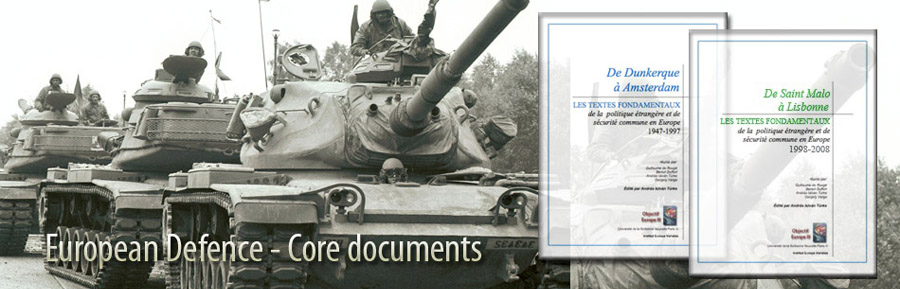
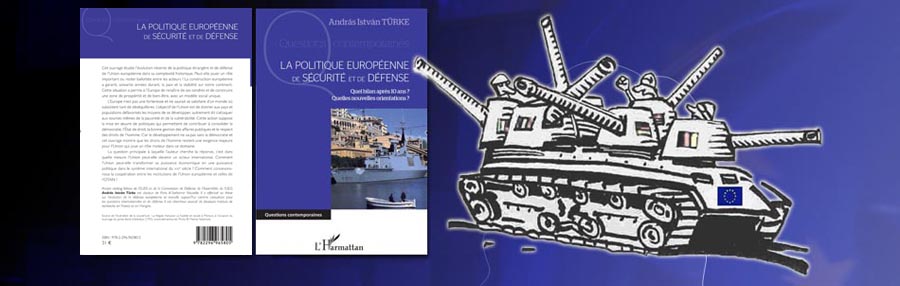
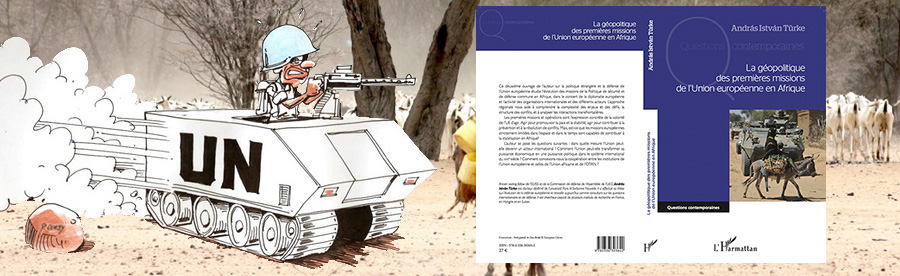
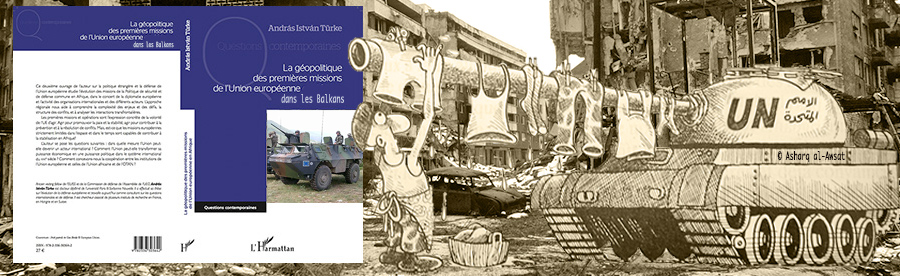
We are looking for sponsors for the English translation of these books, please contact turkeandras(at)gmail(dot)com