
You are here
Africa
Comment les aliments ultra-transformés affectent notre microbiome intestinal
Les additifs ajoutés aux aliments transformés pour prolonger leur fraîcheur pourraient avoir un effet inattendu sur la santé de notre microbiote intestinal.
South Africa stay unbeaten with win over West Indies
Aiden Markram smacks 82 not out off 46 balls as South Africa beat West Indies by nine wickets to maintain their unbeaten record at the 2026 T20 World Cup
Categories: Africa, European Union
South Africa stay unbeaten with win over West Indies
Aiden Markram smacks 82 not out off 46 balls as South Africa beat West Indies by nine wickets to maintain their unbeaten record at the 2026 T20 World Cup
Girl, 14, shot dead as South Africa's 'taxi wars' hit school
Violence has plagued South Africa's highly competitive and lucrative taxi industry for decades.
Is Ethiopia heading back to war in Tigray?
Many people are again leaving the region of Tigray just over three years after the civil war there ended.
Categories: Africa, Balkan News
Is Ethiopia heading back to war in Tigray?
Many people are again leaving the region of Tigray just over three years after the civil war there ended.
Textile « Made in Algeria » : Coup d’envoi des premières expéditions de prêt-à-porter vers ce pays
La wilaya de Mostaganem a franchi, ce jeudi, une étape historique dans la stratégie nationale de promotion des exportations hors hydrocarbures. Entre inauguration de salon […]
L’article Textile « Made in Algeria » : Coup d’envoi des premières expéditions de prêt-à-porter vers ce pays est apparu en premier sur .
Why Ugandan Male Sexual Violence Survivors Suffer In Silence
Dr Busingye Kabumba is a law professor at Makerere University. He said there is a misconception about sexual violence against men. Credit: Wambi Michael/IPS
By Wambi Michael
KAMPALA, Feb 26 2026 (IPS)
When people ordinarily think about sexual violence, it’s of the rape of women by men. In Uganda, as in other countries, activists say men are also victims of sexual violence perpetrated by women, though males remain silent.
The UNFPA 2022 gap analysis of population-related indicators and issues in Uganda report gives details of sexual violence experienced by men and women.
“Similar to physical violence, women are reported to be more exposed to sexual violence than men, although the trend shows a decline over time. The incidence of sexual violence decreased from 27.8 percent in 2011 to 17 percent in 2022 but remains significantly higher than the 6 percent recorded for men in 2022. In the 12 months preceding the 2022 survey, 11 percent of women reported experiencing sexual violence, compared to 4 percent of men.”
The perpetrators of sexual violence against women include current husbands/intimate partners, strangers, friends, and acquaintances. For men, the identified perpetrators are current or former wives/intimate partners, the study says.
Section 110 of Uganda’s penal code describes rape as having unlawful carnal knowledge of a woman. Under that provision, only a male can be found guilty.
Lawyer Ivan Kyazze conducted an exploration study of the sufficiency of the existing international conventions and statutes in Uganda against rape that protect male victims from female perpetrators.
“I want to pose a question. Do you believe that men are raped by women? Think about it,” he asked an audience at Makerere University’s law school auditorium.
“Sexual violence against men has existed but has received relatively little attention. Because in Uganda and elsewhere, men are considered strong and dominant.”
He said for many, it is physically impossible for a woman to rape a man, and in law, it is a more serious offence to forcibly penetrate someone than to force them to penetrate you.
Kyazze, a senior State Prosecutor, suggested that Uganda’s law on rape is biased and that it needs to be changed to protect men who are raped by men.
He said rape is an international crime that is not just growing but is also highly contested and without a joint legal definition.
Rape is an act of sexual assault and a violation of bodily integrity and sexual autonomy, defined as the “non-consensual [invasion of] the body of a person by conduct resulting in penetration, however slight, of any part of the body of the victim or of the perpetrator with a sexual organ.
Kyazze explained that, typically, society imagines men as the perpetrators and women as the victims of rape.
“We need to acknowledge that there are other stories. Stories of men who experience rape, sometimes at the hands of female perpetrators. This is a reality that many men face,” he argued.
He said this abuse is rarely discussed openly.
“In part, this is due to societal stereotypes that make it difficult for male survivors to come forward.”
Being a state prosecutor, Kyazze said some men told him that they were sexually abused by their spouses, workmates, and employers, but the cases don’t get to the courts.
“Today, male victims continue to face physical and psychological harm, including anxiety and depression, and denial of justice. Such a gap within our law leaves our country with no effort to prevent sexual violence against men, in particular rape, and it encourages the harmful stereotypes that exist in our society,” said Kyazze.
According to Kyazze, the rape of men by women happens when the female abuser uses emotional, sexual intimidation tactics and drugs to facilitate the rape.
He explained that when a woman has power or authority over a man, such as in a workplace, she may use that influence to coerce or manipulate a man into a sexual act.
Dr Daphine Agaba, a lecturer at the Department of Gender Studies, Makerere University, believed at one time that a man could not be raped by a woman.
“I asked myself this question several times. How are men raped by women exactly? So to find answers to this question, I polled my male friends,” she said.
In the poll, she discovered that men were willing to relate their experiences with women who had perpetrated sexual violence. In one case a man said he felt “raped and violated” by his wife, who wanted to have a third child.
From that and other testimonies that Agaba heard from her male colleagues, she said she started understanding something that she had earlier doubted.
However, Agaba was not fully convinced by Kyazze’s suggestion about the need to redefine rape under the penal code.
“That assertion decontextualises rape from its societal position. Rape doesn’t happen in the abstract. Rape is a manifestation of how power operates, and this power is still very largely neocentric. This power play not only affects women, but it also hierarchises men into those who are powerful and those who are not,” she said.
Being a woman and a gender activist, Agaba said she felt the debate could help both women and men survivors of sexual violence.
“Finally, men are going to start taking seriously our (women’s) concerns,” she said.
For over sixty years, Uganda has not had a definition for marital rape — the act of one spouse having sexual intercourse without their spouse’s consent.
Women have attempted to include it in the laws enacted over the past 30 years. But each time they have been defeated. In 2021 President Yoweri Museveni declined to assent to a marital rape law, reportedly because it was a duplication of other laws, but activists saw it as a setback for women’s rights.
“In the domestic relations bill, activists said marital rape is a very big challenge. When this bill was put before parliament, the male legislators essentially laughed the women legislators out of parliament,” Agaba commented.
“They said, if you’re my wife and I married you, under what circumstances would you say that I raped you?’ By talking about marital rape, this time perpetrated against men, it is my hope and prayer that now that men want to be written into the law, to be included in the law, they will now start to understand the real plight that we’ve been facing. So my question is, now that men want to be included in the rape law, will we see marital rape in our laws?”
Agaba explained that statistics about conviction rates for female rape victims remain too low in Uganda.
“Which means, even as we are talking about men, it’s not yet Uhuru (not yet Independence) for women, not even close. If Uhuru is here, women are about 100 years away from that. Is that a law that is working for its people?” she asked.
The low conviction rates aside, Agaba told IPS that the elephant in the room was the reality that men are being raped by fellow men, but this issue has been side-stepped in Uganda as elsewhere on the continent.
“In DRC, one in four men has experienced sexual violence. Yet, despite these statistics, few people have asked where this violence comes from. While women are disproportionately affected by sexual and gender violence, its prevalence does not make it exclusive to women. SGBV against men is most often perpetrated by men. It occurs outside the household; the perpetrators are often their acquaintances, their neighbours, and family members.”
She explained that the kind of abuse faced by men in the Congo includes rape, genital mutilation, enforced nudity, and involuntary sterilisation, all of which are perpetrated against both men and women.
Why have men not sought legal action when raped?
Dr Busingye Kabumba, a Senior Law Lecturer at Makerere University’s Law School, said rape has been defined as a crime that leaves the person alive but with a real cost in terms of life.
“That, when someone mentions rape, there’s really no questioning of what is being talked about. One can also think of the rape of men by men, and in those situations, again, there is no questioning what is being spoken of. In some cases, it’s even seen as worse,” adds Kabumba.
Kabumba explained that, like female rape victims, men who are sexually abused by women fear being further traumatised during the court trial.
“I know it’s a very traumatic experience, but then you are in this courtroom, you have a judge, what happened was traumatic, but you’re now being asked to describe it, there’s a transcriber, there’s a court clerk, and they’re just interested in the details, they’re not really interested in what you went through. It’s just, yes, ‘what happened?'” said Kabumba
He explained that under Uganda’s case law, there is already a challenge for women who are raped by men. Now, the idea that men could be the victim of sexual violence by a woman would be even more difficult to prosecute.
The survivor may not even be taken seriously if he does decide to report the crime.
“Is it the incredulity about the idea that a man is too powerful to be powerless? “Are we saying men are so powerful that they can never be overruled or violated?” he asked.
IPS UN Bureau Report
Follow @IPSNewsUNBureau
!function(d,s,id){var js,fjs=d.getElementsByTagName(s)[0],p=/^http:/.test(d.location)?'http':'https';if(!d.getElementById(id)){js=d.createElement(s);js.id=id;js.src=p+'://platform.twitter.com/widgets.js';fjs.parentNode.insertBefore(js,fjs);}}(document, 'script', 'twitter-wjs');
Categories: Africa, Europäische Union
Pénurie de sel et taux d’iode : l’APOCE répond aux inquiétudes des consommateurs
La tension autour du sel a surpris plus d’un consommateur en Algérie ces derniers jours. Ruées dans certains commerces, inquiétudes sur la conformité de produits […]
L’article Pénurie de sel et taux d’iode : l’APOCE répond aux inquiétudes des consommateurs est apparu en premier sur .
Nigeria to hold inquest into death of Chimamanda Ngozi Adichie's toddler
The internationally acclaimed writer has accused Nigerian hospital Euracare of negligence, which it denies.
Debate: What to make of Trump's State of the Union address?
US President Donald Trump has praised his government's policies in his State of the Union address. He declared that the US border was secure, the economy was booming and America's enemies were afraid, speaking of a new "golden age for America". Commentators take a closer look at his speech and criticise a lack of clarity on foreign policy.
Categories: Africa, European Union
Saison estivale 2026 : Algérie Ferries débloque les offres Hana et Safir
Lancées le 22 février, les réservations pour la saison estivale chez Algérie Ferries provoquent la colère des usagers. En cause : des prix jugés excessifs […]
L’article Saison estivale 2026 : Algérie Ferries débloque les offres Hana et Safir est apparu en premier sur .
Psychologie im Job: Darum sind introvertierte Menschen genauso gute Führungskräfte
In sich gekehrte Menschen werden oft unterschätzt oder falsch verstanden. Dabei sind sie sehr gute Führungskräfte und haben stets ein offenes Ohr.
Categories: Africa, Swiss News
Météo Algérie : vents forts, tempêtes de sable et orages dans plusieurs régions ce 26 février
La météo en Algérie connaît un nouvel épisode agité dans le sud du pays. Les services de l’Office National de la Météorologie ont lancé, ce […]
L’article Météo Algérie : vents forts, tempêtes de sable et orages dans plusieurs régions ce 26 février est apparu en premier sur .
International Women’s Day & 70th Session of the UN Commission on the Status of Women
By UN Women
UNITED NATIONS, Feb 26 2026 (IPS)
International Women’s Day 2026 comes at a defining moment: Women and girls have never been closer to equality, and never closer to losing it. Legal protection against domestic violence has expanded in many countries. Yet, the rights of women and girls are being rolled back in plain sight, and across the world, women still do not enjoy the same legal rights as men.
On 4 March, ahead of the 70th session of the Commission on the Status of Women (CSW70), UN Women will launch a report warning that the systems meant to protect women and girls are failing, leaving millions exposed to discrimination, violence and impunity as backlash against gender equality intensifies and violations of fundamental rights rise worldwide.
From 9–19 March, the world will gather at United Nations Headquarters for CSW70 – the United Nations’ largest annual forum dedicated to gender equality and women’s rights. What happens at CSW influences laws, policies, funding and accountability across countries and generations.
This year’s focus is clear: rights, justice and action for all women and girls.
CSW70 is a defining test: whether the world choses to act together and deliver equality before the law for all women and girls or allow injustice to persist with impunity. UN Women calls on governments, partners, institutions and communities everywhere to stand up, show up and speak up for rights, justice and action – so all women and girls can live safely, speak freely and exist equally.
Meanwhile, four years into the full-scale invasion of Ukraine, more than 5,000 women and girls have been killed and 14,000 injured, with 2025 being the deadliest year yet – and the real toll likely far higher.
As the war intensifies and energy attacks cripple daily life, a third crisis is tightening its grip on women and girls: collapsing funding for women-led and women’s rights organizations, the very lifeline keeping women and girls alive, protected and supported.
As humanitarian needs surge, women’s rights and women-led organizations across Ukraine are being driven toward collapse, with deep funding cuts dismantling front-line protection systems and forcing lifesaving services for women and girls to scale back or shut down.
A new UN Women report, The Impact of Foreign Assistance Cuts on Women’s Rights and Women-Led Organizations in Ukraine, documents the scale of the funding crisis and its impact on the lives of women and girls.
One in three women’s rights and women-led organizations surveyed warn they may only survive six months or less with current funding levels. Due to cuts in 2025 and 2026, women-led organizations in Ukraine are projected to lose at least USD 52.9 million by the end of the year.
Women’s rights and women-led organizations surveyed warn they will be forced to stop life-saving services to at least 63,000 women and girls in need in 2026. Those hit first and hardest are those already most at risk: women and girls in front-line and rural areas, older women, women-headed households, and women and girls with disabilities will be cut off from protection, humanitarian aid, and recovery at a time of escalating danger.
As shown in the report developed by the Gender in Humanitarian Action (GiHA) Working Group in Ukraine – co-chaired by UN Women, NGO Girls and CARE Ukraine – the effects of the funding cuts are compounded by a growing nationwide energy crisis and an increase in attacks.
While Ukrainian women’s organizations continue to deliver on their mandates, their operational capacity, access to populations in need, and the well-being of their staff are severely impacted by energy cuts. This is especially urgent today when millions of Ukrainians are deprived of essential services, including electricity, heating and water.
“Women’s organizations in Ukraine are the first to stand with women and girls in crisis – and the force behind sustaining protection, dignity and hope. The current funding cuts are severing their life-saving operations. While UN Women continues to work with and invest in women’s organizations in Ukraine, more sustained funding is needed so that they can keep delivering essential services”.
“This is the only way women and girls can have a full and meaningful role in shaping gender-responsive recovery and building a just and lasting peace,” said UN Women Executive Director Sima Bahous.
IPS UN Bureau
Follow @IPSNewsUNBureau
!function(d,s,id){var js,fjs=d.getElementsByTagName(s)[0],p=/^http:/.test(d.location)?'http':'https';if(!d.getElementById(id)){js=d.createElement(s);js.id=id;js.src=p+'://platform.twitter.com/widgets.js';fjs.parentNode.insertBefore(js,fjs);}}(document, 'script', 'twitter-wjs');
Will Palestine Preside Over the Next UN General Assembly?
The General Assembly adopted a resolution in 2012 granting Palestine the status of non-member observer State in the United Nations. Credit: UN Photo/Rick Bajornas
By Thalif Deen
UNITED NATIONS, Feb 26 2026 (IPS)
The 193-member General Assembly, the highest-ranking policy-making body at the United Nations, is most likely to elect Palestine as its next President in an unprecedented move voting for a “non-member observer state”—a state deprived of a country to represent.
The Secretariat has received three nominations for the position of President of the General Assembly beginning mid-September. In accordance with the established regional rotation, the President of the 81st session will be elected from the Asia-Pacific Group.
The election will be held on June 2, with three nominations so far: Md. Touhid Hossain (Bangladesh), Andreas S. Kakouris (Cyprus) and Riyad Mansour (Palestine).
According to geographical rotation, it will be the turn of the Asia-Pacific Group to nominate a candidate– with the final election by the General Assembly.
The current front-runner, according to diplomatic sources, is Palestine. In virtually all UN resolutions relating to Palestine, it has continued to receive an overwhelming majority of votes in the General Assembly.
The political support for Palestine among member states has always remained constantly strong. And the election of Palestine will also defy a hostile White House.
In November 2012, the General Assembly voted to upgrade Palestine to a “non-member observer state” with a majority of 138 votes in favor, 9 against, and 41 abstentions.
- • Votes in Favor (138): Supported by a majority of UN member states.
• Votes Against (9): Canada, Czech Republic, Israel, Marshall Islands, Micronesia (Federated States of), Nauru, Palau, Panama, and the United States.
• Abstentions (41): Countries that did not vote for or against.
Last December the General Assembly overwhelmingly adopted a draft resolution reaffirming the Palestinian people’s right to self-determination, including the right to an independent State of Palestine.
The draft resolution was approved by a majority of 164 member states (out of 193), with eight countries voting against it, namely Israel, the US, Micronesia, Argentina, Paraguay, Papua New Guinea, Palau, and Nauru.
Nine countries abstained: Ecuador, Togo, Tonga, Panama, Fiji, Cameroon, the Marshall Islands, Samoa, and South Sudan.
Dr Stephen Zunes, Professor of Politics at the University of San Francisco and director of Middle Eastern Studies, told IPS a broad international consensus in support for the establishment of a viable independent Palestinian state in the occupied West Bank and Gaza, and naming a Palestinian as the next president of the UN General Assembly would send a strong message to the Israeli government and its supporters in Washington that the State of Palestine, now recognized by 164 of the UN’s 193 states, should be treated like any other nation.
It would also underscore that Palestine is represented by the Fatah-led Palestine Authority, not by Hamas, which forcibly seized power in Gaza in 2007, he said.
“If Palestine is elected to the General Assembly presidency, the position would likely go to Riyad Mansour, a U.S.-educated diplomat who currently serves as the country’s UN ambassador”.
Mansour, he pointed out, has spent most of his life in the United States, has worked with Youth4Peace and other groups promoting peacebuilding, has no association with terrorism, and is generally considered a moderate.
“Nevertheless, his selection will likely result in an angry backlash from Washington, which opposes any formal role by anyone representing Palestine”.
In 2017, during his first term, the Trump administration blocked the appointment of former prime minister Salam Fayyad, also a well-respected moderate and reformer, from leading the U.N. political mission in Libya to try to end that country’s civil war simply because he was Palestinian, declared Dr Zunes.
Dr Ramzy Baroud, a Palestinian-American author and editor of The Palestine Chronicle, told IPS
two international campaigns are unfolding simultaneously: a US-led effort aimed at legitimizing Israel while it is still actively attempting to exterminate the Palestinian people, and a General Assembly–championed track aimed at legitimizing Palestine, Palestinian rights, and the Palestinian struggle.
The push to elect Palestine as the next UN General Assembly president — though the State of Palestine remains an observing member and lacks actual sovereignty on the ground — is taking place against this stark backdrop: one campaign normalizing and shielding a genocidal state, the other seeking to affirm the rights and political standing of a dispossessed nation, he pointed out.
“Nothing could be more immoral than Washington’s attempt to rehabilitate Israel diplomatically amid genocide. And nothing could be more just than the effort by Palestine’s allies to anchor Palestinian rights within international legitimacy” he said..
Yet a difficult question remains: while the US is gradually chipping away at Israel’s isolation, is much of the international community offering Palestinians little more than symbolic victories?, he noted.
“If the legitimization of Palestine at the General Assembly is to move beyond symbolism, it must translate into concrete recognition of Palestinian territorial rights, sovereignty, and freedom. Legitimacy must not remain rhetorical; it must become political and material,” Dr Baroud argued.
“This requires that the UN General Assembly states that support Palestine in international forums carry that support onto the ground — by isolating Israel diplomatically, severing ties, imposing sanctions, and adopting meaningful accountability measures. While some states have taken such steps, others continue to pursue a precarious “balance,” appeasing Washington and Tel Aviv while paying lip service to Palestine.”
Palestinians are winning what Richard Falk, the former UN Special Rapporteur on Palestine, has called the legitimacy war. But legitimacy as an intellectual or moral category is not enough. At this historical juncture, it must be transformed into enforceable political reality — into sovereignty, protection, and freedom on the ground, said Dr Baroud.
“We hope that the continued centering of Palestine at the UN and across global institutions strengthens the growing current of solidarity worldwide. More importantly, we hope that symbolic recognition will soon give way to decisive and tangible action,” he declared.
IPS UN Bureau Report
Follow @IPSNewsUNBureau
!function(d,s,id){var js,fjs=d.getElementsByTagName(s)[0],p=/^http:/.test(d.location)?'http':'https';if(!d.getElementById(id)){js=d.createElement(s);js.id=id;js.src=p+'://platform.twitter.com/widgets.js';fjs.parentNode.insertBefore(js,fjs);}}(document, 'script', 'twitter-wjs');
Keine Spur von Angela R. (17): Mordverdächtige Schülerin bleibt verschwunden
Seit Ende Januar ist die 17-Jährige Angela R. auf der Flucht. Die Schülerin aus Deutschland steht unter dringendem Verdacht, einen Jungen erstochen zu haben.
Categories: Africa, Swiss News
Linke und SVP gegen Wolkenkratzer: Stadtzürcher Parlament streicht Hochhauszonen zusammen
Das Stadtzürcher Parlament hat am Mittwochabend die Hochhausgebiete verkleinert und strenger reguliert. FDP und GLP erwägen ein Referendum gegen die Entscheidung.
Categories: Africa, Swiss News
Is Ethiopia heading back to war in Tigray?
Many people are again leaving the region of Tigray just over three years after the civil war there ended.
Pope Leo to visit four African countries in April
This is the first time that a pope will visit Algeria, whose population is mostly Muslim.
Categories: Africa, Europäische Union
Pages
the old site is here


© 2012-2015 Europa Varietas Foundation © 2015-2020 Europa Varietas Association
www.europavarietas.org | info(@)europavarietas(dot)org | Switzerland
This is a GDPR ready site
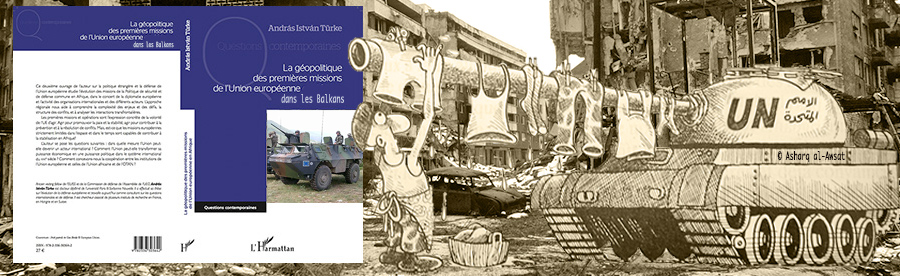
We are looking for sponsors for the English translation of these books, please contact turkeandras(at)gmail(dot)com