
You are here
Swiss News
Gender mainstreaming in Morocco's water sector: from national strategies to oasis farming realities
Gender mainstreaming in the water sector has gained increasing attention in international and national governance frameworks, yet its translation into meaningful change for women and in gender relations more broadly, in a context where both institutional arrangements and accelerating climate change are intensifying challenges around water access, control, use, and governance, remains a persistent challenge. This report examines this gap in the Moroccan context, focusing on two complementary entry points: an overview of gender mainstreaming efforts and institutional advances in the water and irrigation sectors; and the everyday realities of women farmers and cooperative members in the oasis regions of Boudnib and the Drâa Valley. Combining document analysis and institutional interviews with in-depth fieldwork, the study asks whether and how national gender mainstreaming commitments translate into tangible shifts in women’s water access, livelihoods, and decision-making power on the ground.
The findings point to a more nuanced picture. Morocco has made genuine institutional progress: gender is now formally embedded in constitutional principles, water law, sectoral strategies, and national planning instruments, and donor-financed irrigation projects have demonstrated that integrated gender approaches can yield concrete results. Yet these gains remain fragile, often conditional on external support or on the commitment of individual champions within institutions, a dependence that poses significant risks to their sustainability. Outside donor-supported projects, gender analysis is often absent from programme design, and formal inclusion, such as in land programmes, cooperatives, or training schemes, does not automatically translate into effective control over water, labour, or decisions. Many adaptive initiatives are shaped as much by women’s own agency as by the institutional programmes formally available to support them, whose reach remains uneven and frequently contingent on literacy, mobility, and institutional connections. Deeper structural constraints, including historical exclusion from water governance bodies, the growing individualisation of groundwater access, and socio-cultural norms that limit women’s recognition as farmers and irrigators, remain insufficiently taken into account by current approaches. The report concludes with five recommendations calling for stronger institutional anchoring, cross-sectoral coordination, reformed empowerment indicators, and a gradual reduction of dependence on donor financing.
Categories: Diplomacy & Defense Think Tank News, Swiss News
United Nations Least Developed Country Category – Curse or Boon?
By Anis Chowdhury
SYDNEY, Sep 21 2026 (IPS)
The UN General Assembly will soon vote – most likely favourably – on Bangladesh’s request to postpone the country’s graduation from the UN’s Least Developed Country (LDC) category, currently scheduled for November this year. The request for a 3-year extension was endorsed by the ECOSOC following the recommendation of the UN’s Committee for Development Policy (CDP). It is highly likely that the extension will also be justifiably granted to Nepal and Lao People’s Democratic Republic (Lao, PDR) – the two other countries scheduled to graduate with Bangladesh, given the fast deteriorating global economic situation and recent natural disaster in Nepal. In fact, the same argument for an extension may be admissible to all prospective graduating countries, such as Solomon Islands (2027), Cambodia (2029) and Senegal (2029).
Anis Chowdhury
However, this raises some serious questions regarding the LDC category itself and the successive 10-year support programmes for LDCs.The background
The United Nations established the LDC category in 1971 for low-income countries facing severe structural barriers to sustainable development and to direct special international support toward them such as preferential market access, financial aid, and technical cooperation. The idea of a special category for low-income, structurally weak countries originated in the first session of the United Nations Conference on Trade and Development (UNCTAD) in 1964.
Since the creation of the LDC category, the UN organised five international conferences, the first being in 1981, to draw up comprehensive ten-year frameworks for supports with specific goals. The current programme is the Doha Programme of Action (DPOA) for the Decade 2022–2031, preceded by the Istanbul Programme of Action (IPOA) for the Decade 2011–2020.
The decision to establish a separate LDC category was undoubtedly commendable. The global consensus around the comprehensive action programmes also reflected the goodwill of the international community.
However, none of the programmes could reduce the vulnerability of LDCs. The number of LDCs steadily increased from the 1971 list of 25 countries, reaching a peak of 51 countries in 2003. The number now stands at 46, still nearly double that of the original list. Only 9 countries exited the list – one, Sikkim, through India’s annexation in 1975.
Although the inclusion of newly independent countries partly explains the lengthening of the LDC list, one cannot avoid the judgement of an overall failure of the international community’s good-intentioned programmes. This is especially so in light of the development successes of countries which did not join the group despite their eligibility.
The Reckoning
The failure became staggering by the time the international community met in Istanbul in 2011. After four decades since the special LDC category was created, only three countries – Botswana, Cabo Verde and Maldives – exited the group. Furthermore, the post-graduation experience has been disappointing.
For example, life-expectancy in Botswana, the first country to exit the LDC group, declined from 61.6 years in 1988 to 50.08 years in 2003, while it remains one of the most unequal countries in the world, holding the 9th highest income Gini coefficient globally. Botswana, although hailed for macroeconomic stability, failed to transform structurally with the share of manufacturing hovering below 6% of GDP, and it remains extremely vulnerable to fluctuations in international commodity markets, especially diamond. Thus, growth has declined significantly since the mid-2000s and the unemployment rate has increased to very high levels, around 26%.
Therefore, the core goals and targets of the IPOA included:
- • Enable half of all LDCs to achieve graduation status by 2020.
• Attain sustained, equitable, and inclusive economic growth of at least 7% annually.
• Strengthen education, health, and nutrition.
• Build productive bases and diversify economies to generate decent jobs, especially for youth
Unfortunately, only 6 countries – Maldives, Samoa, Equatorial Guinea, Vanuatu, Bhutan and São Tomé and Príncipe graduated – during 2011-2024, and 3 countries – Bangladesh, Nepal and Lao PDR – became eligible to graduate this year. Again, the experience is not very encouraging for the graduated countries, while the fear of graduation has gripped the countries soon to graduate.
In 2021, UNCTAD concluded that 50 years of LDC experience is “sobering”. It found that half of the LDCs fell behind the rest of the world in terms of per capita income and other dimensions of development. Hence, the economic gap between these countries and the rest of the world has widened over the last 50 years.
Rejecting “LDC insult”
Zimbabwe, a land-locked country, rejected the UN’s recommendation to be classified as a LDC in 2006 despite facing severe economic hardships. Zimbabwe viewed the UN recommendation “to be downgraded to LDC status” as an insult, while the neighbouring land-locked Zambia was among the first group of countries classified as an LDC in 1971.
When Zimbabwe’s per capita GDP plunged to USD341 in 2008, resource-rich Zambia’s per capita GDP was around USD1,376. Today, after more than half a century as an LDC, the per capita GDP of Zambia, one of the world’s leading producers of copper, cobalt, and semi-precious gemstones like emeralds, is around USD1,318, while Zimbabwe’s per capita GDP recovered within a decade to around USD3,445 in 2017.
Vietnam, coming out of a quarter century long devasting war in 1975, facing the challenge of unifying the country during the worst global economic situation with a paltry per capita income of around USD85, chose not to join the LDC group. Instead of aid dependence, it opted for the trade and investment route to development. Today, its per capita GDP is approximately USD5,066, while Bangladesh which joined the LDC group in 1975 with a per capita income of around USD230 could manage to raise its per capita GDP to approximately USD2,960.
The Republic of Korea (ROK), one of the poorest countries of the world in the 1960s, could also join the LDC group in 1971 when it was created; but it did not. Maintaining its policy independence and choosing the trade and investment route, ROK has become a full-fledged developed country in 1996 (member of OECD) within three decades. It managed to increase its per capita GDP from USD158 in 1960 to USD36,227 in 2025.
What may have gone wrong?
UNCTAD attributed the “sobering” experience to the LDCs’ inability to exploit international support measures (ISMs) strategically to develop their productive capacity. Others offered different reasons such as failure to understand the complex development process and appreciate the dangers associated with increased integration of structurally weak economies to the rapidly changing global economic system.
Add to these, complicity. Countries joining the group took ISMs as guaranteed; they did not take serious steps to mobilise domestic resources, diversify their economies and expand markets. Take the case of Bangladesh, a country regarded as the best utiliser of ISMs.
Bangladesh’s tax-GDP ratio is dismally low, experiencing a decline from a peak of around 10% to around 7%. Its ready-made garment (RMG) sector’s dominance increased from around 67% of export earnings in 2018 when the country first met the graduation criteria to around 85% by 2025 while it should have been declining as the graduation deadline was approaching.
Bangladesh has also failed to diversify its export markets away from the EU and the USA, accounting for close to 80% of RMG exports. It does not have any meaningful trade agreement with any country or trading bloc, while Vietnam has 17 bilateral FTA and is a member of Progressive Agreement for Trans-Pacific Partnership as well as Regional Comprehensive Economic Partnership, the world’s largest free trade agreement, covering roughly 30% of global GDP.
Ironically, the sector that propelled Bangladesh’s industrialisation, made the country more vulnerable. Worst, too big to ignore, the RMG sector has captured Bangladesh’s political and policy space. The CDP’s recommendation in favour of Bangladesh’s extension request has been made subject to the country’s commitment to reforms. However, political will for reforms may waver when the state is captured by a dominant sector.
Curse or Boon?
Thus, what was supposed to be a boon, for many LDCs, the category has become a curse, trapping them in a perpetual state of underdevelopment and vulnerability. It fits the narrative of William Easterly’s The White Man’s Burden; unfortunately, the international community may feel burdened and grant an extension to the “fearful” LDCs even when its “good-intentioned” efforts have produced so little good.
Anis Chowdhury, Emeritus Professor, Western Sydney University (Australia). He held senior UN positions in Bangkok and New York and served as Special Assistant to the Chief Advisor for Finance (with the status and rank of State Minister) in the Professor Yunus-led Interim Government. E-mail: anis.z.chowdhury@gmail.com; a.chowdhury@westernsydney.edu
IPS UN Bureau
Related Articles
Categories: Africa, Swiss News
Sudan: Blood on Foreign Powers’ Hands
A group of armed defectors from the RSF arrives in the west of Omdurman on 19 August 2026. Credit: Ebrahim Hamid/AFP
By Andrew Firmin
LONDON, Sep 21 2026 (IPS)
Sudan’s civil war grinds on. It’s close to three and a half years since the Sudanese Armed Forces (SAF) and the Rapid Support Forces (RSF) militia began their battle for supremacy, and the two forces and their allies continue to slaughter civilians with impunity. As a recent UN report makes clear, the killing is enabled by numerous foreign powers that continue to supply weapons, personnel and logistical support. They have made a civil conflict their proxy war, and their self-interest is sustaining the killing.
Drone warfare
Things are relatively quiet in the capital, Khartoum, where the curfew was recently lifted following its recapture by the SAF last year, but the RSF still controls significant areas, with fighting concentrated in the Darfur and Kordofan regions to the west and Blue Nile state in the southeast.
Both sides now extensively use drones to kill civilians. In February, a suspected RSF drone strike on an aid convoy in South Kordofan killed three humanitarian workers and wounded four more. In May, a suspected SAF drone strike on a crowded market in Ghubaysh, an RSF-controlled town in West Kordofan, killed 28 people as they shopped for food. In August, another likely SAF strike on a court session in an RSF-controlled village killed 35 people.
The RSF are attacking El Obeid, a city of around half a million people in North Kordofan. RSF drones have hit hospitals and schools. People fear a repeat of what happened when the RSF took the city of El Fasher last October. The UN’s Fact-Finding Mission concluded that the ensuing massacre, in which the RSF killed at least 60,000 people, bore the ‘hallmarks of genocide’, with ethnically targeted killings and widespread sexual violence.
Humanitarian and civic space emergency
The war has caused the world’s largest humanitarian crisis. Over 11 million people have been forcibly displaced within Sudan or to surrounding countries, and around 20 million are experiencing acute food insecurity.
There’s a great need for the help civil society offers, but it’s hard for humanitarian organisations to provide aid because of security dangers and access and movement restrictions. The Sudanese government is also attacking the ability of civil society organisations to operate. In February, authorities revoked the licences of four organisations with missions to provide aid, help victims and promote peace.
Journalists, particularly women journalists, are under attack, making it harder to tell the truth about what’s happening on the ground. In January, the Sudanese Journalists Syndicate recorded that 14 journalists and other media workers had been killed in 2025. In December 2025, it was reported that 40 per cent of women journalists had experienced sexual assault, physical violence, harassment or threats.
Foreign powers behind the war
Sudan’s people can expect little help from the deadlocked UN Security Council. In August, the US government proposed a resolution to expand an arms embargo that currently applies to Darfur to the whole country, explicitly including drones. The Sudanese government condemned the proposal and Russia rejected it, which, given its veto power as a permanent member, means the resolution won’t advance further unless significantly watered down.
Russia initially sold weapons to both the RSF and SAF but more recently has swung behind the SAF, becoming a major arms supplier in return for gold and a potential Red Sea naval base. It’s joined by several other states with a direct stake in the conflict. The UN’s Fact-Finding Mission has set out how the SAF are using foreign-supplied drones while transnational networks are keeping the RSF supplied.
Alongside Russia, states that supply arms or other military support to the SAF, or have done so at some point since the war began, include Egypt, Eritrea, Iran, Libya, Qatar, Saudi Arabia, Somalia, Turkey and Ukraine. Those that have backed the RSF in various ways include the Central African Republic, Chad, Ethiopia, Kenya, South Sudan, Uganda and, most notoriously, the United Arab Emirates (UAE). Weapons originating from countries including Canada, China, Israel and the UK have also been used. In most cases, states deny involvement.
There’s ample evidence that the UAE extensively supplies the RSF with mercenaries and weapons via African transit routes, in return for gold and in the hope of securing a regional foothold. The UAE funded Colombian mercenaries who played an active role alongside the RSF in the slaughter in El Fasher. It was recently revealed that individuals and entities linked to the RSF’s leader Mohamed Hamdan Dagalo, known as Hemedti, have acquired properties worth over US$24 million in Dubai, likely paid for with smuggled gold.
The UAE’s reliance on states that border Sudan to allow its convoys to cross brings the risk of conflict spillovers, as seen in alleged SAF airstrikes on a military convoy in Chad in August.
Push for accountability
A new initiative to hold foreign figures accountable offers some hope for justice. In June, the Raoul Wallenberg Centre for Human Rights and a group of civil society organisations made a legal submission to the International Criminal Court (ICC), asking it to investigate several foreign officials for aiding and abetting crimes against humanity, genocide and war crimes in Sudan. The submission provided evidence of the involvement of the governments of Egypt, Iran, Turkey and the UAE.
The ICC has an ongoing investigation into the situation in Darfur, scene of a 2003-2005 genocide. It has confirmed that human rights crimes committed during the current war fall under its jurisdiction as part of this investigation, and in June it announced it had ‘concrete evidence’ linking RSF leaders to atrocities in El Fasher.
It’s vital that leaders responsible for human rights crimes face justice, and this must include the leaders of the countries waging a proxy war. If there is to be peace and justice, the impunity of the foreign powers that are sustaining the war must be challenged.
Andrew Firmin is CIVICUS Editor-in-Chief, co-director and writer for CIVICUS Lens and co-author of the State of Civil Society Report.
For interviews or more information, please contact research@civicus.org
Categories: Africa, Swiss News
US Visas for Ruthless Autocrats to Address UN – but not for Palestinian Leaders
President Mahmoud Abbas of Palestine. Credit: UN Photo
By Thalif Deen
UNITED NATIONS, Sep 21 2026 (IPS)
When Yasser Arafat was denied a US visa for his second visit to New York to address the United Nations back in 1988, the General Assembly defied the United States by temporarily moving the UN’s highest policymaking body to Geneva—perhaps for the first time in UN history—providing a less hostile political environment and a platform for the leader of the Palestine Liberation Organization (PLO).
Arafat, who first addressed the UN in 1974, took a swipe at Washington when he prefaced his statement in Geneva by remarking, “It never occurred to me that my second meeting with this honorable Assembly, since 1974, would take place in the hospitable city of Geneva.”
The US last week denied visas to the Palestinian delegation, led by President Mahmoud Abbas, who was due to address the General Assembly on September 24. The delegates were also denied visas last year.
In the official list of speakers released last week, Abbas has been designated “Head of State” (HS) of the “State of Palestine.”
The U.S. State Department criticized Abbas and the Palestinian Authority (PA) for pursuing the “unilateral recognition of a conjectural Palestinian state” through international bodies rather than negotiated bilateral talks.
As a rebuff to the US, the General Assembly voted overwhelmingly last week to allow President Abbas and other high-level Palestinian officials to participate and address the annual gathering of world leaders via video, outsmarting the US—electronically.
The resolution was adopted with a 152-3 vote (with four countries abstaining). This decision directly addresses the decision by the United States to deny entry visas to the high-level Palestinian delegation—including Abbas—marking the second consecutive year the delegation has been barred from attending the UN high-level meeting of world political leaders.
The resolution was opposed only by the United States, Israel, and Paraguay, with Colombia, Honduras, Panama, and Peru abstaining.
So far, the UN expects about 73 Heads of State, 45 Heads of Government, 49 Ministers, 11 Vice-Presidents, and one Crown Prince to address the General Assembly through September 28.
Alongside the mandated meetings, there are about 168 events that are scheduled during the high-level week, and last week, Member States have submitted about 1,000 requests for bilateral meetings amongst themselves.
The bilateral meetings with the Secretary-General are also in the process of being scheduled.
The UN has also issued 1,935 press passes for visiting journalists and an additional 1,290 press passes for official media.
Dr. Stephen Zunes, a professor of Politics and International Studies at the University of San Francisco, where he serves as coordinator of the program in Middle Eastern Studies, told Inter Press Service (IPS) under the 1947 US-UN Headquarters agreement that the United States is obliged to allow foreign leaders to address the General Assembly.
“That’s why previous administrations allowed even the likes of Muammar Qaddafi, Mahmoud Ahmadinejad, Idi Amin, Suharto, and other nasty characters to visit.”
(According to one definition, “ruthless autocrats” are political leaders who hold absolute power and use severe oppression, violence, and censorship to maintain control. Throughout history, these dictators have suppressed political opposition, eliminated civil liberties, and caused massive human suffering.)
Now, however, the Trump administration is banning representatives of the government of Palestine—a permanent non-member state of the United Nations—from coming to New York despite their recognizing Israel, renouncing terrorism, and calling for peace, said Dr. Zunes.
And there have been no objections, he said, from Democratic leaders in the US Congress. The problem, therefore, is not that the State of Palestine is a brutal dictatorship or violating international legal norms—the United States has no problems with that.
“The problem is that they are Palestinians. This is bigotry, pure and simple,“ he said.
The General Assembly could have relocated to Geneva, as they did in 1988. However, concerns about the costs and the carbon footprint, combined with access to modern communications technologies, have led them to allow the Palestinian leadership to Zoom in, said Dr. Zunes.
While going to Geneva would have been a more powerful statement, the support by such an overwhelming majority of the world’s nations can still be seen as a rebuke of Washington’s continued opposition to Palestine’s right to exist, declared Dr Zunes.
Mouin Rabbani, Managing Editor, Jadaliyya, an independent ezine produced by the Arab Studies Institute, told IPS the United States has once again demonstrated itself to be unfit to play the role of host nation of the United Nations. It considers the Host Country Agreement as something to be honored on a voluntary basis rather than a series of binding obligations.
The US government considers it perfectly normal to behave like a gangster state and openly violate its obligations by refusing entry to foreign delegates on the most specious of pretexts, he pointed out.
This is not a matter of the Trump administration. Nearly four decades ago, its predecessor, the Reagan administration, also refused entry to a Palestinian leader, Yasser Arafat.
What is particularly noteworthy on this occasion, he said, is that the US government is explicitly identifying the Palestinian recourse to the ICJ and ICC as legitimate grounds to refuse the participation of the Palestinian leader in the GA.
“This is the conduct of one gangster state acting on behalf of another (Israel) and demonstrates in the clearest manner possible that the US cannot and should not be entrusted with hosting the UN HQ.”
The Palestinians should of course be demanding that the GA conduct its session outside the US. The problem is that they are led by the exceptionally weak-kneed Mahmoud Abbas, who seems to continue to believe that absorbing these outrageous violations without confronting them forcefully will earn him brownie points with Trump and Netanyahu, which of course they won’t, declared Rabbani.
Meanwhile, responding to questions from journalists, UN Spokesperson Stéphane Dujarric said last week the Secretary-General deeply regrets the announcement by the United States extending sanctions that would deny visas to members of the Palestine Liberation Organization and officials of the Palestinian Authority to participate in meetings of the United Nations.
“The Secretary-General is concerned about the impact of this decision on the ability of the State of Palestine to participate fully in the work of the United Nations. The full participation of all delegations in the work of the organization is essential to its proper functioning”.
The Secretary-General takes note of the arrangements adopted yesterday by the General Assembly for the participation of the State of Palestine in the eighty-first session.
The Secretary-General urges the host country to ensure that visas are issued to all delegations in accordance with its obligations under the Headquarters Agreement and will continue to engage with the United States authorities to this end.
Meanwhile, key details of the General Assembly decision include the following:
• Scope of Virtual Access:
-
- The approved measure not only permits President Abbas to deliver his address virtually but also extends video-participation rights to any senior Palestinian officials for any UN meetings or conferences over the next year if they remain blocked from traveling to the U.S.
• The U.S. Stance:
-
- The Trump administration extended existing visa sanctions, citing security concerns and accusing the Palestinian Authority (PA) and the Palestine Liberation Organization (PLO) of failing to comply with legal commitments and attempting to “internationalize” the conflict through global tribunals.
• On-the-Ground Representation:
- While the high-level traveling delegation was barred, Palestinian diplomats who are already permanently accredited to the UN in New York will continue to represent them.
IPS UN Bureau Report
Categories: Africa, Swiss News
Wird Berlin nun zur «islamistischen Hauptstadt»?: Clan-Boss und Antisemit feierten mit den Linken den Wahlsieg
Die Wahlsieg-Party der Berliner Linken sorgt für Aufruhr. Clan-Chef Issa Remmo und ein Anti-Israel-Aktivist feierten mit. CDU-Bürgermeister Wegner spricht von einem «verstörenden Signal».
Categories: Afrique, Swiss News
Highlights im Video: Lausanne geht bei Delcroix-Show unter
In Zusammenarbeit mit blue Sport präsentiert Blick die Highlights der Partie FC Lausanne-Sport – FC Lugano (0:4).
Categories: Afrique, Swiss News
Highlights im Video: Cocic vergibt in der 90. Minute den Ausgleich kläglich
In Zusammenarbeit mit blue Sport präsentiert Blick die Highlights der Partie FC Vaduz – FC Thun (1:2).
Categories: Swiss News, Union européenne
La construction d'un port sec à Kérou dans sa phase active
12,7 millions FCFA pour les études du port sec de Kérou
La commune de Kérou avance vers la création d'un port sec dédié aux produits agroalimentaires. Le projet, inscrit dans le programme d'investissement communal de 2026, bénéficie d'un financement public pour sa phase d'études.
Une enveloppe de 12,7 millions de FCFA est prévue pour les études techniques et architecturales du futur port sec agrolimentaire de Kérou dans le département de l'Atacora.
Les études vont durer environ trois mois.
Cette étape permettra de définir les caractéristiques du port sec et d'évaluer le coût de sa réalisation, avant la mobilisation des financements nécessaires aux travaux.
Le projet de port sec figure dans une programmation globale de 306,51 millions de FCFA destinée à deux infrastructures à Kérou. L'essentiel de cette enveloppe, soit 293,822 millions de FCFA, est consacré à l'extension de l'hôtel de ville.
M. M.
Categories: Afrique, Swiss News
Ostschweizer Herbstmesse: Blick verlost Tageskarten für die Olma in St. Gallen
Die Olma findet in diesem Jahr vom 8. bis 18. Oktober statt – und du kannst mit etwas Glück bei der Herbstmesse in St. Gallen dabei sein. Wir verlosen Tageskarten für einen Besuch der Messe am Tag nach Wahl.
Categories: Europäische Union, Swiss News
Publireportage: HeroFest 2026: Das Zentrum für Gaming und Popkultur in Bern
Vom 2. bis 4. Oktober 2026 verwandelt sich die BERNEXPO in die ultimative Popkultur-Welt. Das HeroFest vereint Gaming, Esports, Anime und Cosplay zu einem unvergesslichen Erlebnis. Entdecken Sie Neuheiten und sichern Sie sich Tickets!
Categories: Europäische Union, Swiss News
Rap-Gigant endlich wieder in der Schweiz: Tickets für das Konzert von US-Rapper J. Cole gewinnen
J. Cole kommt am 9. Oktober ins Hallenstadion Zürich – und du kannst live dabei sein. Wir verlosen 5 × 2 Stehplatztickets sowie 7 × 2 Sitzplatztickets für das Konzert. Mach mit und sichere dir die Chance auf einen unvergesslichen Abend mit dem US-Rapper.
Categories: Europäische Union, Swiss News
Publireportage: JA zur Schweizer Neutralität
In unsicheren Zeiten ist eine konsequent neutrale Politik überlebenswichtig für unser Land. Lesen Sie hier, was das heisst.
Categories: European Union, Swiss News
Neue Saison ist gestartet: Blick verlost Tickets für die Heimspiele des EHC Kloten
Endlich ist die National League und die Action auf dem Eis wieder zurück. Gewinne zwei Tickets für ein Spiel des EHC Kloten in der Swiss Arena. Mit etwas Glück geniesst du dabei die Vorzüge der EHC-K Lounge.
Categories: European Union, Swiss News
Im The Cambrian in Adelboden: Gewinne ein exklusives Wellness-Weekend im Wert von 2995 Franken
Eine perfekte Kombination aus Erholung, Genuss und stilvollem Ambiente – inmitten der traumhaften Bergwelt von Adelboden! Sympany verlost ein Wellness-Weekend mit zwei Übernachtungen im The Cambrian im Wert von 2995 Franken.
Categories: Határon túli magyar portálok összesített hírei, Swiss News
Highlights im Video: Auch glücklicher Penalty kann nächste FCB-Heimpleite nicht verhindern
In Zusammenarbeit mit blue Sport präsentiert Blick die Highlights der Partie FC Basel – FC St. Gallen (1:3).
Categories: Határon túli magyar portálok összesített hírei, Swiss News
Der Laubtracker zeigt es dir: Wo ist die Schweiz im Herbst am buntesten?
Wunderbare Aussicht, milde Temperaturen und leuchtende Wälder: Der Herbst bietet ideale Verhältnisse für Ausflüge. Die besten Tipps für viel Genuss, ungewöhnliche Hotels und unvergessliche Naturerlebnisse zu Fuss und per Bike.
Categories: Határon túli magyar portálok összesített hírei, Swiss News
Überraschung nicht auszuschliessen: Dreht Martin Schlegel jetzt an der Zinsschraube?
Während die Zinsen weltweit steigen, bleibt die Schweizer Nationalbank gelassen. Präsident Martin Schlegel könnte die Leitzinsen frühestens im Dezember anheben – die Märkte haben sich darauf bereits eingestellt.
Categories: Határon túli magyar portálok összesített hírei, Swiss News
Une menace sur la campagne cotonnière 2026-27
La campagne cotonnière 2026-2027 fait face à un premier signal de vigilance dans les bassins méridionaux. Les relevés pluviométriques d'août montrent une baisse de 30 mm par rapport à la même période de 2025, alors que le rendement sera déterminant pour redresser la production.
Un déficit pluviométrique commence à attirer l'attention sur la campagne cotonnière 2026-2027 au Bénin. Dans les bassins méridionaux, 149 mm de pluie ont été enregistrés en août, contre 179 mm un an plus tôt, selon les données arrêtées au 31 août par le Programme régional de production intégrée du coton en Afrique (PR-PICA).
Cette baisse de 30 mm intervient à un moment où les plants doivent poursuivre leur développement et préparer la formation des organes fructifères. Des séquences sèches peuvent notamment réduire l'efficacité de l'assimilation des engrais et affecter le développement végétatif.
L'alerte reste toutefois localisée. Dans plusieurs zones du Centre et du Nord visitées début septembre, notamment à Banikoara, Sinendé et Djougou, l'état végétatif des cultures a été jugé globalement satisfaisant.
Le facteur pluviométrique n'est par ailleurs pas le seul point de vigilance. La chenille de la capsule, Helicoverpa armigera, affiche désormais une pression moyenne, tandis que celle des jassides demeure faible.
Avec 519 596 hectares emblavés fin juillet, soit 86,6 % de l'objectif national, la campagne dispose d'une base importante. Reste désormais à préserver le potentiel de ces superficies jusqu'à la récolte, dans un contexte où le Bénin vise 700 000 tonnes après une production de 533 590 tonnes en 2025-2026.
M. M.
Categories: Afrique, Swiss News
Strafrechts-Experte André Kuhn analysiert die Strategien der Ermittler: Wie die Ermittler Xhaka ausdribbeln wollen
Hat Granit Xhaka die Covid-Impfung im November 2022 tatsächlich erhalten? Oder wurde für ihn eine Impfung bescheinigt, die nie stattgefunden hat? Die Staatsanwaltschaft müsste konkrete Beweise liefern.
Categories: Határon túli magyar portálok összesített hírei, Swiss News
«Es ist eine bodenlose Frechheit»: Andy Winiger plant den Strom-Aufstand von Kestenholz SO
Kestenholz SO hat den höchsten Strompreis in der Schweiz. Grund ist ein spezieller Vertrag. Jetzt geht die Gemeinde einen ungewöhnlichen Weg. Ein Ortsbesuch.
Categories: Határon túli magyar portálok összesített hírei, Swiss News
Pages
the old site is here


© 2012-2015 Europa Varietas Foundation © 2015-2020 Europa Varietas Association
www.europavarietas.org | info(@)europavarietas(dot)org | Switzerland
This is a GDPR ready site
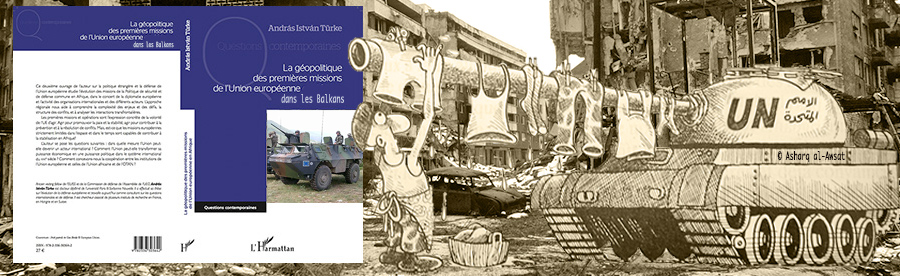
We are looking for sponsors for the English translation of these books, please contact turkeandras(at)gmail(dot)com