
You are here
Swiss News
Schertenleib mit absolutem Traumtor im Clasico
Sydney Schertenleib trifft im Clasico gegen Real Madrid traumhaft aus der Distanz zum 7:0. Ihr Tor zeigen wir in Zusammenarbeit mit DAZN.
Categories: Határon túli magyar portálok összesített hírei, Swiss News
Djokovic und Zverev liefern sich spektakulären Ballwechsel
Alexander Zverev und Novak Djokovic begeistern beim China Open in Peking mit einem sensationellen Ballwechsel.
Categories: Határon túli magyar portálok összesített hírei, Swiss News
Le ministère du Commerce extérieur fixe l’échéance du Fonds export
Les entreprises algériennes tournées vers l’export ont un rendez-vous à ne pas manquer. Le ministère du Commerce extérieur et de la Promotion des exportations vient […]
L’article Le ministère du Commerce extérieur fixe l’échéance du Fonds export est apparu en premier sur .
Categories: Afrique, Swiss News
Port de Cotonou : le Burkina Faso devient le 1er marché du transit, le Niger s'efface mais résiste par le pétrole
Le Port Autonome de Cotonou (PAC) affiche un trafic en forte hausse à 14,7 millions de tonnes en 2025 contre 9,6 millions en 2024, soit plus de 52% de progression en un an. Cette hausse est portée par les flux d'hydrocarbures vers le Burkina Faso. Le transit se recompose vers Ouagadougou, Lagos et N'Djamena, a annoncé la direction commerciale lors du PAC Média Connect 2026. Ce fut l'occasion pour les médias conviés à ce rendez-vous annuel initié par les responsables du PAC de mieux connaître le fonctionnement du PAC, poumon de l'économie béninoise.
Mis en difficulté par les relations tendues entre Cotonou et Niamey avec la fermeture de la frontière depuis fin 2023, la plateforme portuaire béninoise a souffert avant de trouver le moyen de réorienter progressivement ses flux vers de nouveaux marchés. Selon les chiffres communiqués par M. Kévin Potier, directeur commercial du PAC, lors de la 2e édition de Média Connect, le Burkina Faso s'est imposé depuis 2025 comme l'un des principaux débouchés.
Près d'un million de tonnes de marchandises, essentiellement des hydrocarbures, ont transité par Cotonou à destination de ce pays. « L'année dernière, 39,2% du trafic était en transit, dont 16% à destination du Burkina Faso », a-t-il précisé.
Dans cette nouvelle carte, le Nigeria arrive en deuxième position. Le géant ouest-africain, dont les ports restent confrontés à une congestion chronique, profite de la proximité de Cotonou. Le PAC cherche à capitaliser sur cet avantage pour renforcer son positionnement face à la concurrence féroce dans le golfe de Guinée.
Le Tchad est la prochaine cible. Si les volumes restent encore faibles, Cotonou dessert déjà le marché tchadien et ambitionne de devenir une porte d'entrée alternative à Douala, dont le corridor reste contraint. En juillet 2025, une délégation du Conseil des chargeurs du Tchad avait effectué une visite de travail à Cotonou.
Le Niger, lui, n'a pas totalement disparu. Le flux s'est inversé : Niamey utilise désormais la plateforme de Sèmè-Podji, à 20 km de Cotonou, pour exporter son pétrole. Près de 4,3 millions de tonnes de brut ont été traitées sur ce terminal en 2025.
Cette diversification s'accompagne d'une forte reprise. Après être retombé à 9,6 millions de tonnes en 2024, le trafic global est remonté à 14,7 millions de tonnes en 2025, dont 9 millions à l'import et 5,7 millions à l'export. Le trafic conteneurisé a dépassé les 500 000 EVP.
La tendance se confirme en 2026. Au premier semestre, 7,7 millions de tonnes ont été manutentionnées, dont 2,87 millions à l'export contre 2,16 millions un an plus tôt. Sur les 8 premiers mois, le trafic cumulé dépasse déjà les 10 millions de tonnes. Sur la base d'une croissance de 10 à 15%, le PAC pourrait atteindre 16 à 16,5 millions de tonnes fin 2026.
Il faut préciser que cette dynamique est soutenue par un programme d'investissement lancé en 2021 : 12 projets majeurs pour près de 500 milliards FCFA (859 millions USD). Objectif à terme : 25 millions de tonnes et plus d'un million d'EVP.
Categories: Afrique, Swiss News
Times Higher Education 2027 : 31 établissements algériens classés, un record
L’université algérienne continue de grignoter des places sur la scène académique internationale. Dans la dernière édition du classement THE 2027 (Times Higher Education World University […]
L’article Times Higher Education 2027 : 31 établissements algériens classés, un record est apparu en premier sur .
Categories: Afrique, Swiss News
Mise à jour BaridiMob : Algérie Poste alerte ses clients
Les détenteurs d’un compte postal sont de nouveau appelés à la prudence. Ce dimanche, Algérie Poste a diffusé une mise au point sans ambiguïté : […]
L’article Mise à jour BaridiMob : Algérie Poste alerte ses clients est apparu en premier sur .
Categories: Afrique, Swiss News
Deutschrapper feuert gegen AfD-Weidel und ihre Schweizer Partnerin
Baran Kok nennt sich selbst den «ersten schwulen kurdischen Rapper». In seiner neuen Single stichelt er gegen AfD-Chefin Alice Weidel und ihre Partnerin Sarah Bossard.
Categories: Határon túli magyar portálok összesített hírei, Swiss News
Loi de finances 2027 : hausses de salaires actées en Conseil des ministres
Deux annonces lourdes de conséquences sont sorties du Conseil des ministres réuni ce dimanche 4 octobre sous la présidence d’Abdelmadjid Tebboune. Le texte budgétaire de […]
L’article Loi de finances 2027 : hausses de salaires actées en Conseil des ministres est apparu en premier sur .
Categories: Afrique, Swiss News
Wadagni fait ses hommages à Cheikh Hamidou Kane, écrivain sénégalais décédé
Le chef de l'Etat Romuald Wadagni a rendu un vibrant hommage à Cheikh Hamidou Kane, écrivain et homme d'Etat sénégalais, rappelé à Dieu ce samedi 3 octobre 2026. A travers une publication sur sa page Facebook, le président béninois a salué la mémoire d'un écrivain dont la pensée et la plume auront contribué à « faire réfléchir l'Afrique sur elle-même, sur son identité, sa culture et son rapport au monde ».
Cheikh Hamidou Kane, célèbre auteur du roman classique, L'aventure ambigüe n'est plus. Il a tiré sa révérence ce samedi 3 octobre 2026 à Dakar dans sa 98e année. Informé, le président Wadagni à travers une publication sur sa page Facebook lui a rendu un vibrant hommage. « Avec lui disparaît une grande voix de la génération des indépendances. Par sa pensée et sa plume, il aura contribué à faire réfléchir l'Afrique sur elle-même, sur son identité, sa culture et son rapport au monde », a-t-il témoigné.

Le message de condoléances du chef de l'Etat
C'est avec une profonde tristesse que j'ai appris la disparition de Cheikh Hamidou Kane.
Avec lui disparaît une grande voix de la génération des indépendances. Par sa pensée et sa plume, il aura contribué à faire réfléchir l'Afrique sur elle-même, sur son identité, sa culture et son rapport au monde.
L'Aventure ambiguë restera l'une de ces œuvres qui traversent les époques et continuent de nous interroger.
Le Sénégal perd un grand écrivain. L'Afrique perd une grande voix.
J'adresse mes sincères condoléances à sa famille, à ses proches, au peuple sénégalais et à toute la communauté littéraire.
Puisse Allah lui accorder Sa miséricorde et l'accueillir dans Son éternel Paradis.
Reposez en paix. Votre œuvre continuera de vivre.
Categories: Afrique, Swiss News
Servette stürmt in St. Gallen zurück an die Tabellenspitze
Meister Servette erledigt gegen St. Gallen seine Pflicht und erobert die Tabellenspitze der Women's Super League zurück.
Categories: Défense, Swiss News
Verkäuferin meldet sich nach chaotischer Geldsuch-Aktion
Verstecktes Geld, Hunderte Teenager und kaputte Ladenartikel: Der «Catch Cash Event» in Dietlikon ZH lief völlig aus dem Ruder. Betreiberin Wincasa will nun das Geschehene aufarbeiten.
Categories: Africa, Swiss News
Ibrahimovic gönnt sich 3-Millionen-Ferrari
Zlatan Ibrahimovic erweitert seine exklusive Ferrari-Sammlung mit einem F80 im Wert von über 3 Millionen Franken. Mit 1200 PS und 350 km/h Höchstgeschwindigkeit ist das Auto das perfekte Geburtstagsgeschenk für den 45-jährigen Schweden.
Categories: Africa, Swiss News
Jetzt gilt es ernst für Francesca und Anouschka
Am Montag, 5. Oktober, beginnt die 14. Staffel von «Promi Big Brother». Ein Schweizer Sieg mit Francesca Morgese und Anouschka Renzi wäre eine mittlere Sensation.
Categories: Africa, Swiss News
«Ich arbeite sieben Tage die Woche – es ist ein täglicher Kampf»
Wer zu den Working Poor in der Schweiz gehört, hat oft mehrere Jobs, die aber kaum zu Leben reichen. Nora S. ist eine von 360'000 Betroffenen in der Schweiz. Mit Blick spricht sie über ihren herausfordernden Alltag.
Categories: Africa, Swiss News
Jetzt stellt sich Swiss-Olympic-Präsidentin Metzler-Arnold den Vorwürfen
Die erträumten Olympischen Winterspiele 2038 nahmen diese Woche eine hohe Hürde. Dennoch prasselt aktuell Kritik auf Swiss-Olympic-Präsidentin Ruth Metzler-Arnold ein. Jetzt wehrt sich die alt Bundesrätin.
Categories: Africa, Swiss News
Auf hohe Staatsrenditen folgte zweimal eine schwere Krise
Die hohen Renditen bei Staatsanleihen wecken unerfreuliche Erinnerungen. Als diese zuletzt 2000 und 2007 auf dem aktuellen Niveau waren, folgte jeweils eine grosse Krise.
Categories: Balkan News, Swiss News
Evenepoel fährt in Zentimeter-Krimi zu EM-Gold
Zentimeter-Entscheidung an der Rad-EM! Remco Evenepoel holt sich im Sprint die Goldmedaille.
Categories: Balkan News, Swiss News
2+2-Minuten-Strafe steht am Ursprung von irrer Ajoie-Wende
In Zusammenarbeit mit Mysports präsentiert dir Blick die Highlights der Partie HC Ajoie – HC Lugano (5:4).
Categories: Balkan News, Swiss News
Jusqu’à 20 000 euros pour les chercheurs algériens : l’Autriche ouvre ses bourses
Envie de financer vos travaux de recherche au cœur de l’Europe ? Les chercheurs algériens ont aujourd’hui l’opportunité d’obtenir jusqu’à 20 000 euros grâce aux […]
L’article Jusqu’à 20 000 euros pour les chercheurs algériens : l’Autriche ouvre ses bourses est apparu en premier sur .
Categories: Afrique, Swiss News
Heftiger Mini-Hurrikan sucht Barcelona heim
Ganz Südeuropa kämpft gegen heftige Unwetter. Auch die katalanische Hauptstadt Barcelona wird von starken Niederschlägen heimgesucht – das Extremwetter forderte bisher gar zwei Tote.
Categories: Balkan News, Swiss News
Pages
the old site is here


© 2012-2015 Europa Varietas Foundation © 2015-2020 Europa Varietas Association
www.europavarietas.org | info(@)europavarietas(dot)org | Switzerland
This is a GDPR ready site
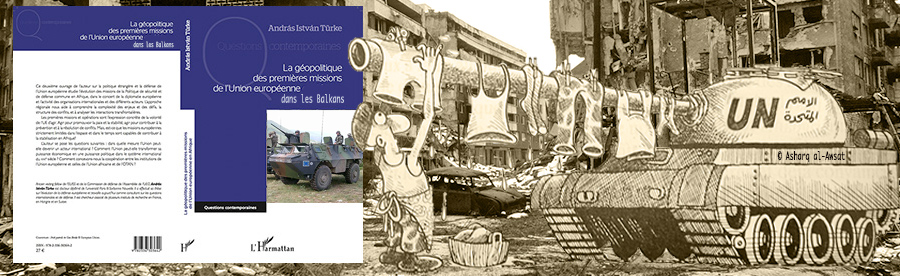
We are looking for sponsors for the English translation of these books, please contact turkeandras(at)gmail(dot)com