
You are here
Határon túli magyar portálok összesített hírei
Minőségi bárányhús a húsvéti asztalra...
2026. 3. 23. Richard Takáč (Smer) földművelésügyi miniszter, Patrik Keľo, a Szlovák Birka- és Kecsketenyésztők Szövetségének elnöke, valamint Anna Kováčiková, a háromrevucai (Liptovské Revúce/Rózsahegyi járás) mezőgazdasági szövetkezet elnökének sajtótájékoztatója
Felmérés – Nyolcpárti parlament: 1. PS, 2. Smer, 3. Republika
Ha márciusban tartanák a parlamenti választást, a Progresszív Szlovákia győzne a szavazatok 20,6%-ával – derült ki az Ipsos ügynökség Denník N megbízásából készített felméréséből, amelyet március 16. és 19. között végeztek el 1.008 személy lekérdezésével. A Magyar Szövetség továbbra sem lépné át a parlamenti küszöböt.
« Pas une zone de guerre » : le tourisme chypriote passe à l’offensive
Les autorités chypriotes devraient intensifier leurs campagnes de promotion au cours des prochains mois afin de limiter les pertes financières
The post « Pas une zone de guerre » : le tourisme chypriote passe à l’offensive appeared first on Euractiv FR.
Tragikus karambol a D1-esen
Halálos kimenetelű közlekedési baleset történt hétfőn (3. 23.) délelőtt a D1-es autópályán, ahol egy Pozsony felől Nagyszombat irányába tartó Škoda személygépkocsi ismeretlen okból nekiütközött egy, az út szélén leállított kamion hátuljának. A Škodát vezető férfi a helyszínen életét vesztette (†44) – közölte a Nagyszombati Kerületi Rendőrkapitányság a Facebookon.
Safe third country concept in the EU pact on migration and asylum
Written by Anja Radjenovic.
The safe third country (STC) concept is well established in international asylum policies. According to the concept, certain migrants should not be granted protection in the country where they have applied for it. Instead, they may be returned, or transferred, to a country where they could have found, or can find, international protection. Amid ongoing EU-level discussions on safe third country rules, in 2018 the United Nations Refugee Agency developed legal considerations on safe third countries.
Within the framework of the body of EU law on asylum, the STC concept is based on the assumption that certain third (i.e. non-EU) countries can be designated as safe for applicants seeking international protection, under specific conditions. The concept builds on cooperation with third countries in a bid to reduce irregular arrivals and increase return rates. It seeks to speed up the processing of the claims of asylum applicants arriving from safe third countries, to prevent overburdening national asylum systems.
The recently adopted Asylum Procedure Regulation provides for broader applicability of safe country clauses. This concerns, in particular, four aspects: (i) the safety assessment when applying the STC concept; (ii) the interpretation of the ‘connection requirement’, i.e. the connection between an asylum seeker and a third country when readmitting an applicant to a designated STC; (iii) the option to designate a third country as safe with territorial limitations or to exclude certain vulnerable groups from such a designation; and (iv) the creation of a common EU list of STCs in addition to national lists. The regulation was amended in February 2026, modifying rules on applications from STCs.
The success of any STC scheme relies on third countries’ cooperation, something that can be challenging to obtain. To counter criticisms of burden shifting and to boost the viability of STC schemes, the EU must demonstrate solidarity through burden sharing. Furthermore, many potentially safe third countries lack asylum laws and administrative frameworks. Consequently, they would likely require substantial support from external partners.
This is an update of a 2024 EPRS briefing.
Read the complete briefing on ‘Safe third country concept in the EU pact on migration and asylum‘ in the Think Tank pages of the European Parliament.
Le climat terrestre est « plus déséquilibré que jamais », avertit l'agence météorologique de l'ONU
L'ONU lance un nouvel avertissement climatique alors qu'El Niño se profile.
Categories: Afrique, Határon túli magyar portálok összesített hírei
Előrehozott választásokat! – 384.314 aláírást tartalmazó petícióval kopogtatott be Pellegrinihez a Demokrati
Robert Fico (Smer) kormányfő távozását követeli a parlamenten kívüli Demokrati, hétfőn (3. 23.) átadta Peter Pellegrini államfőnek azt a több mint 384 ezer aláírást, amit az erről szóló népszavazás kiírása érdekében gyűjtött össze.
Elég volt Ficoból: a népszavazási petíciós aláírások átadása az államfőnek
2026. 3. 23. A Demokrati párt sajtótájékoztatója a köztársasági elnöki hivatal előtt Pozsonyban
Víz világnapja: Tavaly úgy 681 millió köbméter szennyvizet engedtünk a folyókba
Körülbelül 2 milliárd köbméter a szlovákiai víztározók kapacitása, 47 ezer kilométernyi folyóvíz hálózza be az országot – közölte a SzK Statisztikai Hivatala a március 22-i víz világnapja alkalmából.
Les pays les plus heureux du monde en 2026 – et ce qu'ils font de bien
Cette année, les cinq pays en tête du classement présentent chacun des aspects uniques qui contribuent à leur bonheur, même si la liberté de faire des choix de vie occupe une place prépondérante chez tous.
Categories: Afrique, Határon túli magyar portálok összesített hírei
Rendőrautó karambolozott vasárnap Nagyszombatban, vizsgálódik a belső ellenőrzés
TASR: Személyi sérülés okozása miatt indított büntetőeljárást a belügyminisztérium Ellenőrzési Szolgálati Hivatala (ÚIS) egy vasárnap (3. 22.), Nagyszombatban történt közlekedési baleset miatt, mely során rendőrautó ütközött személyautóval – erősítette meg a TASR-nek a kerületi rendőrség és a belső ellenőrzés is.
Sereghy Zoltán, aki sosem száll le a nyeregből
A komáromi Rotary Club márciusi klubülésére egy igazán érdekes vendéget hívtak, méghozzá Sereghy Zoltán lovas kaszkadőrt, aki az utóbbi évek legismertebb filmjeiben tűnt fel. Láthatta őt a közönség a Herkulesben, a Vajákban, a Borgiákban, vagy legutóbb a Hunyadi című sorozat csatajeleneteiben. Utóbbiban hol magyar vitézként, hol oszmán harcosként vágtatott át a képernyőn.
SaS: Botrányos tartalmú USB-kulcs került a kezünkbe! Ezért Sakovának le kell mondania
2026. 3. 23. Az SaS párt sajtótájékoztatója
Reptéri örömhír: Heti 9-ről 13-ra emelkedett a Pozsony-Kassa repülőjáratok száma
Már két oda-vissza repülőjáratot üzemeltet naponta a Wizz Air Pozsony és Kassa között, a szerda kivételével, a számuk így heti 9-ről 13-ra emelkedett – tájékoztatott a hétvégén Veronika Demovičová, a pozsonyi M. R. Štefánik repülőtér szóvivője.
Kenyan police investigate alleged disappearance of ex-foreign minister
The reported disappearance of Raphael Tuju has led to claims he may have been abducted.
Categories: Africa, Határon túli magyar portálok összesített hírei
‘The Political System Only Moves When Threatened Directly’
By CIVICUS
Mar 23 2026 (IPS)
CIVICUS discusses Nepal’s upcoming election with youth activist Anusha Khanal of the Gen Z Movement Alliance, a youth-led civil society coalition mobilising for democratic accountability and governance reform in Nepal.
Anusha Khanal
Following Prime Minister KP Sharma Oli’s resignation in response to mass Gen Z-led protests, Nepal goes to the polls on 5 March. Some 19 million people — including 837,000 new voters — will choose from 120 registered parties. With unemployment and governance failures eclipsing traditional ideological debates, anti-corruption and inclusion demands have dominated the campaign.What triggered the Gen Z protests, and how did the state respond?
The immediate trigger was the government revealing its authoritarian tendencies by banning 26 popular social media platforms. This happened during the ‘nepokids’ trend, in which people exposed the wealth of politicians’ families, contrasting with widespread economic desperation. Inflation was high and unemployment among young people stood at around 23 per cent, and there were no pathways for change within existing political structures. But this wasn’t just about jobs. Young people demanded accountability for decades of corruption, poor governance, service delivery failures and a political system completely disconnected from our realities. The leaders of three parties had rotated in power for years without delivering anything meaningful. We mobilised because we had nothing to lose.
The response was brutal. On the first day of protests, police killed several young people. The government refused to show any responsibility, instead seeking to frame the movement as violent and deny it any legitimacy. It criminalised youth anger instead of listening to it. The choice to emphasise property damage over deaths when some buildings were burned and vandalised told us everything about where their priorities lay. The government showed it did not care about young people.
But repression didn’t stop the movement; it accelerated it. Thousands more young people mobilised, and eventually the pressure became impossible to ignore. Oli’s resignation was a forced concession. But it exposed something important: the political system only moves when threatened directly. That’s a lesson we’re carrying into these elections.
How did civil society organisations engage with the movement?
Young people created the movement, not civil society organisations. Once it started, we received a lot of support from wider civil society. It became a people’s movement, with people of all ages taking part, in person and in spirit. Many civil society groups made a conscious choice to support it, document what was happening, share knowledge, help shape narratives, amplify demands and help exert pressure to translate grassroots anger into political demands. We pushed for accountability, investigations into the killings, protection for protesters and systemic reforms around corruption and governance. We insisted that any negotiation include young people at the table, as stakeholders in decision-making.
A major win was a 10-point agreement with the interim government that included commitments to address corruption, improve governance, ensure youth participation in decision-making and move towards more inclusive democracy. We also pushed for the establishment of the Gen Z Council, a body designed to hold government accountable, monitor implementation of reforms and bridge the gap between the state and young people.
But we’ve been realistic about what civil society can and cannot do. We can organise, advocate, document and monitor. We cannot force a government to implement reforms if the bureaucracy resists or political will collapses after elections. That’s why we’re now focused on maintaining pressure and building systems that make it harder for future governments to ignore youth demands.
How have election candidates addressed the movement’s demands?
Anti-corruption and good governance have become dominant themes across party manifestos. All parties are talking about digital governance, e-governance, going cashless and paperless. Some are promising to establish commissions to investigate past corruption or audit public officials’ assets going back decades. Others focus on timecard systems for service delivery, budget transparency and digitisation of transactions. It’s just that corruption is so visible that ignoring it would be political suicide.
The problem is that most parties are vague on implementation. They describe the what but not the how. There are also ideological differences, but most parties are talking about systemic reform and public-private partnerships.
Across the board, parties are responding to the movement’s anti-corruption demand because they have to. The question is whether these commitments are genuine or just campaign rhetoric.
Why are women and excluded groups still so underrepresented among candidates?
Campaign financing is a massive problem. The government sets spending limits, but everyone knows that’s not what happens on the ground. To run a serious campaign with widespread reach, you need sponsorship from wealthy backers or business interests. If you’re a woman earning a minimum wage, you simply cannot compete against candidates funded by millionaires. There is no public financing system, no state support for candidates from marginalised backgrounds. The economic system excludes most women and poor people before we even get to party selection processes.
Safety is another critical issue that doesn’t get enough attention. Digital violence against women running for office is rampant. Women and queer candidates face abuse, harassment and threats online and offline. When we encourage female and queer colleagues to run, the response is often hesitancy, due to the lack of support and because we haven’t created safe enough spaces for them to participate in politics. Although the constitution guarantees women 33 per cent representation, the reality on the ground is completely different.
Then there’s the distribution of candidacy slots within parties, which is opaque and controlled by party leaders. Even after public pressure, many parties failed to meet the female quota in direct candidacies. Some did better in proportional representation slots, but even there, they selected women who are mostly well-connected and wealthy. The movement emphasised inclusion, but we’ve regressed when it comes to candidate selection.
What obstacles stand in the way of reform?
The first challenge is that we’re almost certainly heading towards a coalition government, which means compromise on every issue. When multiple parties have to negotiate and share power, reform agendas get watered down. Parties will prioritise holding their coalition together over pushing through the anti-corruption and governance reforms they promised. We’ve seen this pattern before. What isn’t clear yet is what kind of coalition will result and what compromises will be made.
The second challenge is the bureaucracy. Nepal’s bureaucracy can be notoriously resistant to change, transparency and accountability. A reform can pass parliament and still die in implementation because mid-level bureaucrats refuse to change how they work. Even though the law to establish the Gen Z Council has been passed, it hasn’t been formed yet. We can identify problems, document failures and advocate loudly, but we cannot force a government to act. If the bureaucracy decides to drag its feet, we have limited leverage. Structural incentives favour the status quo, and that’s before we even consider whether individual politicians will prioritise reforms over personal interests or patronage networks.
But we’re not giving up. Civil society’s role now is to maintain constant pressure, document what does and doesn’t get implemented and call attention when governments fail to keep their promises. The Gen Z Council gives us a formal mechanism to do this, and we can also raise our voices independently of it. We need to build broader coalitions, keep the movement’s demands visible in public discourse and make clear that if a government fails to deliver, there will be consequences. Real change is slow and difficult — but it’s possible if civil society stays organised and vigilant and doesn’t compromise on core demands.
CIVICUS interviews a wide range of civil society activists, experts and leaders to gather diverse perspectives on civil society action and current issues for publication on its CIVICUS Lens platform. The views expressed in interviews are the interviewees’ and do not necessarily reflect those of CIVICUS. Publication does not imply endorsement of interviewees or the organisations they represent.
GET IN TOUCH
Instagram
Anusha Khanal/LinkedIn
SEE ALSO
Nepal’s Gen Z uprising: time for youth-led change CIVICUS Lens 10.Oct.2025
‘The government was corrupt and willing to kill its own people to stay in power’ CIVICUS Lens | Interview with Dikpal Khatri Chhetri 02.Oct.2025
‘The Social Network Bill is part of a broader strategy to tighten control over digital communication’ CIVICUS Lens | Interview with Dikshya Khadgi 28.Feb.2025
Follow @IPSNewsUNBureau
!function(d,s,id){var js,fjs=d.getElementsByTagName(s)[0],p=/^http:/.test(d.location)?'http':'https';if(!d.getElementById(id)){js=d.createElement(s);js.id=id;js.src=p+'://platform.twitter.com/widgets.js';fjs.parentNode.insertBefore(js,fjs);}}(document, 'script', 'twitter-wjs');
Categories: Africa, Határon túli magyar portálok összesített hírei
L’Inde pourrait rejoindre le FCAS en difficulté ou un projet rival pour le futur avion de chasse européen
La course pour intégrer l'un des programmes européens visant à développer un avion de combat de sixième génération bat son plein
The post L’Inde pourrait rejoindre le FCAS en difficulté ou un projet rival pour le futur avion de chasse européen appeared first on Euractiv FR.
Gender Equality: A Global Priority or a Global Consensus?
Opening of the Commission on the Status of Women (CSW70)
Shaped by ongoing dialogue, the CSW70 highlighted progress and diverse perspectives on gender and justice.
By Fernanda Lagoeiro
SAO PAULO, Brazil, Mar 23 2026 (IPS)
The 70th session of the Commission on the Status of Women (CSW70) (March 9-19), held at the United Nations headquarters, brought together governments, decision makers, civil society, and international organizations to address a central issue: access to justice for women and girls.
Taking place in a complex global context, the session reflected both the continued relevance of multilateral cooperation and the evolving nature of discussions on gender equality. As noted in UN remarks during the session, “this year’s theme cuts to the heart of the struggle for equality: access to justice,” giving emphasis on the importance of strengthening legal systems and ensuring that rights are effectively realized.
Sustaining momentum on Gender Equality
One of the key outcomes of CSW70 was the adoption of the Agreed Conclusions, which reaffirm the international community’s commitment to advancing gender equality and improving access to justice worldwide.
While the conclusions were adopted through a recorded vote (an approach less common in CSW processes) the result demonstrated broad support among member states for maintaining and advancing existing frameworks.
Observers noted that the outcome reflects a continued global commitment to the principles first established at the Fourth World Conference on Women and articulated in the Beijing Declaration and Platform for Action.
Civil society organizations also welcomed the outcome, highlighting that the adoption of the conclusions signals that cooperation remains possible, even in a changing geopolitical landscape.
Focusing on access to justice
Discussions throughout the session emphasized that access to justice extends beyond legal frameworks. It includes the ability of women and girls to navigate institutions, obtain remedies, and be protected under the law.
Globally, women have achieved significant legal advancements over the past decades, yet disparities persist in many regions.
As emphasized by UN officials, “no country in the world has achieved full legal equality,” reinforcing the importance of continued efforts at national and international levels.
This shared recognition helped anchor discussions in practical solutions, including strengthening judicial systems, expanding legal aid, and addressing barriers faced by marginalized groups.
Evolving discussions and diverse perspectives
CSW70 also reflected the diversity of perspectives among Member States on how best to advance gender equality.
A number of proposals were introduced during negotiations addressing definitions, policy language, and implementation approaches. These included discussions on how to frame gender, how to address sexual and reproductive health and rights, and how to reflect different national contexts in global agreements.
While not all proposals were incorporated into the final text, the process itself illustrated the dynamic nature of multilateral dialogue. It also highlighted the importance of balancing shared global commitments with national priorities and legal frameworks.
Observers noted that such discussions, while sometimes complex, are part of the ongoing evolution of international cooperation.
The use of a recorded vote, rather than consensus, marked a notable procedural development at CSW70. The session also included discussions around procedural options, such as potential amendments or motions that could influence the negotiation process.
While these mechanisms are part of standard UN practice, their consideration reflects the range of tools available to Member States in shaping outcomes.
The role of civil society
Civil society organizations played an active and visible role throughout the session, while still with a limited space, but contributing expertise, advocacy, and on-the-ground perspectives.
While formal negotiations are led by Member States, civil society contributions helped inform discussions and maintain focus on implementation and accountability. Participants widely recognized that continued collaboration between governments and civil society will be essential for translating commitments into tangible outcomes.
Global South perspectives and contributions
Delegations from regions including Latin America, Africa, and Asia worked to ensure that the outcomes reflected diverse realities and development contexts. In particular, coordination among Latin American countries (including Brazil and Chile) supported regional dialogue and helped maintain constructive engagement throughout the session. Brazilian organizations brought new projects and perspectives around climate resilience to high-level representatives.
These contributions highlight the growing influence of Global South actors in multilateral spaces, not only as participants but as key contributors to consensus-building and policy development. At the same time, the diversity within the Global South itself underscores the importance of inclusive dialogue that reflects a wide range of experiences and priorities.
Areas for continued attention
Alongside its achievements, CSW70 also pointed to areas where further work may be needed.
Differences in perspectives on certain issues (such as specific policy language or implementation approaches) indicate that continued dialogue will be important in future sessions. These discussions reflect the complexity of advancing global agreements in a diverse international community.
Additionally, the evolving nature of negotiations suggests an opportunity to further strengthen mechanisms for collaboration and consensus-building.
Looking ahead
CSW70 reaffirmed the importance of sustained international cooperation in advancing gender equality and access to justice. While the session did not resolve all differences, it demonstrated that progress remains possible through dialogue, engagement, and shared commitment.
As the global community continues to build on the foundations established by the Beijing Platform for Action, the focus will remain on translating commitments into concrete improvements in the lives of women and girls.
In this context, CSW70 stands as a reminder that multilateral processes are not only about outcomes, but also about the continued willingness of countries to come together, exchange perspectives, and move forward collectively (for real).
Fernanda Lagoeiro is a Brazilian journalist specializing in gender, climate and health issues. She has been covering issues relating to social impact, nonprofit sector, and environmental agendas, with a focus on underreported perspectives and human-centered storytelling. She has also contributed to national and international media outlets (such as Der Tagesspiegel, Deutsche Welle etc) and to institutional projects, focusing on accessible and impactful narratives.
IPS UN Bureau
Follow @IPSNewsUNBureau
!function(d,s,id){var js,fjs=d.getElementsByTagName(s)[0],p=/^http:/.test(d.location)?'http':'https';if(!d.getElementById(id)){js=d.createElement(s);js.id=id;js.src=p+'://platform.twitter.com/widgets.js';fjs.parentNode.insertBefore(js,fjs);}}(document, 'script', 'twitter-wjs');
Categories: Africa, Határon túli magyar portálok összesített hírei
World Heating Faster Than Expected, Scientists Sound Alarm in latest UN Report
Cracked earth, from lack of water and baked from the heat of the sun, forms a pattern in the Nature Reserve of Popenguine, Senegal. Credit: UN Photo/Evan Schneider
By Umar Manzoor Shah
GENEVA, Switzerland & SRINAGAR, India, Mar 23 2026 (IPS)
The global climate system continued its alarming trajectory in 2025, with multiple indicators reaching record or near-record extremes, underscoring the accelerating pace of climate change and its cascading impacts on ecosystems and human societies, according to the latest State of the Global Climate 2025 report released by the World Metereological Organisation (WMO).
The report presents a stark assessment. Greenhouse gas concentrations, global temperatures, ocean heat, and sea levels all continued to rise, while glaciers and sea ice declined at unprecedented rates. Scientists warn that these changes are not isolated. They are interconnected signals of a rapidly warming planet.
“The Earth’s energy imbalance has become increasingly positive,” the report notes, referring to the growing gap between incoming solar radiation and outgoing heat. “This leads to an accumulation of excess energy” within the climate system.
Ko Barrett, Deputy Secretary-General, World Meteorological Organization, during the report launch, told reporters that WMO has been issuing state of the global climate reports for more than 30 years to share the annual evidence basis for our key global indicators.
2025 was the third warmest year in recorded history. Credit: WMO
“Our report confirms that 2025 was among the hottest years ever recorded, about 1.43 degrees Celsius above the pre-industrial baseline, and part of an unprecedented streak where the past eleven years have all ranked as the warmest on record. What is particularly concerning is that this warming is not just reflected in temperatures but across the entire climate system. We are seeing glaciers continue to retreat, oceans warming at record levels, and sea levels rising as a result of both thermal expansion and melting ice. At the same time, extreme events such as heatwaves, heavy rainfall, and tropical cyclones are affecting virtually every continent, showing how societies are already experiencing the impacts of climate change in real time.”
She added that these findings identify why monitoring the climate system is so critical. “The data we collect is not abstract. It helps us improve forecasts, strengthen early warning systems, and ultimately protect lives and livelihoods. The science is clear and it is becoming more urgent. Our focus now is to ensure that this information reaches decision-makers and communities so that it can inform planning and response in a rapidly changing climate.”
Earth’s climate is out of balance. Credit: WMO
As per the report, the concentration of carbon dioxide in the atmosphere reached 423.9 parts per million in 2024, the highest level in at least two million years. Methane and nitrous oxide also hit record levels, marking the highest concentrations in 800,000 years.
Scientists attribute this surge to continued fossil fuel use, increased wildfire emissions, and weakening natural carbon sinks. The report highlights that nearly half of all human-emitted carbon dioxide remains in the atmosphere, intensifying the greenhouse effect.
“The increase in the annual carbon dioxide concentration in 2024 was the largest since modern measurements began in 1957,” the report reads, adding that this persistent rise in greenhouse gases remains the primary driver of global warming, accounting for a significant share of radiative forcing since the industrial era.
The World Meteorological Society report shows the state of the Earth’s climate. Credit: WMO
Global temperatures in 2025 remained exceptionally high. The planet was about 1.43°C warmer than pre-industrial levels, making it the second or third warmest year on record.
The report notes that the past eleven years, from 2015 to 2025, have all ranked among the warmest years ever recorded.
Although 2025 was slightly cooler than the record-breaking 2024, largely due to a shift from El Niño to La Niña conditions, the overall warming trend remains clear.
“Despite La Niña conditions, around 90 percent of the ocean surface experienced at least one marine heatwave during 2025,” the report observes, adding that such widespread marine heatwaves disrupt ecosystems, damage fisheries, and intensify extreme weather events.
Carbon dioxide, methane and nitrous oxide concentrations are at an all-time high. Credit: WMO
Karina von Schuckmann, lead author, said that one of the most important messages from this report is that the Earth is no longer in energy balance.
“We are now seeing more energy entering the climate system than leaving it, and this excess energy is accumulating at an accelerating rate. What is striking is where this heat is going. Around 91 percent of it is being absorbed by the oceans, with the rest distributed across land, ice, and the atmosphere. This makes the ocean central to understanding climate change, not just as a buffer, but as a key driver of long-term impacts.”
She added that the world is also observing that this heat is increasingly being transferred into deeper layers of the ocean. According to Schuckmann, the finding is significant because once heat moves below the surface, it becomes part of long-term climate change that can persist for hundreds to thousands of years.
“In that sense, what we are seeing today is not just a short-term fluctuation. It represents a long-term commitment of the climate system. At the same time, greenhouse gas concentrations continue to rise, and indicators like sea level are showing clear signs of acceleration, reinforcing the scale and persistence of the changes underway,” Schuckmann said.
“The rate of ocean warming over the past two decades is more than twice that observed between 1960 and 2005,” the report states.
It says that this rapid warming has far-reaching consequences. It fuels stronger storms, accelerates ice melt, and contributes to rising sea levels. It also threatens marine biodiversity and disrupts food chains.
The report has stated that global mean sea level remained near record highs in 2025, continuing a long-term upward trend. Since satellite measurements began in 1993, sea levels have risen by about 11 cm.
The rate of rise has also accelerated. Between 2012 and 2025, sea levels increased at nearly double the rate observed between 1993 and 2011. “Sea level has risen in all oceanic regions,” the report states, warning of increasing risks for coastal communities.
Rising seas threaten infrastructure, freshwater supplies, and livelihoods, particularly in low-lying regions and small island states.
The cryosphere, which includes glaciers and polar ice, continues to shrink at an alarming pace. The 2024–2025 hydrological year recorded one of the five most negative glacier mass balances since 1950. Notably, eight of the ten worst years for glacier loss have occurred since 2016.
Sea ice trends are equally concerning. Arctic sea ice extent in 2025 was among the lowest on record, while Antarctic sea ice reached its third lowest level since satellite monitoring began in 1979.
“The maximum daily extent of Arctic sea ice in 2025 was the lowest annual maximum in the observed record. “Shrinking ice reduces the Earth’s ability to reflect sunlight, further accelerating warming,” the report notes.
It has been claimed that the oceans, in addition to warming, are becoming more acidic due to the absorption of carbon dioxide. Surface ocean pH has declined steadily over the past four decades.
“Present-day surface pH values are unprecedented for at least 26,000 years,” the report states, citing high-confidence findings.
This chemical shift, as per the report, threatens coral reefs, shellfish, and marine ecosystems that support millions of livelihoods worldwide.
One of the most significant additions to this year’s report is the focus on Earth’s energy imbalance, a measure of how much excess heat the planet is retaining.
In 2025, this imbalance reached its highest level since records began in 1960. Scientists say this metric provides a comprehensive picture of global warming. “The total amount of heat stored on Earth is not just increasing but accelerating. This imbalance drives changes across the climate system, from rising temperatures to melting ice and shifting weather patterns,” the report warns.
The report has claimed that climate change is already affecting human lives and that extreme weather events, including floods, droughts, and heatwaves, are becoming more frequent and intense.
According to the report, these changes are associated with food insecurity, displacement, and economic losses, especially in vulnerable regions.
“Rapid large-scale changes in the Earth system have cascading impacts on human and natural systems. Health risks are also rising. Heatwaves, in particular, pose serious threats, especially in urban areas and regions with limited adaptive capacity,” the report states.
John Kennedy, Climate Scientist told reporters during the report launch that the past eleven years are the warmest on record, glaciers are losing mass at an accelerating rate, and sea ice is declining in both polar regions. He said that, in fact, eight of the ten most negative glacier mass balance years have occurred since 2016, and the past four years have seen the lowest Antarctic sea ice minima on record.
“We are also seeing the impacts of this warming in the frequency and scale of extreme events. Heatwaves are becoming so widespread that it is increasingly difficult to document them individually. At the same time, ocean heat content continues to rise dramatically, with the energy being absorbed by the oceans equivalent to many times total human energy use each year. When we assess these changes against climate model projections, they remain within expected ranges, but the key question now is how these trends will evolve and whether the rate of warming could accelerate further in the coming years,” Kennedy said.
IPS UN Bureau Report
Follow @IPSNewsUNBureau
!function(d,s,id){var js,fjs=d.getElementsByTagName(s)[0],p=/^http:/.test(d.location)?'http':'https';if(!d.getElementById(id)){js=d.createElement(s);js.id=id;js.src=p+'://platform.twitter.com/widgets.js';fjs.parentNode.insertBefore(js,fjs);}}(document, 'script', 'twitter-wjs');
Excerpt:
Global temperature reaches 1.43°C above pre-industrial levels as CO₂ climbs to 423.9 ppm, oceans absorb 91 percent of excess heat and warm at over twice the historical rate, sea levels rise 11 cm since 1993 with accelerating trends, marine heatwaves impact 90 percent of the ocean surface, glaciers record 8 of 10 worst loss years since 2016, Arctic sea ice hits near-record lows, ocean acidity increases with 29 percent CO₂ uptake, and Earth’s energy imbalance grows at 0.3 W/m² per decade.
Categories: Africa, Határon túli magyar portálok összesített hírei
Szoros versenyben nyerte a szlovén parlamenti választást a baloldali Szabadság Mozgalom
Telex.hu: A szavazatok 28,47 százalékának megszerzésével a Szabadság Mozgalom (Gibanje Svoboda) nyerte a vasárnapi parlamenti választást Szlovéniában – írja a Mladina. A leadott szavazatok feldolgozottsága hétfő reggelre több mint 90 százalékos. Szoros volt a verseny, másodikként az Orbán Viktor szövetségese, Janez Janša korábbi miniszterelnök által vezetett Szlovén Demokrata Párt (SDS) végzett 28,35 százalékkal.
Pages
the old site is here


© 2012-2015 Europa Varietas Foundation © 2015-2020 Europa Varietas Association
www.europavarietas.org | info(@)europavarietas(dot)org | Switzerland
This is a GDPR ready site

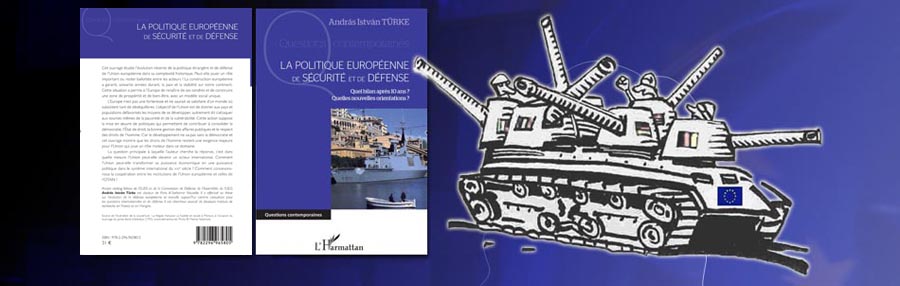
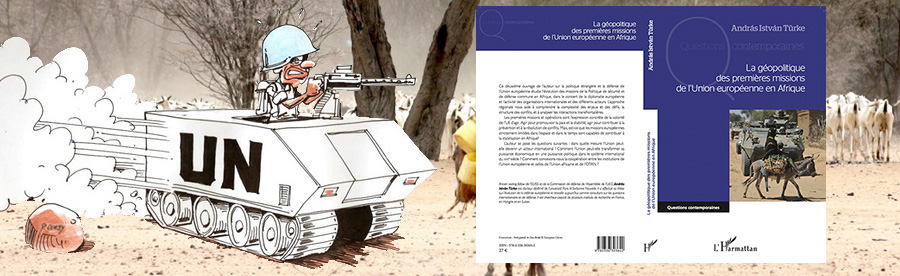
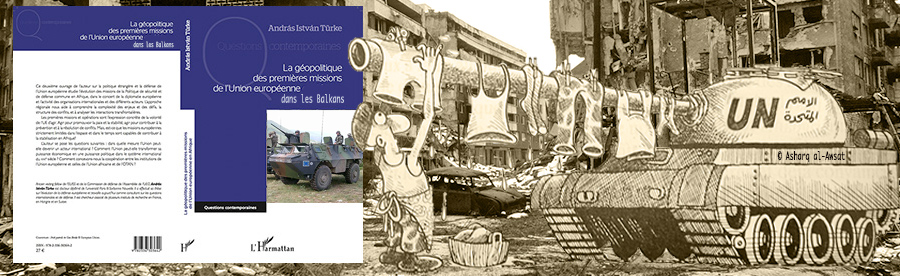
We are looking for sponsors for the English translation of these books, please contact turkeandras(at)gmail(dot)com