
You are here
Afrique
Genf-Servette – Davos 3:2 n.V.: Puljujärvi erledigt den HCD in der Overtime
In Zusammenarbeit mit MySports präsentiert dir Blick die Highlights der Partie Genf-Servette – HC Davos (3:2 n.V.).
Categories: Afrique, Swiss News
Fribourg – SC Bern 2:1: Gottéron sprengt den SCB-Beton in den Schlussminuten
In Zusammenarbeit mit MySports präsentiert dir Blick die Highlights der Partie HC Fribourg-Gottéron – SC Bern (2:1).
Categories: Afrique, Swiss News
ZSC Lions – SCL Tigers 2:3 n.V.: Andrighetto-Strafe kostet ZSC den Sieg
In Zusammenarbeit mit MySports präsentiert dir Blick die Highlights der Partie ZSC Lions – SCL Tigers (2:3 n.V.).
Categories: Afrique, Swiss News
SSo lief der National-League-Abend: ZSC unterirdisch – Zug wartet sehnsüchtig auf Genoni
Für die ZSC Lions gibts innert 24 Stunden die zweite Niederlage gegen ein Team aus dem Kanton Bern. Der EVZ verliert in Ajoie und sehnt sich dem Comeback von Goalie Genoni entgegen. Und in Ambri fallen haufenweise Tore. Hier gibts das Roundup.
Categories: Afrique, Swiss News
Accident CHOC à Jijel : Un bus dérape et finit sa course dans une maison [IMAGES]
Choc et stupeur à Jijel ce samedi en fin d’après-midi : un bus de voyageurs a violemment percuté le mur d’une maison, faisant 15 blessés, […]
L’article Accident CHOC à Jijel : Un bus dérape et finit sa course dans une maison [IMAGES] est apparu en premier sur .
Categories: Afrique, Swiss News
Les JSEB s'achèvent sur la distinction du meilleur article 2025
La 6ᵉ édition des Journées Scientifiques de l'Économie béninoise (JSEB) a été clôturée ce vendredi 28 novembre 2025 à l'hôtel Golden Tulip de Cotonou. Elle a été marquée par la distinction du meilleur article JSEB, 2025.
Organisée par la direction générale de l'Économie (DGE), l'édition 2025 des JSEB a réuni des chercheurs de renom, des universitaires venus de plusieurs pays, des responsables d'institutions publiques, ainsi que des partenaires techniques et financiers autour du thème « Institutions et prospérité des nations ».
L'édition 2025 a été marquée par deux conférences inaugurales, animées par les professeurs James Robinson, prix Nobel d'Economie 2024 et Adama Diaw. Il y a eu une conversation de haut niveau entre le professeur Robinson et le professeur Théophile Azomahou.
Au cours des sessions parallèles, 42 articles ont été présentés, explorant la relation profonde entre qualité institutionnelle, croissance économique, gouvernance et efficacité des politiques publiques.
Les travaux ont mis en lumière un constat largement partagé. Sans institutions fortes (stabilité politique, contrôle de la corruption, état de droit), les politiques économiques produisent des résultats limités et fragiles. Les chercheurs ont également insisté sur l'importance d'une gouvernance cohérente pour soutenir l'industrialisation, renforcer l'inclusion financière et améliorer l'efficacité des dépenses publiques.
Des lauréats récompensés
Le point culminant de la cérémonie de clôture a été la proclamation du Meilleur article JSEB 2025, fruit d'un processus d'évaluation rigoureux mené par un comité d'experts indépendants sur les 42 articles retenus. L'article lauréat est intitulé « Exploitation minière, distance ethnique au pouvoir et confiance institutionnelle », écrit par Ouédraogo Mamadi et Théophile Azonmahou. Selon le directeur de la Recherche et des études stratégiques (Dres) au ministère de l'Economie et des Finances, Professeur Jude Eggoh, l'article s'est démarqué par la qualité de sa méthodologie, l'originalité du sujet, la richesse des données mobilisées (Afrobarometer, données géolocalisées etc). « L'article a analysé les effets des activités minières et de la distance ethnique au pouvoir sur la confiance des institutions. L'article a étudié la relation entre ces différentes variables », explique-t-il.
Comme résultat, informe Jude Eggoh, l'article souligne que l'exploitation minière réduit la confiance institutionnelle. « La stratégie empirique est très crédible et les implications sont importantes en matière de gouvernance, en matière de gestion des ressources naturelles et également en ce qui concerne les tensions identitaires », a-t-il ajouté.
Aristide Médénou, directeur général de l'Économie
Le directeur général de l'Économie Aristide Médénou a exprimé sa satisfaction face à la qualité des travaux et à la richesse des débats. Il a également félicité les lauréats du meilleur article JSEB 2025. « Le ministère fera la promotion du meilleur article. Il sera publié sur le site de la DGE, du ministère des Finances, et fera l'objet d'un traitement médiatique dédié. La presse prendra le relais pour le mettre en lumière », a-t-il annoncé. Les lauréats ont reçu un trophée et une attestation portant la mention « Lauréat du meilleur article présenté aux JSEB 2025 ». Les articles qui se démarquent par leur qualité feront l'objet d'une publication dans une revue scientifique internationale. Le DGE a aussi remercié l'ensemble de l'équipe organisationnelle dont l'engagement a permis le succès des JSEB, édition 2025.
Akpédjé Ayosso
Categories: Afrique, Swiss News
Les résultats des examens nationaux de licence disponibles
Les résultats des examens nationaux de licence, session 2025, sont désormais publics.
Les résultats des examens nationaux de licence sont consultables en ligne sur la plateforme eRésultats.
Les candidats doivent se rendre sur l'adresse dédiée pour vérifier leur admissibilité.
La plateforme est accessible à cette adresse : eresultats.bj/consulter/licence-2025.
Categories: Afrique, Swiss News
Sion-Noten zum Lugano-Spiel: Nicht nur Penalty-Sünder Nivokazi fällt durch
Wer hat wie abgeschnitten? Hier findest du die Noten zu Sions 1:1 in Lugano.
Categories: Afrique, Swiss News
Marché informel des devises : l’euro connait enfin une baisse
L’Euro a enregistré ce samedi 29 novembre un effondrement brutal sur le marché noir des devises en Algérie. Cette dégringolade spectaculaire met fin à une […]
L’article Marché informel des devises : l’euro connait enfin une baisse est apparu en premier sur .
Categories: Afrique, Swiss News
La GN alerte : Routes fermées et circulation fortement perturbée dans ces wilayas
Les importantes chutes de neige qui ont affecté plusieurs wilayas du pays ont entraîné la fermeture de nombreuses routes et perturbé la circulation des véhicules. […]
L’article La GN alerte : Routes fermées et circulation fortement perturbée dans ces wilayas est apparu en premier sur .
Categories: Afrique, Swiss News
Le CRAAG annonce un phénomène astronomique remarquable dans le ciel algérien ce samedi soir (Détails)
Les amateurs d’astronomie en Algérie sont conviés à un spectacle céleste exceptionnel ce soir. Le Centre de Recherche en Astronomie, Astrophysique et Géophysique (CRAAG) a […]
L’article Le CRAAG annonce un phénomène astronomique remarquable dans le ciel algérien ce samedi soir (Détails) est apparu en premier sur .
Categories: Afrique, Swiss News
DZ Mob Pay : le Paiement Mobile Interbancaire en Algérie s’étendra à 15 Banques d’ici 2026
Le déploiement du paiement mobile interbancaire par code QR s’accélère en Algérie, visant une couverture de 15 banques à l’horizon 2026. L’initiative, portée par le […]
L’article DZ Mob Pay : le Paiement Mobile Interbancaire en Algérie s’étendra à 15 Banques d’ici 2026 est apparu en premier sur .
Categories: Afrique, Swiss News
Coupe du monde de la FIFA 2026 : les révélations surprises à suivre lors de la phase finale
L’élargissement du format a permis à un joli contingent de petites nations de se qualifier pour la phase finale de la Coupe du monde de football. Voici quelques-uns de ces outsiders qui défient les pronostics lors du tournoi, coorganisé par les États-Unis, le Canada et le Mexique.
Categories: Afrique
Coupe du monde de la FIFA 2026 : les révélations surprises à suivre lors de la phase finale
L’élargissement du format a permis à un joli contingent de petites nations de se qualifier pour la phase finale de la Coupe du monde de football. Voici quelques-uns de ces outsiders qui défient les pronostics lors du tournoi, coorganisé par les États-Unis, le Canada et le Mexique.
Categories: Afrique, Swiss News
Coupe du monde de la FIFA 2026 : les révélations surprises à suivre lors de la phase finale
L’élargissement du format a permis à un joli contingent de petites nations de se qualifier pour la phase finale de la Coupe du monde de football. Voici quelques-uns de ces outsiders qui défient les pronostics lors du tournoi, coorganisé par les États-Unis, le Canada et le Mexique.
Categories: Afrique, European Union
Médecins Sans Frontières au Bénin : bilan 2025 et perspectives pour 2026
Le jeudi 27 novembre 2025, Médecins Sans Frontières (MSF) a organisé son café de presse annuel à Cotonou, réunissant journalistes et web-activistes béninois pour présenter les réalisations majeures de l'année écoulée et les ambitions pour 2026. La présentation des projets a été assurée par Angela Brucato, Coordinatrice Pays, accompagnée de Dr David Kidinda, Coordinateur Médical, Aissami Abdou, Coordinateur des Opérations et Nahini Rogatien Mante, Chef de Mission Support.
MSF a intensifié ses efforts pour répondre aux besoins sanitaires dans les zones les plus vulnérables du Bénin. Parmi les actions phares :
– Assistance médicale à 4 000 personnes déplacées à Tanongou, dans l'Atacora.
– 1 115 consultations gratuites réalisées grâce aux cliniques mobiles.
– 20 000 patients pris en charge pour le paludisme, notamment des femmes enceintes et des enfants.
– 1 500 enfants traités pour malnutrition aiguë sévère.
– Dans le Couffo :
- 12 500 consultations prénatales
- 4 000 accouchements
- 1 400 consultations postnatales
- 1 900 consultations de contraception
- 111 soins d'avortement sécurisé
- 50 survivantes de violences sexuelles accompagnées
Des travaux d'amélioration des infrastructures ont également été réalisés, notamment l'extension de la maternité de Klouékanmè et la réhabilitation des centres de santé de Djotto et Doko.
Aissami Abdou, Coordinateur des Opérations, a souligné l'importance de renforcer les capacités locales dans les communes de Tanguiéta, Matéri et Cobly, confrontées à des crises récurrentes.
Dans le Couffo, MSF poursuit son appui aux soins de santé sexuelle et reproductive depuis 2022, en collaboration avec des femmes volontaires et des jeunes engagés dans la promotion de la santé.
Angela Brucato a annoncé que MSF prévoit en 2026 de :
– Digitaliser la promotion de la santé pour une meilleure efficacité.
– Améliorer l'accès aux soins pour les survivantes de violences sexuelles et renforcer les services de planification familiale dans le Couffo.
– Former le personnel de première ligne du Ministère de la Santé dans les départements de l'Alibori et de l'Atacora, en mettant l'accent sur les soins d'urgence et les interventions chirurgicales pour les blessés graves.
– Poursuivre l'amélioration des services de santé sexuelle et reproductive dans le Couffo, notamment en matière de planification familiale, de soins post-avortement sécurisés et de prise en charge des violences sexuelles.
– Consolider la qualité des soins dans les structures partenaires et renforcer la préparation aux situations d'urgence.
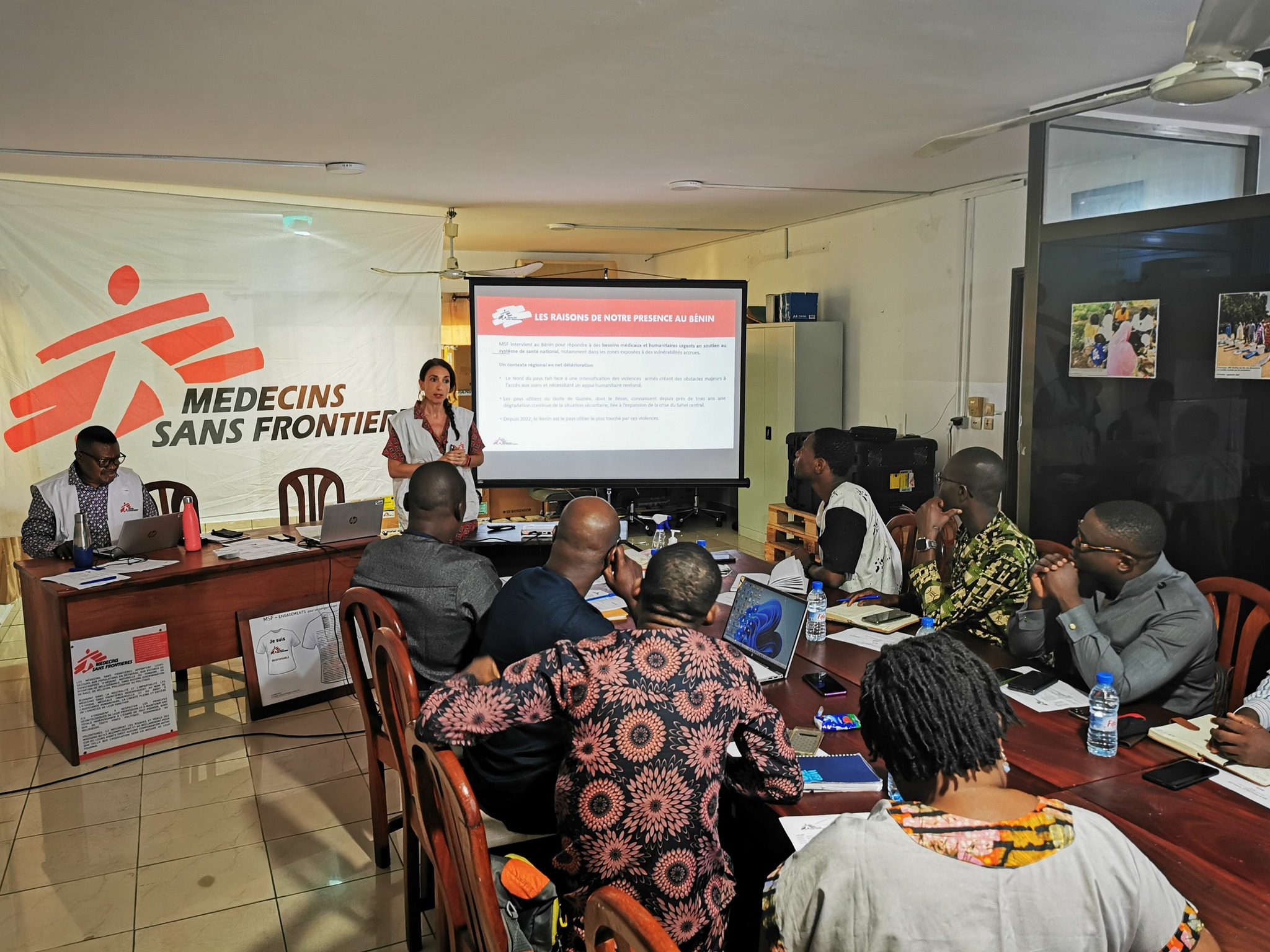
En organisant ce café de presse, MSF souhaite entretenir une relation de proximité avec les médias béninois, acteurs essentiels dans la sensibilisation et la mobilisation autour des enjeux de santé publique. La directrice pays de MSF, Angéla, a réaffirmé l'engagement de l'organisation à œuvrer aux côtés des autorités sanitaires pour garantir un accès équitable à des soins de qualité, en particulier pour les communautés les plus exposées.
Et pour une communication proactive, Nahini Rogatien Mante a rappelé l'importance de fournir une information fiable aux médias pour lutter contre la désinformation. Ce café de presse s'inscrit dans une démarche de transparence et de collaboration avec les acteurs de l'information.
Categories: Afrique, Swiss News
Le coup d'Etat en Guinée-Bissau suscite des doutes quant à sa légitimité
Les déclarations de l'ancien président nigérian Goodluck Jonathan et du Premier ministre sénégalais Ousmane Sonko s'ajoutent aux affirmations de l'opposition selon lesquelles le coup d'État aurait été mis en scène, même si aucune preuve concrète n'a pour l'instant été fournie pour étayer ces accusations.
Categories: Afrique
Partage des données confidentielles : Algérie Poste met en garde
Algérie Poste a publié un rappel important à l’attention de l’ensemble de ses clients, mettant en garde contre la divulgation de toute information personnelle liée […]
L’article Partage des données confidentielles : Algérie Poste met en garde est apparu en premier sur .
Categories: Afrique, Swiss News
“Une usine africaine sur trois se trouve en Algérie”, le pays confirme son leadership pharmaceutique
Le président Abdelmadjid Tebboune a affirmé que l’Algérie occupe désormais la première place en Afrique dans l’industrie pharmaceutique, avec près d’un tiers des usines du […]
L’article “Une usine africaine sur trois se trouve en Algérie”, le pays confirme son leadership pharmaceutique est apparu en premier sur .
Categories: Afrique, Biztonságpolitika
La fin du Lukoil en Afrique, des conséquences ou des opportunités pour tous
La compagnie pétrolière russe Lukoil a annoncé fin octobre qu'elle vendait l'ensemble de ses actifs détenus hors de Russie. Avec des conséquences pour la Russie, les pays occidentaux mais également en Afrique, premiers pays concernés.
Lukoil, deuxième plus grande compagnie pétrolière de Russie, fait face à de sérieuses perturbations dans ses activités internationales, à la suite des sanctions occidentales. Depuis le début de la guerre en Ukraine, plusieurs vagues de sanctions ont été prises à l'encontre du secteur énergétique russe notamment, mais ce dernier, parvenait jusque-là à tenir via des contournements. Cependant, il y a un mois, les dernières mesures prises par l'union européenne, le 19e paquet de sanctions, a sérieusement pesé sur la firme. Dans son collimateur, la branche « outre-mer » de la société Lukoil Overseas) et ses démembrements Litasco Middle East DMCC ainsi que ses prises de participation dans de nombreuses sociétés.
Par conséquent, la multinationale a fini par plier sous le poids des sanctions et a décidé de vendre ses actifs situés en dehors de Russie afin de se recentrer sur mon marché interne.Le malheur des uns faisant le bonheur des autres, de nouvelles opportunités s'ouvrent sur le vieux continent.
Redistribution des rôles dans le secteur énergétique en Afrique
La place laissée par la firme russe ouvre la voie à d'autres acteurs potentiels. Le portefeuille d'actifs est évalué à environ 22 milliards de dollars à l'étranger et compte plusieurs projets africains. La majorité des États concernés par les contrats pétroliers, vont pouvoir exercer leur droit de préemption. Cela leur permettrait s'ils le souhaitent, de renforcer leur pouvoir sur ce secteur stratégique. Les politiques récentes visant à plus d'indépendance pourraient se saisir de cette opportunité. Une plus grande partie des valeurs produites pourrait être récupérée et injectée dans les caisses de l'État. Des entreprises privées locales seraient également en mesure de participer afin de développer ce secteur à un autre niveau. Reste à savoir si des compagnies africaines seront intéressées et pourront faire le poids face à des entreprises étrangères.
Quoi qu'il en soit, libérés de leurs précédents exploitants ce sera l'occasion pour les pays hôtes de choisir leurs nouveaux partenaires et de négocier des conditions plus favorables.
Omar SYLLA !
X : @Le_Ndar_Ndar
Categories: Afrique, European Union
Pages
the old site is here


© 2012-2015 Europa Varietas Foundation © 2015-2020 Europa Varietas Association
www.europavarietas.org | info(@)europavarietas(dot)org | Switzerland
This is a GDPR ready site
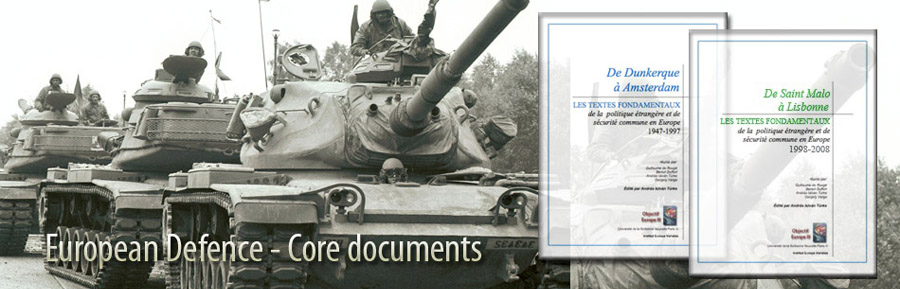
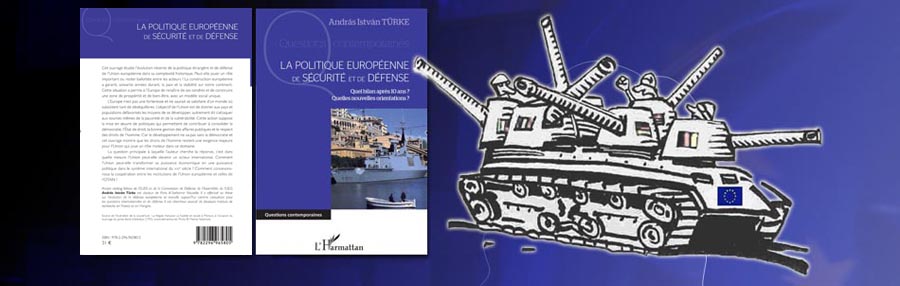
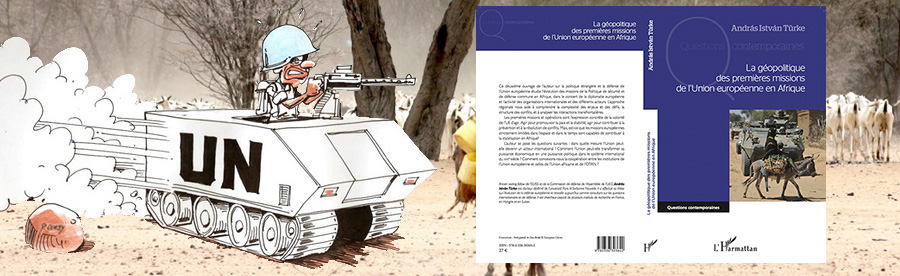
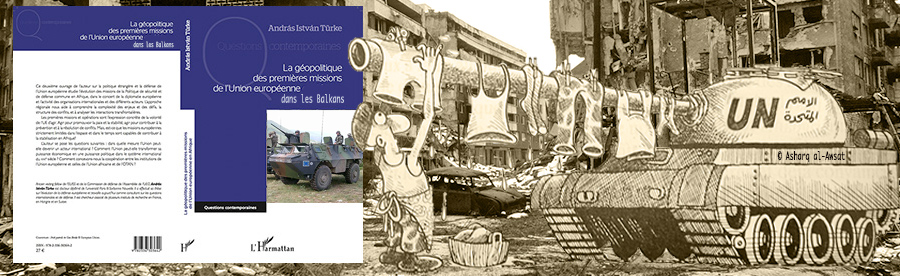
We are looking for sponsors for the English translation of these books, please contact turkeandras(at)gmail(dot)com