
You are here
Swiss News
Steigende Kosten und Mieten: Travailsuisse fordert 2 Prozent mehr Lohn für Angestellte
Travailsuisse schlägt Alarm: Höhere Inflation und steigende Krankenkassenprämien drücken die Kaufkraft. Der Arbeitnehmenden-Dachverband verlangt deshalb 2 Prozent mehr Lohn für 2027. In belasteten Branchen wie dem Gesundheitswesen sogar bis zu 6 Prozent.
Categories: Swiss News, Union européenne
«Schwerste Tage unseres Lebens»: Eltern von Rad-Talent (†19) verabschieden sich emotional
Nach Finlay Tarlings tödlichem Unfall bei der Volta a Portugal verabschieden sich seine Eltern auf Instagram. Das 19-jährige Rad-Talent kollidierte mit einem Fahrzeug, wie neue Details zum Unfall zeigen.
Categories: Swiss News, Union européenne
Brisanter Sicherheitsfauxpas: Briten-Premier Burnham chattete mit Fake-Trump-Berater
Der britische Premierminister Andy Burnham fiel auf Nachrichten eines Betrügers herein, der sich als US-Präsident Trumps Stabschefin Susie Wiles ausgab. Erst später flog die Täuschung auf. Nun wirft der Vorfall Fragen zur Cybersicherheit auf.
Categories: Swiss News, Union européenne
L'artiste Anna Teko alerte sur la maltraitance d'une fillette
Une fillette d'environ 6 à 7 ans a été accueillie, vendredi 14 août 2026, à l'orphelinat Jean Teko, dirigé par la chanteuse gospel Anna Teko, après un signalement faisant état de graves violences présumées.
Victime de violences physiques répétées, la situation d'une fillette a été révélée par Anna Teko dans une vidéo publiée sur les réseaux sociaux.
D'après les propos recueillis auprès de la fillette, celle-ci aurait subi des violences physiques répétées alors qu'elle vivait sous la responsabilité d'une tutrice.
L'enfant a notamment évoqué des coups, des privations de nourriture et des périodes durant lesquelles elle aurait été enfermée. Elle a aussi fait état de blessures aux doigts, dont certaines auraient été provoquées dans le contexte d'accusations de vol de nourriture.
À son arrivée à l'orphelinat Jean Teko, la fillette se serait montrée très éprouvée. Elle aurait beaucoup pleuré et ne souhaiterait plus retourner auprès de sa tutrice.
Anna Teko précise ne pas avoir assisté aux faits rapportés par l'enfant. Elle en appelle à une intervention des services compétents pour vérifier les déclarations de la fillette, déterminer les circonstances des faits et les mesures à prendre.
L'artiste souhaite surtout que la victime puisse rester en sécurité pendant que les services compétents examinent son cas. « Je demande aux autorités de faire leur travail, d'aider cette enfant à avoir la justice », a-t-elle déclaré.
Voilà un cas qui pourrait intéressser l'Institut national de la femme (INF)
M. M.
Categories: Afrique, Swiss News
Les numéros gagnants du DIGITAL 00 H
DIGITAL 00H : Avez-vous tenté votre chance ?
Le tirage DIGITAL 00H N°229 a livré son verdict !
Lundi 17 août 2026
Avez-vous joué ?
Avez-vous misé sur vos numéros porte-bonheur ?
RÉSULTAT : 35 • 63 • 05 • 50 • 15
Félicitations aux heureux gagnants !
Pas encore cette fois ? Gardez le sourire.
Rendez-vous à 08H pour le prochain tirage.
Jouez dans les points de vente de la LNB ou : Tapez *590# ou rendez-vous sur lnbloto.bj
Jouez avec modération et responsabilité. Le jeu doit rester un plaisir.
Categories: Afrique, Swiss News
«Können es kaum erwarten»: Schweizer Snowboard-Traumpaar verkündet Baby-News
Die Schweizer Snowboard-Familie bekommt Zuwachs. Ladina Caviezel erwartet kurz nach ihrem Rücktritt ein Baby. Das teilen sie und ihr Mann Dario Caviezel mit.
Categories: Swiss News, Union européenne
Polizei sucht Zeugen: Mann (21) von drei Unbekannten in Luzern verprügelt – verletzt
Am frühen Samstagmorgen ist ein 21-jähriger Mann in der Stadt Luzern nach einer Auseinandersetzung von drei unbekannten Personen verprügelt und verletzt worden. Die Polizei sucht nach Zeugen.
Categories: Afrique, Swiss News
Duft von Ferien und Kindheit: Warum Sommerregen so gut riecht
Kaum fallen die ersten Tropfen, liegt er in der Luft: der Duft nach Sommerregen. Für viele weckt er Erinnerungen an Kindheit und Ferien. Doch woher kommt dieser Geruch und warum riechen wir ihn so gerne? Dies erklärt Meteorologin Daniela Schmuki im Podcast «Durchblick».
Categories: Afrique, Swiss News
Le Cameroun remporte son premier trophée de la CAN féminine en s'imposant face au Malawi
Marie Ngah Manga inscrit un doublé et le Cameroun s'impose facilement 3-0 face au Malawi et remporte son premier titre de championne d'Afrique des Nations féminine.
Categories: Afrique, Swiss News
International Criminal Court Under Attack
A poster depicting Israeli Prime Minister Benjamin Netanyahu as wanted by the International Criminal Court is displayed in a corridor of the European Parliament in Brussels, June 2026. Credit: Frédéric Pétry/HansLucas via AFP
By Andrew Firmin
LONDON, Aug 17 2026 (IPS)
In a recent Wall Street Journal piece, US Secretary of State Marco Rubio pledged to ‘dismantle’ the International Criminal Court (ICC). The Trump administration intends to pressure states into quitting the court, threatening sanctions, travel bans, visa restrictions and ‘increased scrutiny’ of states that receive its funding. At stake is the court’s ability to stand with victims of the gravest of human rights crimes.
Challenging impunity
Established in 2002 following years of civil society advocacy, the ICC prosecutes atrocities, including crimes against humanity, genocide and war crimes, when national or regional courts can’t or won’t. It prosecutes individuals, and national leaders enjoy no immunity. It has secured several convictions, including of warlords from the Democratic Republic of the Congo, Mali and Rwanda. Among ongoing cases, former Philippines president Rodrigo Duterte awaits trial on crimes against humanity charges. Civil society plays a key role in collecting evidence. Filipino women-led groups, for example, have documented thousands of extrajudicial killings.
The court has 125 members, but the USA is among several powerful states, including China, India, Israel and Russia, that have never joined. US hostility intensified in 2020, when the ICC opened an investigation into crimes against humanity and war crimes in Afghanistan, including those committed by US forces.
A current US campaign could merit the court’s attention. In the Caribbean Sea and eastern Pacific Ocean, the US military is bombing boats it claims are being used by drug cartels to smuggle fentanyl and other illicit substances. It started the strikes as a way of building pressure on then Venezuelan President Nicolás Maduro, but has continued after US forces invaded Venezuela and abducted him, now seemingly with the purpose of communicating US strength and contempt for international rules.
US forces have killed over 200 people. All are civilians, leaving little doubt the strikes are illegal under international law. Last October, a group of UN human rights experts concluded that the strikes amount to extrajudicial executions. UN human rights chief Volker Türk called for an investigation, saying he believed the campaign violated international law. The USA responded by lining up with Israel, North Korea and Russia to oppose Türk’s second term.
The victims include nationals of Colombia, St Lucia and Trinidad and Tobago, all ICC members. The ICC could investigate any strikes carried out in member states’ territorial waters or against vessels registered with them.
Defending Netanyahu
Donald Trump is also determined to defend his prize ally, Israeli Prime Minister Benjamin Netanyahu. He’s said as much, undermining Rubio’s lofty rhetoric about sovereignty. In November 2024, the ICC issued arrest warrants for crimes against humanity and war crimes against Netanyahu, former defence minister Yoav Gallant and Hamas commander Mohammed Deif, later confirmed to have been killed by Israel. Israel doesn’t recognise the court, but the warrants stand because Palestine does.
Netanyahu’s warrant is back in the headlines because he’s due to visit New York for the annual high-level opening of the UN General Assembly in September. Mayor Zohran Mamdani has called for his arrest, but the Trump administration has confirmed it will ignore the warrant. This may have fuelled the latest offensive, which goes further than the Trump administration’s 2025 decision to impose sanctions on nine ICC judges and officials. Early in his second presidency, Trump issued an executive order that declared a ‘national emergency’, arguing the court was a threat to the USA and Israel, and pledging sanctions against anyone who takes part in its investigations. The order was used to impose sanctions on Francesca Albanese, the UN Special Rapporteur on the Occupied Palestinian Territories.
Fearing criminalisation, US-based organisations may feel pressured to end cooperation with the ICC. Last year, two US-based civil society organisations pulled out of the ICC’s annual meeting. Civil society is however fighting back. In July, two US groups filed a lawsuit against the Trump administration, arguing the sanctions violate constitutional free speech protections.
International system under attack
The Trump administration’s attack on the ICC is part of its broader assault on the international system, and particularly its human rights functions. It’s withdrawing from some bodies, defunding others, trying to bend others to its will, forming alternatives it controls, such as the Board of Peace, and showing outright hostility towards those seen to stand in its way.
The USA isn’t the only one. Three military-run Sahel allies – Burkina Faso, Mali and Niger – have begun their withdrawal from the ICC, a process that takes a year. They previously quit the Economic Community of West African States, including its Community Court of Justice, leaving victims of human rights atrocities amid jihadist insurgency with no international routes to justice.
Venezuela set the same course under Maduro. Last December, parliament voted to repeal the law ratifying the Rome Statute, the treaty through which states accept the court’s jurisdiction. That path hasn’t changed under US-compliant Interim President Delcy Rodriguez, whose government recently declared its withdrawal ‘irrevocable’. The US government has welcomed the decision, which will deny justice both to victims of Maduro’s repression and the families of Venezuelans killed in boat strikes.
Others have rallied to the court’s defence. A European Union spokesperson said the bloc ‘stands firm’ behind it. Hungary, which under right-wing nationalist Viktor Orbán had committed to pulling out, reversed that decision under its new government.
Time to rally round
The court faces this onslaught while leaderless. On 24 July, member states voted to remove chief prosecutor Karim Khan following disciplinary proceedings triggered by a sexual abuse complaint from a former staff member. It’s vital that his replacement be a strong and independent leader who can continue the court’s work.
The ICC is under attack by the Trump administration because of its promise to hold the powerful to account. Its member states must defend the principle that no one is above the law by refusing to bow to US pressure.
Andrew Firmin is CIVICUS Editor-in-Chief, co-director and writer for CIVICUS Lens and co-author of the State of Civil Society Report.
For interviews or more information, please contact research@civicus.org
Follow @IPSNewsUNBureau
!function(d,s,id){var js,fjs=d.getElementsByTagName(s)[0],p=/^http:/.test(d.location)?'http':'https';if(!d.getElementById(id)){js=d.createElement(s);js.id=id;js.src=p+'://platform.twitter.com/widgets.js';fjs.parentNode.insertBefore(js,fjs);}}(document, 'script', 'twitter-wjs');
Categories: Africa, Swiss News
Debüt-Pleite gegen Mantova: Gattuso blamiert sich mit Lazio in der Coppa
Schock für Lazio in Rom! Trainer Gennaro Gattuso verliert sein Debütspiel mit 0:2 gegen den Zweitligisten Mantova und scheidet aus der Coppa Italia aus.
Categories: Défense, Swiss News
«Ich bin so dankbar für Wlad»: Hayden Panettieres (†36) Liebe zu Klitschko war einzigartig
Schauspielerin Hayden Panettiere ist tot. Zurück bleiben ihre Tochter Kaya und ein Ex-Partner, mit dem sie tief verbunden blieb: Box-Champion Wladimir Klitschko.
Categories: Swiss News
Probleme in Cincinnati: Djokovic übergibt sich bei Auftakt-Pleite
Tennis-Legende Novak Djokovic muss sich beim Masters in Cincinnati der Weltnummer 50 Thiago Agustin Tirante überraschend geschlagen geben. Während des zweiten Satzes setzen ihm körperliche Beschwerden aufgrund der Temperatur so stark zu, dass er sich gar übergeben muss.
Categories: Swiss News
Personenunfall: Pendlerverkehr am Bahnhof Winterthur lahmgelegt
Aktuell kommt es im Bahnverkehr am Bahnhof Winterthur zu Einschränkungen. Grund dafür ist ein Personenunfall. Es ist mit Verspätungen und Ausfällen zu rechnen.
Categories: Swiss News
Western-Led Green Revolution Failing Africa
By Timothy A. Wise and Jomo Kwame Sundaram
CAMBRIDGE, MA, USA / KUALA LUMPUR, Malaysia, Aug 17 2026 (IPS)
As AGRA turns 20, a new report exposes its worsening failure to double productivity and incomes and halve undernourishment in participating African nations as promised.
Timothy A. Wise
AGRA still failing Africa’s farmersThe Alliance for a Green Revolution in Africa, now known simply as AGRA, was established in 2006.
The multi-billion-dollar initiative, by the Gates and Rockefeller Foundations, has been pursued over the last twenty years in 13 focus countries.
After considerable evidence of failure became apparent, it abandoned its original ambitious goals in 2022, adopting AGRA 3.0, focusing on food systems and policy reforms.
It also ‘rebranded’ by changing its name to AGRA, removing its explicit association with the much criticised Green Revolution. Wise’s 2020 assessment of AGRA up to 2018 found progress on its own declared goals quite modest and uneven.
Wise’s latest review finds even slower productivity growth and worsening hunger under AGRA compared to before 2006. Its improved seeds and fertilizer promotion did not even achieve sustainable intensification, i.e., growing much more food on the same land.
Dubious progress
Increased food production and sales were supposed to reduce rural poverty and food insecurity.
Jomo Kwame Sundaram
But yield growth has been slow and uneven. Productivity grew more slowly than before 2006 despite billions of dollars spent on subsidies for a few AGRA-favoured crops.High-yielding seeds and related agrochemicals were not widely adopted by most smallholders except when heavily subsidised.
But subsidies have encouraged planting favoured crops on new farmland. Modest yield growth often failed to cover the costs of more expensive inputs, leaving farmers in debt.
Meanwhile, cultivation and yields of millet, a nutritious climate-resilient staple, has declined over the last two decades.
Instead of halving the number of hungry, undernourishment has risen by 58% in participating countries since 2006. Tragically, the number of hungry in the 13 AGRA countries nearly doubled over the last six years!
AGRA unmonitored
The African Union was induced to support AGRA by encouraging more government investments in food agriculture. In 2006, it launched the Comprehensive African Agricultural Development Program (CAADP).
CAADP called for dramatically raising government spending on agriculture to 10% of government budgets. However, most governments failed to provide the required funding.
But many governments, particularly in AGRA countries, have spent large shares of their scarce public resources on agriculture. Many have invested in Green Revolution programmes.
Despite setting similar productivity, income, and hunger objectives, by 2025, no country met CAADP’s targets according to its rigorous biennial progress reports using more benchmarks.
High-yielding seeds and related agrochemicals were not widely adopted by most smallholders except when heavily subsidised.
AGRA’s main initiatives, involving input markets and industrial farming, are too costly for most small-scale farmers, benefiting wealthier farmers more.
For Wise, the poor outcomes are not solely or even primarily due to AGRA. Instead, he blames the Green Revolution approach, previously strongly supported by private foundations and now by the World Bank Group.
In contrast, Senegal, not one of the AGRA 13, has succeeded in halving hunger, with more diversified policies supporting a wider range of crops and farming methods.
What failure?
AGRA has never reported actual progress against its original goals of doubling productivity and incomes while halving hunger for 30 million farming households.
With fewer measurable goals, progress reports now focus on the number of commercial seeds produced, private financing generated, and enterprises launched.
Instead, AGRA claimed, “we directly reached 11 million farmers and indirectly reached 26 million farmers. This achievement significantly outstripped our initial targets to reach 30 million smallholder households.”
‘Reaching’ 37 million farmers, mostly ‘indirectly’, says little about its actual impacts on farmers. Unsurprisingly, most donors have cut support for AGRA.
Now, AGRA is influencing national and continent-wide policymaking to accelerate agricultural commercialisation. Its new focus on food systems and policies shifts attention as its website now makes little mention of productivity or small-scale farmers.
Whither AGRA?
Yield growth has been slow and uneven, mainly for a few food crops prioritised by AGRA. Those modest yield gains often did not cover the costs of expensive inputs, leaving many farmers in debt.
Increased food production and sales were supposed to reduce rural poverty and hunger. Instead, malnutrition has risen in most AGRA countries, as dietary diversity has declined with crop diversity.
Asia’s Green Revolution offered far more support to farmers than Africa’s, although its achievements have been more mixed than typically claimed. Africa’s Green Revolution has offered much less, mainly improved commercial seeds.
AGRA still denies the failure of its earlier policies. Instead, it now pays lip service to low-input approaches including agroecology.
In 2025, AGRA president Agnes Kalibata acknowledged, as she stepped down from her post, “Part of why [AGRA] rebranded was that the Green Revolution ship has sailed. We can’t continue pursuing what’s not working for others.”
After twenty years, AGRA should take heed of that advice.
The Alliance for Food Sovereignty in Africa will release its report, drawing on Wise’s research, on August 24.
IPS UN Bureau
Follow @IPSNewsUNBureau
!function(d,s,id){var js,fjs=d.getElementsByTagName(s)[0],p=/^http:/.test(d.location)?'http':'https';if(!d.getElementById(id)){js=d.createElement(s);js.id=id;js.src=p+'://platform.twitter.com/widgets.js';fjs.parentNode.insertBefore(js,fjs);}}(document, 'script', 'twitter-wjs');
Related Articles
- No African Development from Western Trade Policies
- Digging Africa Deeper into Hunger Annual Green Revolution Forum ignores widespread failure of its push for industrialized agriculture
- AGRA Gets Make-Up, Not Make-Over
- Africa Struggles with Neo-Colonialism
- Magical Thinking on Fertilizer and Climate Change
- Fiddling in Nairobi While Africa Goes Hungry
- Another False Start in Africa Sold with Green Revolution Myths
- Africa at the Crossroads: Time to Abandon Failing Green Revolution
- Failing Africa’s Farmers, Starving the Continent
- Green Counter-Revolution in Africa?
- World Bank Dispossessing Rural Poor
- World Bank Financialization Strategy Serves Big Finance
- Hunger in Africa, Land of Plenty
Categories: Africa, Swiss News
«Sonst hätten wir ein Problem»: Mourinho schwärmt von seinen Real-Stars
José Mourinho feiert mit Real Madrid eine gelungene Vorbereitung. Nach drei Siegen und einem Unentschieden zeigt sich der Star-Trainer optimistisch für den La-Liga-Auftakt gegen Espanyol am kommenden Wochenende.
Categories: Swiss News
Nach sieben Jahren: Spanischer Weltmeister verlässt Manchester City
Rodri wechselt von Manchester City zu Barcelona. Nach wochenlangem Ablösepoker einigen sich die Klubs offenbar. Der Spanier unterschreibt einen Vierjahresvertrag beim spanischen Meister.
Categories: Swiss News
Nach Patzer im Auftaktspiel: Harter Schlag für Ex-FCL-Keeper Loretz in Hannover
Nach einem Patzer im Auftaktspiel muss Pascal Loretz bei Hannover 96 auf die Bank. Trainer Titz gibt gegen Wolfsburg überraschend dem bisher unerfahrenen Leo Weinkauf den Vorzug im Tor.
Categories: Swiss News
Thauvin einziger Torschütze: PSG-Dominanz im Supercup beendet – Lens jubelt
Der RC Lens hat den grossen Favoriten PSG besiegt und die französische Supercup-Trophäe 2026 gewonnen. Florian Thauvin erzielt das einzige Tor des Spiels.
Categories: Swiss News
«Der Schmerz ist nicht messbar»: Hayden Panettieres Leben war eine Tragödie
Die US-Schauspielerin Hayden Panettiere ist im Alter von 36 Jahren verstorben. Ihr Werdegang war früh von weltweitem Ruhm geprägt, jedoch überschattet von jahrelanger Abhängigkeit, postpartalen Depressionen und persönlichen Schicksalsschlägen.
Categories: Swiss News
Pages
the old site is here


© 2012-2015 Europa Varietas Foundation © 2015-2020 Europa Varietas Association
www.europavarietas.org | info(@)europavarietas(dot)org | Switzerland
This is a GDPR ready site


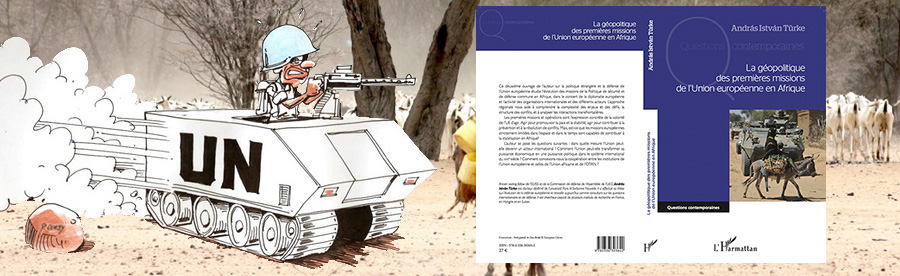
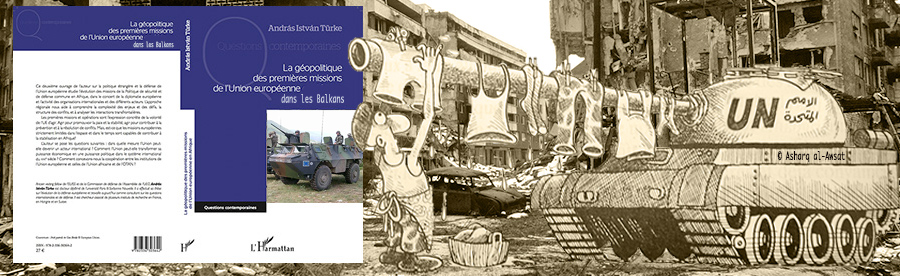
We are looking for sponsors for the English translation of these books, please contact turkeandras(at)gmail(dot)com